Tag Archives: politics

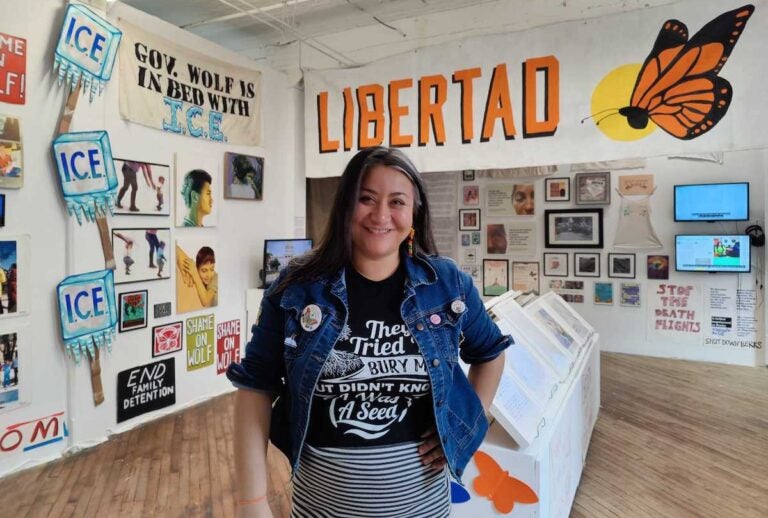
Pittsburgh Mayor Ed Gainey: ‘My Administration Will Not Work With ICE’


WTAE

Jan 28, 2025

Pittsburgh Mayor Ed Gainey said during an event in Harrisburg Monday that his administration will not work with U.S. Immigration and Customs Enforcement.

Our news partners at the Trib said Gainey’s comments come amid heightened concerns from local immigrant communities about ICE raids.

“My administration will not work with ICE,” Gainey said during a Pennsylvania Press Club event Monday. “We will do whatever’s necessary to make our city more welcoming. That’s what we’re built on.”

President Donald Trump has issued “quotas for the immigration enforcement agency to ramp up arrests,” the Trib said, attributing the Washington Post. Trump’s remarks include enforcement at schools and other “sensitive sites.”

“ICE is not going to end the situation of a failed immigration policy — it’s not going to do it,” Gainey said. “What it’s going to do is create more situations where people feel scared, where people don’t feel safe, where people will do things that they normally wouldn’t do.

“If the federal government wants to be serious about what they want to do to reform the immigration law, then they need to create a pathway to citizenship.”

Vanessa Caruso, a Pittsburgh-based immigration attorney, told the Trib that she has been taking calls “all day, every day” from people who are worried about ICE actions.

“The concern is real,” she said to the Trib, and it’s growing as the Trump administration looks to crack down on immigration.

Gainey’s press secretary, Olga George, said in a statement to Pittsburgh’s Action News 4 on Monday evening that the city was unaware of any ICE raids.

“Currently, the city of Pittsburgh has no evidence of ICE activity occurring within city limits and has not been asked to assist the agency in any way,” the statement said. “ICE is a federal law enforcement agency that works outside of city control. Public Safety and the Bureau of Police will adhere to bureau policies.”

According to the Trib, the policy says city police are unable to arrest someone just to investigate their immigration status.

In a statement posted to the @PGHController X account on Tuesday, City Controller Rachael Heisler said, in part, “The Pittsburgh Bureau of Police has long upheld a policy of not arresting or detaining people solely to investigate immigration status. PBP officers are not immigration agents, and enforcing federal civil immigration warrants is not the job they’re trained to do.

“Pittsburgh police will follow procedure for criminal warrants regardless of immigration status. But under current PBP policy, police do not arrest or detain people based on civil immigration or administrative warrants in NCIC.”

Questions One PA brings into 2025 and 2026

Photo: Jasmine Rivera was an organizer with the Shut Down Berks Coalition, and curated the exhibition “Queremos Justicia: Cómo cerramos Berks,” at the Vox Populi gallery in Philadelphia in 2023. (Peter Crimmins/WHYY)

By Jeffrey Lichtenstein

One PA

Jan 7, 2025 – We’re holding several big questions as we move into 2025 that we hope to learn and struggle through together with our funding partners. All of our work, especially our organizing, advocacy, and outreach efforts, will be working through these questions.

 Quality vs Quantity of Doors

Where and when can we initiate and join conversations about the quality of field work rather than simply the quantity of door knock and phone call attempts? The efficacy of canvassing in low-salience elections is statistically unquestionable but in presidential election cycles there is suddenly a great amount of noise. Some of this noise is the result of large-scale vended field programs with weak quality control practices or very low contact rates.

What could it look like to move toward an eco-system wide model for field work that prioritizes the number and quality of conversations, volunteers recruited, and leaders trained? One PA prides itself on high contact rates and rigorous quality control but we still have much to learn. We hope to share and leverage best practices across locally rooted partners and begin to shift the paradigm around field work from quantity alone, to quality and quantity.

Making organizing power more legible

Even the strongest most rigorous electoral field program faces structural challenges with management, hiring and training under conditions of limited funding and time. These efforts also, by their nature, are demobilized and dismantled after an election, even when we know there is another election just around the corner, not to mention countless other opportunities for voters to flex their voice in government and strengthen their civic participation. Political and civic organizing, unlike electoral campaign mobilizations, grow rather than diminish in efficacy and power over time. What would it look like to quantify, validate, resource and scale the civic power of organizing? One PA was successful in 2024 in using every door conversation to begin an organizing pathway. We identified 33,000 hot leads to join One PA. We’re proud of this work, but we have real areas of growth in learning how to maximize the conversion between hot leads and new volunteers. 

Dimensions and Cost of Building Precinct Based Structure

The term ‘organizing’ has been stretched in recent years to mean all manner of engagement. At One PA we are working with multiple battle-tested organizing models in an attempt to integrate the best practices of each in a way that can be quantified, studied and validated at every stage using contemporary data tools and tech. Our model combines dues-based membership, structure based organizing units, systematic leadership development, polarizing campaigns and experimentation. We are proud of our work in 2024 to launch a guardians of democracy and elections captains program.

In the year ahead we plan to scale the program by a factor of five, and are holding questions about what level of resource and training this will require at each level of the organizing structure. Independent Voice It is clear our movement must get upstream of elections in the battle to make meaning out of our communities’ lived realities. By the time candidates win their primaries, the ability to shape what that election will be about is out of the hands of most people except the elite few with an extraordinary amount of influence on the candidates. We are asking ourselves the question: what capacities and practices do we need as a movement to help frame the questions in front of people long before an election?

How can we roll into a cycle with voters broadly knowing already that housing is too high because of slumlords and rollbacks on government investment, not because of immigrants? We know part of the answer is an independent voice for Black and multi-racial working class communities, to help compensate for brand weakness in the Democratic party, to ensure voters feel they are heard, and to guarantee a more healthy mix of ideas about what it will take to fix this country. How can we build the power and independence of this voice in a way that our more traditional and conservative allies won’t attempt to smother in its cradle?

Winning the Internet

We’re also holding questions about how to respond to the reality that the Internet is increasingly becoming a place our communities rely on for social and political queues. Cynical or hateful voices have a head start in offering narrative frames in the digital space. We are holding questions about what it looks like to bring an organizing approach and significant investment in mass communications to organize our base in digital space, win over leaders and taste makers in non-legacy media, and contest for narrative primacy on the internet.

Training to Win next quarter and next decade

Training is critical for nearly every aspect of our plan, especially the proposition that we grow in capacity and power over time, and the responsibility to rebuild a majority. We are clear that we must level up the rigor and scale of our training program, and sit with the question about what kind of training school and content will meet the need. We know curricula must include a breakdown of the structures and histories of power and resistance; song, poetry and other forms  of culture that bring people together at an emotional register; practical application of ideas through repetition of organizing, storytelling, writing and other skill practice. We’re sitting with the question: how can all those pieces best fit together and what kind of resourcing will it take to hold a training program sustainably that can meet these goals?

A renewed tech advantage

We’re also holding a question about technology. For about 20 years, democratic institutions and networks held an advantage in the use of tech in politics – the VAN, click-to-call tools, ActBlue and early P2P text platforms are all examples. But today republican networks and institutions have caught up or surpassed. What kind of tools allow us to easily give an inspired volunteer a list of the 50 closest target people to them, to register them to vote, get them to sign a petition, or have a persuasive conversation about candidates? How do we move away from site-based voter registration only, and use contemporary data to scale door to door registration programs? How do we use new models, like the Steven Phillips “New Majority Index,” to help us assess opportunities and threats?

Cities: Most of our base lives in cities.

Cities are the places where the housing and homelessness crises are worst. Cities are some of the places with the highest income inequality and violent crime. It’s difficult to live in cities unless you’re rich. There is a relationship between our bases’ weakened sense of political agency and their perception of the corruption of government on one hand, and the way our cities are being run on the other. What does it look like to have an intentional plan to broadcast positive accountability messaging when city leaders accomplish something that improves peoples lives? How do we combine that with real resourcing for primary campaigns to support candidates who are committed to using the government to deliver material gains for working class people.’ And what does it look like to add real resourcing for advocacy and pressure campaigns to encourage local leaders on the fence to move toward policies that will demonstrate in real terms how democratic governance is good for people?

Alignment

Last, we’re holding a question about how to build alignment between progressive base-building organizations to have sufficient power to help win the fights that each of us aren’t strong enough to win on our own. We’re proud of the work that we’ve done to build unity through the cycle of the last several races with several partners, especially PA United , Working Families Party , APIPA, Make The Road, 215 People’s Alliance and UniteHERE. How do we strengthen and build on these existing relationships?

On Why the USW, Biden and Trump are Right about the Nippon/USSteel Ripoff

By Ike Gittlen

https://ikegittlen.substack.com/

For months the proposed sale of USSteel to Nippon Steel has been front page news. The Committee on Foreign Investments in the United States (CFIUS), that reviews the national security implications of these global transactions is reportedly at an impasse and unable to come to a determination.

The reality is that what CFIUS decides (or doesn’t) is irrelevant. Both the incumbent President and the President-elect have said they will not approve the deal. It’s slowly dawning on people that this deal isn’t likely to happen.

We shouldn’t be surprised. Opposing the Nippon/USSteel deal is the logical response to all that we have learned about the steel industry, the “free trade” model of global trade, the importance of maintaining domestic control over critical supply chains and how the big money vultures strip-mine our stable industrial/manufacturing enterprises. It isn’t, as Nippon/USSteel would like us to believe, something that must happen or USSteel will collapse. Once this bad deal is gone, we know there are a number of options to retain and enhance USSteel’s assets.

To understand what’s happening we have to start with the global steel overcapacity. The OECD reports a global steel overcapacity exceeding 500 million metric tons, with some estimates reaching as high as 630 million metric tons. This has nations with overcapacity (China in the lead) looking for places to dump their steel production. Our nation is a lucrative place to offload unneeded steel. Interestingly, Nippon is reportedly looking to do deals in other nations with lucrative steel consumption, as the USSteel deal falters.

It’s fantasy to believe that once Nippon owns USSteel it won’t use it to move its overcapacity here. Simply look at the cases that the USW and the Steel Industry have won at the International Trade Commission, to get a flavor of how blatant other nations have violated our trade laws to gain access our steel market. The failure of Nippon to offer credible and enforceable commitments to continue American domestic production, should convince us of their real intent. This is the heart of the national security concern. That if Nippon is allowed to own such a large part of American steel capacity, the will result will be steel shutdowns here and less ability to supply our own needs of this critical economic sector.

Trump Administration’S Mass Deportation Plan Would Hurt Pennsylvania, Immigrant Advocates Warn

They urged Democratic lawmakers to pass legislation to make the commonwealth more welcoming

By: Peter Hall

Penncapitol-Star

Nov 14, 2024 – President-elect Donald Trump’s plan to carry out mass deportations of undocumented immigrants would lead to population loss, exacerbate workforce shortages and increase tax burdens for Pennsylvania residents and businesses, the Democratic state lawmakers heard Wednesday.

Advocates for the immigrant community testified before the state House Democratic Policy Committee that although the federal government maintains exclusive authority over immigration policy, which is expected to take a draconian shift under a second Trump administration, state lawmakers can make Pennsylvania a more welcoming place.

“It’s been laid out very clearly. Unfortunately, it’s going to be immigrant detention and deportations on the horizon,” Julio Rodriguez, political director of the Pennsylvania Immigration and Citizenship Coalition, said. “So now it’s crucial that this legislature not only has welcoming policies to support immigrants, but to fight back against these proposals.”

The hearing on the last day of the 2023-2024 legislative session was convened by state Rep. Danilo Burgos (D-Philadelphia), who serves as chairperson of the Pennsylvania Legislative Latino Caucus.

Pennsylvania ranks fourth in the nation in population loss, Rodriguez said. In 2021, the net decrease in population between births and deaths was more than 23,000.

“We didn’t see that impact, because net international migration, also known as immigrants moving here, was 25,721,” Rodriguez said “Had it not been for immigrants, we would have seen a drastic population decline.”

A state’s population determines its number of representatives in Congress. Rodriguez noted that Pennsylvania lost one congressional seat after the 2020 census and could lose another in 2030. It would also result in Pennsylvania receiving less federal funding.

But more immediately, the loss of a portion of the commonwealth’s 978,000 immigrant residents would worsen the labor shortage in the agricultural sector, driving up grocery store prices. Undocumented workers also contribute billions in taxes and in the state’s gross domestic product, Rodriguez said.

Deluzio Win In Western Pennsylvania Keeps Swing District In Democratic Control

Photo: U.S. Rep. Chris Deluzio (PA-17) speaks to reporters at an event highlighting the Biden Administration’s investment in infrastructure at the Kingsley Center Pittsburgh’s Larimer neighborhood on Tuesday, Feb. 20, 2024. (Steve Mellon/Pittsburgh Union Progress)

By Kim Lyons

Pennsylvania Capitol-Star

November 12, 2024 – We’re analyzing the results of the 2024 election by taking a closer look at some of the pivotal or unexpected outcomes. First up is an interview with U.S. Rep. Chris Deluzio (D-17th District) who held off a GOP challenger in a key swing district.

Pennsylvania’s U.S. House delegation lost two Democrats in last Tuesday’s election, and promising Democratic challengers in two hard-fought House districts in the central and eastern part of the state failed to unseat longtime Republican incumbents.

But in western Pennsylvania, Democrats in the House fared better. Incumbent Reps. Summer Lee (12th District) and Chris Deluzio (17th District) both won reelection. After Lee won a contentious primary against challenger Bhavini Patel in April, she was widely expected to win the general election, which she did, beating GOP challenger James Hayes 56.1% to 43.9%, according to unofficial results.

But Deluzio’s reelection to a second term representing the district that includes parts of blue Allegheny and red Beaver counties was much more uncertain. The National Republican Congressional Committee (NRCC) put the race on its list of seats to flip in 2024.

His opponent, state Rep. Rob Mercuri (R-Allegheny) received a key endorsement from the conservative Americans for Prosperity (AFP) Action super PAC. Even his own party considered it to be a swing district; the Democratic Congressional Campaign Committee (DCCC) named Deluzio as one of the “vulnerable” incumbents it sought to protect this cycle, adding him to its Frontline list of candidates.

He’s the only one of the three U.S. House candidates from Pennsylvania on the Frontline list who won reelection.

“I’m very proud of the win,” Deluzio told the Capital-Star. “I’m really proud we increased the margin, and especially in Beaver County, which moved to the right at the top of the ticket, but we moved it towards me.”

Deluzio also increased the margins from his first election in 2022, when he won by 6.8% over challenger Jeremy Shaffer. This election, he won by 7.3% over Mercuri.

Deluzio refrained from the blame game going on within some parts of the Democratic Party reeling from Harris’ loss to Trump, but said as a representative of a Rust Belt district, he understands the frustration that many voters have with those in power.

“Whether it’s powerful folks or forces or companies who hurt people or who are making life worse, I think there’s a tendency among some in my party to always look for win-win framing,” he said. “And you know what? Sometimes there’s a bad guy and you’ve got to kick his ass.”

College Dems Energized, Republicans Seek ‘Safe Spaces’ Amid Consequential Election Season

Photo: Thomas Ross (left) and Austin Wise give a tutorial to students who have never canvassed before on Saturday, Sept. 21, 2024, at Schenley Plaza in Oakland. (Photo by Anastasia Busby/PublicSource)

Democratic organizers say student political engagement has soared since Kamala Harris took over their party’s presidential ticket. Their Republican counterparts report backlash for supporting candidates and views they say are controversial on campuses.


By Spencer Levering

Public Source

October 3, 2024 – Thomas Ross didn’t realize that the political interest on Pitt’s campus was “electric,” as he characterized it, until the semester’s first door-knocking event for Pitt Students for Harris brought 34 volunteers — more than double the number he expected.

“Having 34 volunteers on our first canvass literally blew my mind,” said Ross, a University of Pittsburgh junior studying history and political science. “Everyone that I’ve spoken with has been very excited about the election.” Other Democratic students echoed this, saying they’re seeing new levels of excitement from their peers.

Just up Forbes Avenue, Anthony Cacciato is aiming to make the Carnegie Mellon University College Republicans a space where students can speak freely about their conservative values. Cacciato, president of the chapter, said with election season sparking student’s political intrigue, he’s preparing for a “barrage of negative backlash.”

At colleges around Pittsburgh, political clubs are organizing students to gear up for the upcoming November elections. Club leaders cited Pennsylvania’s influence on national politics as a key reason why they’re trying to mobilize the youth vote as Republican Donald Trump and Democrat Kamala Harris vie for Electoral College votes.

Organizing through socializing

As on-campus political groups look to activate students this fall, many said they are trying to mix political outreach efforts with social events to appeal to young voters.

Cacciato said group outings, such as seeing the new movie “Reagan,” help prevent students from burning out over organizing.

“We’re a space where you can feel comfortable with talking about who you are, but also feel comfortable in knowing that you’re surrounded by friends,” Cacciato said.

The club’s membership increased by 20% this semester, according to Cacciato, because of Pennsylvania’s outsize impact on national politics.

“When you have that knives-edge margin, any little bit of outreach can mean the difference between 10,000 people staying home and not voting and them going out and voting and flipping a precinct, flipping a state House seat, flipping the state, and flipping the country,” Cacciato said.

At Pitt, Sam Podnar, co-president of the Pitt College Democrats, said she creates an environment in which students can meet new people and break out of political apathy.

“We want to let people know that getting involved doesn’t have to be hard, it doesn’t have to be stressful. We just want them to keep showing up,” Podnar said.

She said President Joe Biden’s decision to drop out of the race and endorse Vice President Harris has energized students to get involved in Democratic organizing. General body meetings, weekend canvasses and the club’s presidential debate watch party have all drawn new participants.

“We’ve seen a really, really big surge in membership that just has honestly blown everyone away,” Podnar said.

Avalon Sueiro, president of the CMU College Democrats, said finding a balance between doing work and building a community helps draw students to attend the club’s events. When election day gets nearer, she plans on bringing therapy dogs to campus to calm students’ nerves.

Making it pop

Among Democratic student organizers, leaders are leaning into memes and pop culture as they try to energize college voters. When the semester began, the Instagram pages for Pitt Students for Harris and Pitt College Democrats both had profile photos referencing Charli XCX’s “brat” album. The pop star’s viral summer tweet calling the vice president “brat” spawned a flurry of online memes, which the Harris campaign embraced as an early branding strategy.

Summer Lee and AOC Rally Pittsburgh College Students To Get Involved In 2024 Election

By Abigail Hakas

Pennsylvania Capitol-Star

September 22, 2024 – PITTSBURGH — With just 44 days until the 2024 election, U.S. Reps. Summer Lee (D-Pa.) and Alexandria Ocasio-Cortez (D-NY) rallied young voters for the Harris-Walz ticket at Carnegie Mellon University on Sunday.

Young people, Lee told the audience “are not the voices of the future,” but rather “the voices of right now.”

“We are all in the most powerful room in the country,” she said. “This is the most powerful room because we are in Western Pennsylvania, we’re in Western Pennsylvania, and the road to the White House, the road to the Senate and the road to the House all leads right here through y’all’s campuses.”

Pennsylvania is key for both Vice President Kamala Harris, the Democrats’ nominee, and former President Donald Trump, the GOP nominee. With its 19 electoral votes, the Keystone State is the biggest prize of the “blue wall” battleground states for either candidate.

According to the Pew Research Center, about two-thirds of registered voters ages 18 to 24 align with Democrats. In 2023, the Center for Information & Research on Civic Learning and Engagement estimated around 41 million members of Gen Z would be eligible to vote in the 2024 election.

Sunday’s event was co-hosted by College Democrats at Pitt, the CMU College Democrats and the Young Democrats of Allegheny County.

“When I talk about what our job is in the next 40-something days, your job is to take care of each other because that’s who I’m voting for,” Lee said. “I’m going to go and vote for the most marginalized person in my life. Because it’s my job, it’s my responsibility, to make sure that I’m creating the conditions that we all can survive in, not just survive, that we can all thrive in.”

Ocasio-Cortez followed Lee with a list of the issues that young voters might be most concerned with: climate change, school shootings and the cost of rent and healthcare.

“We have been aging and growing in a world that our predecessors have left to us,” Ocasio-Cortez said. “Respectfully, a lot of what has been left to us is messed up, is really messed up, and it’s messed up not even on a partisan basis, it’s messed up generationally.”

Ocasio-Cortez told a story of her time at Boston University when Barack Obama began his candidacy, and her absentee ballot did not arrive in time. She said she took a bus back home to New York City to cast her vote for the future president.

She not only encouraged students to register to vote in Pennsylvania with their on-campus address, but also to sign up for a shift with the Harris-Walz campaign, go door-to-door and ensure a Democratic victory at every level in the election.

Those calls-to-action were the theme of the speakers at Sunday’s event, with Pittsburgh Mayor Ed Gainey, Allegheny County Executive Sara Innamorato, CMU College Democrats President Avalon Sueiro and Harris-Walz campus organizer Agatha Prairie all taking the stage.

Prairie encouraged attendees to convince five friends to vote and Sueiro said to knock on classmates’ doors and “have those tough conversations” about the stakes of the election.

Gainey took a more somber approach.

“We should all be tired. I’m tired of someone that can stand on the stage in a debate and say to the American people and the world that immigrants that are here in our country eat dogs and cats,” he said in reference to former President Donald Trump’s false claim that Haitian immigrants were eating pets in Springfield, Ohio. “I’m tired of that level of hate.”

Trump’s running mate, U.S. Sen. J.D. Vance (R-Ohio) campaigned in Berks County on Saturday, and mentioned Springfield in his remarks. His job “as the United States Senator representing the people of Ohio is to listen to American citizens and fight for them,” Vance said.

“So our message to Kamala Harris and Democrats is we’re going to keep on complaining about their politics because this is America and we have the right to speak our minds,” he added.

Innamorato pointed out that a satellite voting location at the Soldiers & Sailors Memorial Hall in Oakland will be open from 8 a.m. to 4 p.m. from Oct. 15-17. Satellite locations offer residents the ability to register to vote, request a mail-in ballot, complete and return it in one place.

“A Pennsylvania victory runs through Allegheny County, and it runs through young people,” Innamorato said. “I’m asking for all of you to do what you can, to knock doors, to volunteer, to make phone calls, to talk to your weird cousin, to get your classmates on board, because we got a lot of work to do over the next 44 days.”

Harris Campaigns In Johnstown And Wilkes-Barre: ‘Listening As Much As We Are Talking’

 Photo: Democratic presidential nominee, U.S. Vice President Kamala Harris takes a selfie with Sen. John Fetterman (D-PA) and his wife Gisele Barreto Fetterman after greeting supporters at John Murtha Johnstown-Cambria Airport on September 13, 2024 in Johnstown, Pennsylvania. (Andrew Harnik/Getty Images)    

By: Patrick Abdalla and Kim Lyons

Penn-Capital Star

September 13, 2024 – WILKES-BARRE —  Vice President Kamala Harris, the Democratic nominee for president, has spent most of the last two weeks in Pennsylvania starting with a Labor Day rally in Pittsburgh, where she returned a few days later to hunker down for debate prep. She debated former President Donald Trump, the GOP nominee for president, in Philadelphia on Tuesday, and on Friday she campaigned in Johnstown and Wilkes-Barre, two areas that have swung Republican in recent elections.

“I will be continuing to travel around the state to make sure that I’m listening as much as we are talking,” Harris said during the Johnstown visit, according to pool reports. “And ultimately I feel very strongly that you’ve got to earn every vote, and that means spending time with folks in the communities where they live. And so that’s why I’m here and we’re going to be spending a lot more time in Pennsylvania.”

Luzerne County, where Wilkes-Barre is located. was once a Democratic stronghold, and is near President Joe Biden’s childhood hometown of Scranton. But Hillary Clinton lost the county by nearly 20 points in 2016, and  Trump beat Biden but nearly 15  points in 2020.

Harris touched on familiar themes in her address to the audience at the McHale Athletic Center at Wilkes University, praising small business owners as the “backbone of America’s economy,” pledging to protect reproductive rights, and reiterating that her campaign for president was informed by her middle-class background. 

“People sometimes just need the opportunity, because we as Americans do not lack for ambition, for aspiration, for dreams, for the preparedness to do hard work,” Harris said. She said if elected, her economic plan calls for building 3 million new homes by the end of her first term, and said she would take on corporate price-gouging, and expand the child tax credit. 

Harris also said she would “get rid of unnecessary degree requirements for federal jobs to increase jobs for folks without a four year degree” and would “challenge the private sector to do the same.”

85 Pennsylvanians have been arrested to date in the Jan. 6 attack on the US Capitol

In this image from video, Alan William Byerly, center, attacks an Associated Press photographer during a riot at the U.S. Capitol in Washington, Jan. 6, 2021. On Sunday, Oct. 9, 2022, federal prosecutors recommended a prison sentence of nearly four years for Byerly, of Fleetwood, who pleaded guilty to assaulting the AP photographer and using a stun gun against police officers during a mob’s attack on the U.S. Capitol. (AP Photo/Julio Cortez, File)

By The Keystone Staff

January 4, 2024

Democracy didn’t die in Washington, D.C. on Jan. 6, 2021, despite the efforts of state Republicans like Doug Mastriano and Scott Perry, and the 85 Pennsylvanians who have been arrested to date for participating in the deadly attack on the US Capitol.

Pennsylvania is inextricably linked to the deadly Jan. 6, 2021 attack on the United States Capitol, in which five people died and dozens were seriously injured after a swarm of Donald Trump supporters — fresh from being told to “fight like hell” by the former president at a nearby “Stop the Steal” rally — descended upon the Capitol with the intent to upend democracy by any means necessary. 

Major political players in the state, such as state Sen. Doug Mastriano (R-Franklin) and US Rep. Scott Perry (R-Dauphin), allegedly played significant roles in Trump’s effort to overturn the 2020 election — a failed criminal venture that led to the attack on the Capitol. 

Mastriano was recently named in a Senate ethics complaint regarding his actions to undermine the commonwealth’s 2020 election results. He also chartered a bus on the day of the insurrection, using campaign funds, and took followers to the rally. Perry’s communications with Trump officials and Pennsylvania Republicans have placed him at the center of Trump’s efforts to overturn the commonwealth’s 2020 election results.

Then there is the role that Pennsylvanians played on the ground in the Jan. 6 attack. Some 85 Pennsylvania residents were arrested for taking part in the insurrection, tying the commonwealth with Texas for the second highest total among states. According to arrest records from the Department of Justice, 95 Floridians were arrested for participating in the attack, the highest total of any state.

To date, 52 Pennsylvanians have been sentenced, with others expected to be sentenced this month. Three died (two by suicide) while awaiting sentencing, and two others, a married couple, moved out of state before being sentenced. 

Overall, according to the DOJ, more than 1,230 defendants have been arrested in nearly all 50 states and Washington, D.C. in connection with the attack, accused of crimes ranging from trespassing, a misdemeanor, to seditious conspiracy, a felony. More than 350 cases are still pending. Around 170 people have been convicted at trial, while only two people have been fully acquitted. Approximately 710 people have pleaded guilty and among those, around 210 pleaded guilty to felony offenses.

Here’s where things stand with each of the 85 Pennsylvanians arrested to date in the Jan. 6, 2021 attack.

Terry Allen – Spring Mills

Allen was arrested in July 2023 and faces charges including entering or remaining in any restricted building or grounds without lawful authority; disorderly and disruptive conduct in a restricted building or grounds; engaging in physical violence in restricted building or on restricted grounds; obstruction of law enforcement during civil disorder; and assaulting a federal officer.

Melanie Archer – Shaler

Archer pleaded guilty in October 2022 to parading, demonstrating, or picketing in a Capitol building. She is awaiting sentencing.

Mark Roderick Aungst – South Williamsport

Aungst pleaded guilty in June 2022 to one count of parading, demonstrating, or picketing in a Capitol building. He died by suicide in July 2022 while awaiting sentencing.

State Sen. Doug Mastriano and former state Rep. Rick Saccone, outside the US Capitol, Jan. 6, 2021 (Facebook screen grab).

Dawn Bancroft – Doylestown

Bancroft was sentenced in July 2022 to 60 days of incarceration, three years of probation, 100 hours of community service, and $500 in restitution for charges including disorderly and disruptive conduct in a restricted building or grounds.

Steven Boyd Barber – Scranton

Barber was arrested in July 2023 and faces charges including entering and remaining in a restricted building or grounds; disorderly and disruptive conduct in a restricted building or grounds; disorderly conduct in a Capitol building or grounds; and parading, demonstrating, or picketing in a Capitol building.

Pauline Bauer – Kane

Bauer pleaded not guilty in May 2021 to charges including obstruction of justice and Congress. Bauer was near then-House Speaker Nancy Pelosi’s office suite during the riot when she yelled at police officers to bring out the California Democrat so the mob of Donald Trump supporters could hang her. She was sentenced in January 2023 to more than two years in prison.

Continue reading 85 Pennsylvanians have been arrested to date in the Jan. 6 attack on the US Capitol

John Fetterman Exits the Progressive Coalition

PA Democratic Senator John Fetterman on December 6 defended ‘reasonable’ border talks. This follows his staunch support for Israel’s war in Gaza, which has also befuddled some of his typical allies on the left.,(Photo credit: Politico)

“I’m not a progressive. I’m just a regular Democrat.” Fetterman is in the first year of a six-year term. He has time to repair relations with progressives or sever ties altogether. At this point, the latter is rapidly happening anyway.

By Ross Barkan  

Political Currents

Dec 21, 2023  – Labels in the American political system have always been slippery. Progressive, liberal, leftist, conservative, hard-right, and hard-left can mean very different things to very different audiences. MAGA, perhaps, offers the most clarity—an unabashed supporter of Donald Trump. But even then, within the vast array of Republicans who back Trump, are disparate political views. Some want a national abortion ban. Some, like Trump himself, don’t quite know what they want.

Others strive to shed labels altogether. Many politicians, for somewhat obvious reasons, embrace them when they’re convenient—rounding up votes in primaries, appealing to activists, and raising cash—and abandoning them once they become a burden. The burden, or perceived burden, arrives when a politician has to campaign in a competitive general election. John Fetterman, the famous senator from Pennsylvania, is deep into his rebrand, and seemingly considering how to position himself when he faces voters again in 2028. His campaign proudly promoted a clip from the 2022 Democratic primary when he told a journalist who asked if he’s a progressive that “no, I’m just a Democrat that has always run on what I believe and know to be true.” Interestingly enough, Fetterman’s social media account doesn’t quote this verbatim. Instead, the post above the clip reads “I’m not a progressive, I’m just a regular Democrat.”

It’s a notable approach from a politician who has caught heat, of late, for his hawkish views on Israel. Fetterman, unlike several other Democratic senators, has not called for a ceasefire or denounced the Israeli military for slaughtering thousands of civilians in Gaza. As pressure has grown on the Biden administration to do more to curb Benjamin Netanyahu’s military ambitions, Fetterman’s rhetoric has been mostly indistinguishable from Mike Johnson or any other conservative Republican. His simultaneous embrace of tougher immigration laws has led NBC News to label him a “maverick” for breaking with progressive Democrats.

Calling Fetterman a maverick is understandable, if inaccurate. A maverick politician—few hardly exist anymore, and John McCain barely qualified—will break with their party on major policy questions. Imagine a Republican who loudly supports abortion rights or a Democrat who denounced the first or second impeachment of Trump. Strengthening the border doesn’t count; Democrats themselves have a range of views on immigration and Biden himself has pushed for more border fencing of late. Fetterman, unlike Trump, has not said immigrants are poisoning the blood of America. That would be one way, in a far darker manner, to become a maverick. And defending Israel at all costs certainly doesn’t qualify. The Democratic Party, these days, might be less hawkish on Israel than the GOP, but staunch Zionists occupy all the leadership posts. There is no daylight between Fetterman and Hakeem Jeffries, the House minority leader, or Chuck Schumer, the Senate majority leader, when it comes to Israel.

But Fetterman is punching left. There’s nothing new to this—see Sister Souljah—and Fetterman might even be earnest. His staff has certainly argued his views on Israel are decades-old, solidified in graduate school. What is more obvious, and helpfully collated on X, is that Fetterman used to happily identify as a progressive. He called himself one in 2016, 2018, and 2020. He inched away from the label in 2022, when he became the frontrunner in the Democratic primary for Senate, but never disavowed the movement of left-leaning activists and organizations that backed him earlier in his career. Fetterman ran unsuccessfully for the Senate in 2016 as a Bernie Sanders supporter and remained close to Sanders when he was elected lieutenant governor in 2018. He benefited from Sanders’ enormous network of online donors in all of his statewide campaigns. He took the Vermont senator’s endorsement multiple times and championed key planks of his platform: a $15 federal minimum wage, Medicare for All, and new wealth taxes. He never identified as a socialist or embraced the more confrontational flavor of leftist politics favored by the Squad, but he was, undeniably, a member of his party’s progressive wing.

It would have been plausible for Fetterman to back a higher minimum wage without calling himself a progressive. “I just want people to make more money and have cheap healthcare” would have been enough. “It’s common-sense,” he might have said, to “make the wealthy pay their fair share. There’s nothing progressive or liberal about that. It’s how we should run a country.” But that would have been less exciting to the donors and activists who were going to power Fetterman’s early campaigns. Fetterman wanted to raise cash and he wanted to win. Hence, the Sanders associations were useful. When Dr. Oz, in the 2022 general election, tried to scare moderate Democrats away, the pivot began. He hasn’t looked back.

If Fetterman were being honest, he could simply declare he is no longer a progressive. He could say he used to be one in 2016 and 2018 and 2020 but he feels differently now. He doesn’t like how progressives talk about Israel or the border or some other hot button issue that might matter to a cross-pressured Pennsylvanian and he’s decided he’s going to operate separately from them. He could say he used to believe in Bernie Sanders and now he’s less sure. But doing that would permanently alienate the activist infrastructure that lifted him to prominence in the first place. Fetterman probably believes this is the safer route: to state, against all available evidence, he was never a progressive. This is dishonest and, in the long run, may not even be good politics. It’s not like Trump, when he was first running for president, ever sought to hide that he used to be a Democrat or pal around with the Clintons. If anything, he used his unscrupulousness to his advantage, boasting about how easy it was for him, as a well-heeled donor, to buy Democrats off. Fetterman needn’t be so venal, but he could acknowledge the past and point the way forward.

Politically, all of this can only matter so much. Fetterman is in the first year of a six-year term. He has time to repair relations with progressives or sever ties altogether. At this point, the latter is rapidly happening anyway. For the Pennsylvania activist class, Fetterman is increasingly persona non grata. Since he also needs to appeal to centrists and Israel-supporting Jews in the Philadelphia and Pittsburgh metropolitan areas, he might not care at all. If he does go down this path, though, he’ll have to find a new way to raise cash and wrangle volunteers. There are many young people who showed up to canvass for Fetterman 2022 that will not bother for Fetterman 2028. They’ll have long memories—and other heroes by then.

[Ross Barkan is a contributing writer to the New York Times Magazine. His reporting and essays have appeared in New York Magazine, the Nation, and elsewhere. He is the author of three books, including the novel The Night Burns Bright.]