PA. Democrats decry Jeffrey Yass spending in judicial races, compare him to Elon Musk | Politics | lancasteronline.com
A coalition of progressive and pro-worker, pro-woman organizations in Pennsylvania did the impossible and radically expanded the amount of voters engaged in a critical, but easily ignored, State Supreme Court race.
By Jeffrey Lichtenstein and Steve Paul
Convergence Magazine
April 28, 2026 – The most important question on the 2025 Pennsylvania general election ballot, retention of State Supreme Court judges, was buried halfway down the back page.
But thanks to a strategic, multipronged coalition effort, voters in this battleground state retained three Democratic justices and kept the Democrats’ five-to-two majority on the court. This win will be critical for protecting reproductive freedom, workers’ rights and environmental regulations, as well as voting rights and fair legislative maps.
In odd-numbered election years, significant numbers of Pennsylvania voters do not vote their entire ballot, a phenomenon typically referred to as roll-off. Ordinarily, as many as 30% of voters will skip offices or questions closer to the end of their ballot that seem less important or recognizable.
But a network of Pennsylvania organizations including One Pennsylvania (One PA), Make The Road PA, Asian Pacific Islander Political Alliance and other members of the Working Families Party–with support from our state donor table–brought roll-off down from 30% in 2021 to 2% in this election–the lowest rate ever.
We named villains without flinching
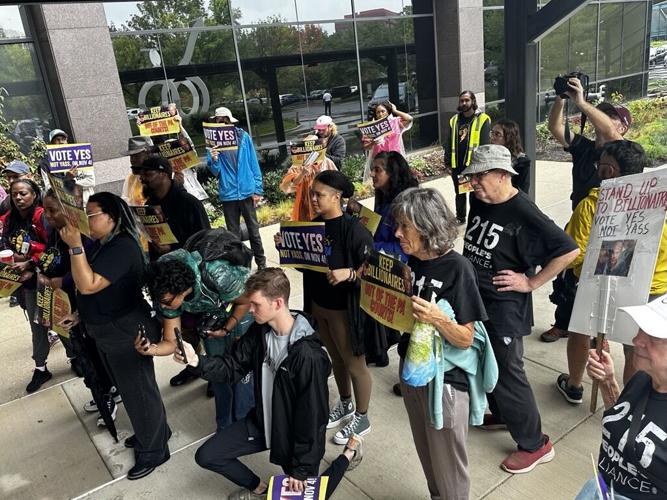
Our coalition used diverse but integrated tactics throughout the spring, summer, and fall of 2025. This included paid, earned and new media alongside door knocking, volunteer organizing, and greeting voters at the polls. We worked to be sure we didn’t flinch from clearly naming villains, and we attempted to bring an organizing approach to every tactic, thinking as much about who is carrying our message and why they care, as much as how well it is polling. We centered working people’s political instincts and prized their established networks of trust.
Our message needed to be clear about what was at stake and who was to blame. And our tactics focused first on winning over leaders of various types who could then carry the message to the communities whose trust they’d already earned. Because we used strategies that sought to move power into regular people’s hands–rather than relying solely on professional consultants and vended programs–we defended a critical bastion in the fight against authoritarianism.
Who and where
The Working Families Party of Pennsylvania is both a movement coalition and a political party, with 10 organizational members, including One PA, who collectively represent 100,000 commonwealth residents. The member organizations include unions and community groups. Their strongest bases are Philadelphia, Allegheny County (home to Pittsburgh), and the Lehigh Valley, but they’re active in several smaller places as well, especially deindustrialized working-class towns and towns with a majority of people of color–which are often the same.
Recognizing that many in our communities get their information from social media, we also launched an effort to organize online content creators…
One PA in particular is rooted in working-class, majority-Black communities in Allegheny, Dauphin, Delaware and Philadelphia Counties. The PA Working Families Party has been active in elections since 2018; our coordination in this election built on collaborations in several previous fights. These include the election and re-election of Philadelphia City Council member Kendra Brooks in 2019 and 2023; the 2021 elections of Philadelphia District Attorney Larry Krasner and Pittsburgh Mayor Ed Gainey; US Rep. Summer Lee’s win in 2022 and Philadelphia City Council member Nic O’Rourke’s in 2023, and Helen Gym’s run in the 2023 Philadelphia mayoral primary. (Continued)