Tag Archives: elections

Questions One PA brings into 2025 and 2026

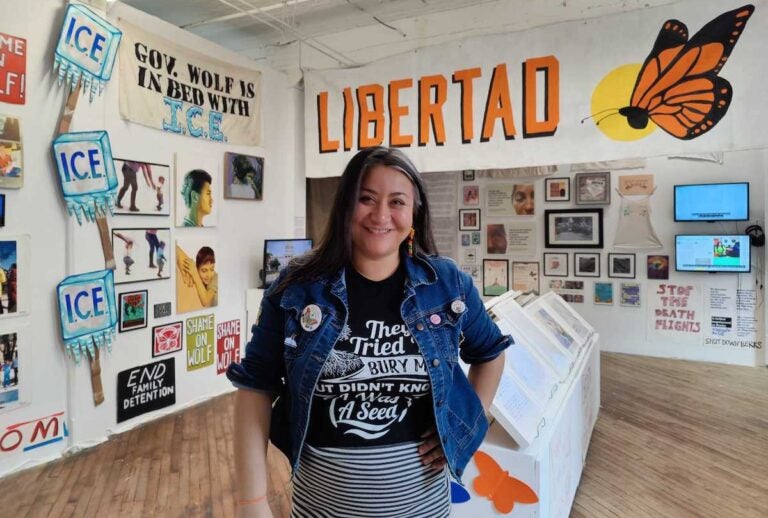
Photo: Jasmine Rivera was an organizer with the Shut Down Berks Coalition, and curated the exhibition “Queremos Justicia: Cómo cerramos Berks,” at the Vox Populi gallery in Philadelphia in 2023. (Peter Crimmins/WHYY)

By Jeffrey Lichtenstein

One PA

Jan 7, 2025 – We’re holding several big questions as we move into 2025 that we hope to learn and struggle through together with our funding partners. All of our work, especially our organizing, advocacy, and outreach efforts, will be working through these questions.

 Quality vs Quantity of Doors

Where and when can we initiate and join conversations about the quality of field work rather than simply the quantity of door knock and phone call attempts? The efficacy of canvassing in low-salience elections is statistically unquestionable but in presidential election cycles there is suddenly a great amount of noise. Some of this noise is the result of large-scale vended field programs with weak quality control practices or very low contact rates.

What could it look like to move toward an eco-system wide model for field work that prioritizes the number and quality of conversations, volunteers recruited, and leaders trained? One PA prides itself on high contact rates and rigorous quality control but we still have much to learn. We hope to share and leverage best practices across locally rooted partners and begin to shift the paradigm around field work from quantity alone, to quality and quantity.

Making organizing power more legible

Even the strongest most rigorous electoral field program faces structural challenges with management, hiring and training under conditions of limited funding and time. These efforts also, by their nature, are demobilized and dismantled after an election, even when we know there is another election just around the corner, not to mention countless other opportunities for voters to flex their voice in government and strengthen their civic participation. Political and civic organizing, unlike electoral campaign mobilizations, grow rather than diminish in efficacy and power over time. What would it look like to quantify, validate, resource and scale the civic power of organizing? One PA was successful in 2024 in using every door conversation to begin an organizing pathway. We identified 33,000 hot leads to join One PA. We’re proud of this work, but we have real areas of growth in learning how to maximize the conversion between hot leads and new volunteers. 

Dimensions and Cost of Building Precinct Based Structure

The term ‘organizing’ has been stretched in recent years to mean all manner of engagement. At One PA we are working with multiple battle-tested organizing models in an attempt to integrate the best practices of each in a way that can be quantified, studied and validated at every stage using contemporary data tools and tech. Our model combines dues-based membership, structure based organizing units, systematic leadership development, polarizing campaigns and experimentation. We are proud of our work in 2024 to launch a guardians of democracy and elections captains program.

In the year ahead we plan to scale the program by a factor of five, and are holding questions about what level of resource and training this will require at each level of the organizing structure. Independent Voice It is clear our movement must get upstream of elections in the battle to make meaning out of our communities’ lived realities. By the time candidates win their primaries, the ability to shape what that election will be about is out of the hands of most people except the elite few with an extraordinary amount of influence on the candidates. We are asking ourselves the question: what capacities and practices do we need as a movement to help frame the questions in front of people long before an election?

How can we roll into a cycle with voters broadly knowing already that housing is too high because of slumlords and rollbacks on government investment, not because of immigrants? We know part of the answer is an independent voice for Black and multi-racial working class communities, to help compensate for brand weakness in the Democratic party, to ensure voters feel they are heard, and to guarantee a more healthy mix of ideas about what it will take to fix this country. How can we build the power and independence of this voice in a way that our more traditional and conservative allies won’t attempt to smother in its cradle?

Winning the Internet

We’re also holding questions about how to respond to the reality that the Internet is increasingly becoming a place our communities rely on for social and political queues. Cynical or hateful voices have a head start in offering narrative frames in the digital space. We are holding questions about what it looks like to bring an organizing approach and significant investment in mass communications to organize our base in digital space, win over leaders and taste makers in non-legacy media, and contest for narrative primacy on the internet.

Training to Win next quarter and next decade

Training is critical for nearly every aspect of our plan, especially the proposition that we grow in capacity and power over time, and the responsibility to rebuild a majority. We are clear that we must level up the rigor and scale of our training program, and sit with the question about what kind of training school and content will meet the need. We know curricula must include a breakdown of the structures and histories of power and resistance; song, poetry and other forms  of culture that bring people together at an emotional register; practical application of ideas through repetition of organizing, storytelling, writing and other skill practice. We’re sitting with the question: how can all those pieces best fit together and what kind of resourcing will it take to hold a training program sustainably that can meet these goals?

A renewed tech advantage

We’re also holding a question about technology. For about 20 years, democratic institutions and networks held an advantage in the use of tech in politics – the VAN, click-to-call tools, ActBlue and early P2P text platforms are all examples. But today republican networks and institutions have caught up or surpassed. What kind of tools allow us to easily give an inspired volunteer a list of the 50 closest target people to them, to register them to vote, get them to sign a petition, or have a persuasive conversation about candidates? How do we move away from site-based voter registration only, and use contemporary data to scale door to door registration programs? How do we use new models, like the Steven Phillips “New Majority Index,” to help us assess opportunities and threats?

Cities: Most of our base lives in cities.

Cities are the places where the housing and homelessness crises are worst. Cities are some of the places with the highest income inequality and violent crime. It’s difficult to live in cities unless you’re rich. There is a relationship between our bases’ weakened sense of political agency and their perception of the corruption of government on one hand, and the way our cities are being run on the other. What does it look like to have an intentional plan to broadcast positive accountability messaging when city leaders accomplish something that improves peoples lives? How do we combine that with real resourcing for primary campaigns to support candidates who are committed to using the government to deliver material gains for working class people.’ And what does it look like to add real resourcing for advocacy and pressure campaigns to encourage local leaders on the fence to move toward policies that will demonstrate in real terms how democratic governance is good for people?

Alignment

Last, we’re holding a question about how to build alignment between progressive base-building organizations to have sufficient power to help win the fights that each of us aren’t strong enough to win on our own. We’re proud of the work that we’ve done to build unity through the cycle of the last several races with several partners, especially PA United , Working Families Party , APIPA, Make The Road, 215 People’s Alliance and UniteHERE. How do we strengthen and build on these existing relationships?

Deluzio Win In Western Pennsylvania Keeps Swing District In Democratic Control

Photo: U.S. Rep. Chris Deluzio (PA-17) speaks to reporters at an event highlighting the Biden Administration’s investment in infrastructure at the Kingsley Center Pittsburgh’s Larimer neighborhood on Tuesday, Feb. 20, 2024. (Steve Mellon/Pittsburgh Union Progress)

By Kim Lyons

Pennsylvania Capitol-Star

November 12, 2024 – We’re analyzing the results of the 2024 election by taking a closer look at some of the pivotal or unexpected outcomes. First up is an interview with U.S. Rep. Chris Deluzio (D-17th District) who held off a GOP challenger in a key swing district.

Pennsylvania’s U.S. House delegation lost two Democrats in last Tuesday’s election, and promising Democratic challengers in two hard-fought House districts in the central and eastern part of the state failed to unseat longtime Republican incumbents.

But in western Pennsylvania, Democrats in the House fared better. Incumbent Reps. Summer Lee (12th District) and Chris Deluzio (17th District) both won reelection. After Lee won a contentious primary against challenger Bhavini Patel in April, she was widely expected to win the general election, which she did, beating GOP challenger James Hayes 56.1% to 43.9%, according to unofficial results.

But Deluzio’s reelection to a second term representing the district that includes parts of blue Allegheny and red Beaver counties was much more uncertain. The National Republican Congressional Committee (NRCC) put the race on its list of seats to flip in 2024.

His opponent, state Rep. Rob Mercuri (R-Allegheny) received a key endorsement from the conservative Americans for Prosperity (AFP) Action super PAC. Even his own party considered it to be a swing district; the Democratic Congressional Campaign Committee (DCCC) named Deluzio as one of the “vulnerable” incumbents it sought to protect this cycle, adding him to its Frontline list of candidates.

He’s the only one of the three U.S. House candidates from Pennsylvania on the Frontline list who won reelection.

“I’m very proud of the win,” Deluzio told the Capital-Star. “I’m really proud we increased the margin, and especially in Beaver County, which moved to the right at the top of the ticket, but we moved it towards me.”

Deluzio also increased the margins from his first election in 2022, when he won by 6.8% over challenger Jeremy Shaffer. This election, he won by 7.3% over Mercuri.

Deluzio refrained from the blame game going on within some parts of the Democratic Party reeling from Harris’ loss to Trump, but said as a representative of a Rust Belt district, he understands the frustration that many voters have with those in power.

“Whether it’s powerful folks or forces or companies who hurt people or who are making life worse, I think there’s a tendency among some in my party to always look for win-win framing,” he said. “And you know what? Sometimes there’s a bad guy and you’ve got to kick his ass.”

Republican-Led Group Launches $11.5 Million Swing States Campaign Against Trump

By Ian Karbal
Penncapital-Star

Sept 3, 2024 – Pennsylvania drivers might begin seeing more billboards featuring ordinary people, like a white-haired, red-shirt wearing man named “Mike,” and a simple message: “I’m a former Trump voter. I’m a patriot. I’m voting for Harris.”

The billboards are paid for by a group called Republican Voters Against Trump, a project of the Republican Accountability PAC, that is hoping the voices of ordinary voters will sway conservatives and independents to support Vice President Kamala Harris, the Democratic nominee for president, in November.

On Tuesday, the group announced a new $11.5 million campaign that will feature voters like Mike on billboards, online ads and tv and radio commercials in Pennsylvania and other swing states like Michigan, Wisconsin and Arizona.

But the bulk of the spending, $4.5 million, will target Pennsylvania, which could end up being the decisive state in the 2024 election.

John Conway, the D.C.-based director of strategy for Republican Voters Against Trump, is leading the campaign (He claims no relation to perhaps the most famous never-Trumper, George Conway).

“Our campaign is built on the idea that you need to establish permission structures in order to get voters who have historically identified as Republican to vote against their party’s nominee,” Conway said. “The ads themselves are coming right from the same people we’re targeting with these campaigns: center-right former Trump voters who don’t want to vote for him again.”

The Trump campaign did not immediately respond to a request for comment Tuesday.

Conway says the group has collected the testimonies of roughly 300 voters who previously cast ballots for former President Donald Trump, but who no longer support him. They constitute the heart of the new advertisements.

New Poll of Older Voters in Six Battleground States Shows Tight Race Between Harris and Trump

Photo: Walz and Harris talking with Aliquppa’s football team, as part of several stops in Western PA three days ago.

However Democrats Must Communicate Their Positions on Medicare and Social Security with this Critical Voting Bloc 

From Retired Americans PAC

Aug 20, 2024

Chicago – A new survey of likely voters ages 65 and up in six key swing states shows Vice President Kamala Harris and former President Donald Trump are in an extremely close race to win the pivotal senior vote in the most contested battleground states. Harris holds 47% of the total senior vote in Arizona, Georgia, Michigan, Nevada, Pennsylvania and Wisconsin, while Donald Trump is supported by 49%. Robert F. Kennedy, Jr. has just 3 percent of the senior vote in those states.

Four years ago, national exit polls found that voters over 65 voted for Trump over Biden by 5%. In each of these states, voters over the age of 65 comprise at least 23% of the electorate.

When asked which party would be best at handling key issues, the poll found that Democrats held a slim 2% advantage on Social Security and Medicare, issues Democrats have led on. On prescription drug costs, Democrats held an 8% advantage over Republicans. However, Republicans held an advantage over Democrats on the issues of inflation, at 9%, and immigration, 18%.

“Harris’ strong showing in the survey with a group that went for Trump four years ago is encouraging,” said Richard Fiesta, an expert on retirement security issues and Treasurer of Retired Americans PAC. “However candidates who want to win must engage older voters directly on the issues that matter most to them now.

“There are stark differences between the two parties on the future of Social Security, Medicare, and prescription drugs – it’s incumbent on Democrats to communicate that they will strengthen and protect these programs, not privatize or cut them,” Fiesta continued.

The poll of 1,200 likely voters ages 65 and up in the November general election was conducted by GBAO between July 23-30, 2024, in AZ, GA, MI, NV, PA and WI on behalf of Retired Americans PAC.*

Harris led Trump among seniors by 3 percentage points in Arizona (49%-46%) and Michigan (50%-47%) and by 4 in Wisconsin (49%-45%). Trump led by 3 in Nevada (48%-45%), by 6 in Pennsylvania (51%-45%) and by 12 in Georgia (55%-43%).

Complete results and charts are available here.

*Two hundred respondents were reached in each state and the results were weighted proportionally. Respondents were reached by live dialers and through text-to-web interviews and the results carry a margin of error of +/- 2.8 percentage points at a 95 percent confidence interval.

Pennsylvania Is Slipping From Donald Trump’s Grasp

Photo: Matt Tuerk, the mayor of Allentown, right, talks to a resident. He is trying to set up a direct flight between San Juan, Puerto Rico’s capital and Allentown © Jennifer Huxta/FT

Kamala Harris gains ground with crucial Hispanic voters in swing state that could decide 2024 US election

By Edward Luce
Financial Times

Kamala Harris gains ground with crucial Hispanic voters in swing state that could decide 2024 US election

By Edward Luce

The Financial Times, gift link

In 2000, Hispanics — a term used for Spanish-speakers, while “Latino” includes those with a heritage in all Latin American countries — accounted for less than a quarter of Allentown’s population. Now the city is majority Hispanic, chiefly Puerto Rican and Dominican. With similar alacrity, the nearby city of Reading turned 70 per cent Hispanic.

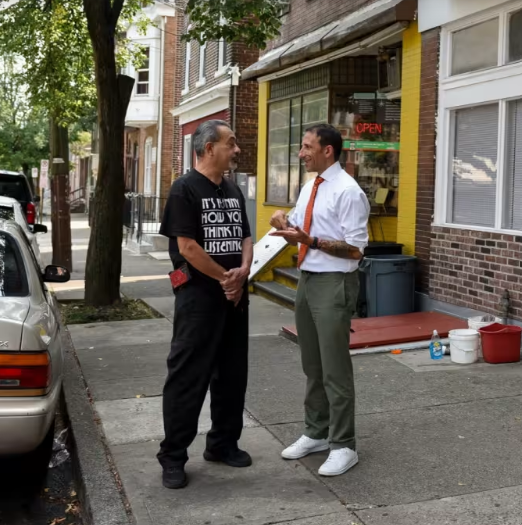
On a walk through a heavily Puerto Rican neighbourhood, Matt Tuerk, Allentown’s mayor, was greeted every few yards by residents lounging on the stoops of neighbourhood bodegas. Tuerk, a bicycling mayor who speaks fluent Spanish, is trying to set up a direct flight between San Juan, Puerto Rico’s capital, and Allentown. He and Susan Wild, the Democratic congresswoman for the area, recently slept on the floor of San Juan’s airport.

“Hispanics won’t automatically vote for either party — and many won’t vote at all,” Tuerk said. “But you won’t get anywhere unless you meet them halfway.” The Harris campaign has 15 campaign offices across the state. Trump has just one, in northern Philadelphia. “Trump doesn’t seem to be making a serious effort,” said Charlie Dent, a former Republican congressman who until 2018 represented the district that includes Allentown. “The focus is still all about Maga [Make America Great Again]. But I’m sceptical that the Maga base will be large enough to win.”

Dent adds that Trump is on his own version of “a Grateful Dead tour” — replaying his big hits from the glory years. Trump may also be drawing confidence from his victory in Pennsylvania in 2016 after a campaign in which he routinely denigrated Hispanic people. He defeated Hillary Clinton in the state by 45,000 votes — a margin of just 0.72 per cent. The eight years since then have seen rapid population change. Large numbers of Hispanics have arrived to work in the booming logistics hub of the Lehigh Valley, which is close enough to East Coast metropolises like New York and Philadelphia to put 100mn Amazon and Walmart customers one truck shift away.

Many affluent New Yorkers, who tend to be Democrats, also relocated to the area during the pandemic. With its German and Czech-Moravian settler roots, the Lehigh Valley county of Northampton was once described by an eminent historian as the most conservative region in America. Now it is a mosaic. Trump was the first Republican to win Pennsylvania since George HW Bush in 1988. In historic terms, his win may have been a fluke.

Could Trump pull off another shock? Only in spite of himself, said Christopher Borick, a pollster at Allentown’s Muhlenberg College. Borick concedes that polling has not fully caught up with anecdotal evidence of Harris’s lightning switch in momentum. A month ago, polls showed Biden also losing Wisconsin and Michigan, the other two must-win swing states.

The surge in enthusiasm for Harris has brought new states, including North Carolina, Arizona, Nevada and Georgia back into play. Recommended US presidential election 2024 Trump or Harris: Who’s ahead in the polls? A registered independent, Borick lives in Nazareth, a few miles from Allentown, and one of the most hotly contested townships in America. A reminder of the region’s bible-suffused early days, Nazareth is 10 miles down the road from Bethlehem, a former steel hub. In 2020, Biden won Borick’s ward, with its population of 1,000, by just three votes. This time he and his neighbours have been bombarded by Democratic door-knocking and campaign mail.

“The Trump campaign is so far missing in action,” said Borick. By the conventional calendar, Trump has 80 days to make up for lost ground in Pennsylvania and elsewhere. But in practice, early voting starts in mid-September. Roughly a third of Pennsylvanians are expected to vote by mail. If the 2022 midterm elections are any guide, these will veer strongly Democratic.

Here again, Trump is trampling on his campaign’s priorities. Republicans are trying to educate their voters about the benefits of the mail-in ballot. On the stump, however, Trump often repeats his claim that Democrats stole the 2020 presidential election via mail-in fraud. In the next 30 days Republicans must somehow enthuse their foot soldiers to vote early without contradicting their leader’s stolen election theory — and his warning that 2024 will also be rigged. For true believers, this requires semantic acrobatics. Traditional Republicans can put it more bluntly. “That’s malarkey,” Montero, the lawyer based in Allentown, tells conservative voters when they express suspicion of postal votes. “We can only win by voting.”

Obama House Party in Beaver Falls

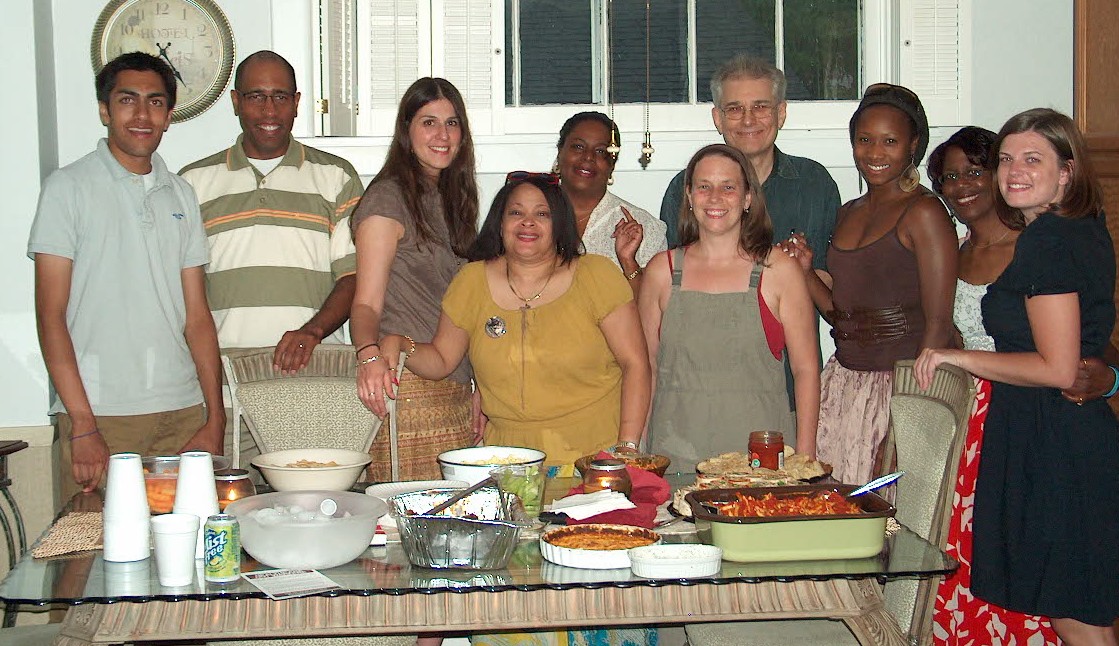
One of four thousand Obama houseparties across the nation was held at the home of Ms. Dawn Monteiro in Beaver Falls, PA.  Ms. Leanne Spearman, another local Obama organizer, made a brief welcoming speech. She said Senator Obama’s book “Dreams from My Father” and his famous speech at the 2004 Democratic Convention helped her decide to become part of the solution to our nation’s problems. She described Obama’s campaign as one that has empowered people by inspiring hope for a better future. Quoting Dr. Martin Luther King, Jr’s famous admonition she closed saying “I am a volunteer because of the ‘urgency of now.'”

The house party welcomed three Obama campaign staff workers who have moved to Beaver County. There was a lively discussion of the economic problems facing the working people of the district many of whom are “a paycheck away from poverty.” Many retirees find it difficult to make ends meet. All participants shared experiences talking to voters who are confused about their choice in November due to their feelings about race. The group made plans for voter registration at festivals, fairs, and other events through the summer.


Democratic Convention Battles


Photo: Obama with Pittsburgh workers

The Antiwar Plank

By John Nichols
The Nation

Democrats were clearly seen as running on an antiwar platform in 2006, and they won big, grabbing control of both houses of Congress.

The lesson should have been clear: when the party defines itself as antiwar, it wins.

But after a year and a half of wrangling between Congressional Democrats and the Bush Administration over Iraq, that definition has blurred. So now, even as Democrats are poised to nominate a candidate who opposed attacking Iraq, key Congressional supporters of the likely nominee, Senator Barack Obama, and his chief challenger, Senator Hillary Clinton, are working together to craft a platform that bluntly positions the Democrats as the party that will bring the troops home and change the policies that sent them to the Middle East. So far, fifty House members, all superdelegates, have signed a letter endorsing the antiwar language.

“On the issues of Iraq and foreign policy, Democrats can’t be vague or fuzzy,” argue Representatives Barbara Lee, an Obama backer; Jim McGovern, a Clinton backer; and Sam Farr, uncommitted until after the primaries, in an open letter to delegates to the Democratic National Convention. The “Democratic Platform that will be ratified at the Convention in Denver will form our core statement of principles as a party for the next four years, principles that we will unite around in both the general election and beyond,” they add. “With only months remaining before we unite as a party in August, it is critical that we take action now to ensure that a clear statement is made in our platform: we will end the war in Iraq; the Republican Party will not.”These influential superdelegates agreed, even while the presidential race divided them, to unite to support platform language that calls for: “an end to the war in Iraq by initiating the safe and secure withdrawal of all US combat forces, leaving no permanent military bases behind; a robust diplomatic surge in the Middle East and beyond that includes negotiations with the Iranian government without preconditions that make sitting down to talk impossible; an end to the use of torture and the closure of our prison at Guantánamo Bay.”

Party platforms are often dismissed as meaningless. But presidential candidates and Congressional leaders do not treat them as such, and neither should antiwar activists. In writing the platform the relationship between the candidate and the party base is defined, and the message for the fall campaign is framed. Four years ago, after Democratic convention delegates finalized an agenda for the party’s campaign, Representative Jesse Jackson Jr. dismissed it as “a cautious platform.” The chair of the party’s platform committee, Representative Rosa DeLauro, said simply, “It reflects John Kerry.” That was the problem. The platform’s “transparent vagaries on Iraq”–to quote antiwar activist Tom Hayden–signaled a tepid approach to the war debate that ceded vital ground to the Republicans. When Howard Dean and Dennis Kucinich supporters attempted to add antiwar language to the platform, Kerry’s man, former National Security Adviser Sandy Berger, rushed in to block them and bragged, “We didn’t give up anything.” Nor did they gain anything, as the results of that fall’s election demonstrated.

The House members who want strong antiwar language in this year’s platform aren’t trying to push Obama around; roughly half are Obama backers. Rather, they suggest, they are prodding the party to do what is necessary to prevail in November. “The Democratic Party needs this,” says Barbara Lee. “It will give the nominee the foundation and the [appeal to the] base to move forward and win.”

Will the platform process be flexible enough to accept what these superdelegates are offering? Perhaps. The closeness of this year’s nominating contest and the fact that the process will be led by backers of Obama, Clinton and John Edwards guarantees a more diverse platform committee, one that will be disinclined to rubber-stamp cautious language produced by consultants. The Win Without War coalition is mounting a campaign to get superdelegates to back the antiwar planks–and it will deliver petitions supporting it to regional platform hearings this summer and at the convention–while Progressive Democrats of America is working closely with Jim McGovern, who is likely to emerge as an outspoken grassroots supporter of the move. Says McGovern of the Democrats, “We need to demonstrate that we get it, and the platform is the place to do that.”

[John Nichols, a pioneering political blogger, has written The Beat since 1999. His posts have been circulated internationally, quoted in numerous books and mentioned in debates on the floor of Congress. Nichols writes about politics for The Nation magazine as its Washington correspondent. He is a contributing writer for The Progressive and In These Times and the associate editor of the Capital Times, the daily newspaper in Madison, Wisconsin. His articles have appeared in the New York Times, Chicago Tribune and dozens of other newspapers.]