Climate Change In Pittsburgh: Locals Aired Concerns on Pollution, Industry and Legislation at Town Hall

U.S. Rep. Mike Doyle, who led Wednesday’s event, called out President Donald Trump for framing climate change as a ‘hoax.’

By Varshini Chellapilla
PublicSource,org

August 15, 2019 – Pittsburgh isn’t a coastal city, in the hurricane belt or among the areas with the worst heat, but there was no shortage of local concerns to discuss at Wednesday’s town hall on climate change. About 200 people showed up to the event organized by U.S. Rep. Mike Doyle, and the conversation ranged from the cracker plant in Beaver County and regional air pollution to the Green New Deal and the Trump administration attempting to roll back Obama-era carbon restrictions.

“I want to provide you with information on how we can go about reducing our greenhouse gas emissions and curbing climate change before it’s too late and, particularly, how can we make a change while we have a president who thinks climate change is a hoax and an EPA which is trying to protect polluters instead of people,” said Doyle (D-Forest Hills) while stressing the urgency to reach net-zero carbon emissions by 2050 as advised by the United Nations.

The UN Intergovernmental Panel on Climate Change released a report in the fall calling for a cut of 40% to 50% of emissions by 2030 to limit global warming by 1.5 degrees Celsius above pre-industrial levels. Even if that goal is met, there are still expected to be consequences, like worsening storms, heat waves and forest fires.

Climate change “is really inextricably tied to every other system and problem we see,” said Anaïs Peterson, an urban studies student at the University of Pittsburgh, at the event held in the Soldiers & Sailors Memorial Hall and Museum.

However, like several other attendees, Peterson was not satisfied with the format of the event, which included two expert panels, followed by a question-and-answer session with the public. Doyle gave an introductory speech, briefed attendees on action in Congress and answered questions.

“I feel like it’s so rare to actually have this face-to-face time with people from Washington,” Peterson said. “I would have liked to have him be more present and have more of a voice throughout the conversation.”

One of the biggest concerns raised by some attendees was Doyle’s stance on the Green New Deal. Introduced in February by Alexandria Ocasio-Cortez (D-New York) and Sen. Edward Markey (D-Massachusetts), the Green New Deal calls for swift action to solve the climate crisis and curtail carbon emissions. The Green New Deal is a proposed overhaul to the U.S. economy that includes ending the use of fossil fuels and shifting transportation systems to use only renewable energy, among other proposals. Doyle is not a co-sponsor of Ocasio-Cortez’s resolution.

“The Green New Deal got a lot of attention when it was introduced in February, but I believe it kicked off an important conversation and has built momentum to address climate change that is affecting our planet,” Doyle said. “I agree with supporters of the Green New Deal’s goals of getting the U.S. economy to net-zero carbon emissions quickly. I share many of its long-term goals as well, and I believe that the components of the Green New Deal will be a part of any comprehensive climate bill that comes out of the House of Representatives.”

Gerald Dickinson, who is challenging Doyle for his seat, criticized Doyle’s stance.

“It is very low key,” Dickinson said after the event. “It’s too incremental and not enough urgency and not enough desire and energy to actually make a difference.” Continue reading Climate Change In Pittsburgh: Locals Aired Concerns on Pollution, Industry and Legislation at Town Hall

THE GREEN NEW DEAL: LET’S GET VISIONARY

Lately there’s been a lot of bad news about climate change and the future of humanity.

Last October, the United Nations issued a major report warning of a climate crisis as soon as 2040. The day after Thanksgiving, the Trump administration tried to bury the release of its own report on the dire effects of climate change already occurring in the United States, which included dark predictions for the future.

In December alone, we learned that 2018’s global carbon emissions set a record high. NASA detected new glacier melts in Antarctica. There were wildfires. Coral reef bleaching. Ecosystem upheaval in Alaska as the arctic ice melts.

Meanwhile the Trump administration sent an adviser to the UN climate summit to promote coal and warn against climate “alarmism.”

So this all sucks. But here’s the thing about climate change: You can either ignore it, get depressed about doomsday scenarios, or believe that no matter how badly we’ve screwed up as a species, we’re also smart and creative enough to fix this.

If the alternatives are ignorance and despair, I’ll choose hope. Every single time.

So where can we focus our hope? What can we actually do about climate change?

I’m excited about the Green New Deal, an idea that’s been kicking around since 2007 but was popularized this fall by Representative-elect Alexandria Ocasio-Cortez (D-NY) and the youth-led Sunrise Movement. At least 37 members of Congress have signed on, along with dozens of activist organizations.

Not only a plan to shake up environmental policies, it’s also a massive jobs program, named after the Depression-era New Deal. The basic idea is to get us to 100 percent renewable energy by 2035, by putting Americans to work building a new energy infrastructure.

It merges the immediate concerns of working Americans — jobs and the economy — with the long-term concerns of climate change. We don’t have to choose between economic sustainability and environmental sustainability.

“This is going to be the Great Society, the moonshot, the civil rights movement of our generation. That is the scale of the ambition that this movement is going to require,” said Ocasio-Cortez during a town hall meeting with Bernie Sanders.

The ambitious plan touches on a “smart” grid; energy-efficient buildings; sustainable agriculture, manufacturing, transportation, and infrastructure; and exporting green technology to make the U.S. “the undisputed international leader in helping other countries transition to completely carbon neutral economies.” Think of the scale of this program, and then think of all the jobs that would be created. This could be huge for rural America in particular.

Will the Green New Deal be expensive? Probably. But that doesn’t mean it will be a drag on our economy.

A recent study by the Global Commission on the Economy and Climate revealed that we could save $26 trillion, worldwide, if we shifted to sustainable development. Another new study shows wind and solar power to be the cheapest sources for electricity around the world. Last year, the Republican mayor of Georgetown, Texas switched his city to 100 percent renewable energy because of the low costs in the long-term.

On the other hand, at the UN climate summit in Poland, some of the world’s most powerful investors warned of a major financial crash if we don’t solve the climate crisis.

Is the Green New Deal too ambitious? No. We need ambition. The impending climate crisis is the biggest problem the human race has ever faced, and we can’t think small.

So let’s get visionary. Let’s dream big. Let’s fight for our children, and let’s invest in their future.

Sisters of St. Joseph Work with Migrants at U.S.-Mexico Border

Setting an Example of Solidarity with Workers and the Poor

By Daveen Rae Kurutz
Beaver County Times

Aug 10, 2019 – A group of nuns and volunteers from the Sisters of St. Joseph in Baden is working with migrant families and children at the U.S.-Mexico border in Texas.

They called him a liar.

For months, the Venezuelan man waited patiently with his wife and three children for permission to leave their home country, riddled with political unrest and economic free fall in the midst of a humanitarian crisis. Once granted, the family waited for months in Mexico for consent to enter the United States as asylum seekers.

It was a long and difficult journey.

Just hours after finally crossing the border into the United States, he sat last week with Sister Janice Vanderneck, a member of the Sisters of St. Joseph in Baden, at the Catholic Charities of the Rio Grande Valley Humanitarian Respite Center in McAllen, Texas.

“What a privilege it is to be able to be among the first people to welcome this family to our country,” Vanderneck said. “I was glad to be the person empathetic to their story because he told me that immigration officials called him a liar, thinking that he didn’t understand English.”

For one week, three members of St. Joseph — Sister Jeanette Bussen, Sister Patti Rossi and Vanderneck — are working at the respite center in McAllen to meet and serve migrant families seeking asylum. They are accompanied by Maureen Haggarty, former sister and benefactor, and Carol McCracken, who was inspired by the service and mission work of Rossi.

The respite center is the first stop for those released from a nearby U.S. Customs and Border Patrol holding center. Each day, the respite center serves between 500 and 900 families, providing migrants in crisis with a warm meal, clean clothes and a chance to recover from the first part of their long journeys.

How to help

The Sisters of St. Joseph in Baden has donated more than $10,000 to help replenish supplies at the Catholic Charities of the Rio Grande Valley Humanitarian Respite Center in McAllen, Texas. Items include toiletries, baby bottles, diapers, sealed snack foods and phone cards.

To donate, visit https://stjoseph-baden.salsalabs.org/bordercrisis/index.html.

The center’s volunteers work to educate parents about their rights and responsibilities as asylum seekers and help prepare them to navigate the legal process to determine whether they can remain in the United States. Continue reading Sisters of St. Joseph Work with Migrants at U.S.-Mexico Border

High-Tech Manufacturing: Aliquippa Summer Camp Opens New World to Students

Kordell Boose, 17, of Aliquippa takes instruction on finishing an aluminum cast during the Titans of Pittsburgh Summer Camp’s field trip Wednesday to Robert Morris University’s engineering lab. [Lucy Schaly/For BCT]

Learning about career opportunities in the manufacturing industry is the purpose of the pilot Titans of Pittsburgh Summer Program developed by Catalyst Connection and Southwestern Pennsylvania BotsIQ.

By Marsha Keefer
Beaver County Times

Aug 10, 2019 – MOON TWP. — Students, most of them from Aliquippa, gathered Wednesday at a robotic work cell in an engineering lab at Robert Morris University’s John Jay Center for the School of Engineering, Mathematics and Science.

For most, it was a seminal moment. The two previous days, they sat at computers at the Family Life Center housed in the Church in the Round in Aliquippa, and used software to design a product. Now, those drafts would be programmed into a computer-controlled milling machine to carve their designs in a rectangular block of aluminum — a process that took all of seven minutes.

What had been merely a concept would come to life.

Most of the 23 students enrolled in the four-day summer camp — high school juniors and seniors and a few recent graduates — had never worked with computer-aided design (CAD) programs and certainly not computer numerical control (CNC) routers, said Scott Dietz, director of workforce initiatives at Catalyst Connection, an economic development organization based in Pittsburgh that helps small- to medium-sized manufacturers improve competitive performance.

“We’re seeing sparks happening already this week in the few days we’ve had with them,” he said. “We’re seeing light bulbs going off. The students are seeing stuff they haven’t been exposed to before. We think the program is definitely a success.”

Essentially, learning about career opportunities in the manufacturing industry, is the purpose of the pilot Titans of Pittsburgh Summer Program developed by Catalyst Connection and Southwestern Pennsylvania BotsIQ, a manufacturing workforce development program that engages high school students in robotics competitions to stimulate interest in manufacturing careers.

Catalyst Connection works with 2,800 manufacturing companies across 12 counties in western Pennsylvania, Beaver County included, Dietz said.

“When we go in their doors, the first thing they tell us when we ask ‘what is their biggest pain point’ is workforce — lack of workforce,” he said.

Dietz estimated 30 percent of the current workforce will retire in the next 10 years and that’s compounded by the large number of job needs now.

“We recently did a survey of 100 of those manufacturers who told us they have 2,300 job openings,” he said. Extrapolating those numbers, Catalyst Connection projects a shortage of about 20,000 workers, Dietz said. Continue reading High-Tech Manufacturing: Aliquippa Summer Camp Opens New World to Students

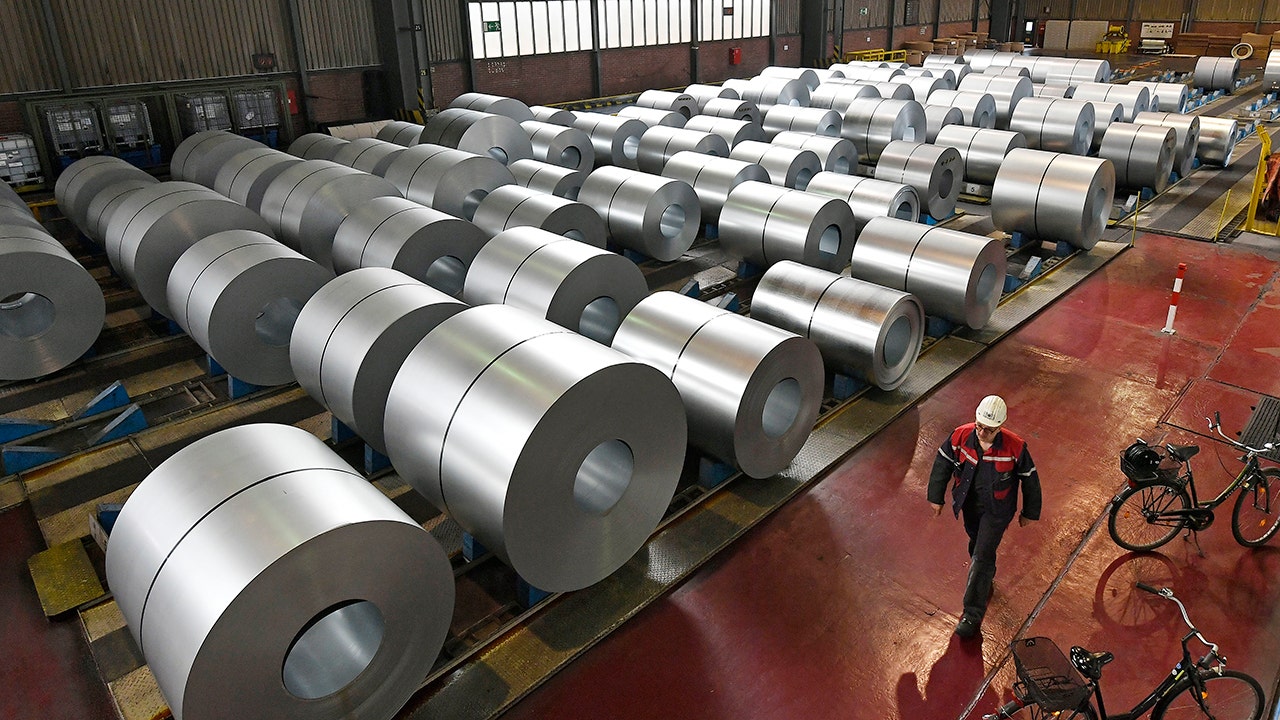
U.S. Steel’s Market Value Drops $5.5 Billion Thanks to Trump’s Tariffs 

Pittsburgh City Paper
According to several reports, Pittsburgh’s largest steel company — and the second largest in the country, has lost about 70 percent of its market value thanks to forces put into place by President Donald Trump’s steel tariffs.

Since Trump announced tariffs on foreign-made steel 16 months ago, U.S. Steel’s market value has dropped by $5.5 billion. Even though steelworkers at U.S. Steel lauded the tariffs when Trump announced them last year, the Los Angeles Times points out how the dynamics set in motion by those tariffs actually hurt steel companies with legacy steel mills with blast furnaces, like U.S. Steel.

From the LA Times: “Exuberance over the levies dramatically boosted U.S. output just as the global economy was cooling, undercutting demand. That dropped prices, creating a stark divide between companies such as Nucor Corp., which uses cheaper-to-run electric-arc furnaces to recycle scrap into steel products, and those including U.S. Steel Corp., with more costly legacy blast furnaces.”

The tariffs boosted steel production for all domestic steel producers in the short term, but as actual demand for steel dropped, U.S. Steel struggled to compete with lower-cost competitors like Nucor Corp. With international steel nudged out of the market by the tariffs, domestic steelmakers responded to fill those gaps, but U.S. Steel got beat in the market by steelmakers with more efficient electric-arc furnaces. Basically, the tariffs created a new market of mostly domestic steelmakers, but the new market actually gave more advantages to Nucor and less to U.S. Steel.

Bank of America analyst Timna Tanners told the LA Times it was “ironic” that the tariffs are “punishing some steel companies.” She also noted the dangers of the steel industry to add capacity without sufficient demand.

Since March 2018, U.S. Steel has idled two of its steel mills in Michigan and Indiana. In the past, U.S. Steel had voiced support from Trump’s tariffs.

Another steel company in the region is also claiming negative effects from the tariffs. Last week, steel producer NLMK USA in Mercer County laid off between 80 and 100 workers. According to WESA, the CEO of NLMK USA blamed the cuts on Trump’s steel tariffs, saying that the Russian-owned company faced steep prices on Russian-imported steel slabs.

Pennsylvania U.S. Sen. Pat Toomey (R-Lehigh), who has been critical of Trump’s tariffs, says both situations show the tariffs are not working as promised.

“As out-of-work steelworkers, like those at NLMK in Sharon, can attest, the administration’s protectionist steel tariffs have not resulted in the promised financial gains even for steel companies,” says Toomey. “This outcome demonstrates that imposing arbitrary taxes on imported products can distort prices, disrupt supply chains, destroy jobs, and increase prices for consumers without sufficiently offsetting benefits.”

Even though U.S. Steel has lost most of its market value since the tariffs started, the company still reported a large fourth-quarter profit last year, netting $592 million.

In May, the company announced a $1 billion investment to upgrade its facilities in West Mifflin, Braddock, and Clairton. With the upgrades, these three facilities will become the central source for high-strength, lightweight steel used for the automobile sector.

But with the upgrade comes an increase in efficiency, and experts told the Pittsburgh Post-Gazette that U.S. Steel will likely cut jobs at the Mon Valley facilities in the future.

And it appears Trump’s tariffs haven’t had that positive of an impact on steel jobs nationwide. According to the Washington Post, the tariffs “didn’t lead to a major increase in manufacturing jobs, largely because modern mills don’t require more manpower to operate at a higher capacity.”

Continue reading U.S. Steel’s Market Value Drops $5.5 Billion Thanks to Trump’s Tariffs 

Court rules in favor of Beaver County power plant workers in FirstEnergy dispute

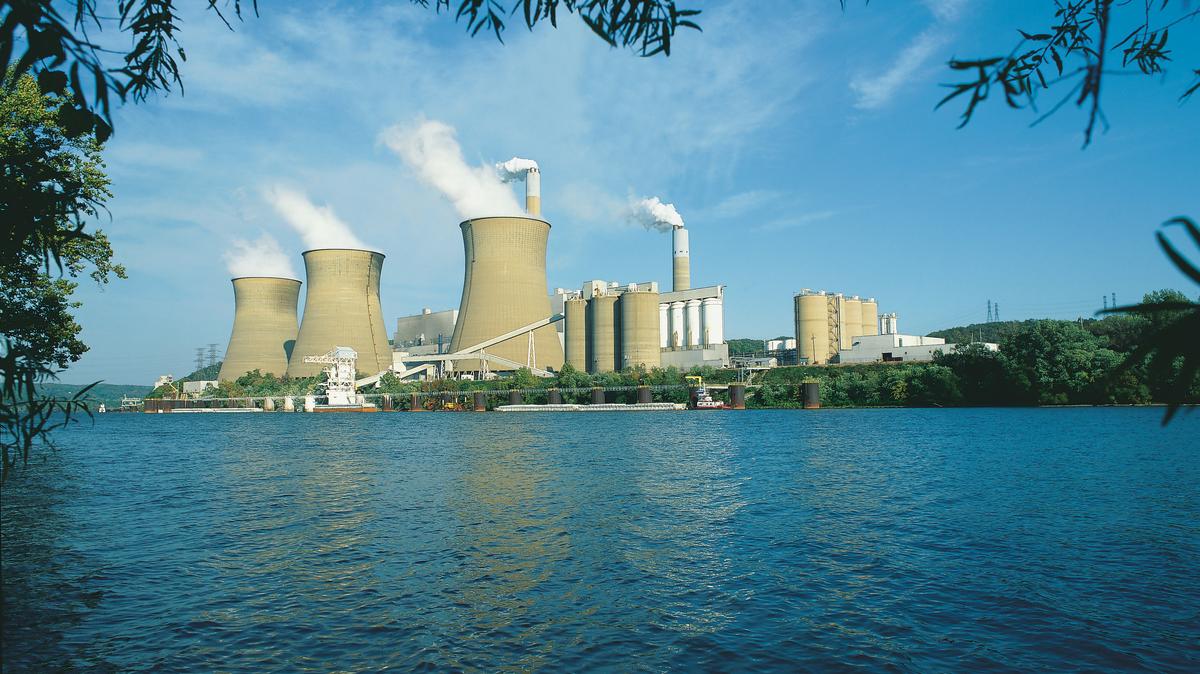
The Bruce Mansfield plant owned by FirstEnergy Corp. in Shippingport, Beaver County.

By Luke Torrance
Pittsburgh Business Times

Jul 8, 2019 – A federal appeals court has ruled in favor of about 230 union power plant workers in Beaver County, supporting the union’s claim for $5.5 million in back wages.

In a decision filed last week in Cincinnati, the U.S. Court of Appeals for the 6th Circuit said that FirstEnergy Solutions Corp. had committed an unfair labor practice when it imposed a contract on the International Brotherhood of Electrical Workers Local 272 workers at the Bruce Mansfield coal-fired plant, located in Shippingport.

The contract between FirstEnergy and the union expired in 2014; after a year of negotiations, the company declared an impasse in October 2015. FirstEnergy implemented a contract that contained some previously discussed provisions, such as the elimination of retiree health subsidies for all in-the-box retirees by the end of the year. But provisions that the union had fought for, such as a wage increase, were not implemented, resulting in the union filing an unfair practice charge. Continue reading Court rules in favor of Beaver County power plant workers in FirstEnergy dispute

Do Democrats Divide Between ‘Extreme Left’ and ‘Normal’ Moderates? Nope.

FAIR Examines Media Bias
Fair.org

July 17, 2019 – The 2020 presidential candidacy race is in full (absurdly early) swing, and there is a clear and obvious internal battle currently raging for the soul of the Democratic Party. One faction is attempting to pull the party in a more populist, social-democratic direction, while another favors maintaining a neoliberal, pro-business course.

We all know the most prominent members of the first group: The likes of presidential hopeful Bernie Sanders and freshmen representatives like Alexandria Ocasio-Cortez, Ilhan Omar, Rashida Tlaib and Ayanna Pressley are constantly referred to (accurately) as representing the left of the party (e.g., New York Post, 7/9/19; New York Times, 4/10/19; New Yorker, 6/18/19), but also as a cabal of “extremist” (Atlantic, 4/3/19; The Hill, 6/17/19), “far-left” revolutionaries (CNN, 7/7/19; CNBC, 7/5/19) who have “contempt” for Americans (Fox News, 7/11/19). Given the broad overlap of their political positions with those of the public at large (FAIR.org, 1/23/19), those labels, popular as they are in the media, are pretty dubious.

But if there is a left-wing of the party, there must, logically, be a right. And it is equally obvious to those paying attention who represents that right-wing: figures like Nancy Pelosi, Joe Biden and Amy Klobuchar come to mind.

The media do report on the split, but they never identify the latter as representing the right at all. In fact, the phrase “right-wing Democrat” has not appeared in the New York Times for over 30 years.

Last week, the Boston Herald (7/11/19) decried Ocasio-Cortez, Tlaib and Omar as far-left “bullies” who were undermining Pelosi, and “sowing division” at a time when the party “needs to project a unified—and more centrist—front to retain its majority and knock Donald Trump from office.” The piece did not, however, scrutinize Pelosi’s political positions—or even identify them at all.

This is a common occurrence in media, and has the effect of normalizing the right-wing of the party as the default. Constantly reminders that Sanders, Ocasio-Cortez and Co. are leftists prime the news consumer to be on the defensive. “You are about to hear socialist propaganda,” is the subtle message delivered. But an analogous message is not transmitted if others are not identified as on the right. Understanding the power of this technique, in 2015, nearly 90,000 Britons signed a petition asking the BBC, in the interests of even-handedness, to start describing Prime Minister David Cameron as “right-wing,” just as it constantly called Labour leader Jeremy Corbyn “left-wing.”

On the US struggle, Buzzfeed News (7/10/19) reports Pelosi has been “publicly feuding” with “left-wing members of the caucus and their staff,” while the Washington Post (7/2/19) sympathetically portrayed her has being under attack from an “open rebellion” of “hard-liners” in the party, with neither suggesting she herself holds any particular political ideology. The effect is to present the battle between left and right as one between radical revolutionaries and the “mainstream,” “normal” or “default” position.

All this despite the fact that Medicare For All and free college tuition are very popular in the US, with even a majority of Republican voters supporting the former. Meanwhile, Ocasio-Cortez’s tax hike proposal for the super-rich is more popular than Trump’s tax cuts, and a plurality of Americans support her supposedly radical leftist Green New Deal. When the public, not political parties, define the left/right spectrum, the landscape appears very different.

When any position is assigned to those who have controlled the party for many decades, it is often misleading. Maureen Dowd in the New York Times (7/6/19) describes Pelosi as “trying to keep the party center-left” with the goal of ousting Trump from office by appealing to the American people, only for that to be “jeopardized” by the party’s supposed “lurch” to the “far left.”

Despite this, Biden describes himself as “center-left,” as do media (e.g. Politico, 6/8/19; Real Clear Politics, 6/12/19; Wall Street Journal, 6/3/19). As the Washington Examiner (6/21/19) noted, the dilemma for the party was between picking a leftist like Sanders or steering a “center-left” course with Biden.As a senator from Delaware, he is a friend of large finance and tech corporations, and blocked student debt forgiveness. In this election cycle, he opposes Medicare for All and claimed that billionaires were being “demonized,” assuring them that if he were president, “nothing would change” about America. “I need you very badly,” he told a group of extremely wealthy donors. He also suggests moving the party to the right by working with the GOP.

Another Democrat not only on the right of the party, but on the right side of the political spectrum more generally, is Joe Biden, a current frontrunner for the presidential nomination. Biden began his political career by opposing busing and maintained a very close friendship with arch-segregationist Strom Thurmond until his death, performing the eulogy at his funeral. Among the most hawkish of Democrats, he strongly supported the Iraq War and even boasted he was the true author of George W. Bush’s PATRIOT Act. He opposed immigration and suggested using troops against undocumented workers.

Successfully positioning yourself in the center is a powerful rhetorical and psychological tactic. Many people like to think of themselves as in the middle. The center is often considered (wrongly) as the default position, and therefore free of bias, as opposed to those on the extremes, which hold negative connotations.

As explored previously (FAIR.org, 3/23/19), every political organization Washington supports is presented as a moderate, centrist force. Indonesian military dictator General Suharto, who presided over genocides against ethnic Chinese and Timorese, was described as a moderate (Christian Science Monitor, 2/6/87). The New York Times (3/7/33) even described the “new moderation in the political atmosphere” in Germany as Hitler came to power, while the Philadelphia Daily Bulletin (1/30/33) praised his “indications of moderation” (cited in the Daily Beast, 12/20/15).

Even Donald Trump Jr., someone not noted for his high intellect and political wisdom, is in on this trick. Writing in The Hill (7/11/19), he “warns” us that if the Democrats undermine “centrist” “moderates” like Pelosi, allowing “radical left” “extremists” like Ocasio-Cortez to come to power, his father will be assured of winning the next election. This has to be the apotheosis of the “Inexplicable Republican Best Friend” trope (FAIR.org, 2/26/19), in which media conservatives offer supposedly good-faith advice to Democrats on how to beat them (which always entails surrendering progressive principles and embracing conservative policies).

Corporate Democrats have now begun to use the “this is why Trump won/will win” tactic on the left. The Washington Examiner (7/10/19) warns the “left-wing elites” that their single-minded charge towards is socialism will isolate and alienate them from “moderate Democrats” and the vast political center of America. Instead, they must be “pragmatic” and choose the best candidate: Joe Biden.

“Pragmatic” meaning adapting sensibly and adopting realistic, fact-based positions—is another newspeak word media use to describe right-wing Democrats espousing pro-corporate policies, regardless of what the facts actually are. CNN (2/18/19), for example, applauds Klobuchar for being the “pragmatic” presidential candidate. Her pragmatism, according to the positive CNN portrait, was “resisting the urge to pander to the party’s progressive wing,” as shown by her strong opposition to Medicare for All, the Green New Deal and free college—all of which, we have seen, are distinctly popular with the public (Jacobin, 8/24/18; Atlantic, 6/21/19) and could be huge vote-winners.

That “pragmatic” is usually used as a euphemistic codeword for moving towards the right can be seen by glancing at recent headlines:

  • Pragmatic Pelosi Points Democratic Party Toward the Center (CBS SF Bay Area, 5/14/19)
  • Pelosi’s Pragmatic Approach to Balancing Democrats’ Leftward Shift (Christian Science Monitor, 2/11/19)
  • Idealism vs. Pragmatism: How Style Divides the Democratic Candidates (NPR, 1/27/16)

Even explicitly anti-left organizations are not described as right-wing. On a story covering the Democratic Majority for Israel, which it notes was set up by “major donors and Washington insiders” expressly to counter left criticisms of Israel in the party, the Huffington Post (7/11/19) did not describe it as “conservative” or any similar label, but framed the debate as being between the left and the “pro-Israel” wings of the party. If wealthy donors and “Washington insiders” don’t count as the right wing of the party, no one can.

Corporate media are funded by the same sources that fund both parties and broadly share the same ideology, hence the reluctance to critique them. By refusing to position them on the political scale, or falsely identifying them as left of center, they are attempting to close the Overton window and prevent a leftward shift in US politics. But that does not mean that we as news consumers have to accept these framings.


Continue reading Do Democrats Divide Between ‘Extreme Left’ and ‘Normal’ Moderates? Nope.

PA 17th CD Chapter of PDA Endorses Bernie Sanders

At its May 2019 Steering Committee meeting, the local chapter of Progressive Democrats of America endorsed Senator Bernie Sanders for President in the 2020 Democratic primary election.

Bernie and Tina

Photo: Bernie Sanders with PA 17th CD Chapter Pres. Tina Shannon

USW Condemns Cruel Treatment of Migrant Children

 From Fred Redmond

United Steel Workers

PITTSBURGH—The United Steelworkers (USW) International President Leo Gerard released the following statement in response to the reporting from the Mexican border on the shocking conditions of our country’s migrant detention centers:

“The USW prides itself on the morality of our core values and its mission of being a collective voice for the voiceless. Therefore it is our duty, as a union that stands with workers and families everywhere, to condemn the cruel and inhumane treatment of migrant children in our nation’s overcrowded and unsanitary detention centers.

“Our global alliances with organizations and unions like Los Mineros in Mexico serve as a reminder of the common ties that bind nations together.  It is also important to remember that the plight of the people fleeing Mexico and Central America is partly a result of our own country’s failed trade policies that have wrecked their economies and their livelihoods.

“At the end of the day, this is not a partisan issue. This is about human decency. This is about recognizing that many of the people coming to our borders seeking asylum are workers. They are our members’ families. They are Americans in waiting. They deserve humane treatment and a real shot at becoming contributing citizens of our great country.

“The labor movement likes to say, ‘An injustice to one is an injustice to all,’ and we must stand firmly in that belief today.”

The USW represents workers in North America employed in many industries that include metals, rubber, chemicals, paper, oil refining and the service and public sectors. 

The Road Not Taken

The shuttering of the GM works in Lordstown will also bury a lost chapter in the fight for workers’ control.

By Sarah Jaffe
The New Republic

June 24, 2019 – Illustration by Nicolas Ortega Chuckie Denison took the podium at the United Steelworkers hall in Canton, Ohio, in his ever-present blue Good Jobs Nation T-shirt, flanked by people holding protest signs. One handmade sign read “Promises Made, Promises Broken”; it featured a likeness of President Trump, who’d flown into Ohio that day for a big-money fund-raiser at a nearby country club. Another sign pointed out that Lordstown, home of the iconic General Motors auto plant, was only 49.4 miles away. Still another read, “We will lose 43,000 jobs because of Lordstown closing.”

Denison leaned into the microphone and told the assembled crowd his story, introducing himself as a third-generation GM autoworker. “I started in Dayton, Ohio. I watched that plant close. I went to Shreveport, Louisiana. I watched that plant close. I come here to Lordstown, Ohio, happy to be back in my home state. I’d never have thought that Lordstown would close.”

During the 2016 presidential campaign, Denison said, Trump came to northeast Ohio and promised better days. “He looked the people in the eyes and told them, ‘Do not sell your homes. The jobs are coming back.’”

The jobs never came back. When GM announced, last November, that the Lordstown plant would be closed as part of a restructuring plan, the community held out hope that the company would decide to retool the plant, and rehire some of the laid-off workers. But the last Chevrolet Cruze rolled off the Lordstown assembly line on March 6—a no-frills white model that workers draped in an American flag and posed behind for a last photo.

Variations of this scene have played out in countless shuttered plants and deindustrializing communities over the past four decades. But with the closure of Lordstown, workers are losing more than paychecks, retirement plans, and long-term job security; they’re also burying a lost chapter in union organizing—the moment in the early 1970s when the militant leaders of United Auto Workers Local 1112 at the Lordstown facility briefly revived the demand for greater control in the workplace. With the specter of Trump, the self-advertised mogul-savior of the manufacturing sector, lurking offstage, the last days of Lordstown feel like a parable about what becomes of workers in a political economy that hinges on their systematic disenfranchisement—on the factory floor and in the public sphere alike.

And as a twenty-first–century parable of the workplace, it naturally involved Donald Trump spouting off on Twitter. Nearly two weeks after the last car left the plant, Trump fired off a couple of tweets telling David Green, president of UAW Local 1112, to “get his act together and produce.” That outburst, combined with the news that Trump was heading to Ohio but skipping the plant, led to the press conference where Denison had laid into GM and Trump.

At the same event, Ohio Democratic Representative Tim Ryan—who’s mounting a 2020 run at the presidency—spoke about how plant closures destabilize the entire community. “You hear from a football booster, ‘So-and-so had to transfer. He was treasurer of the football boosters. So-and-so had to transfer. They ran this Boy Scout group,’” he said. “That’s what workers are…. They put their time in. You do everything right and then when you get home, you go coach Little League.” American Federation of Teachers president Randi Weingarten joined him in calling for GM to reopen the plant. “If parents lose their jobs, it devastates the community,” she told me afterward. “Teachers understand that; they are in some ways the first responders.”

Alyssa Brookbank is one of those teachers and the president of the Lordstown Teachers Association. She’s seen the effects of the shutdown up close. “Students know they are going to have to leave some of their family and close friends behind,” she said. “They don’t know how to handle it, and it is not their fault. It is a lot to put on the shoulders of young kids. This is much bigger than just GM. It is going to affect other businesses in ways we don’t even realize yet. It is going to have a ripple effect.”

Denison has the words “Union Thug” tattooed across his forearm in sweeping script. Higher up on his arm, he told me, he has a tattoo of the state of Ohio. He returned to Ohio, to work at Lordstown, just in time for the bottom to fall out of the economy in 2008. By that time, he had enough seniority with GM—having hired on right out of high school in 1998—to survive the wave of layoffs that came with GM’s bankruptcy filing in the wake of the crash. “The biggest thing wasn’t the money,” he says now. “It was the fact that I had a pension.” Because of those benefits, he was able to retire this year after 20 years of factory labor. He’s one of the lucky ones. Continue reading The Road Not Taken