Category Archives: Harrisburg

PA. House Passes Bill To Raise The Minimum Wage

Signs are Senate Republicans may be more open to a hike this time around.

 Photo: State Rep. Roni Green (D-Philadelphia) speaks at a rally in the Capitol rotunda on Tuesday, on raising the state’s minimum wage to $20 an hour

By: Ian Karbal 

PennCapital-Star

June 11, 2025  – The state House voted along party lines Wednesday to raise the minimum wage to $15 for most Pennsylvanians, and to $12 for those working in smaller, rural counties.

It’s a significant step in the latest effort by Democrats to get it above the federal rate of $7.25. 

Pennsylvania’s minimum wage has not been hiked since 2008 and is lower than all surrounding states — New York, Ohio, New Jersey, West Virginia, Maryland and Delaware.

The measure’s sponsor, House Labor and Industry Committee chair Jason Dawkins (D-Philadelphia), said the bill is in an attempt to compromise with Republicans who have long warned about the potential impacts on businesses, especially in smaller counties with a lower cost of living.

“Since I’ve been chair, we’ve been trying to figure out a different approach to get this done,”  Dawkins told the Capital-Star. “This time around, we had a little bit more insight into where our challenges lie, one particularly being that some of our counties were worried about moving too quickly, and some were not comfortable going over $12.”

previous bill sponsored by Dawkins passed the House in 2023, but died in the Republican-controlled Senate. And in 2019, the Senate passed a Democratic-led bill to raise it to $9.25, which died in the then-GOP-controlled House.

Dawkins’ latest bill would see the minimum wage rise gradually each year, reaching $15 in most counties on Jan. 1, 2028. It would also raise the tipped minimum wage from $2.83 to 60% of the minimum.

Counties with populations below 210,000, with the exception of Centre, Monroe and Pike counties, would only see the minimum wage rise to $12 in the same timeframe. A spokesperson for the House Democratic Caucus said the three smaller counties were put in the $15 bracket at the request of Democratic members who represent them.

One exception to the gradual rise to $15 would be Philadelphia County, which Dawkins represents. There, the minimum wage would rise to $15 on January 1, 2026.

“Philadelphia has the highest population of folks who are in what we call deep poverty levels,” Dawkins said. 

He added there is particular urgency given the possibility some of those people may lose access to federal benefits like Medicaid and food assistance under a proposed bill moving through the GOP-controlled U.S. Congress.

“We wanted to have some type of safety net there because we know those folks might be losing benefits and other services,” he said.

But Dawkins’ attempt to offer an olive branch to GOP lawmakers in the form of gradual wage hike and a lower target in small counties appears to have failed in his own chamber. Every House Republican voted against the bill, and many criticized it during a two-hour debate on the floor Wednesday afternoon.

“Not every wage is designed to be a livable wage,” Minority Leader Jesse Topper (R-Bedford) “My 16-year-old son is not working for a livable wage. Someone who is retired and is helping out part-time, that is not necessarily a livable wage.”

He also warned that raising the minimum wage could result in the elimination of low wage jobs and harm small businesses in particular.

Others opposed the very provisions Dawkins said were intended to earn bipartisan support.

Rep. Kate Klunk (R-York) warned that creating different minimum wages across counties could lead to confusion for businesses that cross county lines, or encourage business owners to set up shop where the wage is lower.

“This county-based patchwork of minimum wages is going to be a mess,” Klunk said. She used examples of businesses with locations in York and Adams counties as examples, including golf courses that straddle the border between them.

“This bill is truly unworkable,” she said. “It is a compliance nightmare.”

Rep. Mike Jones (R-York) was one of few Republicans to signal openness to raising the minimum wage during debate, but said he could not support Dawkins’ bill.

“I do commend the majority chair for what I think is a good faith attempt at a reasonable compromise,” he said.

However, he added that he would want to see exceptions to the minimum wage for nonprofits and high-school aged employees.

 ‘Potential to find middle ground’

To become law, the bill will have to pass the Republican-controlled Senate.

Senate Majority Leader Joe Pittman (R-Indiana) said that there may be room for compromise on a minimum wage increase, especially if paired with Republican-backed deregulation efforts he said could help grow “maximum wage jobs.”

“Making sure working families have access to good, family-sustaining jobs is key to helping our commonwealth grow and thrive,” Pittman told the Capital-Star in a statement. “There is potential to finding [sic] a middle ground for an increase, but any possible action would need to be a commonsense adjustment, and sensitive to the impact changes would have on small businesses and non-profit organizations.”

Republican Sen. Dan Laughlin (R-Erie), who has previously introduced a bill to raise the minimum wage to $15, commended the House’s effort, but said he would not support a bill with a county-by-county approach.

“While I appreciate that the House is trying to advance the conversation, I do not support HB 1549 in its current form,” Laughlin said in an emailed statement. “A minimum wage tied to county size just deepens the economic divides we’re supposed to be addressing. If we’re going to get serious about raising the minimum wage, we need to do it uniformly across the state, not with a patchwork approach that leaves people behind based on where they live.”

Laughlin was an early Republican supporter of raising the minimum wage to $15 in Pennsylvania. But national trends may indicate more openness from members of his party this time around.

On Tuesday, conservative U.S. Sen. Josh Hawley (R-Missouri) introduced a bill to raise the minimum wage to $15 for all Americans.

He told NBC News, “If we’re going to be a working people’s party, we have to do something for working people. And working people haven’t gotten a raise in years. So they need a raise.”

His comments reflect an openness to his party’s increasing appeal to working class voters that was made apparent in the latest general election, which saw them move away from their traditional support of Democrats.

Dawkins, the Pennsylvania bill’s sponsor, is also aware of the shift, and hopes that it will help the bill earn the support that it needs to pass.

“I’m excited by the prospects, but I’m also disappointed that there could be a federal minimum wage that’s gonna be higher than the state minimum wage — and it’s being offered by one of the most conservative members of Congress,” he joked. “But I’m hopeful it’ll help folks come around to the idea.”

“This is what I believe we got elected to do,” he added. 

Ian Karbal covers state government for the Pennsylvania Capital-Star. He’s particularly interested in the influence of money in politics and how arcane policies affect Pennsylvanians across the state.

‘We Are Going To Save Ourselves’: Anti-Trump Crowd Gathers At PA Capitol In 50501 Rally

Photo; PA Rep Malcolm Kenyatta speaking to protestors in Harrisburg. By Bethany Rodgers

  • Protests against President Trump and his agenda, including the involvement of Elon Musk, took place nationwide.
  • Many protestors believe there is a renewed sense of urgency to oppose Trump’s policies in his second term.

By Bethany Rodgers
USA TODAY NETWORK

Feb. 5, 2025 – HARRISBURG — Scores of protestors gathered outside the Pennsylvania state capitol Wednesday as part of nationwide demonstrations against President Donald Trump’s administration and the Project 2025 agenda.

The gathering was part of a nationwide wave of protests coordinated by the 50501 movement, short for “50 Protests, 50 States, One Day.” In Pennsylvania, demonstrations were also planned for Philadelphia and Pittsburgh.

Attendees waved signs calling for Trump’s impeachment, rainbow banners and American flags. A number of them also aimed their ire at Elon Musk, the billionaire who has assailed federal government agencies in recent days with the immense powers Trump has granted him.

Mari-Beth DeLucia, of Harrisburg, said she knows someone who works for the U.S. Agency for International Development, a government humanitarian arm that Musk has called a “criminal” organization and sought to dismantle. Employees at the agency are being placed on administrative leave, and Trump’s team has frozen foreign aid distributed by the office.

The damage Trump and Musk are doing will reverberate through charities, businesses and communities across the U.S., DeLucia predicts. But up to this point, she thinks people have been too stunned to mount the type of protests that spilled into the street when Trump was elected for his first term in 2016.

“Why aren’t we marching? Where is everybody?” DeLucia said she’s wondered lately. “I think it was kind of shell shock.”

More:’Don’t let democracy die’: Anti-Trump protesters rally in cities across US

She’s hopeful that Wednesday’s gathering is a sign that people are again raising their voices.

Savannah Bellem, a volunteer who brought snacks and drinks to the Harrisburg demonstration, said it was her first time participating in a protest. Back in 2016, she thought the answer was to wait out Trump’s term.

Pennsylvania Rep. Malcolm Kenyatta, D-Philadelphia, speaks to a group of protestors in Harrisburg, Pennsylvania, on Feb. 5, 2025. The demonstration against President Donald Trump’s administration was part of nationwide rallies coordinated by the 50501 movement.
“It’s four years — what can happen?” the New Cumberland resident remembers telling her husband.

She now sees that attitude as naive, and this time around she feels a heightened sense of urgency. A gay couple in her family are frightened they could lose their child. She said she is angry that her young daughter now has fewer rights than she did at the same age.

“We’re not going to stand for it,” she said. “We need to get back more into taking care of our community and each other.”

State Rep. Malcolm Kenyatta also emphasized the importance of local action in a speech to the crowd, urging them to focus on city councils and school boards in addition to politicians in Washington, D.C.

“There is no one, and I mean it, no one, coming to save us,” the Philadelphia Democrat said. “But here is the good news, my friends: We are going to save ourselves.”

Bethany Rodgers is a USA TODAY Network Pennsylvania capital bureau investigative journalist.

Questions One PA brings into 2025 and 2026

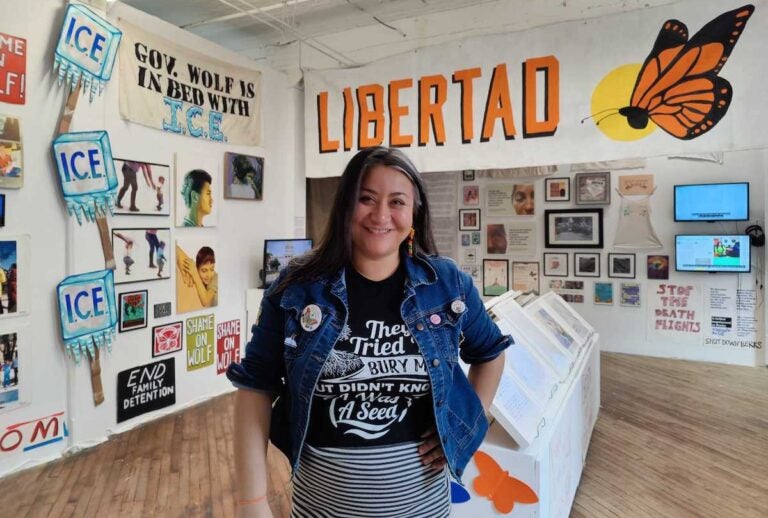
Photo: Jasmine Rivera was an organizer with the Shut Down Berks Coalition, and curated the exhibition “Queremos Justicia: Cómo cerramos Berks,” at the Vox Populi gallery in Philadelphia in 2023. (Peter Crimmins/WHYY)

By Jeffrey Lichtenstein

One PA

Jan 7, 2025 – We’re holding several big questions as we move into 2025 that we hope to learn and struggle through together with our funding partners. All of our work, especially our organizing, advocacy, and outreach efforts, will be working through these questions.

 Quality vs Quantity of Doors

Where and when can we initiate and join conversations about the quality of field work rather than simply the quantity of door knock and phone call attempts? The efficacy of canvassing in low-salience elections is statistically unquestionable but in presidential election cycles there is suddenly a great amount of noise. Some of this noise is the result of large-scale vended field programs with weak quality control practices or very low contact rates.

What could it look like to move toward an eco-system wide model for field work that prioritizes the number and quality of conversations, volunteers recruited, and leaders trained? One PA prides itself on high contact rates and rigorous quality control but we still have much to learn. We hope to share and leverage best practices across locally rooted partners and begin to shift the paradigm around field work from quantity alone, to quality and quantity.

Making organizing power more legible

Even the strongest most rigorous electoral field program faces structural challenges with management, hiring and training under conditions of limited funding and time. These efforts also, by their nature, are demobilized and dismantled after an election, even when we know there is another election just around the corner, not to mention countless other opportunities for voters to flex their voice in government and strengthen their civic participation. Political and civic organizing, unlike electoral campaign mobilizations, grow rather than diminish in efficacy and power over time. What would it look like to quantify, validate, resource and scale the civic power of organizing? One PA was successful in 2024 in using every door conversation to begin an organizing pathway. We identified 33,000 hot leads to join One PA. We’re proud of this work, but we have real areas of growth in learning how to maximize the conversion between hot leads and new volunteers. 

Dimensions and Cost of Building Precinct Based Structure

The term ‘organizing’ has been stretched in recent years to mean all manner of engagement. At One PA we are working with multiple battle-tested organizing models in an attempt to integrate the best practices of each in a way that can be quantified, studied and validated at every stage using contemporary data tools and tech. Our model combines dues-based membership, structure based organizing units, systematic leadership development, polarizing campaigns and experimentation. We are proud of our work in 2024 to launch a guardians of democracy and elections captains program.

In the year ahead we plan to scale the program by a factor of five, and are holding questions about what level of resource and training this will require at each level of the organizing structure. Independent Voice It is clear our movement must get upstream of elections in the battle to make meaning out of our communities’ lived realities. By the time candidates win their primaries, the ability to shape what that election will be about is out of the hands of most people except the elite few with an extraordinary amount of influence on the candidates. We are asking ourselves the question: what capacities and practices do we need as a movement to help frame the questions in front of people long before an election?

How can we roll into a cycle with voters broadly knowing already that housing is too high because of slumlords and rollbacks on government investment, not because of immigrants? We know part of the answer is an independent voice for Black and multi-racial working class communities, to help compensate for brand weakness in the Democratic party, to ensure voters feel they are heard, and to guarantee a more healthy mix of ideas about what it will take to fix this country. How can we build the power and independence of this voice in a way that our more traditional and conservative allies won’t attempt to smother in its cradle?

Winning the Internet

We’re also holding questions about how to respond to the reality that the Internet is increasingly becoming a place our communities rely on for social and political queues. Cynical or hateful voices have a head start in offering narrative frames in the digital space. We are holding questions about what it looks like to bring an organizing approach and significant investment in mass communications to organize our base in digital space, win over leaders and taste makers in non-legacy media, and contest for narrative primacy on the internet.

Training to Win next quarter and next decade

Training is critical for nearly every aspect of our plan, especially the proposition that we grow in capacity and power over time, and the responsibility to rebuild a majority. We are clear that we must level up the rigor and scale of our training program, and sit with the question about what kind of training school and content will meet the need. We know curricula must include a breakdown of the structures and histories of power and resistance; song, poetry and other forms  of culture that bring people together at an emotional register; practical application of ideas through repetition of organizing, storytelling, writing and other skill practice. We’re sitting with the question: how can all those pieces best fit together and what kind of resourcing will it take to hold a training program sustainably that can meet these goals?

A renewed tech advantage

We’re also holding a question about technology. For about 20 years, democratic institutions and networks held an advantage in the use of tech in politics – the VAN, click-to-call tools, ActBlue and early P2P text platforms are all examples. But today republican networks and institutions have caught up or surpassed. What kind of tools allow us to easily give an inspired volunteer a list of the 50 closest target people to them, to register them to vote, get them to sign a petition, or have a persuasive conversation about candidates? How do we move away from site-based voter registration only, and use contemporary data to scale door to door registration programs? How do we use new models, like the Steven Phillips “New Majority Index,” to help us assess opportunities and threats?

Cities: Most of our base lives in cities.

Cities are the places where the housing and homelessness crises are worst. Cities are some of the places with the highest income inequality and violent crime. It’s difficult to live in cities unless you’re rich. There is a relationship between our bases’ weakened sense of political agency and their perception of the corruption of government on one hand, and the way our cities are being run on the other. What does it look like to have an intentional plan to broadcast positive accountability messaging when city leaders accomplish something that improves peoples lives? How do we combine that with real resourcing for primary campaigns to support candidates who are committed to using the government to deliver material gains for working class people.’ And what does it look like to add real resourcing for advocacy and pressure campaigns to encourage local leaders on the fence to move toward policies that will demonstrate in real terms how democratic governance is good for people?

Alignment

Last, we’re holding a question about how to build alignment between progressive base-building organizations to have sufficient power to help win the fights that each of us aren’t strong enough to win on our own. We’re proud of the work that we’ve done to build unity through the cycle of the last several races with several partners, especially PA United , Working Families Party , APIPA, Make The Road, 215 People’s Alliance and UniteHERE. How do we strengthen and build on these existing relationships?

VOTING, Fearing Political Violence, More States Ban Firearms At Polling Places

Photo: A gun rights advocate with an “I VOTED” sticker on his holster gathers with others for an annual rally on the steps of the state Capitol in Harrisburg, Pa., Monday, May 6, 2019. (AP Photo/Matt Rourke)

Two Pennsylvania lawmakers introduced a bill in February that would prohibit guns inside a building where votes were being cast


By Matt Vasilogambros And Kim Lyons

Penn-Capital- Star

March 24, 2024 – Two Pennsylvania lawmakers introduced a bill in February that would prohibit guns inside a building where votes were being cast.

Facing increased threats to election workers and superheated political rhetoric from former President Donald Trump and his supporters, more states are considering firearm bans at polling places and ballot drop boxes ahead of November’s presidential election.

This month, New Mexico became the latest state to restrict guns where people vote or hand in ballots, joining at least 21 other states with similar laws — some banning either open or concealed carry but most banning both.

Nine of those prohibitions were enacted in the past two years, as states have sought to prevent voter intimidation or even violence at the polls driven by Trump’s false claims of election rigging. At least six states are debating bills that would ban firearms at polling places or expand existing bans to include more locations.

In Pennsylvania, state Reps. Tim Brennan (D-Bucks) and Mary Jo Daley (D-Montgomery) introduced a bill in February that would prohibit the carrying of firearms at all polling places. House Bill 2077 would not apply to law enforcement or military personnel on duty at polling places, and anyone licensed to carry a firearm could keep the firearm in their vehicle while voting, but not bring it into the building where votes are being cast.

“Over the years, we have heard more and more about voters and election workers being threatened, harassed, or intimidated at polling places,” the two write in a memo for HB 2077. “As a result, many voters have expressed concerns about voting in person at their assigned polling location, and many voting districts have struggled to find or retain volunteers to work at such locations.”

Daley told the Capital-Star that when she was a committee member in the 1990s she remembers someone coming to a polling place with a gun and it frightened the poll workers. “And we were in a much more peaceful time then,” she said. Daley added she has introduced similar legislation several times but with Democrats in the minority in the House until 2022, there was little chance of it moving forward.

HB 2077 was referred to the House State Government committee March 5. “I think it’d be great to bring it up because quite honestly, we have some members who talk about the value of life, but that doesn’t seem to bear out all lives,” Daley said.

“When you think of elections in Pennsylvania, it’s a community activity,” Daley added. “But it doesn’t mean that some communities aren’t really struggling with this issue.”

New Mexico law
The New Mexico measure, which was supported entirely by Democrats, applies to within 100 feet of polling places and 50 feet of ballot drop boxes. People who violate the law are subject to a petty misdemeanor charge that could result in six months in jail.

“Our national climate is increasingly polarized,” said Democratic state Rep. Reena Szczepanski, one of the bill’s sponsors. “Anything we can do to turn the temperature down and allow for the safe operation of our very basic democratic right, voting, is critical.”

She told Stateline that she and her co-sponsors were inspired to introduce the legislation after concerned Santa Fe poll workers, who faced harassment by people openly carrying firearms during the 2020 presidential election, reached out to them.

Our national climate is increasingly polarized. Anything we can do to turn the temperature down and allow for the safe operation of our very basic democratic right, voting, is critical.

The bill carved out an exception for people with concealed carry permits and members of law enforcement. Still, every Republican in the New Mexico legislature opposed the measure; many said they worried that gun owners might get charged with a crime for accidentally bringing their firearm to the polling place.

“We have a lot of real crime problems in this state,” said House Minority Floor Leader Ryan Lane, a Republican, during a House Judiciary Committee hearing last month. “It’s puzzling to me why we’re making this a priority.”

But over the past several years, national voting rights and gun violence prevention advocates have been sounding the alarm over increased threats around elections, pointing to ballooning disinformation, looser gun laws, record firearm sales and vigilantism at polling locations and ballot tabulation centers.

In February, Pennsylvania Secretary of the Commonwealth Al Schmidt said that the that the turnover among experienced election officials in Pennsylvania counties is “a real concern” ahead of the 2024 elections. Some 70 senior directors or those directly underneath them have left, Schmidt said.

National surveys show that election officials have left the field in droves because of the threats they’re facing, and many who remain in their posts are concerned for their safety.

Add in aggressive rhetoric from Trump, the presumptive Republican presidential nominee, and it becomes “a storm” that makes it essential for states to pass laws that prohibit guns at polling places, said Robyn Sanders, a Democracy Program counsel for the Brennan Center for Justice, a voting rights group based at the New York University School of Law.

“Our democracy has come under new and unnerving pressure based on the emergence of the election denial movement, disinformation and false narratives about the integrity of our elections,” said Sanders, who co-authored a September report on how to protect elections from gun violence. The report was a partnership between the Brennan Center and the Giffords Law Center to Prevent Gun Violence.

“The presence of guns in these places presents a risk of violence,” she added.

Continue reading VOTING, Fearing Political Violence, More States Ban Firearms At Polling Places

Central Pennsylvania ‘Sundown Towns’ and the Legacy of Racism: ‘It’s Still Here’

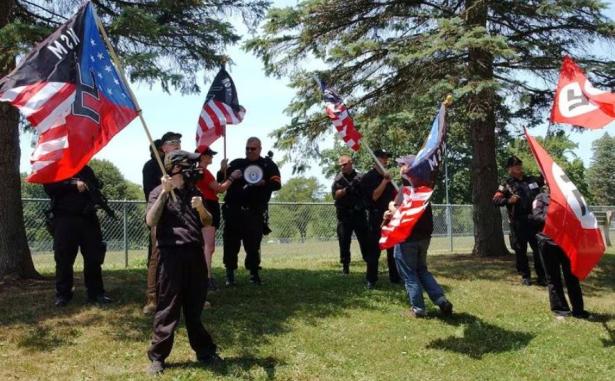
The National Socialist Movement, one of the largest and most prominent neo-Nazi groups in the United States, was one of 36 hate groups active in Pennsylvania in 2020. Members of the group gathered summer 2020 at a downtown Williamsport, PA park.,(Photo credit: PennLive)

‘Don’t get caught there,’ The legacy of sundown towns is not confined to the pages of history books – but is alive and well in 2024. Deep racial disparities are evidence that the intent of sundown towns still lingers today.

By Ivey DeJesus  

PENNLIVE

Feb 22, 2024 – Growing up in the 1960s, the Rev. Roger Dixon heard the warnings every time the William Penn High School football team was set to play Cedar Cliff.

“The older men used to say ‘don’t get caught up there after the game. You might get into trouble. They might try to arrest you,’” recalls Dixon, who is Black and graduated from William Penn in 1966.

Rafiyqa Muhammad tells of a similar experience growing up in Harrisburg.

“Our parents always told us about certain areas,” she said. “Our father would tell us don’t go here, don’t go there. Do not go over to the West Shore. I remember we would drive in and drive out. There was no going over and hanging out.”

Like Dixon, Muhammad, who is Black and came of age in the 1960s and 1970s, lived through some of the most tumultuous times in this country as the vestiges of segregation and the push for civil rights framed the lives of millions of Americans.

As the nation observes Black History Month in February, celebrating the accomplishments and contributions of Black Americans, the experiences of ordinary Americans like Dixon and Muhammad attest to the painful reality that racism was not confined to the south.

Across communities in central Pennsylvania, Black residents were made to feel unwelcome in many communities, especially after dark, and in many cases the communities were their own.

So-called “sundown towns” became a fixture across the country in the early 1900s. These were all-white communities that excluded non-whites via discriminatory laws, intimidation and violence.

These practices were at times explicit – written into statutes and charters – and other times the understanding that if you were Black, you better be out of town by sunset, hence the name. Some towns posted warning signs to Blacks not to “let the sun go down on you here.” Other towns rang a bell at the end of the workday warning Black workers to leave.

Harrisburg may have been well north of the Mason-Dixon Line, but in many ways was emblematic of the practice of sundown towns. While Dixon and Muhammad attended predominantly Black schools and spent time in mostly Black communities, sometimes they needed to cross the Susquehanna River to the mostly white west shore.

“They didn’t call it sundown town, but we know what they meant,” Dixon said. “The old men would say you never know, you never know. Don’t get caught up over there. They were very serious about it.”

Cultural documentarian Candacy Taylor has collected crowd-sources data showing that Pennsylvania was home to about 40 sundown towns, underscoring that these towns were not confined to the south or Midwest.

In her book, “Overground Railroad: The Green Book and the Roots of Black Travel in America,” Taylor mapped the prevalence of such towns in the region. They included Middletown and Camp Hill, and while Harrisburg was not named among the towns, oral histories of residents suggest that those racist attitudes in some neighborhoods prevailed.

“When I hear people say sundown town, I know what that means but I’m looking at my own backyard,” Muhammad said. “We couldn’t get more sundown than here and it’s still that way.”

Muhammad grew up with the unwritten rule that she and her friends – as they walked to and from school and across their Harrisburg community — needed to avoid areas.

“There were places we could not go to,” she recalls. “When we went to school you better not walk through Bellevue Park. You better not be caught there. Italian Lake? The same. You better not be caught in Italian Lakes or the authorities would be called on you and who knows what else.”

Continue reading

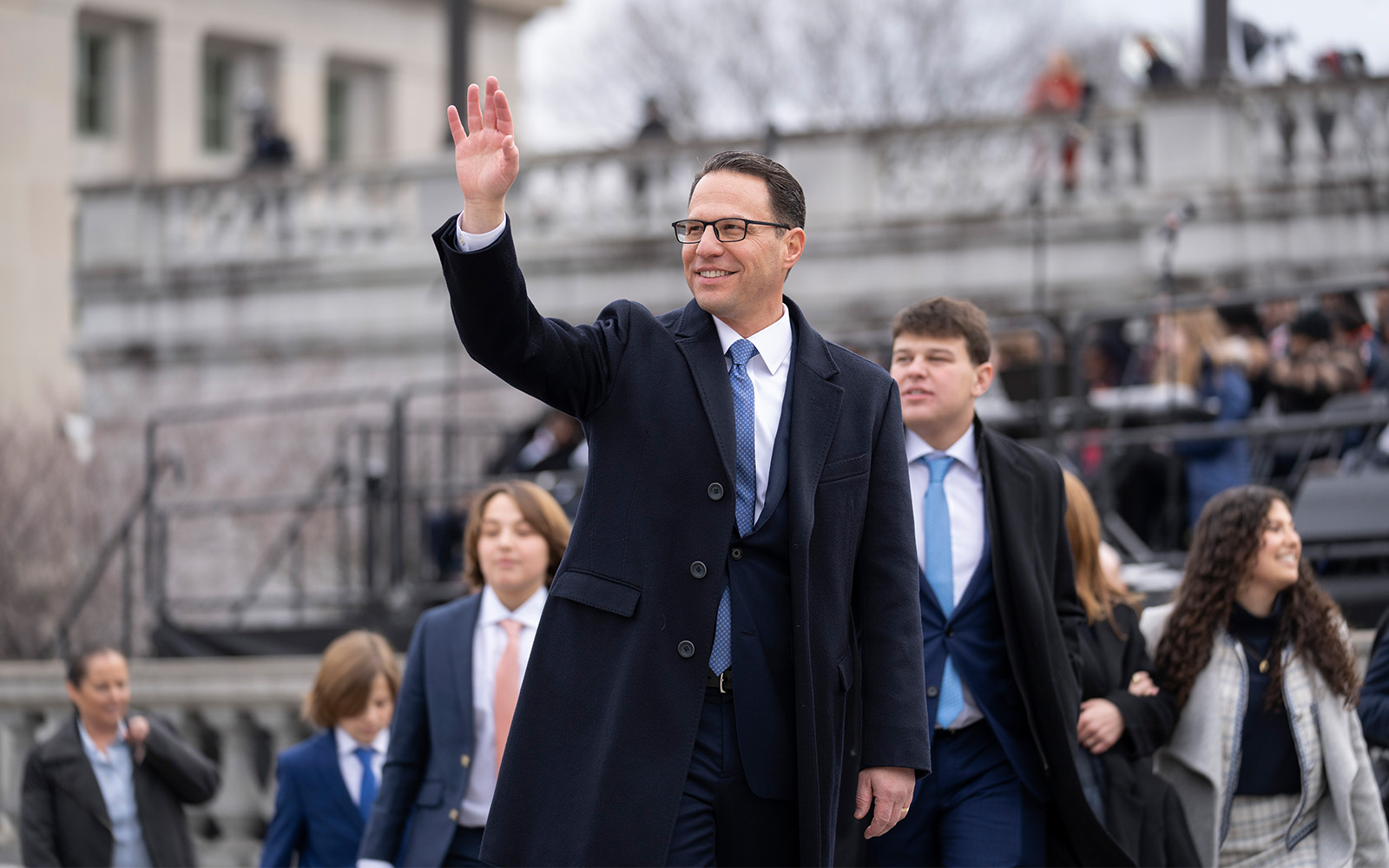
Gov. Josh Shapiro Rebuilt a Bridge, Weathered a Messy Budget, And Walked Fine Partisan Lines in 2023


By Stephen Caruso and Katie Meyer

Spotlight PA | Dec. 12, 2023 – HARRISBURG — In his first year as Pennsylvania’s governor, Josh Shapiro won praise as a literal bridge builder, signed a state spending plan that included long-sought Democratic priorities, and helped expand a relief program for older homeowners.

The Democrat, a former state lawmaker who touts himself as a dealmaker, has nonetheless struggled at times to advance priorities through Harrisburg’s ideologically divided legislature. His record will depend on how well he can find middle ground, and he will be watched not just here in Pennsylvania but in national political circles as well.

His first major attempt at a deal blew up in his face. Shapiro negotiated a budget with the Republicans who control the state Senate, and according to the GOP, agreed to a package that would have funded private school vouchers with public dollars.

Amid widespread opposition from state House Democrats and organized labor, Shapiro vetoed the provision from the budget, throwing unfinished business into a tailspin and prompting Republican outcry that he had reneged.

“A lot of first-time governors, myself included, make this mistake,” said Ed Rendell, a Democrat who was Pennsylvania’s governor from 2003 to 2011 and has known Shapiro for decades. “We assume that our own party is going to support us, and not buck us on something that’s very important to us.”

“Always count heads,” Rendell said. “I don’t think he’ll make that mistake again.”

Shapiro also had to weather a series of events outside of his control beginning in the early months of his administration.

A little more than two weeks after his inauguration, the governor had to respond to the East Palestine train derailment less than a mile from Pennsylvania’s border, which released thousands of tons of toxic chemicals. And amid budget talks, the sudden collapse of an overpass on I-95, used by tens of thousands of Philadelphia commuters every day, required Shapiro to coordinate a temporary replacement in less than two weeks while under national scrutiny.

“There almost wasn’t a quote-unquote normal,” Shapiro spokesperson Manuel Bonder told Spotlight PA of those early emergencies. “We were still figuring out, you know, where the lights were.”

Other unexpected bumps in the road came from the courts.

About a month into Shapiro’s governorship, Commonwealth Court found that the state’s education system was unconstitutionally underfunded, a ruling that presented Harrisburg with a mandate to take action on a thorny, far-reaching, and politically charged policy issue.

“I wonder if he had unpacked all his clothing before the courts made the ruling,” quipped state Rep. Peter Schweyer (D., Lehigh), who heads his chamber’s Education Committee.

But perhaps the thorniest problems of all came from within Harrisburg.

Continue reading Gov. Josh Shapiro Rebuilt a Bridge, Weathered a Messy Budget, And Walked Fine Partisan Lines in 2023

Democrats Keep Control of Pennsylvania House


Pittsburgh Democrat Lindsay Powell

By David W. Chen

New York Times

Sept. 19, 2023 – Democrats kept control of the Pennsylvania House of Representatives Tuesday after winning an open seat in a special election in the Pittsburgh area.

The state’s lower chamber had been split 101-101 between Democrats and Republicans since July, when former Representative Sara Innamorato, a Democrat, stepped down from her seat representing the 21st House District to run for Allegheny County executive.

Republicans had hoped for an upset in Ms. Innamorato’s former district, which includes part of Pittsburgh and its northern suburbs. That did not happen: Lindsay Powell, a Democrat who has strong ties to party leaders in Washington — including Senator Chuck Schumer, the majority leader, and Representative Hakeem Jeffries, the minority leader — easily defeated Erin Connolly Autenreith, a Republican who is the chairwoman of a local party committee. With 95 percent of the vote counted, 65 percent went to Ms. Powell and 34 percent went to Ms. Autenreith.

Pennsylvania’s House of Representatives has been split between Democrats and Republicans since July, with each party holding 101 seats.Credit…Matt Rourke/Associated Press

Why It Matters: The vote will determine a swing state’s power balance.

Pennsylvania is a crucial swing state, playing an important role in presidential elections, as well as determining which party holds power in the United States Congress. Whichever party gains an upper hand in the state can make a major difference in Washington, in addition to making law in Pennsylvania.

It’s also one of just two states, along with Virginia, where the legislative chambers are split by party.

In Harrisburg, Democrats have controlled the governor’s office since 2015, and Gov. Josh Shapiro won his first term convincingly in November 2022. Republicans, on the other hand, have held a strong grip on the Senate for decades.

Democrats won a majority in the House in 2022 for the first time in 12 years and by the slimmest of margins — it took only Ms. Innamorato’s resignation to make it an even split.

Background: The state has seen several special elections this year.

In May, Heather Boyd, a Democrat, won a closely watched special election in southeast Delaware County, part of the Philadelphia suburbs. Top Democrats, including President Biden and Governor Shapiro, had framed the contest as crucial to protecting reproductive rights in Pennsylvania.

But on the same day, in a separate special election, Republicans retained a state House seat in north-central Pennsylvania with the triumph of Michael Stender, a school board member and firefighter.

Heading into the third special election of the year on Tuesday, the Democratic candidate, Ms. Powell, 32, who works in work force development, was viewed as a solid favorite, with a sizable fund-raising advantage.

She was aiming to become the first African American woman to represent the district, which Ms. Innamorato captured in 2022 with 63 percent of the vote.

Republican officials acknowledged that the heavily Democratic district would be difficult for them to win. Still, Ms. Autenreith, 65, had been active on the campaign trail.

What Happens Next: The state House could soon be in play yet again.

Even with Ms. Powell’s victory, voters in Pennsylvania may soon face yet another special election with huge stakes.

If State Representative John Galloway, a Democrat who represents a district northeast of Philadelphia, prevails in a race for a district judgeship in November, as is expected, the chamber would be split again until another contest could be held to fill his seat.

Harrisburg Republicans Are Leveraging Abuse Victims for Political Gain

     
House Republican Leader Bryan Cutler, R-Lancaster, speaks to reporters beside a map of three vacant Allegheny County legislative districts that will be the subjects of special elections next year. (Capitol-Star photo by Peter Hall)

 House Republican Leader Bryan Cutler, R-Lancaster, speaks to reporters beside a map of three vacant Allegheny County legislative districts that will be the subjects of special elections next year. (Capitol-Star photo by Peter Hall)

Long-delayed justice for abuse victims has become hostage to the GOP’s partisan attack on voting, abortion rights

By J.J. Abbott

PA Cap[itol-Star

Jan 11, 2023 – Last week, Harrisburg Republicans, who suffered an overwhelming defeat at the ballot box in 2022, celebrated the election of new state House Speaker Mark Rozzi. We’ve learned in the days since that they did so not for Rozzi, a Berks County Democrat, or the hope of finding bipartisan consensus but for their own cynical, purely political reasons. 

Rozzi, nominated and supported by both Republicans and Democrats, ran for speaker to advance his life’s work: creating an opportunity for justice for fellow adult victims of child sexual abuse. GOP leaders calculated, instead, that Rozzi’s election to the speakership would further their own political goal of advancing a series of unrelated constitutional amendments covering partisan policy proposals that failed to garner enough support to become law through the usual channels. 

In 2022, this GOP package included two election changes borne out of the GOP’s 2020 election denialism, a legislative power-grab around regulations, and a complete ban on abortion rights without any exceptions. Then Republicans lost the governor’s race, nearly all competitive federal races, and 12 House seats and their majority in the state House

The amendment allowing victims of childhood sexual abuse an extended window to sue their attackers garnered wide bipartisan support in three previous legislative sessions. However, the GOP, fresh off losing up-and-down the ticket, now seems to be threatening to withhold their support for a final vote unless they leverage it to add their hyper-partisan agenda into the state constitution, effectively holding victims of abuse hostage to conspiracies spun by former President Donald Trump.

To assuage the fears of victims and advocates and try to prevent bitter fights over unrelated policies, Gov. TomWolf – with Rozzi’s backing – called a special session to focus on getting the window to justice on the ballot by the May primary. Some thought this would help avoid partisan fights over elections and abortion amendments that lack the same urgency or consensus. 

Republican leaders were incensed at the prospect of losing this leverage and immediately attacked the governor for calling the special session. Senate Republicans went as far as to say their politically-charged amendments were “equally important” as justice for these victims.

https://www.penncapital-star.com/civil-rights-social-justice/rozzi-to-appoint-working-group-on-legal-relief-for-abuse-survivors-after-special-session-stalls/embed/#?secret=QcbcniXyoa

According to a report by NBC10 in Philadelphia, “​​House Republican Leader Bryan Cutler says there are other, more urgent things they need to prioritize ahead of child sex abuse.”

Seriously? Have they no shame? 

In openly admitting they want to hold justice hostage, GOP leaders justified the need for a special session focused on the most urgent matter: justice for these victims. 

In addition to no moral comparison between their partisan amendments and justice for abuse victims, there is no urgent need or policy rationale for these election and regulation changes other than the political goals of the Republican Party. 

Take elections as one example.

https://www.penncapital-star.com/government-politics/voter-id-audits-regulatory-authority-constitutional-amendments-advance-pa-senate-committee/embed/#?secret=JnS6wH5yCP

Pennsylvania law already requires ID to vote and mandates state-run audits of every election. Voter impersonation almost never happens and audits typically find only small computation errors, if anything at all. So while nearly three-in-four Pennsylvania voters said in 2022 exit polls that they were confident PA had fair elections, GOP leaders continue to push these amendments because Republicans think they will help them win elections.

For years, Pennsylvania’s counties outlined urgently needed election policy updates. Unfortunately, in a similar act of political gamesmanship, those bipartisan, consensus changes also remain victims to GOP hostage-taking.

A much more responsible approach would be to engage in the traditional legislative process of building consensus towards some sort of comprehensive elections reform bill, instead of ramming bad policy into the constitution because you failed to pass it the right way.  

GOP leaders seem ready to force their members to engage in a raw political exercise of derailing and delaying justice for abuse victims over these other amendments.

In 2018, four incumbent Republican senators lost re-election after they voted against a statutory change similar to the proposed constitutional amendment. The GOP’s latest legislating by hostage-taking creates a tough partisan pill for these members to swallow with huge political risks.

This unseemly approach is a reminder of why voters overwhelmingly rejected the GOP last election after decades of their control of Harrisburg lawmaking.

Voters are tired of business as usual in Harrisburg and clearly rejected the GOP’s extreme agenda in 2022. But Republican leaders in Harrisburg prove once again that they don’t care what the voters think. 

J.J. Abbott served as press secretary and deputy press Secretary for Gov. Tom Wolf from 2015 until 2020. He now serves as executive director of Commonwealth Communications, a Pennsylvania progressive communications non-profit. 

Shapiro for Governor: He Could Be Our First Jewish President. But First He Needs to Beat a Far Right Christian Nationalist in PA

Shapiro doesn’t think of himself as a moderate or establishment Democrat, the terms journalists often use to describe him. Instead, he calls himself a “populist.”

Devoutly Jewish, Josh Shapiro wants to persuade voters that his opponent’s Christian nationalism doesn’t represent the values of the state.

By Holly Otterbein
Politico

Sept 14, 2022 – PHILADELPHIA — In one of the poorest neighborhoods in one of the poorest big cities in the country, blocks away from where a woman was gunned down just the day before, Josh Shapiro is singing with a group of Black pastors.

Shapiro, a type-A attorney general running to be the Democratic governor of Pennsylvania, rocks in his pew. When a reverend asks the churchgoers to lift up their voices, he looks her in the eye and finishes her sentence, pronouncing “me” when she croons, “What God has for me, it is for me.” He then proceeds to give a 30-minute speech that was supposed to be closer to half as long.

Unlike some before him, Josh Shapiro hasn’t downplayed his religion out of a fear of appearing different. To the contrary, he’s made his faith — and fighting anti-Semitism — a central part of his political persona.

“I want you to know that being up here on the pulpit means a lot to me — and it is a place where I feel comfortable,” says Shapiro. “I feel comfortable here because this is a place of spirituality, this is a place of purpose.”

Shapiro, 49, who describes himself as a Conservative Jew from the Philadelphia suburbs, talks about being raised to bring faith “out in the community and make a difference.” He refers to Martin Luther King Jr. and Rabbi Abraham Joshua Heschel, the spiritual icons who forged a friendship during the civil rights movement. He quotes from an ancient collection of Jewish teachings: “No one is required to complete the task, but neither are we free to refrain from it.”

The battle for governor in Pennsylvania is one of the most consequential races in the country: It could determine whether women have the right to an abortion and all voters have the right to cast a ballot in a pivotal battleground state. Shapiro’s Republican opponent, Doug Mastriano, led the movement in the state to overturn Joe Biden’s election and opposes abortion with no exceptions.

Mastriano, a state senator who is widely seen as the archetype of the rise of Christian nationalism in the GOP, is courting MAGA-aligned Evangelicals and other conservative Christians. Though he rejects that label, he has said the separation of church and state is a “myth.” Mastriano also has ties to antisemites, and this week he used an antisemitic trope, portraying Shapiro as out of touch with everyday Pennsylvanians for attending what he called “one of the most privileged schools in the nation,” a Jewish private school.

Shapiro’s response has not been to decry the entry of religion into the race; in some ways, he has amplified it. He says he doesn’t want to tell anyone “what to believe.” (“I’ll be a governor that relies on my faith and my upbringing to actually look out for everybody,” Shapiro says. “And I think he’s the exact opposite.”) But he refuses to cede Pennsylvania’s churches to his opponent. Instead, he deliberately highlights his religiosity to appeal to Christians and people of other faiths who might feel alienated by Mastriano’s brand of religion-tinged conservatism.

If Shapiro can fend off the far-right firebrand, he would catapult into the position of one of the most prominent Jewish elected officials in the country — and be talked about within political circles as a future presidential or vice-presidential candidate. And he’d do it by being a new kind of Jewish politician. Unlike some before him, Shapiro hasn’t downplayed his religion out of a fear of appearing different. To the contrary, he’s made his faith — and fighting antisemitism — a central part of his political persona.

“People are looking for someone who has strong faith. It almost doesn’t matter what denomination it is,” says former Democratic governor Ed Rendell.

Shapiro sees his Judaism as a tool to bond with people, not as something that sets him apart. On this sun-drenched September morning in Philadelphia, at least, his strategy seems to be working.

Speaking to the dozen powerful pastors of nearby AME churches, all of whom could help him turn out critical Black voters in November, Rev. Dr. Janet Jenkins Sturdivant says Shapiro is “not a perfect man.” But he is a “man of God — and all we need is someone who will listen to God.”

Josh Shapiro in a Quiet Rage

“NO good jews.” “America jews themselves are a cancer on any society.” “I hope no one votes Jew.”

The frothing messages from users of Gab, a far-right social media network, flash on the screen. A narrator explains that Mastriano’s campaign paid the website, the same one where Robert Bowers posted antisemitic screeds before police say he massacred 11 people in 2018 at Pittsburgh’s Tree of Life synagogue. Mastriano, the spot hammers, is “way too extreme.”

GOP Fascism: Doug Mastriano’s Election-Takeover Plan

Photo: Pennsylvania Republican gubernatorial candidate Doug Mastriano speaks during a rally at Archery Addictions on May 13, 2022 in Lehighton, Pennsylvania. With less than a week until Pennsylvania’s primary election on Tuesday May 17, polls have Republican candidate Doug Mastriano as the front runner in the Governor’s primary race. (Photo by Michael M. Santiago/Getty Images)

Stop the Steal is only a pretense for seizing control.

By Amanda Carpenter

The Bulwark

JULY 5, 2022 – By now, political junkies are familiar with the rucksack of election-denying baggage that Pennsylvania GOP gubernatorial candidate Doug Mastriano schleps around: He organized a faux post-election legal hearing for Rudy Giuliani in Gettysburg; he asked Congress to deny Pennsylvania’s electors; he spent thousands of campaign funds busing people to the Capitol on Jan. 6th; he was filmed crossing police barricades; some of his supporters were arrested for their activities that day, and he visited Arizona to observe its disastrous Cyber Ninjas audit in hopes of replicating it in Pennsylvania.

Those are only the highlights of what Mastriano has done in the past. But what about the future? People like Mastriano are never going to let Donald Trump’s 2020 election loss go. If anything, Trump’s “Stop the Steal” lies provide a pretext for actions intended to ensure MAGA types win in future elections.

How will they do it? Well, Mastriano has some ideas. (Well above and beyond hiring Trump’s throne-sniffing flack Jenna Ellis as his legal adviser.)

Although Mastriano evades scrutiny by blockading typical media interviews, with some help from his insurrection-friendly friends, he doesn’t hesitate to talk about his plans when he feels comfortable. Put those snippets together, and it shows Mastriano has a pretty well-thought-out election takeover plan in mind.

His platform includes the following:

–loosening restrictions on poll watchers to make it easier to challenge votes;


–repealing vote-by-mail laws;


–appointing a fellow 2020 election-denier to be secretary of state who could enable him to decertify every voting machine “with a stroke of a pen”;


–forcing all Pennsylvania voters to re-register;

–and defunding the Pennsylvania Supreme Court.


Let’s take them one by one.

Last month, Mastriano’s legislation to loosen restrictions on poll watchers passed both houses of the General Assembly. Its passage on party-line votes by the GOP-controlled legislature is not surprising, since one of the problems that frustrated Trump supporters in 2020 is that they could not recruit in-county residents in blue areas, such as Philadelphia, to serve as poll workers and make challenges to votes. Mastriano’s bill changes that.

If the bill were signed into law—which Democratic Gov. Tom Wolf has said he will not do—it would increase the number of poll watchers permitted by candidates from two to three, kill in-county residency requirements for poll watchers, and give poll watchers a “clear line of sight to view and hear” election workers and voters “at a distance of six feet or less.”

What could these poll watchers do with this increased capacity? Per Pennsylvania state guidance, poll watchers are empowered to “make good faith challenges to an elector’s identity, continued residence in the election district, or qualifications as an eligible voter.”

Such challenges are directed to the judge of elections, who “has the obligation to determine if the challenge is based on actual evidence and whether there is a good faith basis to believe that the person is not or may not be a qualified elector.” Democratic critics of the bill object that the close proximity of poll watchers brought in from out of the county raises the likelihood of voter intimidation.

In a statement, Trump encouraged Pennsylvania Republicans to tie passage of this bill and other election-related restrictions to the state budget:

Just as Trump called for, Mastriano has also promoted legislation to ban dropboxes and private funding for elections, as well as to eliminate “no excuse” mail-in voting and the permanent absentee voter list.

But Mastriano’s potential powers as governor far exceed that of a state senator when it comes to controlling Pennsylvania’s elections.

Unlike many other states where the secretary of state is an elected position, in Pennsylvania, the governor gets to make an appointment for the position. Mastriano already has his pick in mind and, although he hasn’t provided a name, he has teased that with this appointment and his powers, he could “decertify every machine in the state with a stroke of a pen via the secretary of state.” He said, as captured via audio, here:

“I’m Doug Mastriano, and I get to appoint the secretary of state, who’s delegated from me the power to make the corrections to elections, the voting logs, and everything. I could decertify every machine in the state with the, you know, with the stroke of a pen via my secretary of state. I already have the secretary of state picked out. It’s a world-class person that knows voting integrity better than anyone else in the nation, I think, and I already have a team that’s gonna be built around that individual.”

This is why Mastriano probably feels like he has a sporting chance to reset the voter rolls and force all of Pennsylvania’s 9 million voters to submit new voter applications to re-register to vote.

Federal voting laws prohibit such a practice, but that doesn’t deter Mastriano from campaigning on it and may not prevent Governor Mastriano from trying it—and creating a massive tangle of legal problems in the face of looming election deadlines.

Where would those legal challenges be decided? Most likely, in the Pennsylvania Supreme Court. And for that, Mastriano has another idea in mind in case things don’t go his way.

If the state’s highest court doesn’t do as he pleases, he thinks it should be defunded, which is something he’s called for after the 2020 election. Here he is on a podcast* in November 2020:

“I wish the General Assembly, we would do our darn job here, and make them feel some pain. We could, we could, rein in elements. Even, we even, budget and fund the Pennsylvania Supreme Court. If we are so, we’re out there as you know, shouting outrage about how they’re rewriting law, then, okay, maybe we should defund them. And let them figure out how they’re going to run a business without a budget. …” Read More