

PITTSBURGH POST-GAZETTE
JAN 27, 2018 – Just ahead of the State of the Union speech President Donald Trump gives Tuesday, Post-Gazette reporters have gathered information on the state of Western Pennsylvania and what people involved in politics, government, business, religious life, health care and environmental issues see in the months ahead.
Health Care
A year after the newly inaugurated president promised quick repeal of the Patient Protection and Affordable Care Act, and despite efforts to replace Obamacare over the ensuing 12 months, the program is quite alive, with more than 8 million Americans signed up for 2018 plans including nearly 400,000 Pennsylvanians.
Locally, both UPMC Health Plan and Highmark say they remain committed to offering ACA plans locally, even as one expands and the other steps back. In 2017, UPMC offered ACA policies in all 29 Western Pennsylvania counties, including one of the lowest-cost Silver plans in the U.S., while Highmark withdrew from 17 of the 29 counties after suffering massive losses in the marketplace’s first years.
Still waiting for Congress to act, Pennsylvania community health centers begin cutbacks
For the current year, the Consumer Health Coalition on the North Side reports helping 1,248 people — including 784 who qualify for medical assistance — signed up for 2018 ACA plans, which “overshot our goals significantly,” said executive director Lou Ann Jeremko.
But attacks on the ACA nationally, such as eliminating the tax penalty in 2019 on those who do not obtain insurance, leaves the future stability of the marketplace still in question.
Taxes
While corporations stand to reap the biggest windfall from the Republican tax overhaul, average workers here and across the country are likely to see a slight increase in pay due to an adjustment in the federal income tax withholding tables.
Higher income workers will benefit more than lower income workers when the tax savings are considered dollar for dollar, although it is difficult to say exactly how much more because different taxpayers have different exemptions that contribute to the bottom line.
But in general, a worker earning about $2,000 a month may see a pay increase of about $10, whereas a taxpayer earning $200,000 a year could see a benefit of a couple thousand dollars.
With the top tax rate for corporations slashed from 35 percent to 21 percent, many corporations see an opportunity to increase employee salaries, said Alex Kindler, a partner at H2R CPA in Green Tree. “We’ve had tax cuts before, but this is the first time I’ve had so many corporate clients say they will pass the savings on by increasing pay to workers.”
Social Services
Advocates for the poor fear the president and congressional Republicans could enact major cuts to safety-net programs such as Medicaid, which provides health insurance for low-income and disabled people, or the food stamp program.
They also fear cuts to funds for affordable housing, money for heating assistance, legal help for the poor, or Supplemental Security Income, a program for people with disabilities.
“We are generally concerned that another year will go by without any real policies to address poverty and hunger,” said Emily Cleath, a spokeswoman for Pittsburgh anti-hunger advocacy group Just Harvest. “These should include passing HR 1276 so that SNAP [food stamps] benefit amounts better reflect the actual cost of a healthy diet, raising the federal minimum wage, mandating paid Family and Medical Leave, addressing the critical shortage of affordable housing, and funding universal high-quality childcare and preK. Imagine how great a nation we would be if we could provide those things. Instead, this administration and Republican leaders in Congress seem more interested in perpetuating the War on the Poor.” Continue reading What’s Changed in Western Pa after Trump’s First Year?
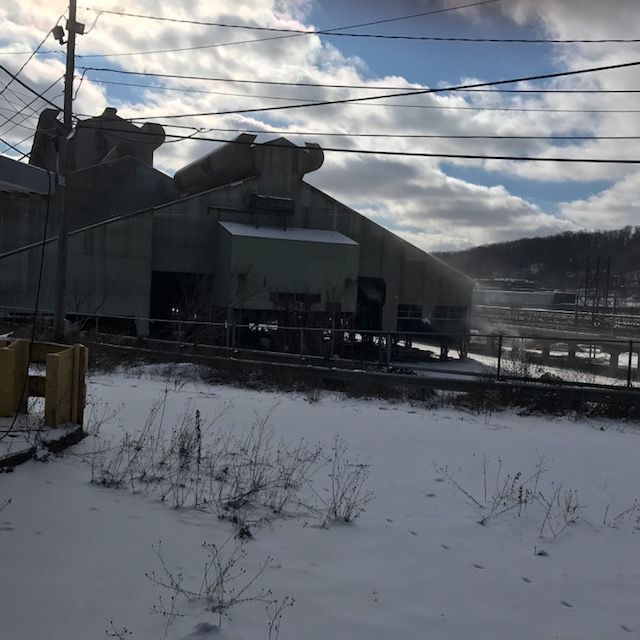
MOUNDSVILLE, Jan 2, 2018 — China Energy’s potential $84 billion investment in energy projects in the Mountain State has sparked an uptick in interest in available industrial properties throughout the Upper Ohio Valley, officials say.
The memorandum of understanding, or MOU, is not binding, meaning the Chinese company can still back out if it wants to.
“Everybody’s trying to figure out what it means,” said Bryce Custer, NAI spring real estate adviser, Energy Services.
Custer is working with New York’s Frontier Industrial Corp. to market vacant industrial properties in Marshall and Hancock counties.
“I think what it’s done is to create more of a sense of urgency for some companies.They realize if they want to have a facility in the area, they’d better speed up their game a bit,” Custer said. “So, yes, the MOU has had an impact; we are seeing a good bit more activity.”
Custer said he’s been busy fielding calls from clients “looking from Moundsville north to Monaca, Pennsylvania,” where Royal Dutch Shell has already begun building a $6 billion-plus ethane cracker. Frontier’s properties in the Upper Ohio Valley — a 58-acre parcel that once housed a power plant in Moundsville, as well as a thousand surplus acres that steel giant ArcelorMittal wants to unload in Weirton — are generating a tremendous amount of interest because of their river and rail access, he said.
“We’ve got a good bit of activity right now with (the Kammer) facility. We’re working with companies not only within the U.S., but also with some companies overseas. There’s a good bit of interest right now in properties that have rail and barge access for a variety of products. They’re diverse companies … petrochemical companies, straight chemical companies and also plastics and derivatives,” he said.
Continue reading China Energy MOU Impact Paying Dividends for Northern Panhandle Properties

If your state is the only oil and gas producer in the nation that doesn’t have a severance tax, there’s going to be a lot of pressure on you to enact one. But given the amount of money involved, it’s easier to talk about creating such a tax than actually imposing it. In Pennsylvania, that talk has blossomed into a fight over more than just money; it now involves lobbying, environmental protection and the next campaign for governor.
Pennsylvania became the first place in the world to successfully drill for oil back in the 1850s. Over the past decade, however, natural gas has overtaken oil as the big game in the state. Pennsylvania is now the nation’s second-leading producer of natural gas, after Texas. Naturally, lawmakers are wary of tampering with the golden goose. “Right now, you have an industry that’s growing and not asking for state dollars, like others,” says Steve Miskin, a spokesman for state House Speaker Mike Turzai. “It has brought back great-paying jobs.”
The industry has spent more than $60 million on lobbying and campaign donations in the state over the past decade to ward off a severance tax on its profits. Industry officials like to point out that, even in the absence of a severance tax, Pennsylvania’s general business tax rates are often higher than those in other production states — notably Texas, which doesn’t tax corporate income. What’s more, Pennsylvania five years ago imposed an impact fee on drillers, which generated $173 million last year. “The comparison with other states shouldn’t stop and start just with the severance tax,” says Kevin Sunday, chief lobbyist with the Pennsylvania Chamber of Business and Industry. “We have to look at the whole structure.”
But no one disputes that fiscally challenged Pennsylvania could use the money a severance tax would bring in — easily as much as $100 million a year. So quite a few legislators are determined to pass one. The state Senate actually approved a severance tax earlier this year.
It’s been a tough sell in the House, though, and not only because Turzai and other Republicans are largely opposed. State Rep. Greg Vitali, a Democrat who became the first legislator to propose a severance tax nearly a decade ago, came out against the Senate package, arguing it would also loosen state control of drilling permits and weaken environmental protection. “I find myself in the odd position during these budget negotiations to suddenly be opposing it,” he says. “The passage of a severance tax now is linked to some very bad provisions that in my view would cripple the Department of Environmental Protection’s ability to do its job.”
Meanwhile, the severance tax has become a sensitive campaign issue. A leaked tape captured Republican state Sen. Scott Wagner, a likely gubernatorial candidate next year, predicting that passage of the tax would guarantee a second term for Democratic Gov. Tom Wolf, a leading severance tax advocate, because he’d have a big victory to tout.
The specter of handing Wolf a win has become the final and perhaps the biggest hurdle for the severance tax to overcome. “Both the Democrats and the Republicans,” Vitali says, “are viewing the severance tax through the lens of the gubernatorial election.”
By Jim Melwert
CBS News
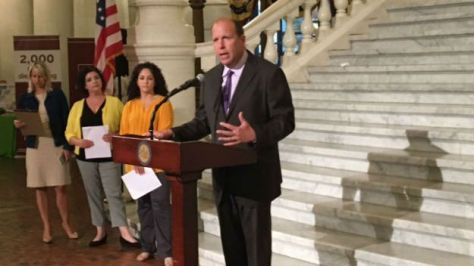
Dec 18, 2017 – NORRISTOWN, Pa. (CBS) — State Sen. Daylin Leach will not step down from his seat in the legislature, but he is suspending his run for Congress in the wake of accusations of sexual harassment of staffers.
Leach says he will step back from his congressional campaign to focus on his family and to work with Senate leaders to address the allegations.
He says he will fully cooperate as the allegations are all vetted.
“While I’ve always been a gregarious person, it’s heartbreaking to me that I have put someone in a position that made them feel uncomfortable or disrespected,” Leach said in a statement Monday. “In the future, I will take more care in my words and my actions, and I will make it my top priority to protect those who to speak up to help change the culture around us.”
Leach was seeking the Democratic nomination in next fall’s congressional race for the seat currently held by Pat Meehan.
Pennsylvania Gov. Tom Wolf called on Leach to resign after the allegations were published and says he does not think that was premature.
“I think Daylin Leach has done a fine job as a senator, but I think we need to make a statement about what kind of society we are and what kind of a commonwealth we are,” said the governor. “I’ve had zero tolerance for this back when I was in the private sector and zero tolerance for it in the executive branch. This is not something that anybody, male or female should be forced to subject himself or herself too in the course of doing a job. It’s wrong.”
But Leach says he plans to keep his seat in the state legislature, adding, “I will continue to do all that I can to advance progressive causes in the Senate and represent my constituents with honor.”

Oct 27, 2017 – Congressional Republicans are selling a trickle-down tax scam times two. It’s the same old snake oil, with double hype and no cure.
A single statistic explains it all: one percent of Americans – that is the tiny, exclusive club of billionaires and millionaires – get 80 percent of the gain from this tax con. Eighty percent!
But that’s not all! To pay for that unneeded and unwarranted red-ribbon wrapped gift to the uber wealthy, Republicans are slashing and burning $5 trillion in programs cherished by workers, including Medicare and Medicaid.
Look at the statistic in reverse, and it seems worse: 99 percent of Americans will get only 20 percent of the benefit from this GOP tax scam. That’s not tax reform. That’s tax defraud.
Republican tax hucksters claim the uber rich will share. It’s the trickle down effect, they say, the 99 percent will get some trickle down.
It’s a trick. Zilch ever comes down. It’s nothing more than fake tax reform first deployed by voodoo-economics Reagan. There’s a basic question about this flim-flammery: Why do workers always get stuck depending on second-hand benefits? Real tax reform would put the rich in that position for once. Workers would get the big tax breaks and the fat cats could wait to see if any coins trickled up to jingle in their pockets.
House Speaker Paul Ryan claimed Republicans’ primary objective in messing with the tax code is to help the middle class, not the wealthy. Well, there’s a simple way to do that: Give 99 percent of the tax breaks directly to the 99 percent.
The Republican charlatans hawking this new tax scam are asserting the pure malarkey that it provides two, count them TWO, trickle-down benefits. In addition to the tried-and-false fairytale that the rich will share with the rest after collecting their tax bounty, there’s the additional myth that corporations will redistribute downward some of their big fat tax scam bonuses.
A corporate tax break isn’t some sort of Wall Street baptism that will convert CEOs into believers in the concept of paying workers a fair share of the profit their labor creates.
Corporations have gotten tax breaks before and haven’t done that. And they’ve got plenty of cash to share with workers right now and don’t do it. Instead, they spend corporate money to push up CEO pay. Over the past nine years, corporations have shelled out nearly $4 trillion to buy back their own stock, a ploy that raises stock prices and, right along with them, CEO compensation. Worker pay, meanwhile, flat-lined.
In addition to all of that cash, U.S. corporations are currently sitting on another nearly $2 trillion. But CEOs and corporate boards aren’t sharing any of that with their beleaguered workers, who have struggled with stagnant wages for nearly three decades.
Still, last week, Kevin Hassett, chairman of the President’s Council of Economic Advisers, insisted that the massive corporate tax cut, from 35 percent down to 20 percent, will not trickle, but instead will shower down on workers in the form of pay raises ranging from $4,000 to $9,000 a year.
Booyah! Happy days are here again! With the median wage at $849 per week or $44,148 a year, that would be pay hikes ranging from 9 percent to 20 percent! Unprecedented!
Or, more likely, unrealistic.
“Dishonest, incompetent, and absurd” is what Larry Summers called it. Summers was Treasury Secretary for President Bill Clinton and director of the National Economic Council for President Barack Obama.
Jason Furman, a professor at the Harvard Kennedy School who once held Hassett’s title at the Council of Economic Advisers, called Hassett’s findings “implausible,” “outside the mainstream” and “far-fetched.”
Frank Lysy, retired from a career at the World Bank, including as its chief economist, agreed that Hassett’s projection was absurd.
Hassett based his findings on unpublished studies by authors who neglected to suffer peer review and projected results with all the clueless positivity of Pollyanna. Meanwhile, Lysy noted, Hassett failed to account for actual experience. That would be the huge corporate tax cuts provided in Reagan’s Tax Reform Act of 1986.
Between 1986 and 1988, the top corporate tax rate dropped from 46 percent to 34 percent, but real wages fell by close to 6 percent between 1986 and 1990.
Thus many economists’ dim assessment of Hassett’s promises.
The other gob-smacking bunkum claim about the Republican tax scam is that it will gin up the economy, and, as a result, the federal government will receive even more tax money. So, in their alternative facts world, cutting taxes on the rich and corporations will not cause deficits. It will result in the government rolling in coin, like a pirate in a treasure trove. That’s the claim, and they’re sticking to it. Like their hero Karl Rove said, “We create our own reality.”
Here’s Republican Sen. Patrick J. Toomey, for example: “This tax plan will be deficit reducing.”
If the Pennsylvania politician truly believes that’s the case, it’s not clear why he voted for a budget that would cut $473 billion from Medicare and $1 trillion from Medicaid. If reducing the tax rate for the rich and corporations really would shrink the deficit, Republicans should be adding money to fund Medicare and Medicaid.
While cutting taxes on the rich won’t really boost the economy, it will increase income inequality. Makes sense, right? Give the richest 1 percenters 80 percent of the gains and the remaining 99 percent only 20 percent and the rich are going to get richer faster.
Economist Thomas Piketty, whose work focuses on wealth and income inequality and who wrote the best seller “Capital in the Twenty First Century,” found in his research no correlation between tax cuts for the rich and economic growth in industrialized countries since the 1970s. He did find, however, that the rich got much richer in countries like the United States that slashed tax rates for the 1 percent than in countries like France and Germany that did not.
This Republican tax scam is a case of the adage that former President George W. Bush once famously bungled: “Fool me once, shame on you. Fool me twice, shame on me.”
Republicans, like P. T. Barnum, think workers are fools who can be continually conned. But they aren’t. They’ve been duped too many times to believe this new GOP scam will serve anyone but the rich.
Continue reading GOP Smash-And-Burn Tax Plan Does Nothing for Workers
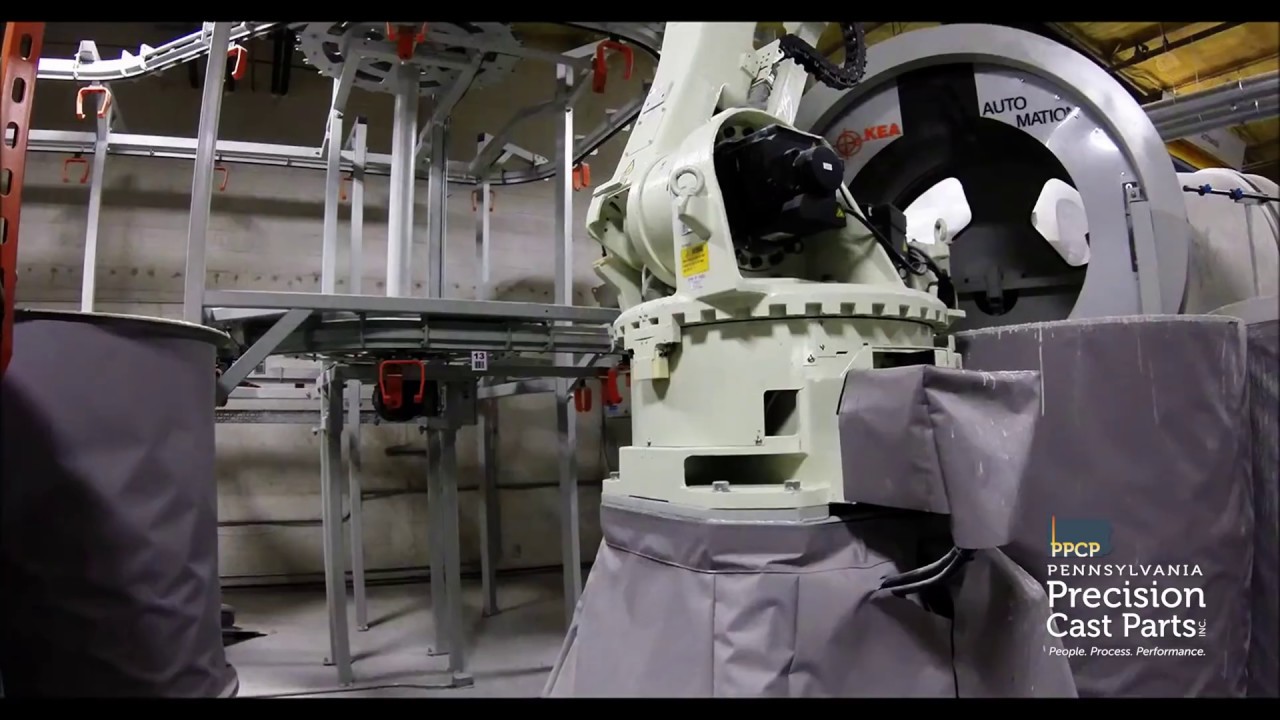
Testing Robot at Pennsylvania Precision Cast Parts
By Kim Hart
Axios
Oct 11, 2017, YORK, Pa. — For decades, Rust Belt cities have been seen as decaying manufacturing centers struggling to reinvent themselves. Now, central Pennsylvania — comprised of the smaller cities of York, Lancaster and Harrisburg — is trying to leverage its long history of manufacturing as the foundation for a vibrant robotics hub.
Why it matters: President Trump made dwindling manufacturing jobs a big theme of the presidential election, blaming globalization for the losses. Now many fear that artificial intelligence-infused technologies and robots will kill even more legacy jobs. Some small and mid-sized cities are looking to use their mechanical backgrounds to their advantage.
Why we care: I visited these three cities as part of the “Rise of the Rest” tour led by Steve Case’s firm Revolution, which aims to draw attention to the cities between the coasts that don’t have the same access to capital and reputation for innovation as Silicon Valley, New York or Boston. Pennsylvania got about 1% of the nation’s venture capital last year, a number Case would like to see increase.
By the numbers: Today there are around 12 million manufacturing jobs nationwide, compared to 17 million manufacturing jobs in 2000, according to Bureau of Labor Statistics data. In the York area, 20% of the labor force works in manufacturing — twice the Pennsylvania and national average.
Factory history: The area has a long heritage of factories that crank out both sweets and pretzels. It’s known as the “Snack Capital” — it’s home to Hershey, Utz, York Peppermint Patties and Snyder’s of Hanover. And it’s a big producer of machinery, with Harley Davidson, BAE (which makes tanks) and Voith (which makes hydro turbines) all located here.
Pivot to robotics: A skilled workforce that knows how to work with their hands and tinker with machines is a great fit for building robots, says John McElligott, CEO of York Exponential, which is working on deploying “collaborative robots” (or “cobots”). He believes robots will work alongside humans rather than displace them completely.
The problem: Not enough workers — because people just aren’t enthusiastic about going into manufacturing. “There’s not a skills gap in manufacturing, there’s an interest gap,” McElligott said.
So he set out to nudge the next generation of workers in that direction by opening The Fortress, a robotics and artificial intelligence center in York that also houses a coding and robotics bootcamp.
He expects a “silver wave” of retiring baby boomer manufacturing workers — and their machinery expertise will be needed to train the next generation of robot-builders. Continue reading Manufacturing Fuels Growth of Robotics in Central Pennsylvania
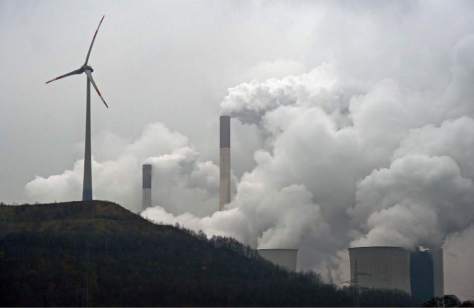
July 14, 2017 – This is in response to Keith Rothfus’ recent op-ed, “A better ‘climate’ for America,” and honestly, it’s difficult to know where to begin.
In reference to the Paris accord, Rothfus claimed, “The American people would never approve of a deal so harmful to their security and prosperity.”
Yet, as The Atlantic reported, 70 percent of Americans want the United States to remain in the Paris accord.
Rothfus argued that during the 2014 polar vortex, natural gas failed to provide energy to capacity while coal and nuclear energy did just fine.
However, PJM Vice President Craig Glazer stated at the time that coal generation was stymied by “frozen coal or wet coal, frozen limestone, frozen condensate lines, frozen fly ash transfer equipment, cooling tower basin freezing, and freezing of injection water systems for emissions control equipment.”
Rothfus suggest the coal industry’s recent woes are due to President Obama’s policies. While some policies may have affected the coal industry output, the real driving force has been its own market forces.
Charles Bayless, former chief executive of Tucson Electric Co. and Illinois Power, said, “A gas plant is much cheaper to build than a coal plant and it is much simpler to run.”
Continue reading A Closer Look at Climate Accord–and Our Congressman

While the president goes on the attack, Democratic-controlled states and municipalities forge ahead
By Justin Miller
American Propect
July 11, 2017 – In the face of the Trump administration’s predictably antagonistic stance on pro-worker policies, coupled with the escalating onslaught against worker power in Republican-controlled states, progressives are racing ahead to enact innovative labor laws to help working people in the places where they can.
Over the past eight years, Democrats’ control of government has receded to 1920s-levels, severely hindering progressives’ ability to advance pro-worker labor policy in Washington, D.C., or in the states. As of now, the Democratic Party controls the governorship and legislature in just six states, while progressive power is most concentrated in a few dozen municipalities.
It’s in those places in recent weeks that lawmakers have pushed forward a number of innovative labor laws that present a clear contrast to the Chamber of Commerce-influenced, deregulation-driven labor agenda in the White House.
Improving Home Care
Last week, Hawaii passed a law establishing a cash assistance program for people who are struggling to take care of a sick or elderly family member while maintaining a full-time job. The policy, the first of its kind in the country, takes aim at the increasingly urgent elder care crisis as the massive boomer generation ages and their children struggle to care for them.
“Every eight seconds, somebody turns 65 in America,” Ai-jen Poo, co-director of Caring Across Generations, a group that advocates for policies that improve home care, said on a call with reporters Monday. “It’s a great thing; we’ve extended longevity. And we are wholly unprepared for what the implications are in terms of care.”
Fully half of the workforce will be called on to provide care for an elder within the next five years, the group says. And that’s not a small commitment. Of the 45 million people who currently provide some level of unpaid home care to a relative, more than half are spending about 20 hours a week while also holding down a full-time job.
The Kapuna (the Hawaiian word for elder) Caregiver program would establish a fund to provide full-time workers who are providing care to a dependent elder $70 a day to help offset the burden. A recipient could use that money to help pay for health care, a caregiver, or transportation to a doctor’s appointment.
There are more than 150,000 unpaid caregivers in Hawaii currently, according to estimates by the AARP. And while in-home care or assisted living is expensive, costing between $5,000 and $10,000 a month in the state, the $70-a-day benefit is a small step to helping caregivers balance their lives.
The legislature has provided an initial $600,000 for the program and advocates say they will return to the statehouse next year to bolster funding. Continue reading Despite Trump, State Progressives Advance Pro-Worker Policies
 Beaver County Blue: Voice of the 17th CD of Progressive Democrats of America