Aug 14, 2025 – As the Trump administration aims to bolster fossil fuels at the expense of clean energy expansion, new research shows the oil and gas sector has so far failed to become a major jobs creator for heavily fracked areas of northern Appalachia.
“To the degree that we allocate resources to help develop that industry, we’re diverting those resources from other industries that actually could deliver” more jobs and higher per-capita incomes, said Sean O’Leary, author of the recent report from the Ohio River Valley Institute.
The report uses the term “Frackalachia” to describe 30 top oil- and gas-producing counties in Ohio, Pennsylvania, and West Virginia. As a group, the counties have smaller populations and a net loss in the number of jobs compared to 2008, just before Appalachia’s shale-gas boom began.
The counties’ growth in per-capita income also has lagged behind the national average, even as their nominal gross domestic product nearly doubled, increasing their share of the country’s GDP by 6%. Basically, comparatively high economic output from the counties did not produce higher-than-average incomes for their residents.
“Despite immense economic growth as measured by GDP, Frackalachia is in a position of actually having lost jobs since the beginning of the natural-gas boom,” O’Leary said. In his view, the numbers contradict pro-industry pitches for more oil and gas development.
“Whatever else it is, the natural-gas boom is not an engine for economic prosperity,” O’Leary said. He thinks the gas industry is “structurally incapable” of delivering lasting growth in jobs and income for the people living in heavily fracked areas. The Frackalachia counties have also seen relatively few jobs from “downstream” industries, such as the production of plastics, he added.
Oil and gas development is “highly capital-intensive, but not very labor-intensive,” O’Leary explained. Most earnings go to shareholders, investors, and suppliers based far from where fossil fuels are extracted, so only a small share of project income stays in the community to stimulate more economic activity.
Completed wells don’t need many permanent employees, O’Leary said. And many people who work in drilling and fracking come from outside the local area.
Canary Media’s review of data from the Ohio Department of Job and Family Services is consistent with that observation. From 2012 through 2022, the agency issued annual reports about the economic impact of the state’s oil and gas industry, including data for both “core” jobs and “ancillary” industries, which support oil and gas development.
By Joseph Minott Special to The Beaver County Times
If the first three months of operations at Shell’s petrochemical plant are any indication, the next 30 years are going to be stressful and hazardous for nearby Beaver Country residents.
The community is locked into a lasting and significant source of plastics production and dirty air pollution that will degrade the Commonwealth’s air quality and our environmental legacy for decades to come. Shell clearly isn’t interested in operating safely or responsibly – so it’s up to regulators and citizens to force them to get emissions in check.
The Shell Polymers Monaca plant in Potter Township officially began operations in November of last year. Even before opening day, the plant was already posing a threat to the surrounding community. From the very beginning, Shell has not managed to keep its pollution to safe and legal levels. It has set a terrible precedent for decades to come, and there’s no reason to expect Shell will act differently – unless it’s forced to do so.
The Environmental Integrity Project and Clean Air Council are taking steps to force Shell to take their responsibility to residents and the environment seriously. Our organizations have filed a notice of intent to sue Shell for the consistent violation of air pollution limits.
In September 2022, the plant emitted 512 tons of volatile organic compounds, nearly reaching in that one month the 12-month permitted limit of its approved volatile organic compound emissions (516.2 tons in any consecutive 12-month period). These chemicals contribute to smog and can cause nausea, nerve damage and other health problems. Shell also emitted the dangerous pollutants nitrogen oxides and carbon monoxide from sources at the plant in the final months of 2022 at rates that exceed permit limits.
It’s important to note that these limits were agreed upon by Shell and the Pennsylvania Department of Environmental Protection (DEP) through an in-depth permitting process. The fact that Shell began violating them immediately underscores just how little regard its leaders have shown for the residents harmed by the massive facility.
Those residents have had to be extra vigilant in ensuring their families are safe. The plant has caused unexpected noises in the middle of the night, odd smells, unexpected flaring activities, and more. With few official updates from Shell, community members and environmental advocates have taken to sharing information on social media and elsewhere to stay informed and connected. Eyes On Shell is one group monitoring the refinery’s actions and keeping local residents updated.
Clearly, it shouldn’t be left up to citizens and nonprofit groups to decipher flames brightening the skies or chemical odors and figure out how to protect their loved ones. Shell should be updating the community and taking every action to protect surrounding residents through safer operations and no environmental violations. The public should be able to rely on DEP to force Shell to do better.
The Shell petrochemicals complex is ground zero for an identity crisis playing out in the fossil fuel space. As the world recognizes the need to transition away from dirty fossil fuels to renewable forms of energy, companies like Shell are pivoting to massive investments in plastics manufacturing. The cracker plant on the Ohio River is a prime example: it can produce as much as 3.5 billion pounds of plastic pellets in a single year. Yet Shell’s own leaders have been caught questioning the impact of three more decades of single-use plastic production and wondering if the company will one day “take responsibility” for all that environmental damage.
We demand that Shell take responsibility now. It’s time for Shell to take responsibility for the unsafe pollution and start operating under the permitted emissions limits. It’s time for Shell to take responsibility to inform and protect the community it joined when it began this massive project. It’s time for Shell to take responsibility for the generations of Pennsylvania families it threatens with its reckless operations and environmental destruction. Tell your local lawmakers and DEP that it’s time to hold Shell accountable.
Joseph O. Minott is executive director and chief counsel of the Clean Air Council, one of the leading nonprofit advocates for Pennsylvania’s environmental protection.
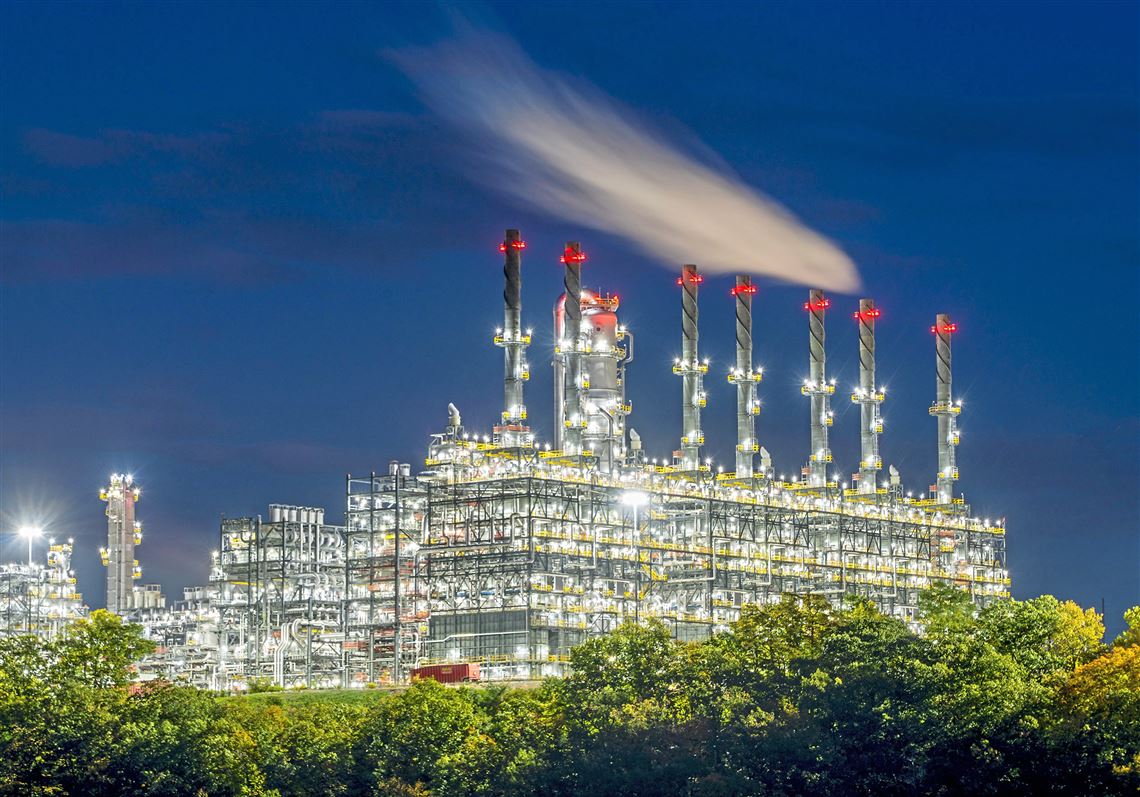
Photo: The bright lights and early emissions of the Shell Pennsylvania Petrochemical Complex in Potter Township, Beaver County.
Petrochemical plants are an environmental and economic dead end
By Matt Mehalik Pittsburgh Post-Gazette Op-Ed
DEC 11, 2022 – Southwestern Pennsylvania could have a brighter and healthier future — if only our state and region made better economic investments. After all, you get what you pay for.
Instead, the region is on a path to a dead-end by pursuing a futile, harmful fossil-fuel based economic strategy. Just last month, Shell’s massive polyethylene resin plant began production near Pittsburgh and is already proving to be a threat to the area.
What’s worse, Pennsylvania taxpayers are bankrolling it. Pennsylvania granted Shell $1.65 billion in state tax credits in 2016, one of the largest tax incentives in state history. In addition, in November the state legislature and governor passed and signed a bill that provides over $2 billion in subsidies over 20 years for natural gas, hydrogen and petrochemical industries — with less than a half-day’s notice and no public hearings.
Additionally, the Department of Energy is looking to provide $8 billion in additional federal subsidies for fossil-based hydrogen hubs. Despite alternative strategies for accelerating decarbonization and promoting inclusive economic growth, our region’s leadership doubled down on a call for fossil fuel subsidies, as detailed in “Our Region’s Energy Future” by the Allegheny Conference on Community Development earlier this year.
The Shell subsidy alone would be enough to cover a payroll of $95,000 per year over 25 years for the 400-600 permanent employees the plant was expected to employ. Shell stated that at peak construction, the site employed more than 8,500 workers. However, these temporary jobs mostly went to construction workers from other states, and have dropped now that the plant is open.
Why should taxpayers continue to subsidize a mature industry that does not deliver jobs and prosperity widely to our communities, and that also locks in harmful air, water and climate pollution?
The Pittsburgh region still suffers from some of the worst air pollution in the country. Allegheny and Beaver County for example, have elevated cancer risks and rates of asthma, heart disease and early deaths. Pennsylvania as a whole has the greatest number of excess deaths due to exposure to fine particle air pollution from fossil fuel sources per person in the country. And half of the region’s pollution still comes from industrial plants.
Emissions from the new Shell plant will add to the already-devastating concentration of pollutants in our air, and undermine the country’s progress on meeting national climate goals. The Shell plant in Beaver County would be the second highest hazardous air polluter in the state, and the 20th most polluting in the country.
The Shell plant is permitted to emit 522 tons of volatile organic compounds (VOCs) and 30.5 tons of Hazardous Air Pollutants (HAPs) per year. These chemicals are, according to the USEPA, known to “cause cancer and other serious health impacts.” VOCs for example, are also known to be damaging to lung tissue. The 159 tons of fine particles the plant will release per year will further contribute to respiratory and cardiac diseases in the region.
The people of Southwestern Pennsylvania should feel confident that the air we breathe won’t make us sick. We have the right to live and work in clean, safe and healthy environments. Why are we subsidizing the opposite of this vision, particularly when it undermines national climate goals as well?
The plant is estimated to release 2.2 million tons of carbon-dioxide-equivalent emissions per year: That’s the equivalent of the emissions from 474,000 passenger vehicles, which is more than half the number of vehicles registered in Allegheny County. The plant will also produce plastic resins that will be used to manufacture more single-use plastic goods in a world that already has too much plastic. Today, 36% of plastic production goes toward single-use plastics, specifically plastic packaging.
These are not investments we should be making or celebrating in a region that shows so much promise in going beyond the fossil fuel economy. Further, they are not a proven way to secure long-term jobs or economic growth. Studies show that wind and solar manufacturing would employ more people than comparable investments in oil and gas: More than 15,000 jobs for the same investment that is producing only a few hundred jobs at the Beaver County plant.
Our neighbors in New York State understand this. According to New York’s “Clean Energy Investment Report 2022,” New York added over 24,000 jobs in the renewable energy sector between 2015 and 2021. That’s a growth of 17% after the governor announced a $1.5 bllion investment in clean energy.
New York is continuing these fossil-free investments, and the growth is accelerating. These are not temporary jobs; rather, they are being built on a solid foundation because they are not based on extracting resources that will someday run out, and because they align with the health, climate and overall well-being needs of communities. They are long-term investments, not short-term stopgaps.
Community organizations in the region understand this. Reimagine Beaver County released a vision in 2019 that outlined a more economically viable future than petrochemicals, one made possible by investing in four major sectors of economic development: energy innovation, green chemistry and manufacturing, sustainable agriculture, and riverfront recreation and tourism.
Just think of where our region would be if we had embraced this vision, instead of propping up petrochemicals and fossil fuels.
That’s why the Breathe Project calls for imagining a brighter, healthier and more prosperous future than the one promised by fossil fuels and petrochemicals. This includes building a new workforce with diverse jobs in solar, wind and other clean technologies that will include everyone from blue-collar workers to high-tech researchers. It also includes transitioning to electric cars, buses and trucks; improving bicycle lanes; and providing more public transportation options.
While our policymakers continue to fail us, we’re glad that other leaders have stepped in. We recently appreciated a huge boost from Mike Bloomberg and Bloomberg Philanthropies’ Beyond Petrochemicals campaign that will invest $85 million in new funding for local advocacy groups in these efforts.
As someone who grew up in the Monongahela Valley, I am ready to see economic and environmental optimism for our region, based on a different vision that recognizes that fossil-fuel-based industries are not in Pittsburgh’s best interests, now and into the future. It is time to go in a different direction. Stop throwing good money after bad investments. Stop subsidizing a mature, private industry that casts burdens on our communities while allowing a narrow few to reap large profits at our expense.
Our economic future should not, and will not, be hitched to subsidizing new uses for dirty materials like petrochemicals. We can have healthy people, healthy workers, a healthy economy and a healthy environment. We deserve a bright future.
Matt Mehalik is Executive Director of the Breathe Collaborative and its communication platform, the Breathe Project.
Environmentalists in Beaver County alarmed by harmful emissions from the plant once it opens say they are discouraged by most voters’ inattention, but not deterred.
By Emma Ricketts
Inside Climate News November 5, 2022
Photo: Shell’s new petrochemical plant in Beaver County, Pennsylvania. Credit: Emma Ricketts
Environmentalists Fear a Massive New Plastics Plant Near Pittsburgh Will Worsen Pollution and Stimulate Fracking
Oct. 27, 2017 – A New Shell Plant in Pennsylvania Will Soon Become the State’s Second Largest Emitter of Volatile Organic Chemicals
ALIQUIPPA, Pa.—From the tranquility of her garden in Beaver County, Pennsylvania, Terrie Baumgardner worries that her grandchildren will grow up without access to clean air, clean water and a safe space to play outdoors.
For decades, Beaver County’s economy has been dependent on polluting industries—first steel, and more recently natural gas drilling. Many longtime residents, who remember the prosperity brought by the steel industry, have welcomed the construction of a massive new Shell petrochemical plant and the politicians that support it.
Baumgardner and other environmental activists are discouraged that local residents and politicians favor the continuation of fracking and the new mega plastics plant it has spawned, but they are not giving up their fight.
“People say that’s what we do in Beaver County—we trade our health for jobs,” Baumgardner said. “But it’s unfortunate, because it doesn’t have to be that way now.”
A reluctant activist, Baumgardner first became involved in environmental issues in 2011, when she learned about the dangers posed by fracking. Concern for the environment and health of local residents led her to canvas for signatures in 2016 as Shell moved toward building the plastics plant.
Spanning nearly 800 acres along the Ohio River, the plant is expected to open later this year. The facility will convert fracked gas into 1.6 million metric tons of polyethylene per year.
Polyethylene, made from ethane, a form of natural gas, is the key building block in numerous common plastic products—from food wrapping and trash bags to crates and bottles.
Despite assurances from Shell that the facility will be safe for the surrounding community, environmental activists have warned that the plant will cause air and water pollution, and a protracted dependence on fracking.
Under Shell’s permit, the plant can release up to 159 tons of fine particulate matter and 522 tons of volatile organic compounds per year. Exposure to these emissions has been linked to issues in the brain, liver, kidney, heart and lungs. They have also been associated with miscarriages, birth defects and cancer.
“They’re going to unload all of these toxic chemicals, hazardous air pollutants, volatile organic compounds and millions of tons of CO2 gas. What’s going to happen?” asked Bob Schmetzer, a local councilman from nearby South Heights and a long-time spokesperson for Beaver County’s Marcellus Awareness Committee. He has opposed the plant since it was first proposed 10 years ago.
Jack Manning, a Beaver County Commissioner, does not share these concerns. “I have great faith in the technology and in the competency of those that will be running the facility,” he said. “It’s a state-of-the-art, world-class facility.”
Manning blamed people’s apprehension on unfair comparisons between the environmental impacts of the plant and those of the steel mills that used to occupy the area. “Those heavy particulates are a different type of pollution,” he said.
Shell has assured residents of the safety of its plant. “At Shell, safety is our top priority in all we do and that includes being a good neighbor by communicating about plant activities that could cause concern if not expected,” Virginia Sanchez, a Shell spokesperson, said in a statement. “When we are in steady operations, it is our goal to have little to no negative impact on our neighbors as a result of our activities.”
For activists, these assurances do little to allay concerns. On a grassy hillside overlooking the massive complex, Schmetzer spoke with his friend and fellow activist, Carl Davidson. While the plant is not yet operational, the grinding sounds of industrial machinery and screeches of train cars disturbed the clear fall day.
Photo: Bob Schmetzer and Carl Davidson, standing above the petrochemical plant. Credit: Emma Ricketts
Davidson, a self-professed “solar, wind and thermal guy,” wore a Bernie cap and alluded to his youth as a student leader of the New Left movement in the 1960s. While he estimates that around one-third of residents were concerned about the plant’s potential impacts from the beginning, he expects this number to grow once it opens. “People are starting to see two things,” he said. “Number one, there is all kinds of pollution that they didn’t know about. And second, all the jobs that were promised aren’t real.”
The plant sparked hope for a revival of economic prosperity in the area. However, now that construction is largely complete and thousands of workers have finished working on the site, the plant is expected to only employ about 600 people going forward, according to Shell.
While opponents wait anxiously for the plant to begin operations, they don’t think it will influence next week’s elections. The Shell plant has been a non-issue in the tight race for the 17th Congressional District in Beaver County between Democrat Chris Delluzio and Republican Jeremy Shaffer, both of whom support continued fracking.
In the state’s closely watched U.S. Senate race between Democrat John Fetterman and Republican Mehmet Oz, both of whom support fracking, the environment has barely come up in a nasty campaign focused on abortion rights.
Similarly, fracking and the environment have hardly been mentioned in the governor’s race between Democrat Josh Shapiro, the state’s attorney general, and Republican state Sen. Doug Mastriano, a Trump supporter and election denier.
Beaver County, while only counting for 1.3 percent of the votes cast in any given election in Pennsylvania, is a bellwether, according to Professor Lara Putman of the University of Pittsburgh. “It is socio-demographically similar to counties that, collectively, make up about one-quarter of Pennsylvania’s population. So in that sense, when Beaver shifts other places are usually shifting as well,” she said.
Baumgardner called the political candidates’ silence “disheartening.”
“I wish they would have the courage to speak up, to take a position and stick with it,” she said.
However, she understands the political risks associated with taking an environmental stand in a community that believes its economic fortunes are tied directly to pollution. She just wishes this wasn’t still the case. “We have alternatives,” she said. “We just need our political leaders to embrace them and get serious about renewables and removing the subsidies on fossil fuels.”
According to Davidson, the key to awakening the public is to ensure that alternatives are tangible. Good ideas aren’t enough to make people give up the job opportunities they have, he said. Clean energy projects are great in theory, but until workers can see a real job with similar wages, many will continue to support the status quo.
Progress might be slow, but Baumgardner, Davidson and Schmetzer remain hopeful that the realities of the plant will sway public opinion once residents’ senses are assaulted with the acrid smells and cacophony of relentless sound they expect the new plastics plant will emit. They each stand ready to educate people on its health and environmental impacts, as soon they are ready to listen. They may be discouraged, but are not deterred.
“Nothing is going to shut me down as long as my grandkids are here,” Baumgardner said.
Emma Ricketts is a graduate student at Northwestern University’s Medill School of Journalism. She focuses on politics, policy and foreign affairs reporting, with a particular interest in climate change and environmental issues. Previously, Emma practiced as a lawyer in a New Zealand-based commercial litigation team where she focused on climate-related risk.
Covid19 forced Shell to focus on workers’ health &safety at its construction site in Beaver County.
By Randy Shannon Beaver County Blue
For months 8,000 workers were laboring, eating, and bus riding in close quarters. Some local construction workers said it was the safest cleanest site they had known. When Covid19 came around construction workers were worried but they couldn’t say anything. When a few cases showed up in Beaver County including one at Eaton Corp and one at Anchor-Hocking, then family members – spouses – decided the money Shell paid wasn’t worth risking the lives of their families.
Tina Shannon, the leader of Progressive Democrats of America starting receiving a few messages from people she knows, who had significant others working at Shell. They were concerned that the filth and the packed lunch rooms and buses would spread the virus.
The next day Tina posted a Call-In Day Event Page on Facebook and a massive email, asking people to call the County Commissioners and tell them to demand Shell shut down the construction site. As she publicized the Event, she got a lot of positive feedback. One local union friend did, however, respond by suggesting that her demand would “rob thousands of employees and their families of a living.”
Tina’s response, on March 18th, was: “Drawing everyone from throughout the County into this one place is a recipe of how to spread a virus. This is unconscionable. Take a look at Italy and then compare our very conservative numbers. We’re going to have to have federal legislation to give people income to get through this.”
In two days local folks, including people in Pittsburgh (located downwind) had bombed the County Commissioners with phone calls. The third day the County Commissioners held a press conference announcing that they wanted Shell to shut down construction immediately to prevent spread of Covid19. On March 18th Shell announced it was closing while claiming that it was safe and clean. Continue reading Covid19 and Unions in Beaver County→
Disability-rights advocate Jessica Benham (D-South Side) has been running for Pennsylvania state House District 36 for several months and picked up a number of Democratic endorsements along the way, including Pittsburgh City Council President Theresa Kail Smith (D-West End) and state Sen. Lindsey Williams (D-West View).
But on Sunday, the Allegheny County Democratic Committee (ACDC) endorsed Benham’s opponent Heather Kass (D-Carrick) despite Kass’ past social media posts where she praised Donald Trump, decried the Affordable Care Act, and shared a far-right meme about Hillary Clinton.
The Allegheny-Fayette Labor Council issued a rebuke of the ACDC endorsement of Kass, saying, “There is no room — in the labor movement or in the Democratic party — for someone who trashes the Affordable Care Act and pushes propaganda from right-wing think tanks that exist to attack unions, hurt workers, and help corporate interests.”
WESA reported that AFLC didn’t endorse any candidate, but that Benham came closest to the threshold of votes needed to get the labor council’s endorsement.
Today, a local union that sits within the AFLC has announced it is endorsing Benham in the District 36 race.
Operating Engineers Local 66 is backing Benham and Local 66 business manager Jim Kunz says in a press release that Benham “will be an advocate for our workers and for family-sustaining union jobs in the natural gas industry, ensuring that our members will have a voice in conversations about jobs and the environment.”
OE Local 66 represents more than 7,900 members in 33 Western Pennsylvania counties as well as three counties in Ohio. Members complete construction and other work for contractors, private businesses, and municipalities. OE Local 66 members are currently working on the ethane cracker plant in Beaver County and a power plant in Lawrence County.
Benham says in a press release that she is honored to stand with the Operating Engineers to “fight for good jobs and for a strong local economy.”
“In my ongoing conversations with them, we have discussed the necessity of a public policy that protects our environment without leaving workers behind,” said Benham in a press release.
“When I talk about clean air and water, I want to center everyone who is impacted.”
Benham says she looks forward to working with unions, community members, and environmental advocates to move the region toward a sustainable energy future.
Dec 17, 2019 – In 2018, a natural-gas well exploded near Powhatan Point in Ohio, a small town that sits along the Ohio River, just 60 miles from Pittsburgh as the crow flies. The fracking well was owned and operated by a subsidiary of oil giant Exxon.
According to a study published yesterday in the Proceedings of the National Academy of Sciences, this single explosion emitted a gargantuan amount of methane into the atmosphere. Over the 20 days it took for Exxon to plug the well, more than 57,000 metric tons of methane was released, at a rate of about 120 metric tons of methane per hour.
This figure, from one well in less than three weeks, eclipsed the annual amount of methane that is emitted by the oil and gas industries of France, Norway, and the Netherlands combined. The Ohio blast is now the largest known methane leak on record in the U.S. and was twice as large as the previous largest leak that occurred at an oil and gas storage facility in California in 2015.
@NaomiAKlein: Terrifying story about a blowout in Ohio that released “as much methane as the entire oil and gas industries of some nations release in a year.” EDF – which has aggressively pushed NatGas as a “bridge fuel” – explains that this could be happening every day https://nyti.ms/34tdR7f
The findings mark a step forward in using space technology to detect leaks of methane, a potent greenhouse gas, from oil and gas sites worldwide.
Methane is an extremely powerful greenhouse gas. Studies vary, but methane is generally considered to be between 25-84 times more potent of a greenhouse gas than carbon dioxide.
Oct 7, 2019 – Pennsylvania is ready for a just, clean-energy future. Ever since 1859, when Edwin Drake ushered in the modern era’s addiction to fossil fuels when he struck “rock oil” in Titusville, our state has been at the front lines of the extraction industry’s booms and busts. We are way past ready for a Just Transition to renewable sources of energy and a sustainable future for us all.
For a century and a half, we’ve watched corporations pull poisons from the ground, then leave the health and safety of our communities in ruins as they move on with all the riches. From poisoned rural waterways to the nearly catastrophic explosion at a South Philadelphia oil refinery earlier this year, no part of the state has been left unscathed. But even after a century and a half, the extraction industry still thinks the people of Pennsylvania can be fooled by its false narrative. We won’t.
Rose Tennent, a longtime conservative pundit and surrogate for the Trump campaign, now leads this unholy choir in Pennsylvania. She recently penned an op-ed decrying Senator Elizabeth Warren’s proposal to ban fracking entirely under her presidency.
Presumptuously claiming to speak for all Pennsylvanians, Tennent argues Warren’s proposal will kill the “desirable” jobs that have accumulated in the state as a result of the fracking industry, which she irresponsibly calls “responsible.”
Let’s talk jobs first – because the statistical data Tennent relies on is grossly inaccurate. She overstates the positive impact the fracking industry has had on communities.
Speaker Mike Turzai, Tennent’s extraction-loving wing man in the Pennsylvania House of Representatives, doesn’t even bother to remove industry emblems from the handouts he uses to promote fracking. Like Tennent, he touts the number of jobs he says fracking has created in the state. But we need to look beyond this headline to get to the truth. Continue reading Pennsylvania Is Ready For A Just, Clean-Energy Future→
Some medical experts said breathing will be much harder once plant is up and running
By Paul Van Osdol WTAE Investigative Reporter
May 9. 2019 – MONACA, Pa. — The massive ethane cracker plant in Beaver County is bringing thousands of jobs to Western Pennsylvania.
But Action News Investigates has learned it may also bring thousands of tons of air pollutants to a region that already has some of the nation’s dirtiest air.
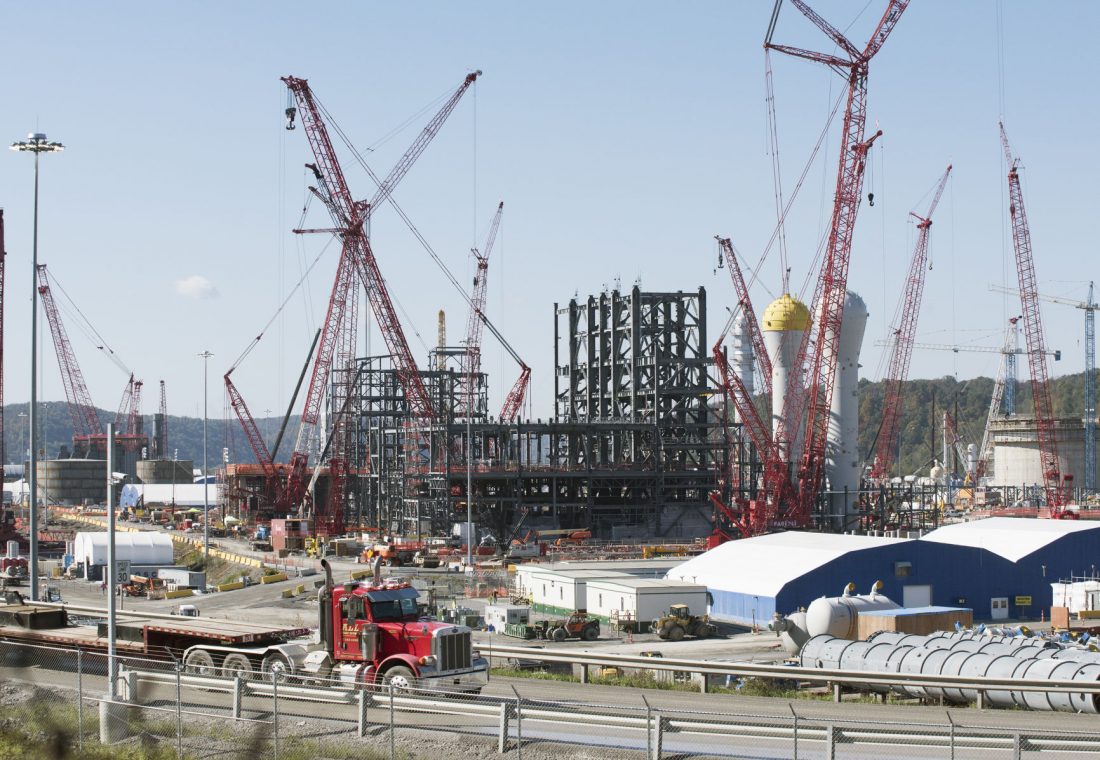
At the cracker plant site, dozens of cranes soar into the sky as thousands of construction workers assemble the petrochemical facility that will convert natural gas liquids into plastics.
The project has breathed new life into what was an industrial wasteland.
But some medical experts who are also environmental advocates said breathing will be much harder once the plant is up and running.
“To me it’s about breathing. It’s about health,” said Dr. Ned Ketyer, a retired pediatrician affiliated with Pitt’s Climate and Global Change Center.
He said the plant’s toxic fumes will affect health as far south as Pittsburgh.
“Allegheny County is already dealing with higher risks of cancer because of air pollution and I believe this is going to make things much worse,” Ketyer said.
Volatile organic compounds, or VOCs, are a major industrial pollutant. Environmental Protection Agency records show the industrial plant with the largest VOC emissions in Western Pennsylvania is the Clairton Coke Works, with 291 tons of VOCs in 2014, the most recent year available.
But the cracker plant’s state permit says it is allowed up to 522 tons of VOCs per year.
Ammonia is another air toxin.
“That can have immediate effects on the brain and the liver,” Ketyer said.
EPA records show the Coke Works and U.S. Steel’s Edgar Thomson Works in Braddock combined emitted 139 tons of ammonia in 2014.
Protestors outside the Marcellus and Manufacturing Development Conference in Morgantown, West Virginia on April 9, 2019. (Photo by Kat Procyk/PublicSource)
By Oliver Morrison
PublicSource.org
April 10, 2019 – Attendees at an industry conference in West Virginia on Tuesday cheered projections for increased petrochemical production in the next 40 years, while protesters outside held up withered single-use plastic bags to show the environmental harm of petroleum products.
Both groups, however, shared a common view that the economic hype and resulting environmental impact predicted for the region may not pan out. It’s how they feel about the prospect that diverges.
The Ohio River Valley region is projected to be on the brink of a petrochemical boom adding to its already booming natural gas industry: Production of ethane, which is used to make plastics, is expected to quadruple by 2025, according to a presentation by Brian Anderson, the director of the National Energy Technology Center at the U.S. Department of Energy.
Several top industry executives and analysts at the Marcellus and Manufacturing Development Conference in Morgantown spoke about the rare opportunity to create 100,000 jobs, an industry estimate, and bring billions of dollars in economic growth to the region, which includes Pennsylvania, West Virginia and Ohio.
“This is the chance of a lifetime to create a generational change for the region,” said Michael Graney, executive director of the West Virginia Development Office.





 By Ryan Deto


 Beaver County Blue: Voice of the 17th CD of Progressive Democrats of America