The Short Course on the Marcellus Shale – But There’s Much More to Come

A Huge Fracking Mess

New York Times investigation uncovers lax regulations, radioactivity and serious concerns about water contamination.

By Andrew Schenkel
Beaver County Blue via MNN.Com Bloggers
Mon, Feb 28 2011

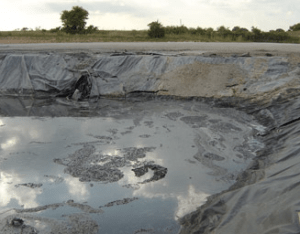
Fracking concerns FRACKED UP: A recent expose by the New York Times reveals all sorts of problems with the process for extracting natural gas. (Photo: ltmayers/Flickr)

The New York Times and reporter Ian Urbina dropped a serious bomb on the fracking industry over the weekend with the first installment of a series of reports entitled Drilling Down.

Urbina’s story is the first must-read of the year when it comes to energy and environmental reporting. It reveals all sorts of damning nuggets about fracking in Pennsylvania, Wyoming and Colorado. I think anyone who cares about energy production should take a look. Here are a few highlights or, in this case, lowlights:

1. Radioactive material found in water

Wastewater is a major part of the fracking process. Millions of gallons of toxic water mixtures are necessary for the extraction of natural gas, and once the gas is extracted something has to be done with all that waste. The problem, according to the Times, is that the wastewater has been frequently found to contain amounts of radiation hundreds and sometimes thousands of times higher than what the federal government allows. This radioactive wastewater may be getting into drinking water because it is often hauled to sewage plants not designed to treat it and “discharged into rivers that supply drinking water.” That’s not good, even if you are a fan of the three-eyed fish from The Simpsons.

2. The EPA hasn’t done much

For everyone in Congress who has been clamoring to reduce the power of the Environmental Protection Agency, the Urbina piece reveals that the agency has been relatively powerless when it comes to fracking. The story alludes to several documents and interviews that “alarmed” EPA scientists, but were never made public. These findings included the revelation that many sewage treatment plants simply couldn’t remove the contaminants from the toxic fracking fluids. Perhaps even more damning is that scientists and consultants with the EPA have known about the radioactive problem since 2006 and have apparently not made much of an effort to call for testing for radioactivity. (The fracking boom began in 2008.) That’s not good, even if you are a fan of water that glows in the dark.

3. Concerns out West

Most of the Urbina story focused on Pennsylvania, which was described as “ground zero” for the fracking industry. While this is certainly true, the story did make some interesting and scary connections to the heavily fracked states of Colorado and Wyoming. As someone who has spent a few years in both states, I wasn’t surprised. But I was still disappointed to read, “In a sparsely populated Sublette County in Wyoming, which has some of the highest concentrations of wells, vapors reacting to sunlight have contributed to levels of ozone higher than those recorded in Houston and Los Angeles.” From my few trips to Sublette County, I can tell you that there isn’t much that it has in common with Los Angeles or Houston. The ozone connection is not a good one to make, even if you are a fan of awesome sunburns. 

4. The natural gas industry doesn’t seem to care

While it’s easy to point to flaws in the regulatory process and within the EPA, let’s not ignore the industry that is doing this. I couldn’t help but notice that throughout the NY Times story, it seemed the industry not only knew about these serious concerns but kept operating despite them. An industry study going back to 1990 stated that “’using conservative assumptions,’ radium in drilling wastewater dumped off the Louisiana coast posed ‘potentially significant risks’ of cancer for people who eat fish from those waters regularly." This is of concern because radium may not just be getting into water in places like Pennsylvania, but also the food chain, as livestock is likely to ingest radium. Therefore anyone who eats that livestock may be exposed to the carcinogen. There are also several other instances of information that the industry was privy to in this report, followed by explanations of how they are not concerned. Perhaps most concerning of all is this statement that reveals how much regulators are depending on the very industry they are regulating for information. “’If we’re too hard on them,’ the inspector added, ‘the companies might just stop reporting their mistakes.’”

So there you have it — a few lowlights from a very depressing article. However, perhaps this is the beginning of getting energy right. You have to know what’s wrong before you can fix it. There’s certainly a lot wrong, but with accountability and transparency perhaps we can get it right. That’s a start.

Rep. Conyers Introduces Full Employment Act: HR870

Congressman John Conyers, Jr.
Chairman, House Committee on Judiciary
Dean of the Congressional Black Caucus

________________________________________________________________________

For Immediate Release Contact: Nicole Triplett
March 3, 2011 (202) 225-5543

Conyers Introduces Deficit Neutral Full Employment and Training Bill

Washington DC- Congressman John Conyers (D-Mich.) today introduced H.R. 870, the “Humphrey-Hawkins 21st Century Full Employment & Training Act,” a comprehensive and innovative federal and local government job creation and training bill that would create millions of new jobs for the nation’s unemployed.

Local jobs would be created through a partnership between the Department of Labor, state, and local governments, non-profit community organizations, and small businesses. Under the Act, jobs would be created in the fields of construction, infrastructure repairs, green jobs, education, health care, and neighborhood renovation.

The Act’s Full Employment Trust Fund would provide federal funding for local community-based job creation and training initiatives until full employment is reached in the United States. The Act is deficit neutral and fully funded through a modest tax on Wall Street stock and bond transactions.

“Today, there are millions of Americans who want a job, but can’t find one,” said Conyers. “The inability to find meaningful and sustainable work strips our fellow citizens of their basic right to have access to food, housing, health care, freedom of movement, and perhaps, most importantly, the ability to pursue life with a sense of dignity and meaning. High levels of unemployment are unacceptable and immoral in the wealthiest nation in the world. Thus, I believe it is critical that the federal government empower states, local governments, non-profits, and small businesses to create jobs during an economic downturn.

My “Humphrey-Hawkins 21st Century Full Employment and Training Act” would allow local government officials to work with community leaders to come up with an effective job creation program, based on each community’s respective needs—be it improvements in infrastructure, housing, energy efficiency, education, or health care.

The private sector will also benefit if millions of new jobs are created through improvements in our nation’s aging and crumbling infrastructure. New orders for brick, concrete, steel, aluminum, and plastics mean new jobs in America’s plants and factories and a rebirth of American manufacturing.

Lastly, because we exist in a period when concerns about government debt loom large in many minds, my legislation will be fully funded by a tax on Wall Street speculation and will not add a dime to the federal debt. Wall Street was responsible for the financial crisis that began in 2008 and continues to affect us today. Having already received significant assistance from the federal government, it is only fair that Wall Street now pay Main Street back by helping put America back to work.”

Urgent: Tell Your Water Authority to Test for Radium

Casey pushes for testing of water sources

Wednesday, March 02, 2011
By Don Hopey, Pittsburgh Post-Gazette

U.S. Sen. Bob Casey has called on state and federal environmental regulators to increase testing of public drinking water supplies for radioactive contamination connected with the burgeoning Marcellus Shale gas well drilling industry in Pennsylvania.

The senator’s request that the state Department of Environmental Protection and the U.S. Environmental Protection Agency step up sporadic radiation testing follows a New York Times report that hydraulic fracturing wastewater at 116 of 179 deep gas wells in the state had been found to contain high levels of radiation.

“No threat to Pennsylvania drinking water should be taken lightly, especially one involving radioactive material,” Mr. Casey, D-Pa., said Tuesday. “Alarming information has been raised that must be fully investigated.”

Continue reading Urgent: Tell Your Water Authority to Test for Radium

Progressive Dems Start Calling Out Polluters and Their Apologists

Toxic Sludge from ‘Fracking’

Dems seek EPA Natural Gas Drilling

Controls on Heels of NY Times Exposé

By Ben Geman –
The Hill

02/27/11 – A top House Democrat is urging EPA to quickly toughen regulation of natural gas drilling following a New York Times report on the discharge of dangerous pollutants into rivers that supply drinking water.

The Times – citing internal documents from EPA and elsewhere – claims that chemicals and radioactive elements in wastewater from gas projects are creating “dangers to the environment and health [that] are greater than previously understood.”

Rep. Ed Markey (D-Mass.) sent EPA Administrator Lisa Jackson a detailed letter Saturday calling for “immediate action.”

“I am outraged that state and federal regulators were evidently well aware of the risks that the wastewater might pose, but instead chose to adopt a ‘see no evil, hear no evil’ approach to regulation by ignoring them,” writes Markey, the top Democrat on the Natural Resources Committee.

Continue reading Progressive Dems Start Calling Out Polluters and Their Apologists

The Truth Comes Out: The New York Times Bombshell on Natural Gas ‘Fracking’ Everyone’s Talking About

Drilling Down: Regulation Lax as

Gas Wells’ Tainted Water Hits Rivers

By IAN URBINA
New York Times

Feb. 26, 2011 – The American landscape is dotted with hundreds of thousands of new wells and drilling rigs, as the country scrambles to tap into this century’s gold rush — for natural gas.

The gas has always been there, of course, trapped deep underground in countless tiny bubbles, like frozen spills of seltzer water between thin layers of shale rock. But drilling companies have only in recent years developed techniques to unlock the enormous reserves, thought to be enough to supply the country with gas for heating buildings, generating electricity and powering vehicles for up to a hundred years.

So energy companies are clamoring to drill. And they are getting rare support from their usual sparring partners. Environmentalists say using natural gas will help slow climate change because it burns more cleanly than coal and oil. Lawmakers hail the gas as a source of jobs. They also see it as a way to wean the United States from its dependency on other countries for oil.

But the relatively new drilling method — known as high-volume horizontal hydraulic fracturing, or hydrofracking — carries significant environmental risks. It involves injecting huge amounts of water, mixed with sand and chemicals, at high pressures to break up rock formations and release the gas.

With hydrofracking, a well can produce over a million gallons of wastewater that is often laced with highly corrosive salts, carcinogens like benzene and radioactive elements like radium, all of which can occur naturally thousands of feet underground. Other carcinogenic materials can be added to the wastewater by the chemicals used in the hydrofracking itself.

Continue reading The Truth Comes Out: The New York Times Bombshell on Natural Gas ‘Fracking’ Everyone’s Talking About

Worker Solidarity Comes To Harrisburg, Too!


‘We Are Wisconsin’ Rally on Capitol Steps Draws 1,000

LARA BRENCKLE, The Patriot-News

By LARA BRENCKLE

Harrisburg’s Patriot-News

Feb 26, 2001

We are Wisconsin rally

Carla Crawford of Pittsburgh yells towards protesters during a We Are Wisconsin rally to show support for the state’s workers. Wisconsin’s governor and Republican legislature are seeking to end collective bargaining for state employees.

Tom Banks of Lemoyne (with flag) shows his support during a "We Are Wisconsin" rally to show support for the state’s unionized workers. Wisconsin’s governor and Republican legislature are seeking to end collective bargaining for state employees.

rally 2 0226 sds

Saying they’re sending an SOS for the American Dream, a thousand people gathered on the steps of the State Capitol this afternoon in support of union workers and the middle class.

Organized by Keystone Progress and dozens of other  organizations, the event was part of a nationwide day of action against efforts in Wisconsin and other states to eliminate collective bargaining for unionized state employees.

Continue reading Worker Solidarity Comes To Harrisburg, Too!

Egypt and the United States – Victims of the Neoliberal Agenda

A revolution against neoliberalism?

If rebellion results in a retrenchment of neoliberalism, millions will feel cheated.
‘Abu Atris’ Last Modified: 24 Feb 2011 17:04 GMT

On February 16th I read a comment was posted on the wall of the Kullina Khalid Saed (“We are all Khaled Said”) Facebook page administered by the now very famous Wael Ghonim. By that time it had been there for about 21 hours. The comment referred to a news item reporting that European governments were under pressure to freeze bank accounts of recently deposed members of the Mubarak regime. The comment said: “Excellent news … we do not want to take revenge on anyone … it is the right of all of us to hold to account any person who has wronged this nation. By law we want the nation’s money that has been stolen … because this is the money of Egyptians, 40% of whom live below the poverty line.”

By the time I unpacked this thread of conversation, 5,999 people had clicked the “like” button, and about 5,500 had left comments. I have not attempted the herculean task of reading all five thousand odd comments (and no doubt more are being added as I write), but a fairly lengthy survey left no doubt that most of the comments were made by people who clicked the “like” icon on the Facebook page. There were also a few by regime supporters, and others by people who dislike the personality cult that has emerged around Mr. Ghoneim.

This Facebook thread is symptomatic of the moment. Now that the Mubarak regime has fallen, an urge to account for its crimes and to identify its accomplices has come to the fore. The chants, songs, and poetry performed in Midan al-Tahrir always contained an element of anger against haramiyya (thieves) who benefited from regime corruption. Now lists of regime supporters are circulating in the press and blogosphere. Mubarak and his closest relatives (sons Gamal and ‘Ala’) are always at the head of these lists. Articles on their personal wealth give figures as low as $3 billion to as high as $70 billion (the higher number was repeated on many protesters’ signs). Ahmad Ezz, the General Secretary of the deposed National Democratic Party and the largest steel magnate in the Middle East, is supposed to be worth $18 billion; Zohayr Garana, former Minister of Tourism, $13 billion; Ahmad al-Maghrabi, former Minister of Housing, $11 billion; former Minister of Interior Habib Adli, much hated for his supervision of an incredibly abusive police state, also managed to amass $8 billion — not bad for a lifetime civil servant.

Continue reading Egypt and the United States – Victims of the Neoliberal Agenda