
The Coming War with Iran
Iranian missiles for taking out aircraft carriers and other targets
Is GOP Rhetoric Setting the
Stage for an Israeli Attack?
By Tom Hayden
Beaver County Peace Links via TomHayden.com
Feb. 7, 2012 – Israel now estimates that Iran’s nuclear program is nine months away from “being able to withstand an Israeli attack,” which happens to be the same timeline as the U.S. presidential election. Meanwhile, a well-connected U.S. Pentagon adviser believes that Israel might give the White House only an hour or two warning before attacking Iran, “just enough to maintain good relations between the countries but not quite enough to allow Washington to prevent the attack.”
These troubling assertions were contained in a recent and authoritative article in The New York Times Magazine about a potential Israel-Iran confrontation. Written by the magazine’s Israeli correspondent Ronen Bergman, who has access to top Israeli leadership, the story reports that Israel believes three key conditions for starting a war may have been met.
First, that Israel can cause serious damage to Iran’s sites and “withstand the inevitable counterattack.” Second, that there is tacit support from the “international community,” particularly the United States, for carrying out an attack. And third, all other possibilities of containing the threat have been exhausted, and it will soon be too late to prevent.
Standing in the way, according to the article, is President Barack Obama, whom the Israelis suspect “has abandoned any aggressive strategy that would ensure the prevention of a nuclear Iran and is merely playing a game of words to appease them.” The same conclusion has been suggested elsewhere.
Beaver Coalition Rallies for PA Voting Rights against Republican HB 934
 January 27, 2012
by Tina Shannon
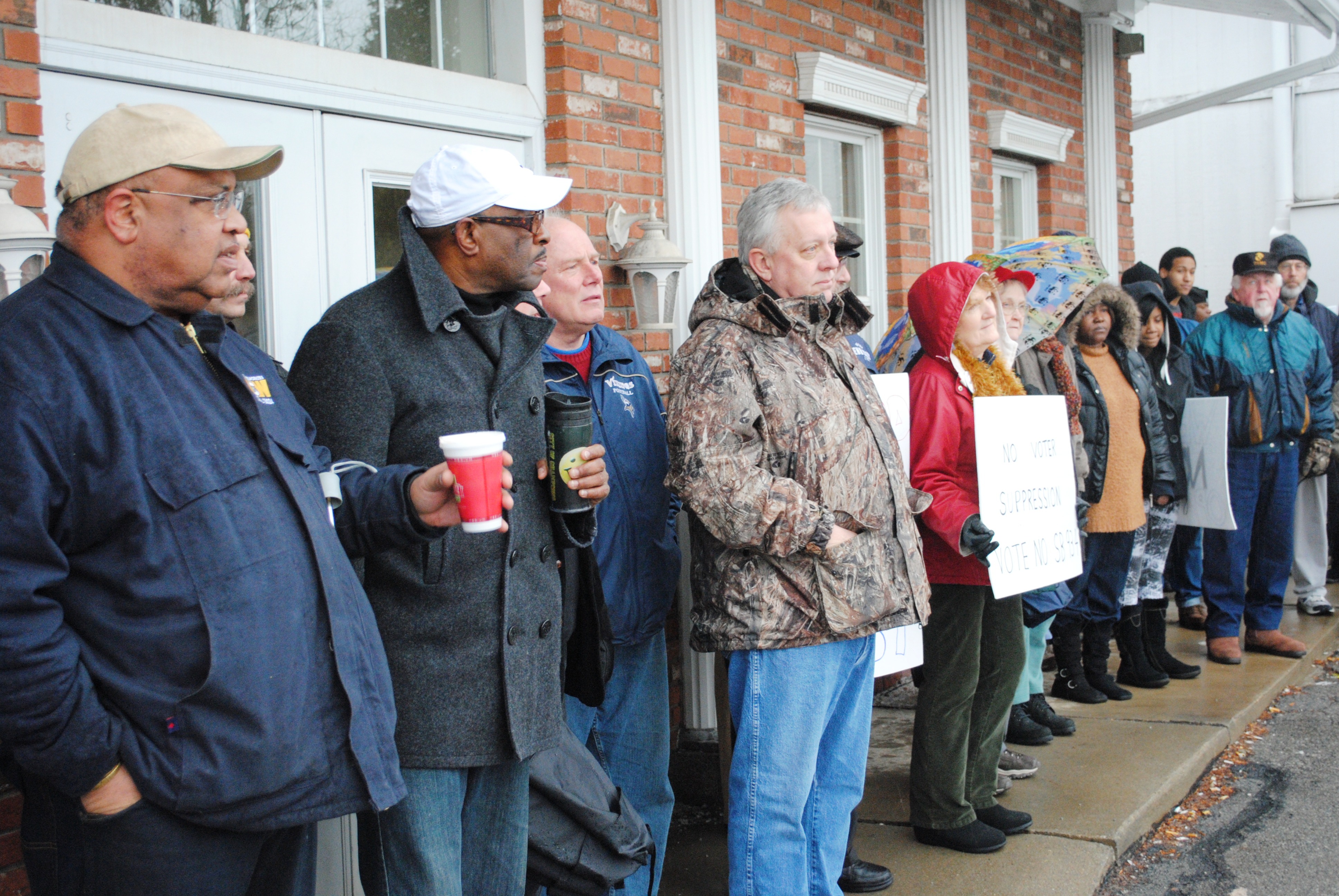
You might think it depressing to stand in a parking lot in a cold blowing rain on a Saturday afternoon to protest for our voting rights.
Nothing could be further from the truth.
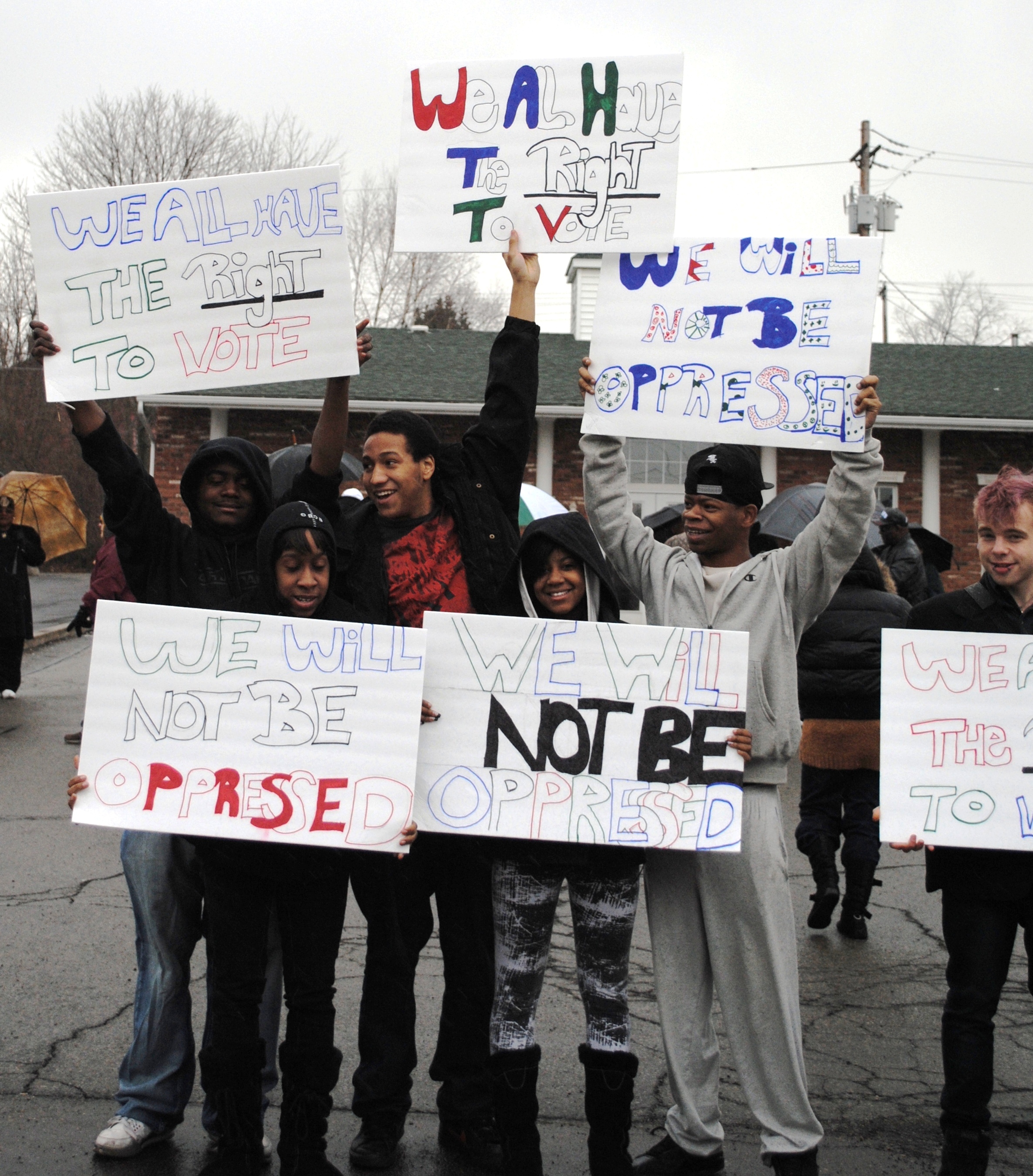
Over fifty people, black & white, young and old, stood together outside State Senator Elder Vogel’s office last Saturday at noon. We let him know we don’t like the PA Republican legislators trying to make it harder to vote.
HB 934, which would create obstacles to voting, was rushed through the State House of Representatives. We want to make sure Senator Vogel doesn’t allow the same thing to happen in the State Senate.
Me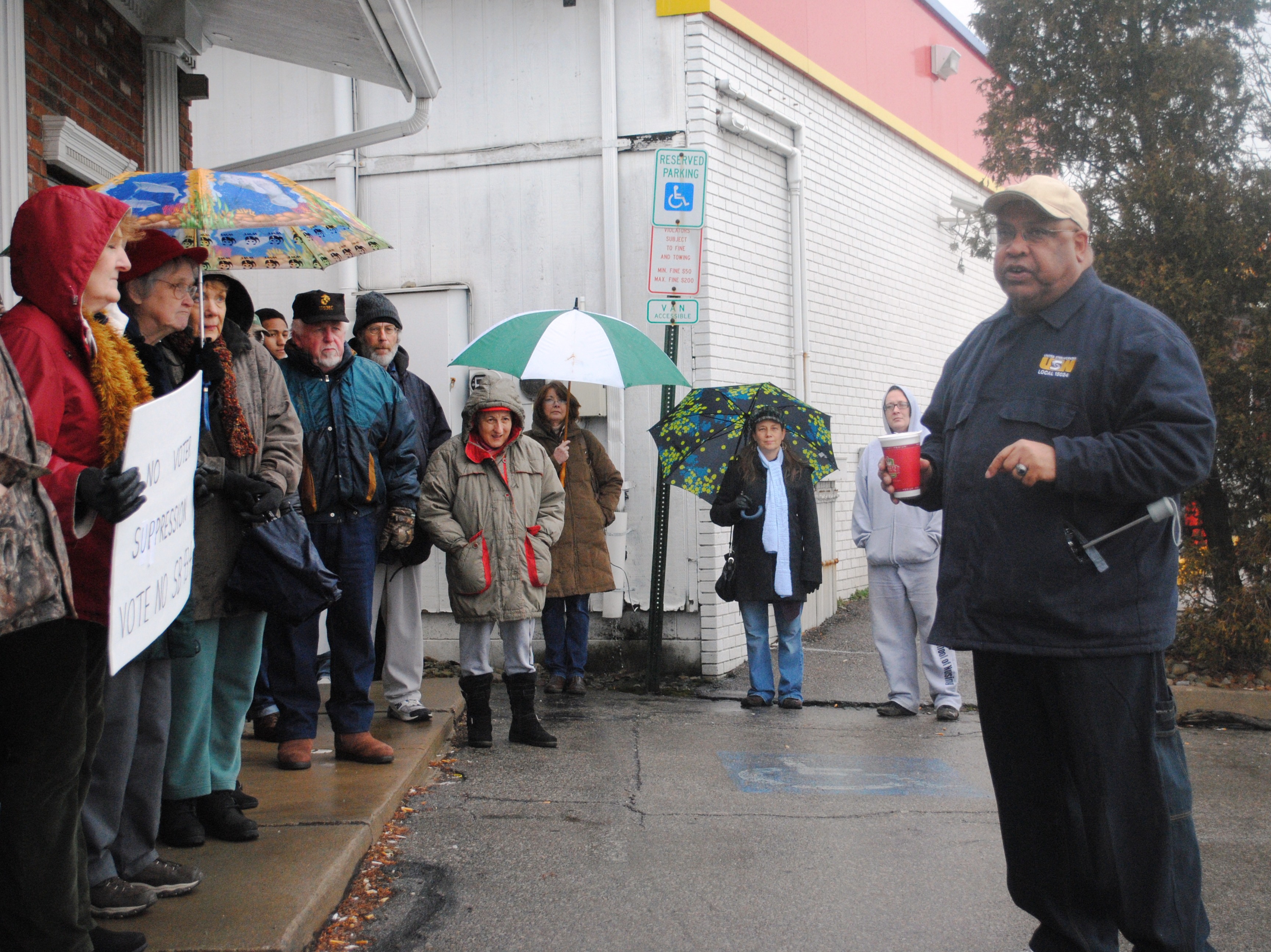 mbers of the Beaver County Minority Coalition, the Beaver- Lawrence Central Labor Council, the Beaver County Chapter of the NAACP and many local area Unions were present. Local Progressive Democrats turned out in large numbers.
USW International Vice-President Carl Redmond addressed the crowd, after being introduced by Minority Coalition Chair Linwood Alford. He pointed out that the Republican Governor was slashing the budgets for education, child care, community services, environmental protection, worker safety and local governments. Curtailing the right to vote is part of their plan to silence the voice of the working people of our state.
NAACP President Willie Sallis and Beaver County Commissioner Joe Spanik also spoke. The theme of the day was unity in defense of our rights and the gains we’ve made over the years.
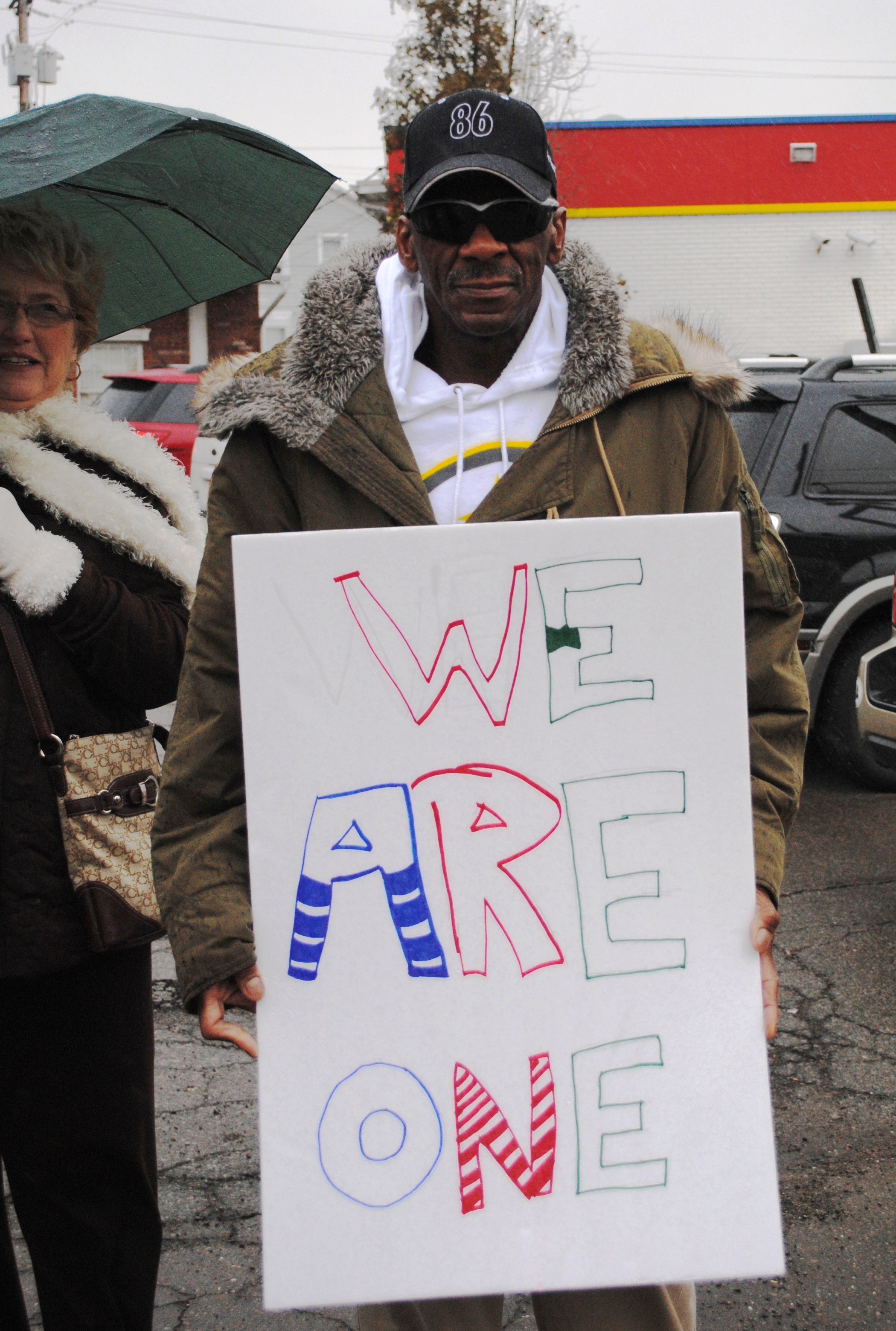
Unity was not only in the words spoken, but also in the comradery of the crowd. As we work together to make Beaver County and our country a better more fair society, we are getting to know one another. We are beginning to trust one another and understand each other’s motivations. This is the way forward.
You can get a glimpse of this when you look at the faces in these pictures. It was great to stand in the rain with so many people who are committed to democracy. It gave us all hope for the future.
 Help defend our right to vote by calling Senator Vogel next week and ask him to stop the Senate version of HB 934 for coming to a vote.
Voting Rights Protest vs. GOP in Rochester, Saturday, Jan. 28
We Need Some ‘Street Heat’
on Sen. Elder Vogel, Join Us!
By Tina Shannon
Progressive Democrats of America
Dear Friends & Fellow Progressives,
The right wing in our nation has always and continually made every effort to keep people from voting.
At one time only white male property owners could vote. This was expanded to all white males. Then after a bloody civil war, black males gained the right to vote. Then women gained the right to vote after a long battle. Finally young folks from ages 18 to 21, who were fighting and dying in foreign wars, gained the right to vote.
In the South, where the former slave-owner aristocracy maintained power, a raft of new laws were passed that disenfranchised black voters. There were poll taxes, various voter tests and other obstacles thrown up to stop blacks and poor whites in the South from voting. The Republican Party is renewing this drive to disenfranchise wide sectors of the voting population in order to tighten their hold on the national government.
We are concerned that Sen.Vogel is a supporter of House Bill 934, the PA Voter Suppression Bill.
The right to vote is one of our most important rights. Now it is being challenged with new restrictions. Join us Saturday to voice your protest in person.
PROTEST TO DEFEND VOTING RIGHTS
(Sen Vogel, stop this bill from coming to a vote)
Saturday, January 28th 12:00 noon
Sen. Elder Vogel’s office 488 Adams St. in Rochester
This demonstration is being organized by leaders and activists of the Beaver-Lawrence Labor Council, the NAACP, the Minority Coalition, Progressive Democrats, and representatives of local unions and churches. Our only hope politically is to keep building this progressive coalition that is growing & gaining strength right before our eyes. Please come out & help with this. It’s what PDA is all about.
Continue reading Voting Rights Protest vs. GOP in Rochester, Saturday, Jan. 28
We’re All in the Same Boat?
On the Topic of Obama, the
GOP Can’t Even Blush Anymore
By Carl Davidson
Keep On Keepin’ On!
If Hollywood gave Oscars for shamelessness, the Republican responses to President Obama’s State of the Union speech last night, Jan 24, would have swept the field.
Take Indiana’s Gov. Mitch Daniels, who gave the official GOP response:
"No feature of the Obama presidency has been sadder than its constant efforts to divide us, to curry favor with some Americans by castigating others," he said. "As in previous moments of national danger, we Americans are all in the same boat."
Amazing. One top GOP candidate, Newt Gingrich, is running around the country attacking Obama as the ‘Food Stamp President,’ while the other, Mitt Romney, whose newly released tax returns show he takes in more in a day than a well-paid worker does in a year, critiques Obama’s business skills using a shuttered factory as a stage prop.
Obama, of course, never shut down a single factory, yet that was precisely the business Mitt Romney and his outfit, Bain Capital, was famous for, including shutting down a factory in Florida, where his video message was being recorded.
"All in the same boat" and ‘castigating others’ indeed. Governor Daniels uttered these words as the state he presides over is currently engaged in a notorious ‘right to work for less’ battle to strip Indiana’s workers on their ability to bargain collectively.
Like many Americans, I watched the President’s speech with a critical eye. As he detailed a number of manufacturing and alternative energy industrial policies, I thought, finally, he’s giving some voice to his ‘inner Keynesian’ and forcing a crack in the neoliberal hegemony at the top. I cheered when he took aim at Wall Street and declared, "No more bailouts, no more handouts, and no more cop outs." On the other hand I winced more than once at the glorification of militarism and the defense of Empire-I’m one quick to oppose unjust wars and who has long believed a clean energy/green manufacturing industrial policy needs to trump a military-hydrocarbon industrial policy.
This speech was also Obama in campaign mode. One thing we’ve learned over the last four years is that his governing mode is not the same thing, and requires much more of us in terms of independent, popular and democratic power at the base to make good things happen.
But one thing is clear. My critical eye has nothing in common with what’s coming from the GOP and the far right. The first Saturday of every month, the pickups trucks from the local hills and hollows, growing numbers of them, fill the parking lot of the church on my corner, picking up packages from the food pantry to help make ends meet. In these circumstances and lacking better practical choices, I’ll go with the ‘Food Stamp’ President any day of the week.
United Steelworkers Endorse Critz Over Altmire

Leo Gerard Greets Mark Critz
GOP-led Redistricting Unsettles Old Patterns
By Timothy McNulty
Pittsburgh Post-Gazette
Jan 23., 2012 – The United Steelworkers union announced its support this morning of U.S. Rep. Mark Critz, D-Johnstown, in the increasingly competitive race for the new 12th congressional district.
Republican mapmakers combined the seats of Mr. Critz and fellow Democratic incumbent Jason Altmire of McCandless, forcing them to face off in the state’s primary April 24th. The endorsement by the union, and its 32,000 active and retired members, should help Mr. Critz introduce himself to voters in Mr. Altmire’s backyard in suburbs north of the city.
"Mark has always been there, not just for the Steelworkers union, but for working families," said union president Leo Gerard at the announcement at union headquarters Downtown.
Every local union president in the new district (which includes parts of Allegheny, Beaver, Cambria, Cambria, Lawrence, Somerset and Westmoreland counties) endorsed Mr. Critz, and the union has committed to do phone banks, mailers and door-knocking on the candidate’s behalf. Steelworker and retiree volunteers will also phone members of other unions to urge support of Mr. Critz, the USW’s political director Tim Waters said.…
[Text of USW Statement at Close of Article]
Continue reading United Steelworkers Endorse Critz Over Altmire
“Right to Work” Laws and the Legacy of Segregation
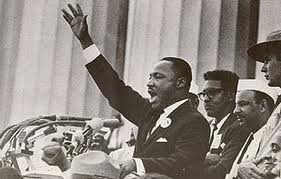 ‘Right-to-Work’ and the Jim Crow Legacy That Affronts King’s Memory
By John Nichols
When the Congress of Industrial Organizations launched “Operation Dixie” in the aftermath of World War II, with the goal not just of organizing unions in the states of the old Confederacy but of ending Jim Crow discrimination, Southern segregationists moved immediately to establish deceptively named “right-to-work” laws.
These measures were designed to make it dramatically harder for workers to organize unions and for labor organizations to advocate for workers on the job site or for social change in their communities and states.
In short order, all the states that had seceded from the Union in order to maintain slavery had laws designed to prevent unions from fighting against segregation. The strategy worked. Southern states have far weaker unions than Northern states, and labor struggles have been far more bitter and violent in the South than in other parts of the country. It was in a right-to-work state, Tennessee, where the Rev. Martin Luther King Jr. was assassinated while supporting the struggle of African-American sanitation workers to organize a union and have it recognized by the city of Memphis.
Continue reading “Right to Work” Laws and the Legacy of Segregation
Honor the Message, Honor the Man
Occupy: Resurrecting
Rev. King’s Final Dream
By Leo Gerard
United Steel Workers
In public squares across the country, Occupy protesters honor Rev. Martin Luther King’s memory on this holiday devoted to him. Their tribute is more meaningful and enduring than the granite monument that President Obama dedicated to Rev. King in Washington, D.C. last year.
That’s because the Occupiers are pressing for a cause — economic justice — that Rev. King had embraced in the months before his assassination in 1968. And they’re pursuing it with the technique he advocated – nonviolent protest.
Rev. King’s final crusade, his Poor People’s Campaign, and the Occupiers’ championing the nation’s 99 percent are remarkable in their similarities. It’s tragic that in the 44 years since Rev. King launched his campaign for an economic Bill of Rights that the nation’s poor and middle class have lurched backward instead of forward. It’s hopeful, however, that a whole new generation of idealists has taken up the dream of economic justice.
In the year before Rev. King was gunned down, he persuaded the Southern Christian Leadership Conference to join him in a movement devoted to securing for all citizens the basic needs that would enable them to pursue the American Dream, to pursue happiness. He believed every able-bodied person should have access to a job with a living wage. And he believed every American should have decent housing and affordable health care. Without economic security, he said, no man is free.
Structural Reform: The Case for Public State Banks
Meet Occupy Wall Street’s Favorite Banker
By Ryan Holeywell
SolidarityEconomy.net via Governing Magazine
Jan 4, 2012 – Try to find a bank president that’s beloved by supporters of the Occupy Wall Street movement. It’s not impossible. You’ll just have to travel to North Dakota.
Meet Eric Hardmeyer, who bears the unlikely distinction of being perhaps the only banker in America who, in addition to being embraced by Wall Street protesters, has been exalted by the likes of Michael Moore, Mother Jones magazine, and the Progressive States Network, among other progressive stalwarts.
That’s because Hardmeyer heads the Bank of North Dakota (BND), the country’s only publicly-owned state bank. The institution, located ironically enough in a solidly red state, has become the darling of progressives who have become frustrated with corporate banks they say helped cause the financial crisis and resulting credit crunch.
Now, state lawmakers nationwide are pushing for the North Dakota model to be replicated in their home states. Since 2010, state lawmakers in at least 16 states have introduced bills to create a state bank, something similar, or study the issue, according to a study by the National Conference of State Legislatures. So far, momentum is slow. The movement has yet to produce another Bank of North Dakota, but advocates are hoping to raise the issue again in 2012 legislative sessions. Their pitch: publicly-owned banks can help create jobs, generate revenue for the state, strengthen small banks, and lower the cost of borrowing for local governments by offering loans below market rate.
Hardmeyer, who was named bank president in 2001, hasn’t always been such a well-known figure. But his profile has been raised over the last year – including in Bloomberg BusinessWeek — and now he regularly fields calls from state lawmakers and other officials inquiring about his institution. “There hasn’t been a big push anywhere that I’m aware of until recently,” said Hardmeyer in a late December interview with Governing. “They’re interested in how it works, why it works, [and] what the roadblocks are.”
Continue reading Structural Reform: The Case for Public State Banks
Pres. Obama Signs Law Cancelling Habeus Corpus and Right to Trial for US Citizens
How the New Indefinite Detention Provisions can be used on Americans
Congress just passed, and the President just signed, a bill that gives legal authority to the President to kidnap and perpetually imprison persons, including American citizens, without the benefit of due process.
Members of Congress, in the days leading up to the vote, tried to assure their constituents that they have nothing to fear — that the bill doesn’t apply to Americans.
Some were lying. Most were deceived.
Now, I don’t want to imply that Barack Obama plans to sweep up every one of his critics (or even a select few) because of statements they’ve uttered publicly. That is overstatement. The law doesn’t permit that. But consider the following scenario…
You object to the way the Federal Leviathan State is run. You gather, every other Tuesday, with others who share your values. We’ll call your fictional group the Constitution League (CL).
Continue reading Pres. Obama Signs Law Cancelling Habeus Corpus and Right to Trial for US Citizens

