Beaver County residents from all groups–workers, retirees, African Americans, youth, women–united in a militant rally aimed at blocking the Trump regime. ‘No Kings, No ICE, No Wars!’ was the overall thrust. This time, rallies took place in 12 Western PA towns in addition to Pittsburgh, and an additional 10 over last year. The event was called by the local Democrats, but supported by dozens of organizations.
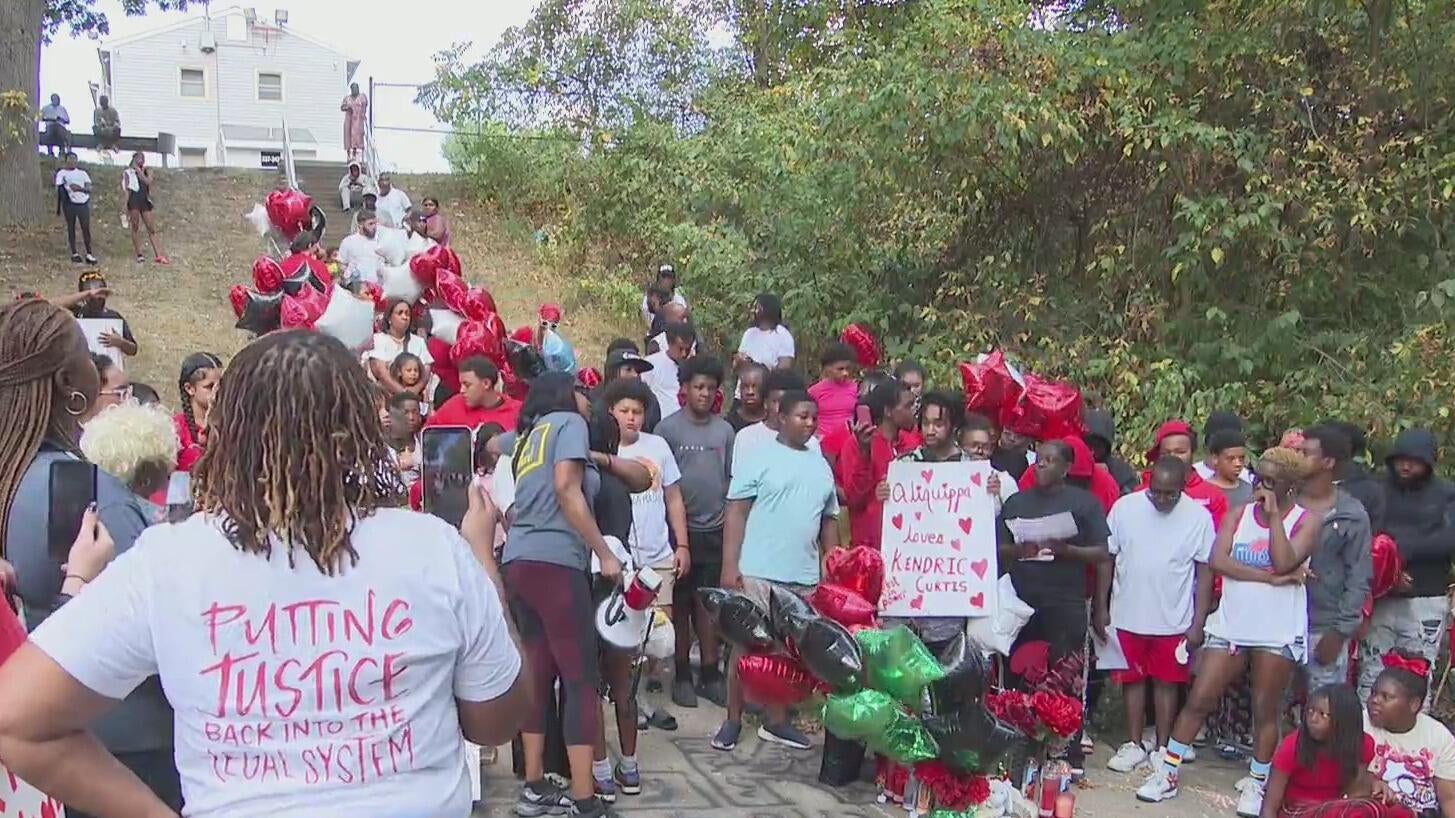
Sept 21, 2025 – Aliquippa community comes together to remember 18-year-old shot and killed by ATF agent 02:17 The Aliquippa community both honored the life of 18-year-old Kendric Curtis and called for accountability and transparency during a vigil on Sunday.
An ATF agent shot and killed the Aliquippa High School student on Thursday after state police say Curtis shot at an officer in Aliquippa’s Linmar Terrace neighborhood.
The emotional vigil featured Curtis’ sisters and girlfriend.
“When I heard what happened, it felt like it ripped my heart out, and it took a part of my soul,” Curtis’ girlfriend said. “I just want answers for my boyfriend.”
While the event focused heavily on Curtis’s life, the bubbling anger in the community was also present.
Pennsylvania State Police say officers ahead of the shooting tried to make contact with Curtis before he ran away and shot at them. The ATF and FBI were working on a joint investigation when the shooting took place.
His sisters said their brother was being painted in a bad light, calling him a “good person” who “everyone loved.”
“I feel like my son was targeted and wrongfully killed by the police,” Curtis’ father wrote in a letter that was read aloud at the vigil. “I don’t know what happened, but I know my son is not here to share his side of the story.”
Neighbors told KDKA-TV on the night of the shooting that the ATF agent, whom they believed had shot Curtis, was in plain clothes.
Community leaders have asked for patience as more information comes out. Skeptical community members, some of whom don’t believe law enforcement’s version of what happened, want more information now.
“We demand an answer why, we demand that answer why. Give us that answer,” said organizer George Powell. “Give us those cameras, give us that man in handcuffs who took that little kid’s life. It’s been three days and we’ve heard nothing.”
Neighbors hoped to change more than just a narrative about Curtis.
“We have to stand up and show everyone that Aliquippa is not just about guns, drugs, death, murder, football, [or] sports,” said one of the speakers. “We got young men growing up and dying daily, and we’re going to stand up.”
Photo: La Roche University, Friday, Feb. 10, 2023, in McCandless. (Photo by Stephanie Strasburg/PublicSource)
By Maddy Franklin Public Source
April 11, 2025 – Here’s how President Donald Trump’s administration has roiled higher ed, and how the University of Pittsburgh, Carnegie Mellon University and other local colleges and universities have responded.
This timeline will be updated as developments occur.
April 11 A visa held by an undergraduate student at La Roche University is revoked, a university administrator shared with PublicSource.
Revocations and wipes of international students’ records through a Department of Homeland Security system have been widespread over the week. Much of this is occurring, schools and students report, without communication from the government and with no reasons provided.
U.S. Secretary of State Marco Rubio said last month that there’s “no right to a student visa” and argued that visas would be cancelled in cases the government finds “appropriate,” such as participation in pro-Palestinian demonstrations.
Without legal status, students with terminated visas risk deportation.
We are local reporters who tell local stories. Subscribe now to our free newsletter to get important Pittsburgh stories sent to your inbox three times a week.
April 9 Visas held by two recent graduates and one current Pitt student are revoked, according to an email sent by a university administrator. The administrator said no known immigration agencies or authorities have been on campus, and the students were offered unspecified “support.”
PublicSource reached out to Duquesne, Point Park, La Roche, Carlow, Chatham and Robert Morris universities to ask if students or recent graduates have been impacted by sudden visa terminations. Spokespeople for Duquesne, Point Park, Carlow and Chatham said there haven’t been any changes. RMU did not immediately respond.
April 7 Visas held by five recent graduates and two current CMU students are revoked, following a trend seen at universities across the country. The university reports that no immigration authorities have been on campus, and the students were connected with legal resources.
March 19 A congressional committee sends letters to six universities, including CMU, requesting information regarding Chinese students to assess national security risks. The letter states that U.S. higher ed institutions “are increasingly used as conduits for foreign adversaries to illegally gain access to critical research and advanced technology” and sets an April 1 deadline to turn over the details.
March 14 The U.S. Department of Education Office for Civil Rights opens investigations into CMU and 44 other universities nationwide for alleged Civil Rights Act violations following the guidance set out in the department’s “Dear Colleague” letter. The department said these institutions engaged in “race-exclusionary” practices within their grad programs by partnering with The Ph.D. Project, which “limits eligibility based on the race of participants.”
March 13 After Pitt paused faculty and staff hiring, administrators say that federal actions are not the only reason for the freeze. At a university faculty assembly meeting, Pitt’s Chief Financial Officer Dwayne Pinkney says enrollment trends, inflation and flat state funding were also behind the decision. The freeze would’ve happened “a little later” if not for recent events, he says — federal funding uncertainty was simply the catalyst.
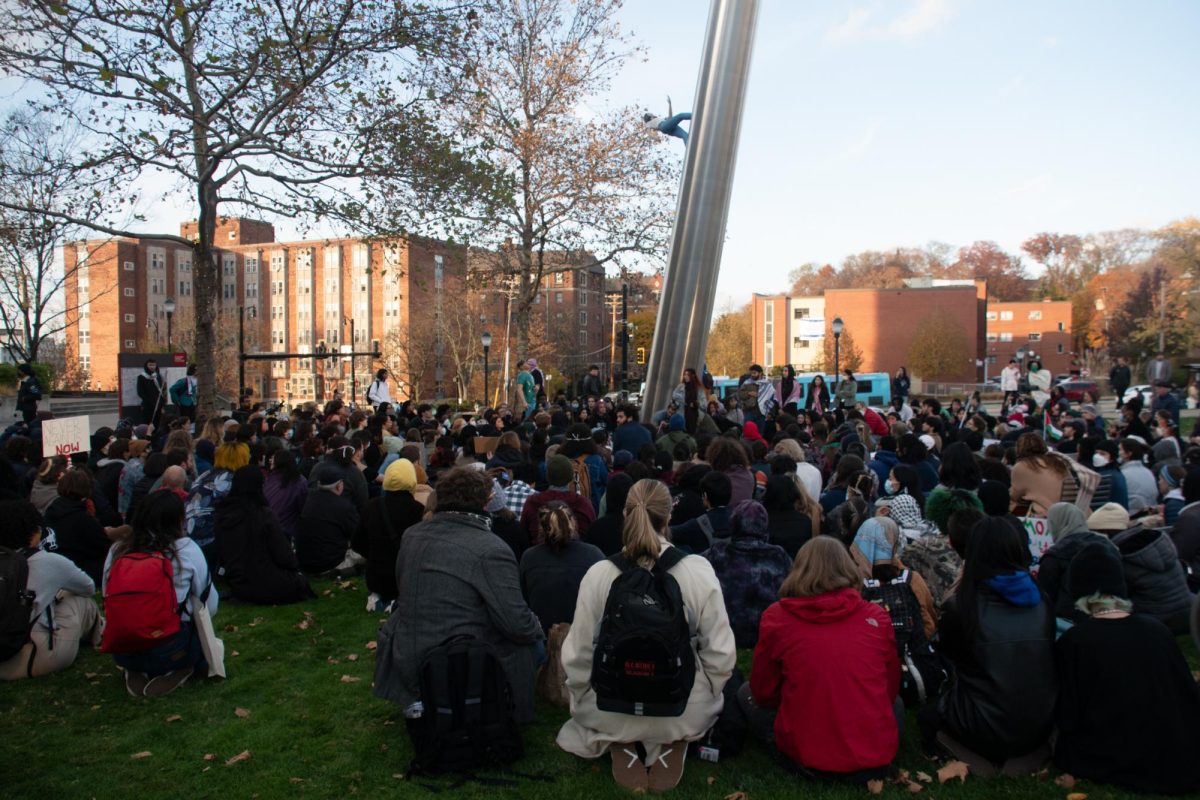
Several hundreds gathered outside of the William S. Moorhead Federal Building this afternoon to protest as part of the national 50501 “No King’s Day” demonstrations on President’s Day.
Protesters marched downtown, calling out President Trump and Elon Musk, chanting, “Not my president” and “Human rights are meant for all.”
The demonstration lasted for over an hour, ending in front of the City Council building where organizers offered participants important election information and petitions to sign.
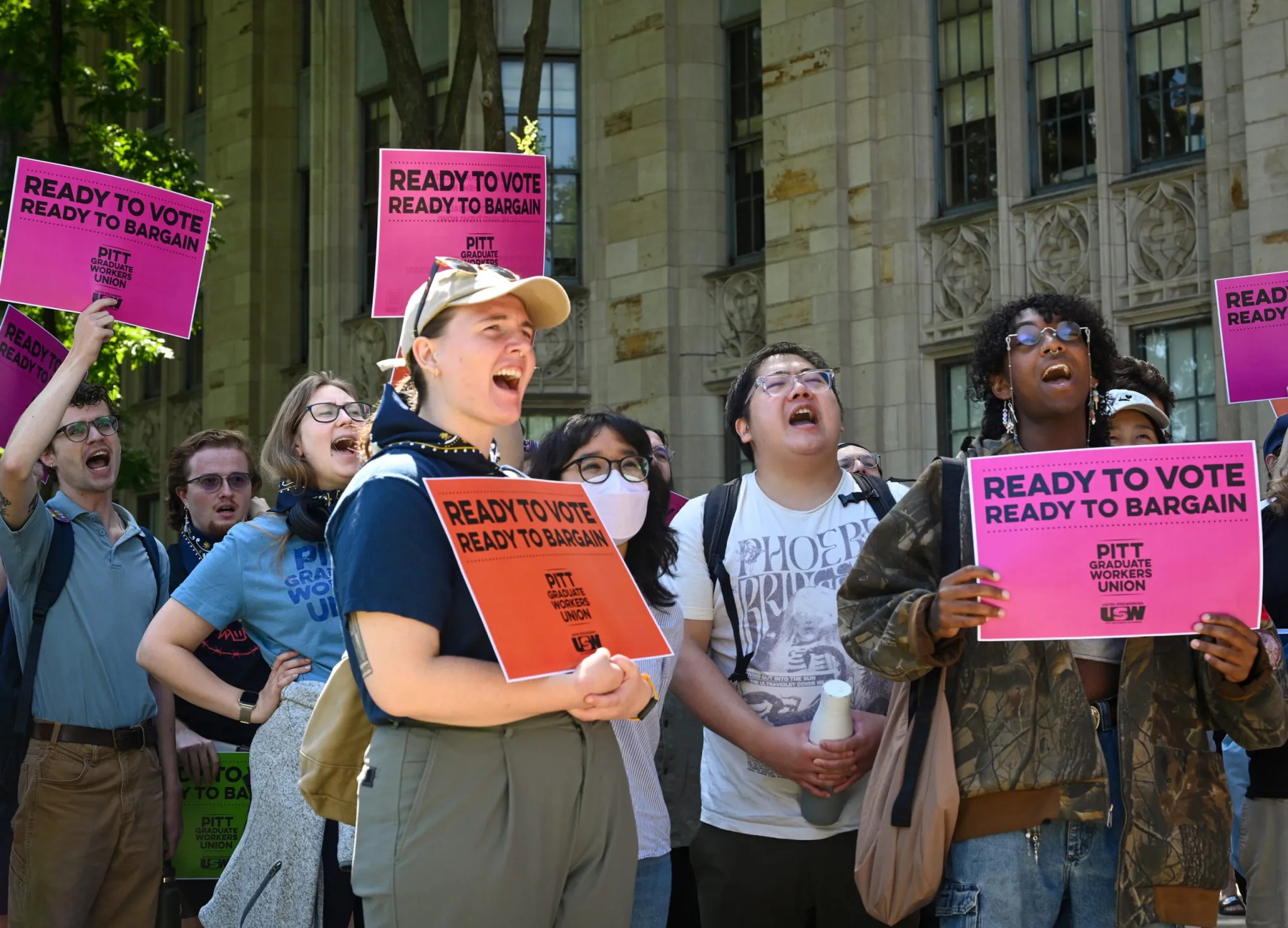
The University of Pittsburgh’s graduate student workers narrowly declined unionization in 2019, but this week’s overwhelming vote has the Oakland campus riding a wave of higher ed organizing.
Nov 22, 2024 – Throughout the week, more than 1,000 graduate student workers at the University of Pittsburgh made their way to a nondescript ballroom in the O’Hara Student Center to vote on whether to unionize.
Supporters sought everything from more transparency on the part of university administration to pay equity, better vacation time and health insurance.
The line outside the ballroom stretched, at times, down the stairs of the center. “People are so excited … I’ve never seen engineers this excited,” said Lauren Wewer, a materials science and engineering Ph.D. student and organizer at Pitt.
On Friday, organizers announced the results: a 1033-28 vote to unionize with the United Steelworkers [USW]. The Pennsylvania Labor Relations Board had not yet confirmed the vote count as of mid-afternoon.
With this win, Pitt grad student workers become the latest employees to undergo a successful union bid at a U.S. higher education institution, continuing an upward trend in the sector’s organizing activity over the last few years. They also join faculty and staff at the university which unionized with the USW in 2021 and September, respectively.
Pat Healy, an information science Ph.D. student at Pitt, said the wide margin of support reflected in the vote, “aligns with how most of the grad union votes [in the country] have gone the last couple of years.” Healy has been organizing at the university since 2019, which was the last time grad student workers attempted to unionize. Then, the pro-union students lost by fewer than 40 votes. For them, the impact of this year’s vote stretches beyond Pitt’s campus.
“I’m happy for the movement [and] looking forward to some other grad unions popping up, I’m sure inspired by us, because that always happens,” Healy said.
After Thanksgiving, they said organizers will begin setting up for bargaining with Pitt’s administration.
In a statement after the vote count, the university said, “While first contract negotiations can be complex, please know that we will come to the table in good faith and be there to support all graduate students throughout and beyond the process.”
Immediately following the loss in 2019, any efforts to restart conversations about unionizing would meet with “a kind of extreme hesitancy,” Healy said, blaming “a lack of understanding of what a union was.”
This year felt different, Healy said. There are likely a few reasons why.
Five years after failed vote, Pitt grad students unionize EQT’s ‘bulldog’ has D.C. in his grip, with profits — and maybe higher gas bills — on the horizon
A wave of change
From 2021 to 2023, nearly 64,000 U.S. grad student workers joined unions. By comparison, only 20,394 students unionized from 2013 through 2020. Today, four in 10 grad student employees belong to labor groups.
This trend was, experts say, driven in part by the pandemic and by the administration change from Donald Trump to Joe Biden in 2021, which ushered in a National Labor Relations Board more amenable to organizers.
Adrienne Eaton, professor of labor studies and employment relations at Rutgers University, noticed COVID-19-driven layoffs and research funding losses on campus in New Jersey that eventually led to a faculty and grad student strike last year. She describes this time as an “active moment” in American higher ed, with students advocating for change across the board at universities and colleges. And with grad students, there’s another factor at play: “The faltering job market in academia.”
“A high percentage of students no longer [are] confident that they have a future as tenure-track professors, in particular, or potentially as academic faculty at all,” Eaton said. “So, I think it really changes the way that graduate students look at their assistantships that they get.”
Photo: Thomas Ross (left) and Austin Wise give a tutorial to students who have never canvassed before on Saturday, Sept. 21, 2024, at Schenley Plaza in Oakland. (Photo by Anastasia Busby/PublicSource)
Democratic organizers say student political engagement has soared since Kamala Harris took over their party’s presidential ticket. Their Republican counterparts report backlash for supporting candidates and views they say are controversial on campuses.
By Spencer Levering
Public Source
October 3, 2024 – Thomas Ross didn’t realize that the political interest on Pitt’s campus was “electric,” as he characterized it, until the semester’s first door-knocking event for Pitt Students for Harris brought 34 volunteers — more than double the number he expected.
“Having 34 volunteers on our first canvass literally blew my mind,” said Ross, a University of Pittsburgh junior studying history and political science. “Everyone that I’ve spoken with has been very excited about the election.” Other Democratic students echoed this, saying they’re seeing new levels of excitement from their peers.
Just up Forbes Avenue, Anthony Cacciato is aiming to make the Carnegie Mellon University College Republicans a space where students can speak freely about their conservative values. Cacciato, president of the chapter, said with election season sparking student’s political intrigue, he’s preparing for a “barrage of negative backlash.”
At colleges around Pittsburgh, political clubs are organizing students to gear up for the upcoming November elections. Club leaders cited Pennsylvania’s influence on national politics as a key reason why they’re trying to mobilize the youth vote as Republican Donald Trump and Democrat Kamala Harris vie for Electoral College votes.
Organizing through socializing
As on-campus political groups look to activate students this fall, many said they are trying to mix political outreach efforts with social events to appeal to young voters.
Cacciato said group outings, such as seeing the new movie “Reagan,” help prevent students from burning out over organizing.
“We’re a space where you can feel comfortable with talking about who you are, but also feel comfortable in knowing that you’re surrounded by friends,” Cacciato said.
The club’s membership increased by 20% this semester, according to Cacciato, because of Pennsylvania’s outsize impact on national politics.
“When you have that knives-edge margin, any little bit of outreach can mean the difference between 10,000 people staying home and not voting and them going out and voting and flipping a precinct, flipping a state House seat, flipping the state, and flipping the country,” Cacciato said.
At Pitt, Sam Podnar, co-president of the Pitt College Democrats, said she creates an environment in which students can meet new people and break out of political apathy.
“We want to let people know that getting involved doesn’t have to be hard, it doesn’t have to be stressful. We just want them to keep showing up,” Podnar said.
She said President Joe Biden’s decision to drop out of the race and endorse Vice President Harris has energized students to get involved in Democratic organizing. General body meetings, weekend canvasses and the club’s presidential debate watch party have all drawn new participants.
“We’ve seen a really, really big surge in membership that just has honestly blown everyone away,” Podnar said.
Avalon Sueiro, president of the CMU College Democrats, said finding a balance between doing work and building a community helps draw students to attend the club’s events. When election day gets nearer, she plans on bringing therapy dogs to campus to calm students’ nerves.
Making it pop
Among Democratic student organizers, leaders are leaning into memes and pop culture as they try to energize college voters. When the semester began, the Instagram pages for Pitt Students for Harris and Pitt College Democrats both had profile photos referencing Charli XCX’s “brat” album. The pop star’s viral summer tweet calling the vice president “brat” spawned a flurry of online memes, which the Harris campaign embraced as an early branding strategy.
September 22, 2024 – PITTSBURGH — With just 44 days until the 2024 election, U.S. Reps. Summer Lee (D-Pa.) and Alexandria Ocasio-Cortez (D-NY) rallied young voters for the Harris-Walz ticket at Carnegie Mellon University on Sunday.
Young people, Lee told the audience “are not the voices of the future,” but rather “the voices of right now.”
“We are all in the most powerful room in the country,” she said. “This is the most powerful room because we are in Western Pennsylvania, we’re in Western Pennsylvania, and the road to the White House, the road to the Senate and the road to the House all leads right here through y’all’s campuses.”
Pennsylvania is key for both Vice President Kamala Harris, the Democrats’ nominee, and former President Donald Trump, the GOP nominee. With its 19 electoral votes, the Keystone State is the biggest prize of the “blue wall” battleground states for either candidate.
According to the Pew Research Center, about two-thirds of registered voters ages 18 to 24 align with Democrats. In 2023, the Center for Information & Research on Civic Learning and Engagement estimated around 41 million members of Gen Z would be eligible to vote in the 2024 election.
Sunday’s event was co-hosted by College Democrats at Pitt, the CMU College Democrats and the Young Democrats of Allegheny County.
“When I talk about what our job is in the next 40-something days, your job is to take care of each other because that’s who I’m voting for,” Lee said. “I’m going to go and vote for the most marginalized person in my life. Because it’s my job, it’s my responsibility, to make sure that I’m creating the conditions that we all can survive in, not just survive, that we can all thrive in.”
Ocasio-Cortez followed Lee with a list of the issues that young voters might be most concerned with: climate change, school shootings and the cost of rent and healthcare.
“We have been aging and growing in a world that our predecessors have left to us,” Ocasio-Cortez said. “Respectfully, a lot of what has been left to us is messed up, is really messed up, and it’s messed up not even on a partisan basis, it’s messed up generationally.”
Ocasio-Cortez told a story of her time at Boston University when Barack Obama began his candidacy, and her absentee ballot did not arrive in time. She said she took a bus back home to New York City to cast her vote for the future president.
She not only encouraged students to register to vote in Pennsylvania with their on-campus address, but also to sign up for a shift with the Harris-Walz campaign, go door-to-door and ensure a Democratic victory at every level in the election.
Those calls-to-action were the theme of the speakers at Sunday’s event, with Pittsburgh Mayor Ed Gainey, Allegheny County Executive Sara Innamorato, CMU College Democrats President Avalon Sueiro and Harris-Walz campus organizer Agatha Prairie all taking the stage.
Prairie encouraged attendees to convince five friends to vote and Sueiro said to knock on classmates’ doors and “have those tough conversations” about the stakes of the election.
Gainey took a more somber approach.
“We should all be tired. I’m tired of someone that can stand on the stage in a debate and say to the American people and the world that immigrants that are here in our country eat dogs and cats,” he said in reference to former President Donald Trump’s false claim that Haitian immigrants were eating pets in Springfield, Ohio. “I’m tired of that level of hate.”
Trump’s running mate, U.S. Sen. J.D. Vance (R-Ohio) campaigned in Berks County on Saturday, and mentioned Springfield in his remarks. His job “as the United States Senator representing the people of Ohio is to listen to American citizens and fight for them,” Vance said.
“So our message to Kamala Harris and Democrats is we’re going to keep on complaining about their politics because this is America and we have the right to speak our minds,” he added.
Innamorato pointed out that a satellite voting location at the Soldiers & Sailors Memorial Hall in Oakland will be open from 8 a.m. to 4 p.m. from Oct. 15-17. Satellite locations offer residents the ability to register to vote, request a mail-in ballot, complete and return it in one place.
“A Pennsylvania victory runs through Allegheny County, and it runs through young people,” Innamorato said. “I’m asking for all of you to do what you can, to knock doors, to volunteer, to make phone calls, to talk to your weird cousin, to get your classmates on board, because we got a lot of work to do over the next 44 days.”
Penn State Reaches Tentative Deal With Union Days After Teamsters OK Strike
Photo: LOUIS B. RUEDIGER | TRIBUNE-REVIEW Unions representing workers at Penn State University’s main and branch campuses, including New Kensington, seen here, said they have reached a tentative four-year labor pact.
By BILL SCHACKNER
Pittsburgh Tribune-Review
Monday, July 1, 2024 – Union members will vote in the coming weeks on a tentative contract agreement with management covering 2,500 employees on Penn State University branches statewide and the main University Park campus.
The deal, if ratified, could offer a measure of labor peace at a time of heightened workplace anxiety across Penn State generally, and its branches in particular, over university-wide budget cuts and a 10% faculty and staff reduction through buyouts this spring on those branches, where enrollment has fallen sharply since 2010.
Teamsters Local 8 represents employees in custodial service, emergency medical response, food service, housing service, trades, science, athletics, agriculture, research, printing, engineering, transportation, airport services, information technology and media.
Its members on Wednesday had authorized leaders to call a strike if necessary.
The previous contract with Teamsters Local 8 was due to expire Sunday. The union announced the tentative four-year contract on social media Saturday night.
“The new deal includes 20% wage increases (21.79% compounded) over the life of the contract. More details will be shared during the forthcoming ratification meetings,” it read. “This effort was only made possible by the nearly 1,900 members who authorized strike action and showed the University that WE WERE READY!”
The contract would run through June 30, 2028, and will be retroactive to Monday.
Jonathan Light, president of Teamsters Local 8, could not immediately be reached Monday for additional comment on the agreement.
Penn State President Neeli Bendapudi welcomed the tentative pact, and in a statement, said pay raises included are comparable to deals recently reached by Penn State with Service Employees International Union Local 668 and the American Federation of State, County and Municipal Employees (AFSCME) Local 13.
“These are the employees who keep Penn State operational,” said Jennifer Wilkes, vice president for human resources and chief human resources officer. “They maintain our facilities and grounds, provide food and services for our students, and clear the snow and ice during weather emergencies. During the COVID-19 pandemic, they were essential workers, serving on the front lines while the rest of the university was working remotely ….”
The branches statewide covered by the tentative agreement include Penn State New Kensington, Greater Allegheny, Beaver, Fayette and Shenango in Southwestern Pennsylvania.
Collectively, most of the branches have faced enrollment losses between 16% and 50% the last 10 years, officials said. They were expected to bear the brunt of $94 million in cuts announced in January to further reduce a university-wide deficit that at one point was $140 million.
Leadership on a number of those branches, which Penn State calls its Commonwealth system, is also being restructured. Multiple campuses will report to one chancellor under those changes.
On Wednesday, 91% of the 2,053 Teamsters who cast ballots on the strike authorization measure voted to approve it, said Light.
Union members will vote in the coming weeks on a tentative contract agreement with management covering 2,500 employees on Penn State University branches statewide and the main University Park campus.
The deal, if ratified, could offer a measure of labor peace at a time of heightened workplace anxiety across Penn State generally, and its branches in particular, over university-wide budget cuts and a 10% faculty and staff reduction through buyouts this spring on those branches, where enrollment has fallen sharply since 2010.
Teamsters Local 8 represents employees in custodial service, emergency medical response, food service, housing service, trades, science, athletics, agriculture, research, printing, engineering, transportation, airport services, information technology and media.
The previous contract with Teamsters Local 8 was due to expire Sunday. The union announced the tentative four-year contract on social media Saturday night.
“The new deal includes 20% wage increases (21.79% compounded) over the life of the contract. More details will be shared during the forthcoming ratification meetings,” it read. “This effort was only made possible by the nearly 1,900 members who authorized strike action and showed the University that WE WERE READY!”
The contract would run through June 30, 2028, and will be retroactive to Monday.
Jonathan Light, president of Teamsters Local 8, could not immediately be reached Monday for additional comment on the agreement.
Penn State President Neeli Bendapudi welcomed the tentative pact, and in a statement, said pay raises included are comparable to deals recently reached by Penn State with Service Employees International Union Local 668 and the American Federation of State, County and Municipal Employees (AFSCME) Local 13.
“These are the employees who keep Penn State operational,” said Jennifer Wilkes, vice president for human resources and chief human resources officer. “They maintain our facilities and grounds, provide food and services for our students, and clear the snow and ice during weather emergencies. During the COVID-19 pandemic, they were essential workers, serving on the front lines while the rest of the university was working remotely ….”
The branches statewide covered by the tentative agreement include Penn State New Kensington, Greater Allegheny, Beaver, Fayette and Shenango in Southwestern Pennsylvania.
Collectively, most of the branches have faced enrollment losses between 16% and 50% the last 10 years, officials said. They were expected to bear the brunt of $94 million in cuts announced in January to further reduce a university-wide deficit that at one point was $140 million.
Leadership on a number of those branches, which Penn State calls its Commonwealth system, is also being restructured. Multiple campuses will report to one chancellor under those changes.
On Wednesday, 91% of the 2,053 Teamsters who cast ballots on the strike authorization measure voted to approve it, said Light.
Bill Schackner is a TribLive reporter covering higher education. Raised in New England, he joined the Trib in 2022 after 29 years at the Pittsburgh Post-Gazette, where he was part of a Pulitzer Prize-winning team. He can be reached at bschackner@triblive.com.
volume_off
-2:12
sd
share
closed_caption
fullscreen
Auto (360p)
225p
360p
Subtitles Off
Subtitles EN
EU Summit: Leaders Set to Finalize Top Jobs Deal
2:23
Orban Forms EU Alliance, Expands Populist Power
1:51
Von der Leyen to Stay on as EU Commission Head
2:26
China Miscalculated With Europe in Backing Russia, US Ambassador Says
0:55
Road to White House Goes Through NC, Wiley Says
2:07
arrow_back_ios_new
arrow_forward_ios
Bill Schackner is a TribLive reporter covering higher education. Raised in New England, he joined the Trib in 2022 after 29 years at the Pittsburgh Post-Gazette, where he was part of a Pulitzer Prize-winning team. Previously, he has written for newspapers in Connecticut, New York, Pennsylvania and Rhode Island. He can be reached at bschackner@triblive.com.
Amid contract negotiations, Hopewell Area School District teachers flood school board meeting
BY JENNIFER BORRASSO
MARCH 28, 2023
CBS PITTSBURGH
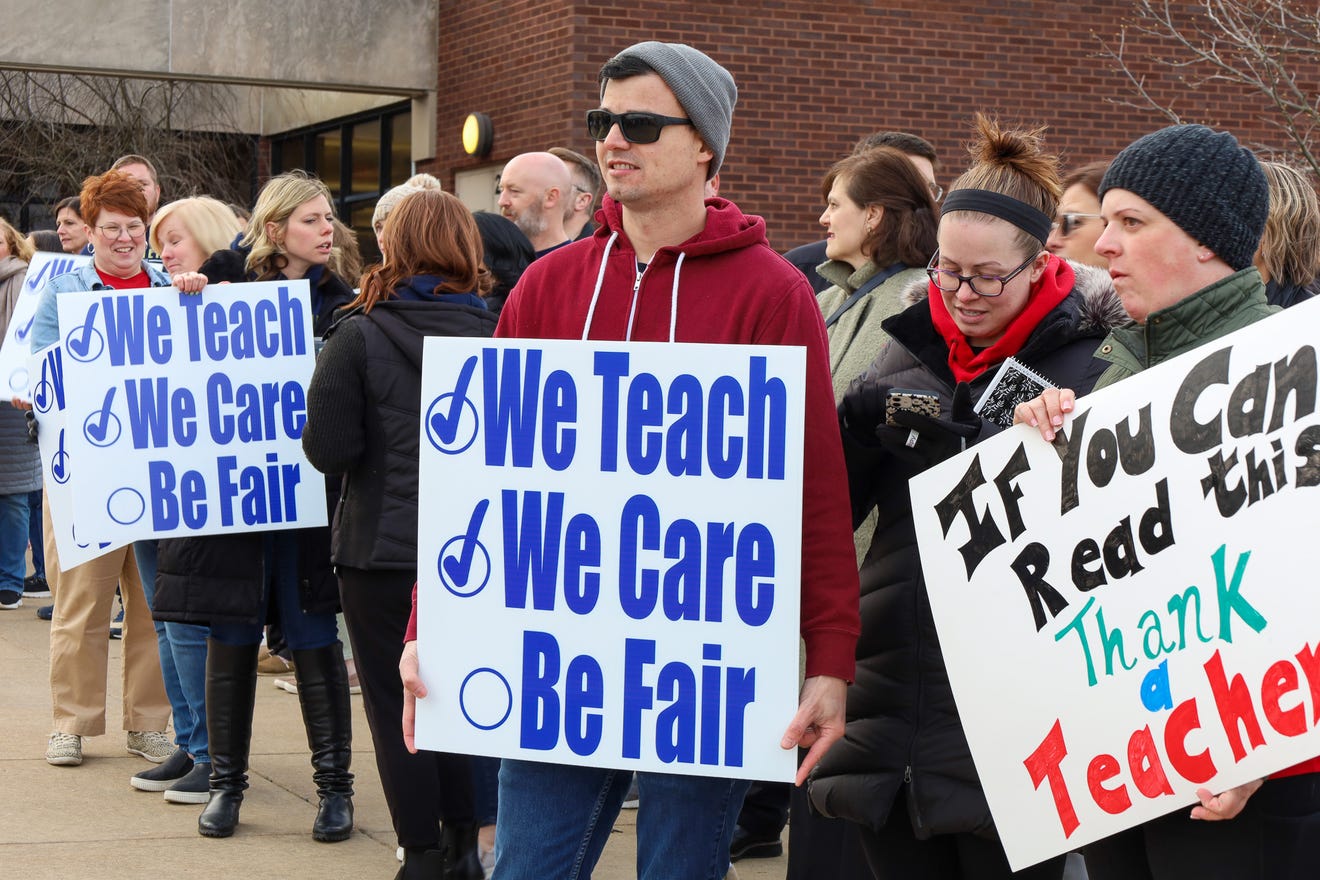
HOPEWELL, Pa. (KDKA) — A group of teachers crashed the Hopewell Area School Board meeting on Tuesday to put pressure on the board.
The president of the teachers union said teachers have gone without a contract since July 1, 2022. About 200 people showed up Tuesday to the meeting, including parents.
“I want to make sure they know they are valued and thank them for what they are doing for our students,” one parent said.
“All I’m asking for is our teachers get a fair contract. We need to do whatever it is to keep our kids in school,” another parent said.
Hopewell Education Association Union President Jeffrey Homziak said so far there have been 15 negotiating sessions since November 2020 but no deal has been reached.
Homziak said they want a five-year deal and a meaningful pay increase, more than the 2 percent increase the district is offering. They also don’t want to pay more for their health care and don’t want to work longer hours and not be compensated, Homziak added.
“Salary and health care are the biggest sticking points for any district,” Homziak said. “They want an extended school year and more time throughout the week for us to work without giving us salary.”
School board president Danny Santia talked to KDKA-TV after the meeting.
“Be fair to the community, be fair to the taxpayers and the teachers,” Santia said. “I want to give them a fair contract, but it has to be fair to the whole community.”
Between 1,800 and 2,000 students attend schools in the district.
KDKA-TV’s Jennifer Borrasso: “Are these teachers prepared to strike?”
Homziak: If it comes down to that. … We don’t want to do that to our students. We want to be in the classroom.”
There are three more negotiating meetings scheduled, with both sides back at the bargaining table on Thursday.
June 10, 2020 – There have now been more than a dozen protests across the Pittsburgh region for George Floyd, a Black man killed by Minneapolis Police, and Breonna Taylor, a Black woman killed by Louisville police. The protests are condemning police brutality against Black people; the tens of thousands of Pittsburghers who have marched are calling for swift and decisive reforms to police departments.
The vast majority of the protests have concluded without incident or serious confrontation with police. But there has been a lot of confusion around what happened during protests that took place on May 30 and June 1, both of which ended in confrontations with police and police firing tear gas and sponge rounds or rubber bullets.
Many reports have largely relied on information solely from police. And considering that police admitted lying about using tear gas during the protest on June 1, Pittsburgh City Paper is attempting to document what happened on May 30 and June 1 through its own reporting, videos on social media, and other reports from journalists on the ground during these events.
University of Pittsburgh criminology professor and national policing expert David Harris also provided insight after CP informed him in detail of both what has been reported and what CP witnessed on both May 30 and June 1.
Here is what is known from the protest and events following on May 30:
More than 3,000 people marched for about two hours Downtown to PPG Paints Arena without incident. Shortly after they arrived outside the arena, a 20-year-old white Shaler man allegedly damaged an empty police vehicle, spray-painting it and smashing its windows. Shortly after, more young men, both white and Black, continued to damage the vehicle with blunt instruments like baseball bats. Then, several police officers arrived on horseback and surrounded the vehicle, causing the crowd to recede. Some protesters threw a few water bottles at the officers, hitting at least one in the back. The police officers then rode away from the car toward Downtown.
After mounted officers left, more damage was done to the empty vehicle and then it was set on fire. Calls began for the protest to disperse from some apparent protest organizers. At this point, the vast majority of the crowd left. However, about 200 people remained and began demonstrating on Washington Place in front of several police officers, who had already lined up, in riot gear such as face shields, helmets, and batons. Protesters kneeled en masse, and then were instructed to disperse. Then, one or two tear-gas canisters were fired in front of protesters. Many retreated, but then shortly returned. At that point, police broke their line and retreated from the scene entirely. One empty undercover police vehicle was left behind. A small group of protesters then smashed it and set it on fire.
After this, more protesters dispersed and left the scene, but a group of about 100 remained and marched back Downtown. WESA reported that “store windows were shattered along Smithfield Street, and some looting was reported” and that “police used tear gas and rubber bullets to disperse crowds, as demonstrators again used signage to erect barricades.” Pittsburgh Mayor Peduto tweeted at the time that “those vandalizing Downtown … will be arrested” and protesters who continued Downtown had “turned on the very mission, and more importantly — the people, you supposedly marched for two hours ago.”






 Beaver County Blue: Voice of the 17th CD of Progressive Democrats of America