Category Archives: Pittsburgh

Pittsburgh Google ‘Contract’ Workers Start Unionization Process, Bosses Prep Union-Busting Campaign

White-collar workers join with United Steelworkers for collective bargaining rights.

By Vasuki R
Liberation News

Sep 11, 2019 – Last week, the Pittsburgh Association of Tech Professionals filed a petition on behalf of tech employees at HCL Technologies, a contractor for Google in Pittsburgh.

These 90 employees perform essential work for the Google Shopping platform alongside full-time employees, but with reduced benefits, pay and job security. Through this mechanism of sub-contract work, Google has maintained its reputation as a generous and fair employer — despite the fact that temps, vendors and contractors form a “labor underclass” that comprises over half of Google’s global workforce.

Over two thirds of the workers at HCL signed cards seeking union representation. They organized on the basis of directly improving their working conditions, hoping to bargain for better wages and benefits.

HCL employee Josh Borden drew attention to the lack of job security, noting that he and his co-workers “constantly worry about being downsized at any moment while watching our benefits slowly slip away.” With no severance policy and a recession looming, contract workers are stuck in a position of permanent instability. At other contractor sites, the prospect of permanent employment with Google is used to lure white-collar workers into abusive wage theft.

PATP is an arm of the United Steelworkers, formed to fight for better working conditions in the city of Pittsburgh and raise the voices of tech professionals. While workplace activism has long been prominent at Google, this campaign marks a qualitative shift in organizing for tech and contract workers.

Since the announcement of the union drive, USW organizer Damon Di Cicco has seen a surge of interest around the PATP. Unionizing efforts elsewhere in the industry have yet to succeed, but the workers at HCL are demonstrating an actionable path for tech and games workers subjected to miserable working conditions. The date for their union representation election has been tentatively set for the 24th of September.

The path forward will not be without resistance: recently, HCL recently hired consultants from the union-busting law firm Ogletree Deakins. Despite stonewalling requests by workers for better wages, the company is willing to pay exorbitant legal fees to attempt to stop their workers from organizing. Ogletree specializes in defending bosses against discrimination lawsuits, yet was itself sued by a shareholder for gender discrimination before forcing the plaintiff into arbitration.

Forced arbitration is a mechanism by which employees waive their right to a trial as part of their contract, with workplace issues instead adjudicated by third-party arbiters that favor management; ending this loophole nationally has been a key plank of tech worker organizing.

Ogletree has set up space at a hotel near the office, with the classic strategy of trying to create division within the campaign by dissuading workers one by one. Working closely with Ogletree is the Labor Relations Institute, a “preeminent firm in countering union organizing campaigns”, which boasts a client list that includes Kronos Foods and Trump Hotel. These firms have been brought on as “neutral advisors that will educate workers about their rights”, despite overtly advertising “union avoidance” services.

HCL has clearly demonstrated little respect for the legal right of workers to organize themselves, and it remains to be seen whether Google itself will directly intervene with its own anti-worker retaliation apparatus. In these crucial coming weeks, solidarity and militancy will keep the workers united as they fight for democracy and the ability to collectively bargain.

To follow the campaign and stay updated on the best ways to support the workers, sign up for email updates at pghtechprofessionals.org/join
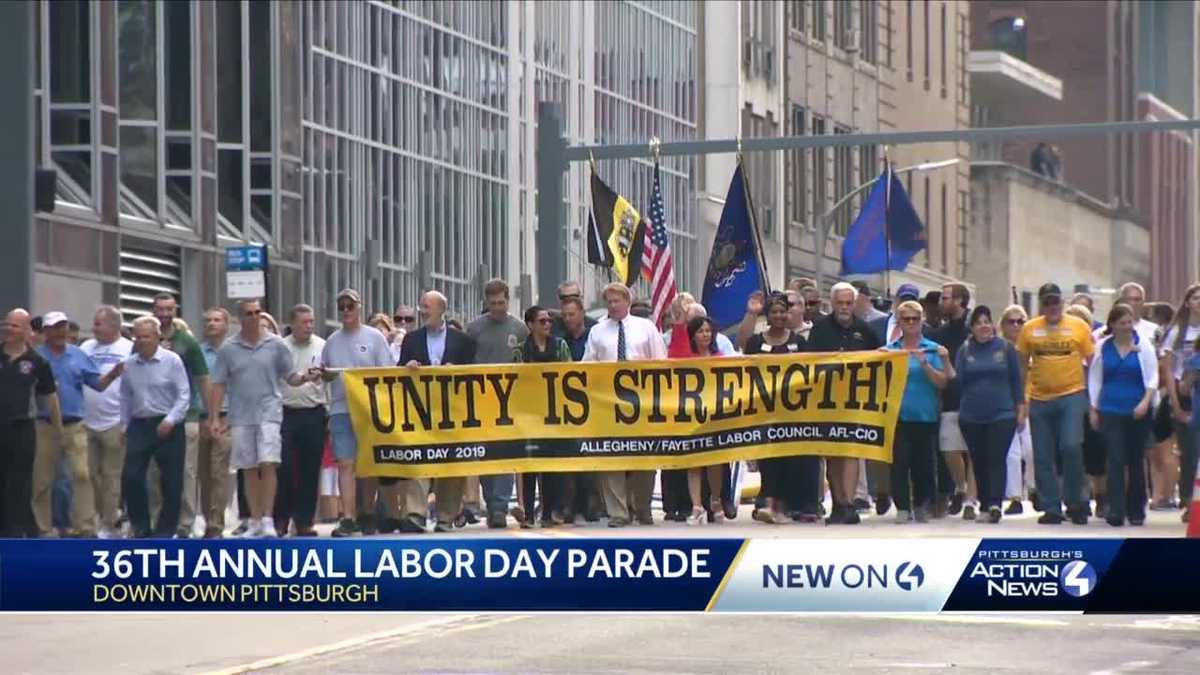
SEIU President Rallies Workers in Pittsburgh on Labor Day

By Marylynne Pitz

Pittsburgh Post Gazette

Mary Kay Henry, president of the Service Employees International Union for nearly 10 years, organized health care employees during the late 1990s at a major Catholic hospital system in California.

Before Pittsburgh’s Labor Day Parade began, Ms. Henry urged local union members during a rally at Freedom Corner in the Hill District to continue fighting, despite the legal odds.

“The right to organize doesn’t exist any longer in the U.S. We have an 80-year-old law that is broken,” Ms. Henry on Monday told a large crowd that included boilermakers, carpenters, journalists, postal carriers, shipbuilders and steamfitters.

“UPMC workers have been trying to form a union since 2012. Ten thousand hospital workers have been trying to get to a bargaining table,” Ms. Henry said.

UPMC has announced that its hourly workers will earn $15 an hour in 2021.

The SEIU’s plan, called Unions for All, envisions workers organizing and bargaining across industries instead of the workplace-by-workplace system currently used in the U.S.

“Bargaining by industry, where workers from multiple companies sit across a table from the largest employers in their industry to negotiate nationwide for wages and benefits, is standard practice in almost every developed country in the world,” Ms. Henry said.

The SEIU also wants to ensure that every public dollar creates union jobs and that every federal worker and contractor earns at least $15 an hour and has the chance to join a union.

One of the UPMC employees who marched in the parade was Nila Payton of East Hills, who belongs to Hospital Workers Rising.

A UPMC receptionist for 13½ years, Ms. Payton said a union survey found that at least 5,000 UPMC employees are in debt to their employer for medical care.

“They steer us to Medicaid. Some of us make too much to get Medicaid. Some people are actually scared of going to the doctor for fear of going into medical debt,” Ms. Payton said.

U.S. Rep. Conor Lamb, D-Mt. Lebanon, said federal labor law is “in urgent need of an update” because employers can play “lots of tricks” to delay bargaining.

“We need to level the playing field, ” Mr. Lamb said.

Lt. Gov. John Fetterman, the former mayor of Braddock, served as the parade’s grand marshal. Other politicians attending included Allegheny County Executive Rich Fitzgerald and state Sen. Jay Costa, D-Forest Hills.

Marchers walked down Grant Street, past the historic marker for Henry Clay Frick, just outside the building named for the industrialist.

Many trade unionists remember Frick for provoking violence by hiring 300 Pinkerton agents armed with Winchester Rifles during the bloody Homestead steel strike of 1892.

On the Boulevard of the Allies, where the parade ended, marchers passed the Red Door, where volunteers at St. Mary’s Parish were giving sandwiches to the homeless.

Continue reading SEIU President Rallies Workers in Pittsburgh on Labor Day

U.S. Steel’s Market Value Drops $5.5 Billion Thanks to Trump’s Tariffs 

Pittsburgh City Paper
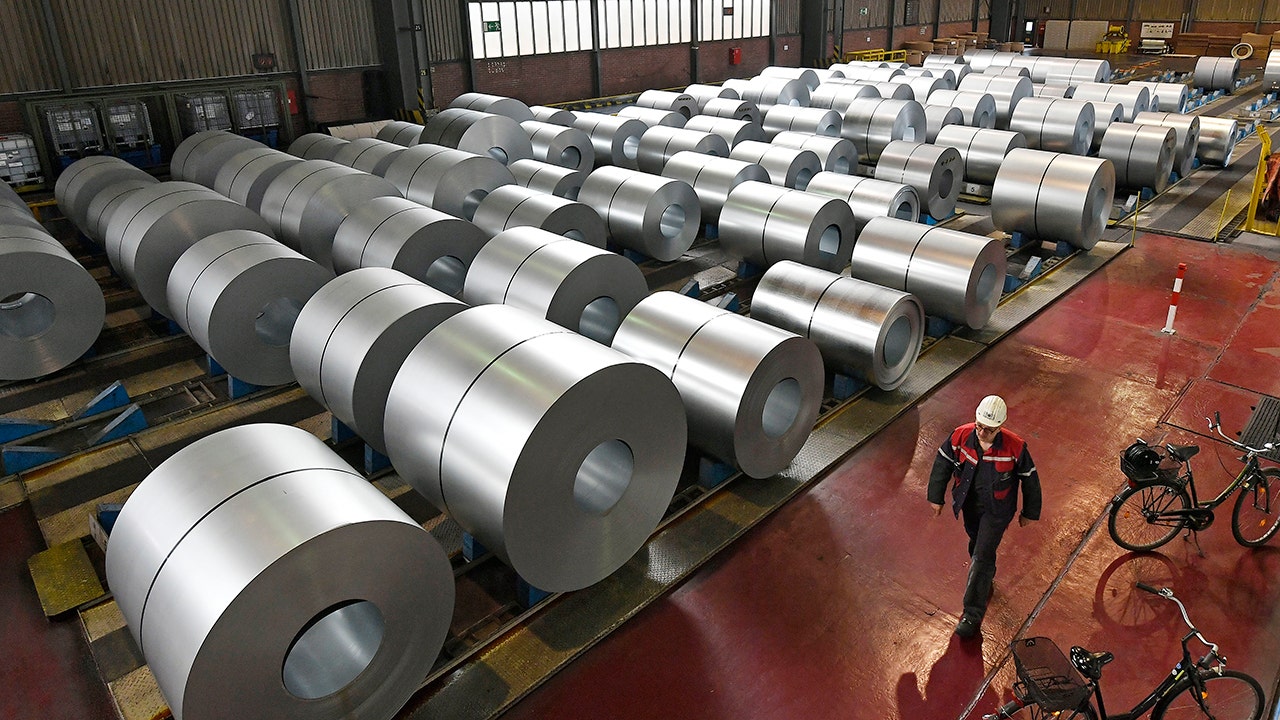
According to several reports, Pittsburgh’s largest steel company — and the second largest in the country, has lost about 70 percent of its market value thanks to forces put into place by President Donald Trump’s steel tariffs.

Since Trump announced tariffs on foreign-made steel 16 months ago, U.S. Steel’s market value has dropped by $5.5 billion. Even though steelworkers at U.S. Steel lauded the tariffs when Trump announced them last year, the Los Angeles Times points out how the dynamics set in motion by those tariffs actually hurt steel companies with legacy steel mills with blast furnaces, like U.S. Steel.

From the LA Times: “Exuberance over the levies dramatically boosted U.S. output just as the global economy was cooling, undercutting demand. That dropped prices, creating a stark divide between companies such as Nucor Corp., which uses cheaper-to-run electric-arc furnaces to recycle scrap into steel products, and those including U.S. Steel Corp., with more costly legacy blast furnaces.”

The tariffs boosted steel production for all domestic steel producers in the short term, but as actual demand for steel dropped, U.S. Steel struggled to compete with lower-cost competitors like Nucor Corp. With international steel nudged out of the market by the tariffs, domestic steelmakers responded to fill those gaps, but U.S. Steel got beat in the market by steelmakers with more efficient electric-arc furnaces. Basically, the tariffs created a new market of mostly domestic steelmakers, but the new market actually gave more advantages to Nucor and less to U.S. Steel.

Bank of America analyst Timna Tanners told the LA Times it was “ironic” that the tariffs are “punishing some steel companies.” She also noted the dangers of the steel industry to add capacity without sufficient demand.

Since March 2018, U.S. Steel has idled two of its steel mills in Michigan and Indiana. In the past, U.S. Steel had voiced support from Trump’s tariffs.

Another steel company in the region is also claiming negative effects from the tariffs. Last week, steel producer NLMK USA in Mercer County laid off between 80 and 100 workers. According to WESA, the CEO of NLMK USA blamed the cuts on Trump’s steel tariffs, saying that the Russian-owned company faced steep prices on Russian-imported steel slabs.

Pennsylvania U.S. Sen. Pat Toomey (R-Lehigh), who has been critical of Trump’s tariffs, says both situations show the tariffs are not working as promised.

“As out-of-work steelworkers, like those at NLMK in Sharon, can attest, the administration’s protectionist steel tariffs have not resulted in the promised financial gains even for steel companies,” says Toomey. “This outcome demonstrates that imposing arbitrary taxes on imported products can distort prices, disrupt supply chains, destroy jobs, and increase prices for consumers without sufficiently offsetting benefits.”

Even though U.S. Steel has lost most of its market value since the tariffs started, the company still reported a large fourth-quarter profit last year, netting $592 million.

In May, the company announced a $1 billion investment to upgrade its facilities in West Mifflin, Braddock, and Clairton. With the upgrades, these three facilities will become the central source for high-strength, lightweight steel used for the automobile sector.

But with the upgrade comes an increase in efficiency, and experts told the Pittsburgh Post-Gazette that U.S. Steel will likely cut jobs at the Mon Valley facilities in the future.

And it appears Trump’s tariffs haven’t had that positive of an impact on steel jobs nationwide. According to the Washington Post, the tariffs “didn’t lead to a major increase in manufacturing jobs, largely because modern mills don’t require more manpower to operate at a higher capacity.”

Continue reading U.S. Steel’s Market Value Drops $5.5 Billion Thanks to Trump’s Tariffs 

Struggles In Steel – A Story of African-American Steelworkers

Twenty years have passed since the Struggles premiered at the Sundance Film Festival. We are trying to find out what to the children and grandchildren of steelworkers who lost their jobs.

‘Unfortunately in Pittsburgh, We Have a Tale of Two Cities.’

Local filmmaker Chris Ivey stands at the entrance to East Liberty, now marked by new development. - PHOTO BY HEATHER MULL

Local filmmaker Chris Ivey stands at the entrance to East Liberty, now marked by new development

Pittsburgh is poised for growth for the first time in 60 years. Will the city’s African-American community grow with it?

By Ryan Deto

Pittsburgh City Paper

It used to be that community activists, politicians and developers would fight over allowing the gentrification of city neighborhoods. If you eliminated affordable housing and replaced it with housing that was not as affordable, most people agreed it was at least the start of gentrification.

These days, the battle is apparently a little more nuanced. 

On Nov. 5, for example, Mayor Bill Peduto tweeted: “So far Pittsburgh’s East Liberty neighborhood has avoided gentrification while reducing crime & improving investment,” with an accompanying study by local analytics firm Numeritics.

The study claims gentrification is “obviously not the case in East Liberty” because all new market-rate development happened on vacant land, and because neighborhood demographics from 2010 to 2013 remained the same.

However, Pittsburgh filmmaker Chris Ivey feels differently.

“The [report authors] certainly knew the story they wanted to tell and chose to ‘back up’ that story with the facts that happen to support it,” wrote Ivey, who documented the demolition of an East Liberty housing project in 2006, in an email to City Paper.

Ivey notes there has been a demographic shift in East Liberty since 2000, with the numbers of blacks declining three times as fast as whites, according to U.S. Census data. Census data also indicate that the northern tract of East Liberty lost hundreds of African-American residents since 2000, and that the median black income there went up 14 percent as a result — or, as Ivey puts it “poor blacks moved out.”

Another statistic foregone by the study was homeownership. According to statistics compiled by Pittsburgh Community Reinvestment Group (PCRG), from 2011 to 2014, East Liberty saw 55 homes purchased by whites, while only three homes were bought by blacks.

So while some may argue whether what’s gone on in East Liberty and other city communities is gentrification, one fact is uncontroverted: African Americans are leaving some of their long-time Pittsburgh neighborhoods in droves because they can no longer afford to live there, and that urban flight could get worse before it gets better. 

With thousands of residential units slated for development, the city is seemingly poised for growth for the first time more than 50 years. But will Pittsburgh’s black population grow with it?

Historically, many African Americans came to Pittsburgh in the years between World War I and World War II. During this era of black migration, African Americans settled in the city neighborhoods of South Side, Garfield, East Liberty and Homewood, with the Hill District becoming the preeminent black neighborhood.

Continue reading ‘Unfortunately in Pittsburgh, We Have a Tale of Two Cities.’

As Pittsburgh Grapples With A Changing Workforce, The Fight For 15 Comes To Town


2851873691_47cf10c24a_o

In this photo, Pittsburgh’s U.S. Steel Tower, whose upper reaches bear the initials of the city’s largest employer. Flickr Creative Commons/Adam Sacco

By Cole Strangler

International Business Times

Oct 22, 2015 – The tallest building in Pittsburgh owes its title to the industrial giant that made the city famous. But instead of its floundering namesake, the U.S. Steel Tower now displays the initials of a different sort of employer: the University of Pittsburgh Medical Center, or UPMC.

When the signage went up eight years ago, it seemed, as the New York Times noted, to perfectly epitomize the evolution of a city and its labor force — from an economy once world-renowned for its manufacturing might to one focused on “eds and meds”; a place where the working classes flock to booming research institutions and hospitals, not coke plants or blast furnaces.

In the old economy, steelworkers won pay raises and benefits that transformed what used to be a grueling, low-wage job into a virtual ticket to the middle class. But according to policymakers and labor advocates, too many workers in the new Pittsburgh are still struggling to make ends meet.

At hearings slated to kick off Thursday, a newly-formed, city council-backed wage committee plans to shed light on the problem — and consider a potential remedy: Whether to follow the examples set by Seattle, San Francisco, and Los Angeles and adopt a $15 hourly minimum wage, more than double the current statewide minimum of $7.25. This is the core demand of the Fight For 15, the protest movement backed by the powerful Service Employees International Union (SEIU).

“We’ve been talking about the need to increase the minimum wage, but we’ve not really linked that to the benefits it can bring to the city or to workers and their families in a succinct way,” says Reverend Ricky Burgess, the committee’s architect and lone representative from city council. “What I want to do is provide some data.”

In addition to testimony from economists and poverty experts, the data will likely come first-hand from low-wage workers themselves — people like Justin Sheldon, 34. He’s one of 62,000 people who work at the University of Pittsburgh Medical Center, the largest private employer in Pennsylvania, and by far, the largest employer of any kind in the Pittsburgh metropolitan area.

Medical residents at the hospitals tend to earn over $50,000 a year, according to the employee review site Glassdoor. But the more than 10,000 service workers — the people who staff cafeterias, transport patients and sterilize equipment, among other things — earn substantially less. They make an average of $12.81 an hour, UPMC said last year. The health care provider did not respond to request for comment.

“My reason [for supporting $15] is pretty simple,” says Sheldon, a housekeeper at the UPMC Presbyterian hospital. “I want to be able to support my family — properly.”

Sheldon makes $12.52 an hour and works 48 hours a week, cleaning doctor’s offices, conference rooms and restrooms. He says he can barely pay the bills for his household, which includes two young children, ages six and four. His wife is visually impaired and receives Social Security disability payments, about $700 a month, he says. They pay $600 a month to rent a house in McKees Rocks, a blue-collar community that overlooks the Ohio River.

“Anything I save up usually ends up getting used” he says. Within a week of the next paycheck, “I’m usually down to $30 or less.”

Continue reading As Pittsburgh Grapples With A Changing Workforce, The Fight For 15 Comes To Town

Pittsburgh: Bernie Sanders for President: Yes, He Could!

Pia Colucci, right, of Oakland waits for Bernie Sanders to begin speaking during a telecast broadcasted at a meet-up held in Lawrenceville on Wednesday. Supporters of the Democratic presidential hopeful gathered across the country to watch the telecast. Rebecca Droke/Post-Gazette

By Tony Norman
Pittsburgh Post-Gazette

July 31, 2015 – Vermont Sen. Bernie Sanders has more than a few fans in Pittsburgh, judging by the turnout for his first televised meet-up since his poll numbers began shifting in a positive direction nationally. The muggy Wednesday evening air did its best to discourage a line from forming outside the Spirit Lounge on 51st Street in Lawrenceville, but 350 supporters squeezed into the former Moose Lodge that had once been the home to many a studio ’rasslin’ night.

After ponying up the suggested $5 donation at the door, the cross-generational crowd of Democrats and fellow travelers jockeyed for the best vantage point in front of a projection screen on the east end of the hall. Mr. Sanders would televise his remarks to 3,100 similar gatherings across the country from an apartment in Washington, D.C., shortly after 7 p.m. Eastern time.

According to organizers, Mr. Sanders would be addressing as many as 100,000 supporters nationwide — a number that should concern the complacent Democratic establishment, even though the insurgent candidate trails former Secretary of State Hillary Rodham Clinton by as much as 40 points in some polls.

Still, Bernie Sanders has roughly the same level of name recognition that Sen. Barack Obama had at this point in his underdog campaign against Mrs. Clinton. Unlike Mr. Obama, who was still trying to justify his candidacy to skeptical black leaders already committed to Mrs. Clinton in the summer of 2007, Mr. Sanders is drawing more energetic and enthusiastic crowds than Mrs. Clinton — a sign that the party’s progressive and liberal base is hungry for something it isn’t getting from its presumptive front-runner.

There is still time for Mrs. Clinton to ignite the passion of grass-roots Democrats, of course, but Bernie Sanders is on fire right now in ways no other candidate for the nomination can remotely claim. When he finally appeared on screen to make his speech, there was a collective roar from the crowd that felt almost primal — a mix of sweat, genuine giddiness and exasperation that it has taken so long for a candidate who shares their deepest convictions and disappointment with the status quo to finally emerge.

Technical difficulties with the live stream signal on Pittsburgh’s end prevented him from being heard at first, but when his Brooklyn-forged accent finally broke through the buffering silence, the crowd was primed to hear the candidate declare his allegiance to their issues and priorities.

“The American people are saying loudly and clearly — enough is enough,” Mr. Sanders said after ticking off a series of priorities that would occupy his days in the White House. The candidate would return to this mantra many times after promising to reverse 40 years of middle-class decline and income inequality, raising the minimum wage, affordable college education and combating the “real unemployment rate” he insisted was over 10 percent.

“Maybe, just maybe, instead of higher rates of incarceration,” he said referencing minority youth, “we could provide them with education and jobs.” In a tip-of-the-hat to the #BlackLivesMatter movement that heckled him a week earlier, Mr. Sanders pledged to fight against institutional racism. Just as he was beginning say something about instituting a campaign finance system that didn’t reward corporate bribery, Mr. Sanders’ image froze on the screen, prompting someone in the crowd to shout: “It’s a conspiracy!”

Continue reading Pittsburgh: Bernie Sanders for President: Yes, He Could!

Pittsburgh’s Mayor Supports Chief McLay’s Embrace of Anti-Racism Message

Pittsburgh Police Chief Cameron McLay on New Year’s Eve, holding a sign offered by the local activist group What’s Up?! Pittsburgh. The photo was widely circulated on social media. What’s Up?! Pittsburgh

City police union president objects to chief’s appearance in social media and effect on officer morale

By Michael A. Fuoco
Pittsburgh Post-Gazette

Jan 4, 2015 Pittsburgh Mayor Bill Peduto was at home with his girlfriend on New Year’s Eve when he glanced at his smartphone and saw a Facebook posting of a photograph of Police Chief Cameron McLay holding a sign reading “I resolve to challenge racism @ work. # end white silence.”

“I thought, ‘What a great way to begin the new year,’ ” the mayor said, and he showed his girlfriend the photo. It had been taken by activists from What’s Up?! Pittsburgh, who approached the chief in a coffee shop during the city’s First Night festivities and asked him pose with their sign.

So pleased was Mayor Peduto with his new police chief’s action that he quickly posted the photograph on his own Facebook account, adding his support to restoring trust between the police bureau and the communities it serves, a stated goal of Chief McLay.

“I thought there was very little chance for someone to say this was the wrong message to send,” Mr. Peduto recounted Saturday.

He was wrong.

The photo, which continues to be shared on social media, has drawn cheers from numerous groups and individuals, but Fraternal Order of Police President Howard McQuillan isn’t among them.

KDKA-TV quoted him Friday as saying the photo amounted to the chief labeling the police force as racist. And in an email to the chief, obtained by the Pittsburgh Post-Gazette, Officer McQuillan wrote that the chief’s actions raised “serious concerns. … By Mayor Peduto labeling us ‘corrupt and mediocre’ and now our current Chief insinuating that we are now racist, merely by the color of our skin and the nature of our profession, I say enough is enough!”

Moreover, Officer McQuillan accused the chief of violating the bureau’s social media policy and of being “hypocritical” for disciplining two officers who violated it.

In response, Chief McLay sent an email to the entire bureau Friday with the subject line “Race and Police” in which he apologized “if any of my PBP family was offended,” adding “I saw no indictment of police or anyone else in this sign.”

Continue reading Pittsburgh’s Mayor Supports Chief McLay’s Embrace of Anti-Racism Message

Pittsburgh: Worker Coalitions and Organizing around Public Transit

By Alicia Williamson

USW.org

Dec 27, 2014 – I first got involved in transit-related activism in 2010 through my support for organized labor. A major public funding gap threatened the solvency of Pittsburgh’s public mass transit system, and—in line with so many recent attacks we’ve seen on public-sector unions—the Amalgamated Transit Union (ATU) was taking the brunt of the blame for the projected 30% cut.

The myth of the “overpaid” bus driver as an excuse and scapegoat for draconian government austerity measures was hardly unique to Pittsburgh (see, for example, Oregon, Madison, and New York). The gross exaggeration in such accounts of the $100K-per-year driver is beside the point.

It’s a line of classist rhetoric that depends upon invoking a sense of meritocratic rage against decent compensation for workers who are perceived to be “unskilled.” Most frustratingly, it shows how easily workers can be divided against one another in a climate where most accept neoliberal economic scarcity as a given.

Pittsburghers for Public Transit (PPT) was founded as a coalition of riders and drivers to fight rampant layoffs, service cuts, fare hikes, and privatization while building solidarity among the working people who operate and use transit. Indeed, public transit is essential to Pittsburgh’s urban labor force, and over half of all workers in the city’s major employment centers use it for their daily commute, accounting for 86% of all ridership. Service cuts were tantamount to job losses not only for drivers but also for many riders. And yet, the same riders often did not see union drivers as allies in the fight to save their service, lower their fares, and improve the system as a whole.

Continue reading Pittsburgh: Worker Coalitions and Organizing around Public Transit

Young People Take to the Street in Solidarity with Ferguson, Garner and vs. other Killings

Pittsburgh police give Downtown protesters their space

By Liz Navratil

Pittsburgh Post-Gazette

Dec 4, 2014 – Julia Johnson let out a piercing scream on the steps of the City-County Building on Thursday afternoon.

“Stop killing us!” she yelled next. Then, she screamed loudly once more.

Below her, on the steps leading to the Downtown building, dozens of people lay on the ground, their limbs splayed outward as if they were dead. Later, some would be outlined in chalk, and Ms. Johnson would scatter flower petals over their bodies.

On the outskirts of the protest — which at times swelled to include about 100 people — were Pittsburgh police officers on bicycles and on foot, some in plainclothes. Most of them stood silently or chatted with one another while the crowd — over about two hours — chanted slogans such as “no justice, no peace” and “no racist police.”

Their message was being echoed at similar demonstrations across the country — they decried a New York City grand jury’s decision not to indict an officer who killed Eric Garner in a chokehold this year and lamented a Missouri grand jury’s decision not to charge an officer who killed unarmed teenager Michael Brown.

20141204MWHprotestLocal17-1 Protesters rally against police brutality and racism by marching with their hands up along Liberty Avenue, Downtown.

Protesters rally against police brutality and racism by marching with their hands up along Liberty Avenue, Downtown. Michael Henninger/Post-Gazette

But this demonstration, unlike some in other cities, ended peacefully and without arrests.

Pittsburgh police Cmdr. Eric Holmes stood on the fringes of the protest as groups blocked traffic at four intersections and as one of his officers coordinated with demonstrators to clear the path for a woman driving her child to Children’s Hospital of Pittsburgh of UPMC.

The issues discussed, he said, were important to many officers on the force. “I obviously recognize that I’m an African-American male, so I’m going to come to the discussion on both sides.”

Cmdr. Holmes said he took a “passive approach” to working with the demonstrators. “I allowed them to block the street, and I made that call, so that decision rests with me. We wanted to make sure that individuals are allowed to exercise their First Amendment rights and we do recognize that with that comes a cost, and today that cost was [the] disruption of traffic.”

Elizabeth Pittinger, executive director of the Citizen Police Review Board, watched as the group gathered outside the City-County Building. She praised the police and the protesters for the way they acted. The 2009 G-20 Summit aside, she said, Pittsburgh residents and police have a long history of peacefully interacting with each other at protests.

Still, tensions at times were high. Iyanna Bridges, who is black, yelled in the street at a white man who she said described their protest and stories as “funny.”

Continue reading Young People Take to the Street in Solidarity with Ferguson, Garner and vs. other Killings