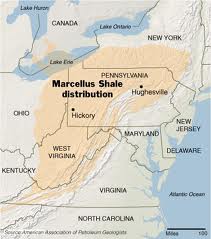
In Fiorentino v. Cabot Oil & Gas Corp., No. 09-CV-2284, 2010 WL 4595524 (M.D. Pa., Nov. 15, 2010), the United States District Court addressed a variety of issues in the first ruling to arise from a tort claim for personal injuries and property damage from Marcellus Shale Gas drilling. This case arises out of the allegations in Dimock, Pennsylvania that drilling for Marcellus Shale gas by the defendant, Cabot Oil & Gas Corp., caused property damage and personal injuries to residents.
As has been highlighted both in a documentary movie and on 60 Minutes, drinking water supplies have been alleged to contain methane, natural gas and other toxins and allegedly have been released onto plaintiff’s land. Plaintiffs brought suit seeking an injunction prohibiting future natural gas operations, seeking compensatory and punitive damages, the cost of future health monitoring, attorneys’ fees and other unspecified relief.
The plaintiffs’ complaint alleged the following claims against the defendant: 1) Hazardous Sites Cleanup Act, 35 P.S. §§ 6020.101 et seq. (“HSCA”); 2) negligence; 3) private nuisance; 4) strict liability; 5) breach of contract; 6) fraudulent misrepresentation; 7) medical monitoring trust funds; and 8) gross negligence.
The defendant filed a motion to dismiss the claims brought pursuant to HSCA, strict liability, medical monitoring and gross negligence. The defendant also filed a motion to strike a number of allegations largely related to the claims they were seeking to dismiss, as well as negligence per se and attorneys’ fees. The ruling by Judge John E. Jones, related only to the motion to dismiss these claims and the motion to strike. For the most part, in his ruling, the Judge sided with the plaintiffs. Issues
Whether the court should dismiss claims against a natural gas drilling company relating to HSCA, strict liability, medical monitoring and gross negligence.
Whether the court should strike allegations relating to punitive damages, negligence per se and attorneys’ fees.
Pa. allows dumping of tainted waters from gas boom
By: DAVID B. CARUSO
The Associated Press
Monday January 3, 2011 10:34 PM
Published by The Beaver County Times
The natural gas boom gripping parts of the U.S. has a nasty byproduct: wastewater so salty, and so polluted with metals like barium and strontium, most states require drillers to get rid of the stuff by injecting it down shafts thousands of feet deep.
Not in Pennsylvania, one of the states at the center of the gas rush.
There, the liquid that gushes from gas wells is only partially treated for substances that could be environmentally harmful, then dumped into rivers and streams from which communities get their drinking water.
In the two years since the frenzy of activity began in the vast underground rock formation known as the Marcellus Shale, Pennsylvania has been the only state allowing waterways to serve as the primary disposal place for the huge amounts of wastewater produced by a drilling technique called hydraulic fracturing, or fracking.
State regulators, initially caught flat-footed, tightened the rules this year for any new water treatment plants, but allowed any existing operations to continue discharging water into rivers.
At least 3.6 million barrels of the waste were sent to treatment plants that empty into rivers during the 12 months ending June 30, according to state records. That is enough to cover a square mile with more than 8 1/2 inches of brine.
Researchers are still trying to figure out whether Pennsylvania’s river discharges, at their current levels, are dangerous to humans or wildlife. Several studies are under way, some under the auspices of the Environmental Protection Agency.
DECATUR — One year to the day after a company set up its drilling rigs on their land in eastern Wise County, Tim and Christine Ruggiero confirmed the depth of their loss.
Originally on the 2010 tax rolls for $257,330, their home and 10-acre horse property are now worth $75,240.
The Wise County Central Appraisal District Appraisal Review Board — five community members with varying expertise in real estate — agreed that the drilling company’s use of the Ruggieros’ land warranted the extraordinary reduction.
“It’s the biggest cut I’ve ever seen,” said Bob Boughton, board chairman, at the conclusion of a nearly two-hour hearing Thursday afternoon.
It took the couple about 30 minutes to present all the significant events — from the day crews moved in without proper agreements to the recent installation of a “thermal oxidizer,” which continuously burns emissions — leading up to their 10-year-old daughter’s health problems.
The couple’s daughter has been having breathing difficulties for several months. After her latest trip to the emergency room, she was diagnosed with asthma, the couple testified. A neighbor’s child also had recently been diagnosed with asthma.
Some board members said they would neither be able to sell the property, nor even consider listing the property, after hearing the couple’s disclosures, including the fact that they had filed a lawsuit against the company for damages.
Dec. 27, 2010 – Conservatives have a legislative agenda for 2011 that will hurt your ability to get or keep a job, your neighborhood’s ability to recover from the recession and this country’s ability to regain its footing in the global economy.
To keep conservatives from enacting policies that will kill a nascent economic recovery, progressives will have to organize against these top 10 economy killers.
1. Repeal of Health-Care Reform
Republicans have placed "repealing Obamacare" at the top of their legislative agenda for 2011. If they succeed, the economy is going to come down with multiple serious illnesses—at least 24, according to a report released this month by Rep. Peter Stark of the House Ways and Means Committee.
Among them: a $143 billion increase in the deficit by losing the savings the reforms created, an increase the number of uninsured by 30 million people, an end to free preventative care services and the loss of the requirement that insurance companies devote the bulk of premium payments to health care costs rather than expensive advertising and executive perks. While a Virginia judge is a conservative hero for blocking health-care reform’s requirement that people buy private insurance, conservatives are silent on the fact that if that requirement goes, the reform’s mandate that insurance companies cover preexisting conditions is unsustainable.
We’ll be back to uncontrolled cost increases in private insurance. But, as the state of our health compared to other leading nations continues to decline, conservatives will at least be able to say that they maintained the United States’ global leadership as the nation that spends the most on health care and gets the least.
2. Diminish the Federal Government’s Ability to Support Job-Creation
Conservatives are poised to execute a strikingly broad assault against federal spending, particularly programs that help jump-start and steer the nation’s job-creation engine. It includes the expected targets—such proven programs as Community Development Block Grants—as well as some new ones, such as the Small Business Administration (there goes all that Republican fealty to "small business") and even the requirement that the Federal Reserve take employment impact into account when it sets monetary policy.
As I have written, when we peel back the layers of the real estate “onion” what we find is layer after layer of fraud. From the mortgage brokers to the appraisers and lenders, from the securitizers to the ratings agencies and accountants, from the trustees to the servicers, and from MERS (Mortgage Electronic Registry System) through to the foreclosures, what we find is a massive criminal conspiracy—probably the worst in human history. I realize that is a harsh claim but I cannot find any other words that fit.
In the old days, we used to hang horse thieves. The justification was that a man’s horse was necessary to his way of life, and in some cases, to his very survival. There can be little doubt that a home is equally important to maintenance of a middle class living standard today for most Americans. There is almost no calamity worse than loss of one’s home. It is the main asset that most Americans hold—essential to the educational success of one’s children, and to a comfortable retirement of our citizens. Americans typically borrow against their home equity to put their kids through college, to ease the financial distress caused by unexpected health care expenses, and to finance other large expenditures. The accumulated equity in the home is the only significant source of wealth for the vast majority of Americans. The home is necessary to one’s continuing connection to the neighborhood, school district, and network of friends. Theft of one’s house today is certainly equivalent to theft of a horse 150 years ago.
And, yet, we are not hanging the thieves who are stealing millions of homes from Americans. The thievery today is orders of magnitude greater than the horse thievery of the distant past. Today’s foreclosure thieves have stolen more property of citizens than all previous thieves combined since the founding of our nation. The only thing that could trump it would be the theft of property and livelihood from our native Americans. To be sure, we have evolved as a nation, and I would not advocate hanging those responsible. But without question they ought to be incarcerated in prison, with long terms and with confiscatory monetary penalties—perhaps 10 years for anyone who helps to improperly foreclose on a homeowner’s property, and $10 million for each case of fraudulent foreclosure. That would provide the proper incentive as well as the proper monetary reward that will be required to get good lawyers to take cases of homeowners who are being illegally thrown out of their homes every minute of every day.
Imagine waking up one morning and having no safe water at all. In a recent radio program about Peak Water,Maude Barlow said: The day will come–mark my words–when every single thing we do will be measured against what it does to water. For people in Midland, Texas, that day is here.
Hexavalent Chromium contamination is spreading in the groundwater used by some Midland, Texas residents and environmental investigators say the mounting evidence points to the oil and gas industry. Affected residents say they have proof that hydraulic fracture giant Schlumberger is responsible.
Erin Brockovich was in Midland investigating and her team is still in Midland. (video)
“The only difference between here and Hinkley,” Brockovich said, “is that I saw higher levels here than I saw in Hinkley.”
In 2005, at the urging of Dick Cheney, former Halliburton CEO, Congress exempt hydraulic fracking from the Safe Drinking Water Act (SDWA) as part of the Energy Policy Act of 2005. This exemption is commonly known as the Halliburton Loophole because Halliburton earns about 1.5 billion annually from hydraulic fracturing. The exemption allows hydraulic fracture giants like Halliburton and Schlumberger, to keep the chemicals they use secret.
Hydraulic fracturing is a process where 1 to 5 million gallons of potable water, mixed with chemicals and sand are pumped under pressure down the drilling hole to release the gas trapped deep in the earth. According to Victor Carrillo, Railroad Commission of Texas, 90% of all U.S. oil and gas wells undergo hydraulic fracturing to stimulate the production of oil and gas.
Schlumberger denies responsibility and denies use of hexavalent chromium although it is commonly used in hydraulic fracturing compounds. 3M Oil and Gas even offers protective gear (page 5) to protect oil field workers from exposure to hexavalent chromium in hydraulic fracturing fluid.
Bob Bowcock, an environmental engineer investigating the Midland County contamination with Brockovich said, “The culprit is definitely oilfield activity.” In an earlier statement to Big 2 News in Midland, Bowcock said Brockovich investigators have “evidence” that Schlumberger is to blame.
Paul Jay: Nancy Folbre, in her blog on the New York Times, wrote the following: "The Great Recession has sometimes been dubbed the Mancession because it drove unemployment among men higher than unemployment among women." So how is this affecting families? How is this affecting the future outlook for the population as a whole when it comes to unemployment? What might be the social consequences of men being more reliant on women for family support? . . .
Nancy Folbre:Male unemployment is significantly higher than female unemployment now. That’s not terribly surprising — typical in recessions for men to be more affected, because they’re employed in more cyclical industries like manufacturing that go up and down more than other industries. But –.
Paul Jay: As opposed to service sector, like nurses.
Nancy Folbre: Right. But the more disturbing trend is a longer-term decline in manufacturing employment. If you look at the last ten years, even counting the boom years, employment in that sector has declined. And that’s one of the factors that are driving higher unemployment among men.