Pittsburgh, March 11, 2011 – This statement was released this morning by the United Steelworkers (USW) on actions taken last evening by Wisconsin Governor Scott Walker and Republican Senators.
In a clear violation of Wisconsin’s open meeting law, Wisconsin conservative senators yesterday voted without a quorum to strip the state’s public sector workers – teachers, nurses, and librarians – of collective bargaining rights that the people of Wisconsin granted them a half century ago.
United Steelworkers International President Leo W. Gerard said this attack on the rights of Wisconsin’s public sector workers is an attack on all working people. “Although Wisconsin law requires a quorum when Senators vote to spend the people’s money, these conservatives exploited a loophole to vote without a quorum on legislation to steal workers’ rights. This is not democracy,” Gerard said.
“As illustrated by the surging crowd of protesters who filled the capitol building in Wisconsin after the undemocratic sneak-vote Wednesday, workers everywhere, whether public sector or private sector, union or unrepresented, will unite to win back their rights with their feet at protests and their votes at ballot boxes,” said Gerard, who leads North America’s largest industrial union, with 850,000 members, including steelworkers, paper workers, oil workers, rubber workers and public sector workers in the U.S. and Canada.
The conservative attack on workers in Wisconsin is far from isolated, Gerard said: “This is a nation-wide campaign by billionaires and country-club conservatives, to terminate workers’ rights, giving unfettered power to corporations.” So far in Wisconsin, conservatives have granted only government workers the right to freeload – the ability to benefit from collective bargaining without paying union dues. In nine other states, from Maine to Missouri, conservatives are pushing right to freeload legislation to cripple all unions.
“All this legislation is an attack on the middle class, which blossomed in this country as a result of collective bargaining victories during the middle of the last century. Middle class workers, whether Republican or Democrat, know they must repel this assault on their right to collectively bargain or be reduced to insecurity and poverty,” Gerard said.
ALIQUIPPA – Hopewell Township resident Danielle Houston was 22 and uninsured when she went to Planned Parenthood to take a pregnancy test.
The test was positive, Houston got health insurance and eventually had a son, and she’s grateful for the assistance she received from Planned Parenthood. "I felt that they weren’t judgmental," she said Tuesday in the parking lot of U.S. Rep. Jason Altmire’s Aliquippa district office.
Now, Houston is again without health insurance and she’s returned to Planned Parenthood for help. "It’s the only place I can get affordable checkups and birth control," she said.
Not like Valentine’s Day, which is about love and chocolate, or Mother’s Day, which is about sentimentality and breakfast in bed, International Women’s Day is about equality and autonomy.
The first commemoration occurred on March 19, 1911, a time when most governments in the world, including the U.S. and Canada, barred women from voting and most employers refused to hire women, ghettoizing them in sweatshops.
Six days after that first international call to action for women, flames engulfed such a sweatshop, the Triangle Shirtwaist Factory in New York City, killing 146 workers, the vast majority of them young women aged 16 to 25, some of whom jumped to their deaths from the 9th floor rather than burn.
Women can vote now. They can hold most jobs, though not all, including combat positions in the U.S. military. And their pay is only 75 percent of men’s. So the struggle for equality and autonomy is not over. Yet the GOP is intent on setting women back. If the Republican governors across the country succeed in confiscating collective bargaining rights from public sector workers, women will be hurt most. Continue reading March 8: Women’s Day Is About Equality and Autonomy→
The people most eager to proclaim themselves as deficit hawks are hypocrites, and the current congressional debate over deficit reduction is essentially fraudulent and runs the risk of doing real damage to our economy.
It is often said that “everything must be on the table” and “everyone has to sacrifice” if we are to bring down the deficit. But not everything is on the table and not everyone is being asked to sacrifice. In fact, there is little in the current debate that should bring a frown to the faces of millionaires such as Lloyd Blankfein of Goldman Sachs, Rupert Murdoch of Fox Broadcasting or Jamie Dimon of JP Morgan Chase.
As recently as three months ago, Republicans in Congress were demanding—and getting—a two-year extension of tax cuts for the richest 2 percent of Americans, which will increase the federal budget deficit by $100 billion. Now congressional Republicans want to make up for this budget shortfall with as much as $100 billion in spending cuts that will cost working people hundreds of thousands of good jobs and gut the government functions they depend on, such as workplace safety and health. Meanwhile, many of the same people demanding tax cuts for rich people are also loudly demanding cuts in Social Security and Medicare benefits.
New York Times investigation uncovers lax regulations, radioactivity and serious concerns about water contamination.
By Andrew Schenkel Beaver County Blue via MNN.Com Bloggers Mon, Feb 28 2011
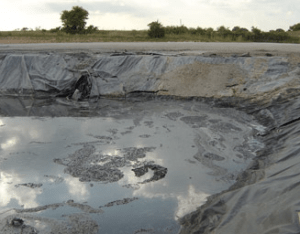
Fracking concerns FRACKED UP: A recent expose by the New York Times reveals all sorts of problems with the process for extracting natural gas. (Photo: ltmayers/Flickr)
The New York Times and reporter Ian Urbina dropped a serious bomb on the fracking industry over the weekend with the first installment of a series of reports entitled Drilling Down.
Urbina’s story is the first must-read of the year when it comes to energy and environmental reporting. It reveals all sorts of damning nuggets about fracking in Pennsylvania, Wyoming and Colorado. I think anyone who cares about energy production should take a look. Here are a few highlights or, in this case, lowlights:
1. Radioactive material found in water
Wastewater is a major part of the fracking process. Millions of gallons of toxic water mixtures are necessary for the extraction of natural gas, and once the gas is extracted something has to be done with all that waste. The problem, according to the Times, is that the wastewater has been frequently found to contain amounts of radiation hundreds and sometimes thousands of times higher than what the federal government allows. This radioactive wastewater may be getting into drinking water because it is often hauled to sewage plants not designed to treat it and “discharged into rivers that supply drinking water.” That’s not good, even if you are a fan of the three-eyed fish from The Simpsons.
2. The EPA hasn’t done much
For everyone in Congress who has been clamoring to reduce the power of the Environmental Protection Agency, the Urbina piece reveals that the agency has been relatively powerless when it comes to fracking. The story alludes to several documents and interviews that “alarmed” EPA scientists, but were never made public. These findings included the revelation that many sewage treatment plants simply couldn’t remove the contaminants from the toxic fracking fluids. Perhaps even more damning is that scientists and consultants with the EPA have known about the radioactive problem since 2006 and have apparently not made much of an effort to call for testing for radioactivity. (The fracking boom began in 2008.) That’s not good, even if you are a fan of water that glows in the dark.
3. Concerns out West
Most of the Urbina story focused on Pennsylvania, which was described as “ground zero” for the fracking industry. While this is certainly true, the story did make some interesting and scary connections to the heavily fracked states of Colorado and Wyoming. As someone who has spent a few years in both states, I wasn’t surprised. But I was still disappointed to read, “In a sparsely populated Sublette County in Wyoming, which has some of the highest concentrations of wells, vapors reacting to sunlight have contributed to levels of ozone higher than those recorded in Houston and Los Angeles.” From my few trips to Sublette County, I can tell you that there isn’t much that it has in common with Los Angeles or Houston. The ozone connection is not a good one to make, even if you are a fan of awesome sunburns.
4. The natural gas industry doesn’t seem to care
While it’s easy to point to flaws in the regulatory process and within the EPA, let’s not ignore the industry that is doing this. I couldn’t help but notice that throughout the NY Times story, it seemed the industry not only knew about these serious concerns but kept operating despite them. An industry study going back to 1990 stated that “’using conservative assumptions,’ radium in drilling wastewater dumped off the Louisiana coast posed ‘potentially significant risks’ of cancer for people who eat fish from those waters regularly." This is of concern because radium may not just be getting into water in places like Pennsylvania, but also the food chain, as livestock is likely to ingest radium. Therefore anyone who eats that livestock may be exposed to the carcinogen. There are also several other instances of information that the industry was privy to in this report, followed by explanations of how they are not concerned. Perhaps most concerning of all is this statement that reveals how much regulators are depending on the very industry they are regulating for information. “’If we’re too hard on them,’ the inspector added, ‘the companies might just stop reporting their mistakes.’”
So there you have it — a few lowlights from a very depressing article. However, perhaps this is the beginning of getting energy right. You have to know what’s wrong before you can fix it. There’s certainly a lot wrong, but with accountability and transparency perhaps we can get it right. That’s a start.
For Immediate Release Contact: Nicole Triplett
March 3, 2011 (202) 225-5543
Conyers Introduces Deficit Neutral Full Employment and Training Bill
Washington DC- Congressman John Conyers (D-Mich.) today introduced H.R. 870, the “Humphrey-Hawkins 21st Century Full Employment & Training Act,” a comprehensive and innovative federal and local government job creation and training bill that would create millions of new jobs for the nation’s unemployed.
Local jobs would be created through a partnership between the Department of Labor, state, and local governments, non-profit community organizations, and small businesses. Under the Act, jobs would be created in the fields of construction, infrastructure repairs, green jobs, education, health care, and neighborhood renovation.
The Act’s Full Employment Trust Fund would provide federal funding for local community-based job creation and training initiatives until full employment is reached in the United States. The Act is deficit neutral and fully funded through a modest tax on Wall Street stock and bond transactions.
“Today, there are millions of Americans who want a job, but can’t find one,” said Conyers. “The inability to find meaningful and sustainable work strips our fellow citizens of their basic right to have access to food, housing, health care, freedom of movement, and perhaps, most importantly, the ability to pursue life with a sense of dignity and meaning. High levels of unemployment are unacceptable and immoral in the wealthiest nation in the world. Thus, I believe it is critical that the federal government empower states, local governments, non-profits, and small businesses to create jobs during an economic downturn.
My “Humphrey-Hawkins 21st Century Full Employment and Training Act” would allow local government officials to work with community leaders to come up with an effective job creation program, based on each community’s respective needs—be it improvements in infrastructure, housing, energy efficiency, education, or health care.
The private sector will also benefit if millions of new jobs are created through improvements in our nation’s aging and crumbling infrastructure. New orders for brick, concrete, steel, aluminum, and plastics mean new jobs in America’s plants and factories and a rebirth of American manufacturing.
Lastly, because we exist in a period when concerns about government debt loom large in many minds, my legislation will be fully funded by a tax on Wall Street speculation and will not add a dime to the federal debt. Wall Street was responsible for the financial crisis that began in 2008 and continues to affect us today. Having already received significant assistance from the federal government, it is only fair that Wall Street now pay Main Street back by helping put America back to work.”
U.S. Sen. Bob Casey has called on state and federal environmental regulators to increase testing of public drinking water supplies for radioactive contamination connected with the burgeoning Marcellus Shale gas well drilling industry in Pennsylvania.
The senator’s request that the state Department of Environmental Protection and the U.S. Environmental Protection Agency step up sporadic radiation testing follows a New York Times report that hydraulic fracturing wastewater at 116 of 179 deep gas wells in the state had been found to contain high levels of radiation.
“No threat to Pennsylvania drinking water should be taken lightly, especially one involving radioactive material,” Mr. Casey, D-Pa., said Tuesday. “Alarming information has been raised that must be fully investigated.”
02/27/11 – A top House Democrat is urging EPA to quickly toughen regulation of natural gas drilling following a New York Times report on the discharge of dangerous pollutants into rivers that supply drinking water.
The Times – citing internal documents from EPA and elsewhere – claims that chemicals and radioactive elements in wastewater from gas projects are creating “dangers to the environment and health [that] are greater than previously understood.”
Rep. Ed Markey (D-Mass.) sent EPA Administrator Lisa Jackson a detailed letter Saturday calling for “immediate action.”
“I am outraged that state and federal regulators were evidently well aware of the risks that the wastewater might pose, but instead chose to adopt a ‘see no evil, hear no evil’ approach to regulation by ignoring them,” writes Markey, the top Democrat on the Natural Resources Committee.
Feb. 26, 2011 – The American landscape is dotted with hundreds of thousands of new wells and drilling rigs, as the country scrambles to tap into this century’s gold rush — for natural gas.
The gas has always been there, of course, trapped deep underground in countless tiny bubbles, like frozen spills of seltzer water between thin layers of shale rock. But drilling companies have only in recent years developed techniques to unlock the enormous reserves, thought to be enough to supply the country with gas for heating buildings, generating electricity and powering vehicles for up to a hundred years.
So energy companies are clamoring to drill. And they are getting rare support from their usual sparring partners. Environmentalists say using natural gas will help slow climate change because it burns more cleanly than coal and oil. Lawmakers hail the gas as a source of jobs. They also see it as a way to wean the United States from its dependency on other countries for oil.
But the relatively new drilling method — known as high-volume horizontal hydraulic fracturing, or hydrofracking — carries significant environmental risks. It involves injecting huge amounts of water, mixed with sand and chemicals, at high pressures to break up rock formations and release the gas.
With hydrofracking, a well can produce over a million gallons of wastewater that is often laced with highly corrosive salts, carcinogens like benzene and radioactive elements like radium, all of which can occur naturally thousands of feet underground. Other carcinogenic materials can be added to the wastewater by the chemicals used in the hydrofracking itself.





 Casey pushes for testing of water sources
 Beaver County Blue: Voice of the 17th CD of Progressive Democrats of America