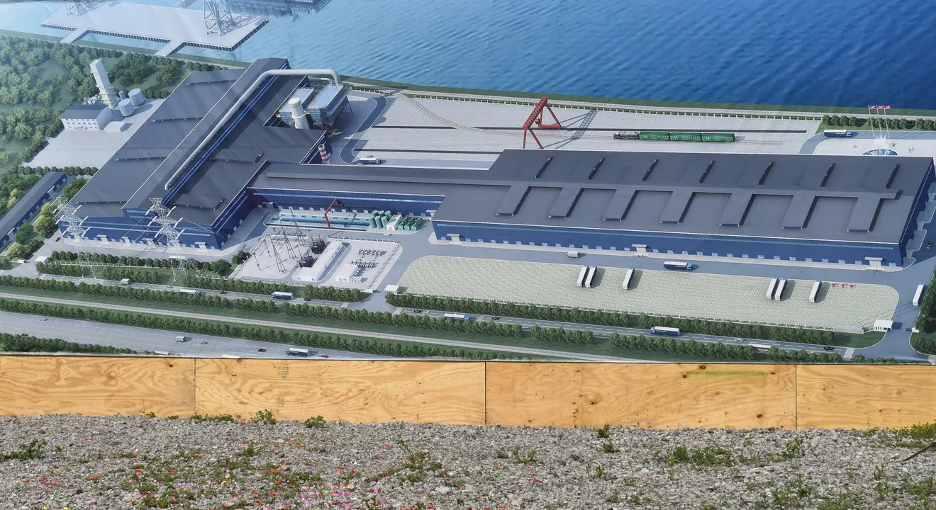
Artist’s rendering of the proposed 72 Steel manufacturing plant on former J&L land in Aliquippa–Beaver County Times
By Fair Shake
July 24, 2023
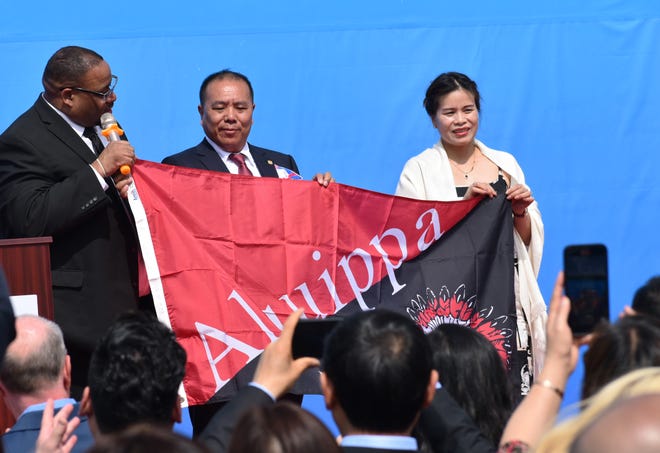
On May 16, 2023, 72 Steel held a groundbreaking ceremony to announce its plans to build a new steel manufacturing plant in Aliquippa, PA. 72 Steel will build the proposed plant at the former Jones & Laughlin/LTV steel mill site. 72 Steel is a Brooklyn, NY based company that distributes steel products primarily from their Brooklyn service center. Private investors associated with 72 Steel from New York and New Jersey will fund the projected $218 million plant. 72 Steel is also looking to receive federal tax credits made possible by the Biden Administration’s Bipartisan Infrastructure Law, allocating funds to workforce hubs such as Pittsburgh.
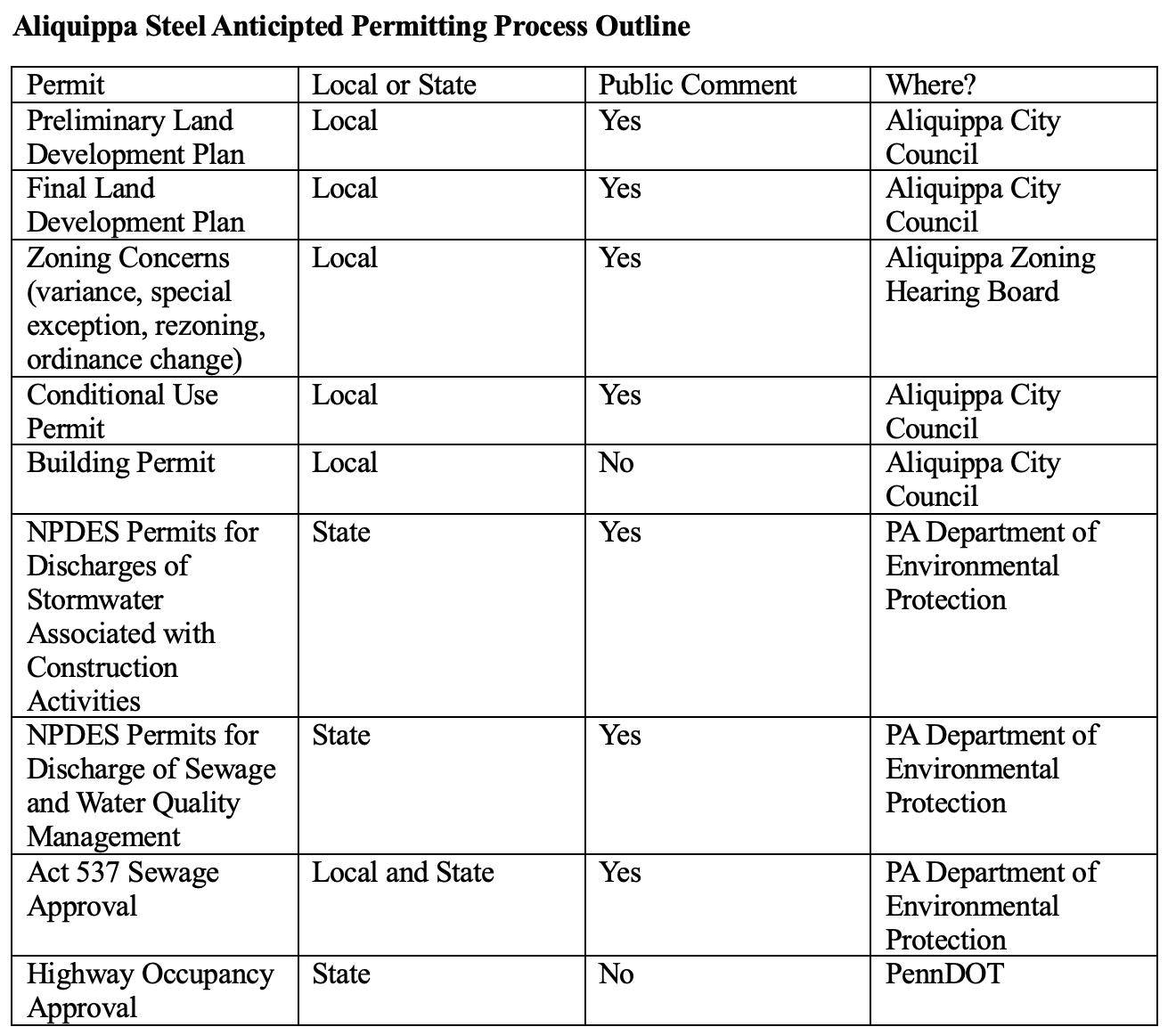
This Aliquippa facility will make steel parts for 72 Steel’s products using an Electric Arc Furnace (EAF). The plant is projected to produce 500,000 tons of steel rebar a year with the potential to expand to steel beam and anchor production. The Aliquippa plant will be 72 Steel’s first venture into steel manufacturing. 72 Steel expects a production capacity and output value of $400 million. Despite the ambitious planning, 72 Steel has yet to close on the property according to the current landowner, Chuck Betters. Also, 72 Steel has yet to complete the appropriate local and state land development permits prior to construction. Much of the permitting process includes opportunities for public participation and comment. The permits listed below are the anticipated stamps of approval 72 Steel needs to satisfy prior to construction.
Local Permits
At the local level, 72 Steel (through its developer) must satisfy multiple different permits and zoning requirements before it can begin constructing the manufacturing plant. Below is a list of local permits and opportunities for public participation. See Fair Shake’s Commenting Tips for ideas and strategies for public commenting.
Preliminary Land Development Plan
72 Steel must submit a preliminary land development plan application that complies with the Aliquippa Subdivision and Land Development Ordinance (SALDO). The plan will include a comprehensive description of the steel plant development including land surveys, erosion plans, stormwater management plans, construction details, phasing schedules, traffic impact studies and other SALDO required documentation. 72 Steel will submit the application to the zoning officer who sends it to the city engineer and planning commission. The city engineer and planning commission will submit recommendations of approval, approval with conditions, or disapproval. Both the city engineer and the planning commission consider the SALDO, zoning ordinances, and other city ordinances that are relevant. If recommended for approval, the city council may hold a public hearing or meeting discussing the application and will make a final approval decision no later than ninety days after filing.
Groundbreaking ceremony in Aliquippa, May 16, 2023
By Chrissy Suttles Beaver County Times
ALIQUIPPA – A New York-based company plans to revive Aliquippa steel production with a $218 million advanced manufacturing facility on land once occupied by J&L Steel’s tin mill.
72 Steel, founded in 2016 by Chinese-American entrepreneurs, committed Tuesday to purchase the land owned by developer Chuck Betters to build a steel fabrication plant on 44 acres of the historic Aliquippa Works site along the Ohio River.
The operation will include an electric-arc furnace — a steelmaking technology with lower carbon intensity than traditional methods — to melt scrap steel and produce 500,000 tons of rebar, or reinforcement steel, annually for a variety of industries. Its production capacity and output value are expected to reach $400 million.
Artist rendering of the new mill
Once complete, the company expects to hire 300 to 400 permanent employees, but hundreds of construction workers will be needed to build the facility, roadways, parking space, product storage areas and ancillary buildings. Regional union leadership could not immediately comment on whether they’re in talks with 72 Steel to hire union builders and/or operators. The plant’s anticipated completion is 2025; it will be 72 Steel’s first manufacturing site.
72 Steel plans to use “energy-saving and environmental protection technologies” during production, including air and water pollution control equipment and an electric-arc furnace from Italian technology supplier Tenova.
Xiaoyan Zhang, senior business adviser at 72 Steel, said the company’s decision to build was prompted by the 2021 federal Bipartisan Infrastructure Law that included $110 billion in new funds for roads, bridges and other major projects. The company toured sites in West Virginia, Ohio and North Carolina before settling on Beaver County due to its river and rail access and the Pittsburgh region’s enduring history of steelmaking.
The company’s $218 million investment is “an initial investment,” Zhang said. “Maybe, down the road, there would be some additional (investment).” Company leadership, he said, “feels proud as Chinese Americans about making America great and supporting the infrastructure bill.”
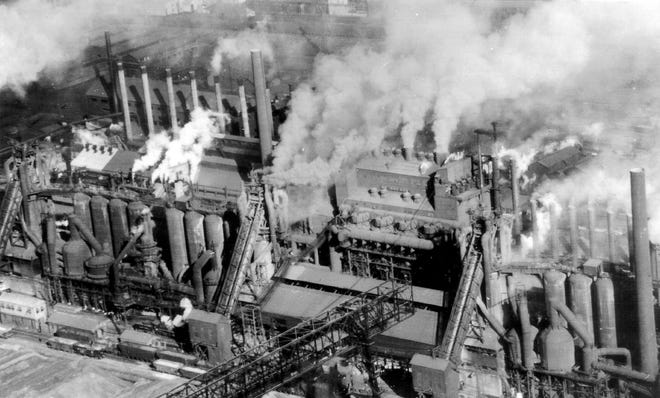
The old J&L
The move has been in the works for months; 72 Steel leadership toured the proposed facility late last year alongside landowner Chuck Betters, state and local officials and members of the Allegheny Conference on Community Development. State business filings show 72 Steel registered with Pennsylvania in June 2022.
“Pittsburgh has a celebrated history as the manufacturing powerhouse that built the modern world,” said Matt Smith, chief growth officer at the Allegheny Conference. “Today, we are positioned as the region where the next-generation of manufacturing is happening now – spanning advanced, additive, green manufacturing and more.”
J&L Steel’s mill at 611 Woodlawn Road opened in 1910 and expanded in 1947 for tin plate production. It operated until the 1980s when Aliquippa Works, by that time owned by LTV Corp., closed amid the region’s steel collapse.
Aliquippa Works at one time employed more than 10,000 workers; nearly 8,000 people were out of jobs when the site closed, leaving former company town Aliquippa financially ruined with a disintegrated tax base. The site was later demolished and, in recent years, served as a staging area for Shell’s ethane cracker plant in Potter Township.
Mayor Walker congratulating a partner.
“My dad put 18 years in at this very site,” said Aliquippa Mayor Dwan Walker during a Tuesday groundbreaking ceremony. “My father walked out of this mill in ‘86 thinking steel was never going to come back. I was so emotional this morning thinking about the possibility of what will be … I can’t wait to see cars come through that tunnel with stickers: ‘My kid goes to Hopewell,’ ‘My kid goes to Beaver Falls,’ or ‘My kid goes to New Brighton.’ I can’t wait to see those stickers come through that tunnel like when my dad was working here.”
72 Steel has not yet closed on the deal, but Betters said they’re on their way. The Beaver County developer pledged to invest $1.5 million of his own money into the project within seven days of closing.
“I’m comfortable you’re very honorable people,” he told 72 Steel leadership. Once the deal closes, planning and environmental permitting will begin.
Most of the remaining Aliquippa Works land is now owned by cellular PVC manufacturer Versatex and U.S. Minerals, which makes roofing and abrasive products like coal slag abrasives, iron silicate roofing granules and mineral fillers.
Tuesday’s groundbreaking featured speakers from 72 Steel and state, county and local lawmakers and figureheads.
“It’s always about jobs, jobs and more jobs,” said state Rep. Rob Matzie, D-16, Harmony Township. “There were some close calls on this property, suitors have come and gone, and we are hopeful … we will see construction. I live across the river, growing up in the ‘70s and ‘80s, I was able to see the J&L smokestack on this property. I still live up on that hill, and I’ll be able to see this new construction when it’s complete, hopefully, sooner rather than later.”
Stephanie Sun, executive director of former Gov. Tom Wolf’s Advisory Commission on Asian/Pacific American Affairs, called Tuesday’s event a milestone for Chinese Americans living in Pennsylvania, noting that May is Asian/Pacific American Heritage Month and Asian Americans are the fastest-growing racial or ethnic group in the United States.
“The Asian/Pacific American community is also the fastest-growing population in the United States with a strong international network of investment and business opportunities,” she said, adding it’s been just 80 years since the repeal of the federal Chinese Exclusion Act.
Mayor Walker with new steel officials.
Beaver County Commissioners’ Chairman Dan Camp said the groundbreaking marked a new era of Beaver County steel, adding Beaver County is “always open for business.”
“We want to bring more work to the area, and assist communities where they can raise a family,” Camp said. “To make Beaver County what it was when the steel mills were running 24 hours a day, seven days a week with a strong focus on economic growth and creation of good-paying jobs. Just like (Walker’s) father, my relatives and many other Beaver Countians who worked tirelessly on this very ground to help create the rich history that Beaver County has today.”
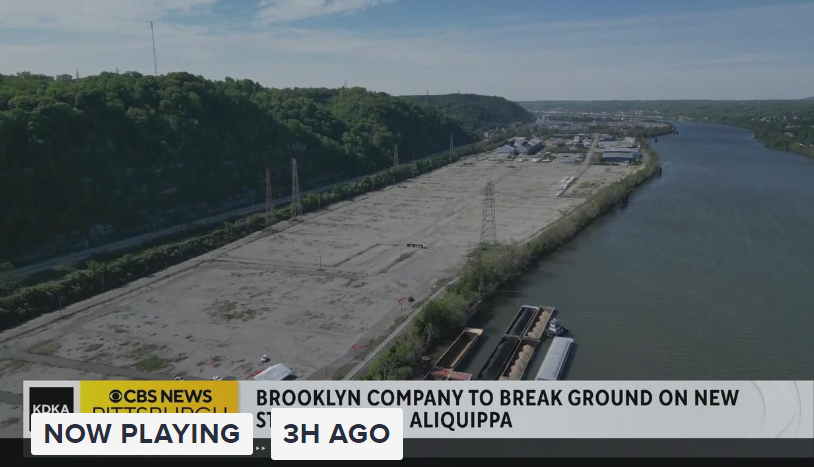
New mill: Aliquippa’s large ‘brownfield’ was the core of the old J&L Steel.
By Lauren Linder CBS News
ALIQUIPPA, Pa. (KDKA) – A major economic boost appears to be heading to Aliquippa, as a Brooklyn company is planning to build a new steel mill in Beaver County.
The official groundbreaking is Tuesday, May 16, which will mark a special moment for the city that was originally built around steel.
Aliquippa Mayor Dwan Walker never thought he would live to see a day when the steel industry returned to the city, but it’s happening in the same spot off Woodlawn Road, where his dad spent 18 years working for J & L in the 1970s and 1980s.
“To have a comeback to where it gave birth to, it’s a beautiful thing,” Walker said. “To hear my dad almost cry about it, that says more to me than any words that I could say.”
The land remained vacant for decades since the J & L and LTV mills closed. Now a Brooklyn, New York company is coming in, 72 Steel, started by Chinese-American entrepreneurs.
New steel mill coming to Aliquippa 01:35 72 Steel Senior Business Advisor Xiaoyan Zhang said they chose Aliquippa for the $218 million facility over sites in Ohio and West Virginia. They will produce rebar at the 44-acre mill and hire 300 to 800 workers for construction, distribution, and the plant.
“We know that history, and so to build a steel mill here is exciting,” Zhang said. “Because this is an old industrial base, there will be a lot of talent, you know, that’s for hiring people and everything else.”
Property owner Chuck Betters was waiting for the right business to move in. In recent years the space was used as a staging area for the Shell cracker plant in Monaca. Then, a couple of years ago, he showed the land to 72 Steel, and eventually, they agreed.
“It’s what I’ve been hoping for,” Betters said. “I think it could be a heck of a good job creation here, a tax base for the city. I think it would be good things.”
This is the hope for Mayor Walker.
“We planted a seed that’s going to last the test of time, and then this is this going to be a caveat,” Walker said.
It’s a full-circle moment as the city heads into the future.
“This is going to be the blessing, you know, to make sure we stay out of distressed and to make sure we’re bringing economics and financial stability back to Aliquippa on a solid ground, on solid footing,” Walker said.
No word on when construction will start but 72 Steel hopes to finish by mid-to-late 2025.
Betters said he sold the rest of the 80-something-acre old mill land to Versatex, which makes products like plastic decking, and U.S. Minerals, which makes abrasives.
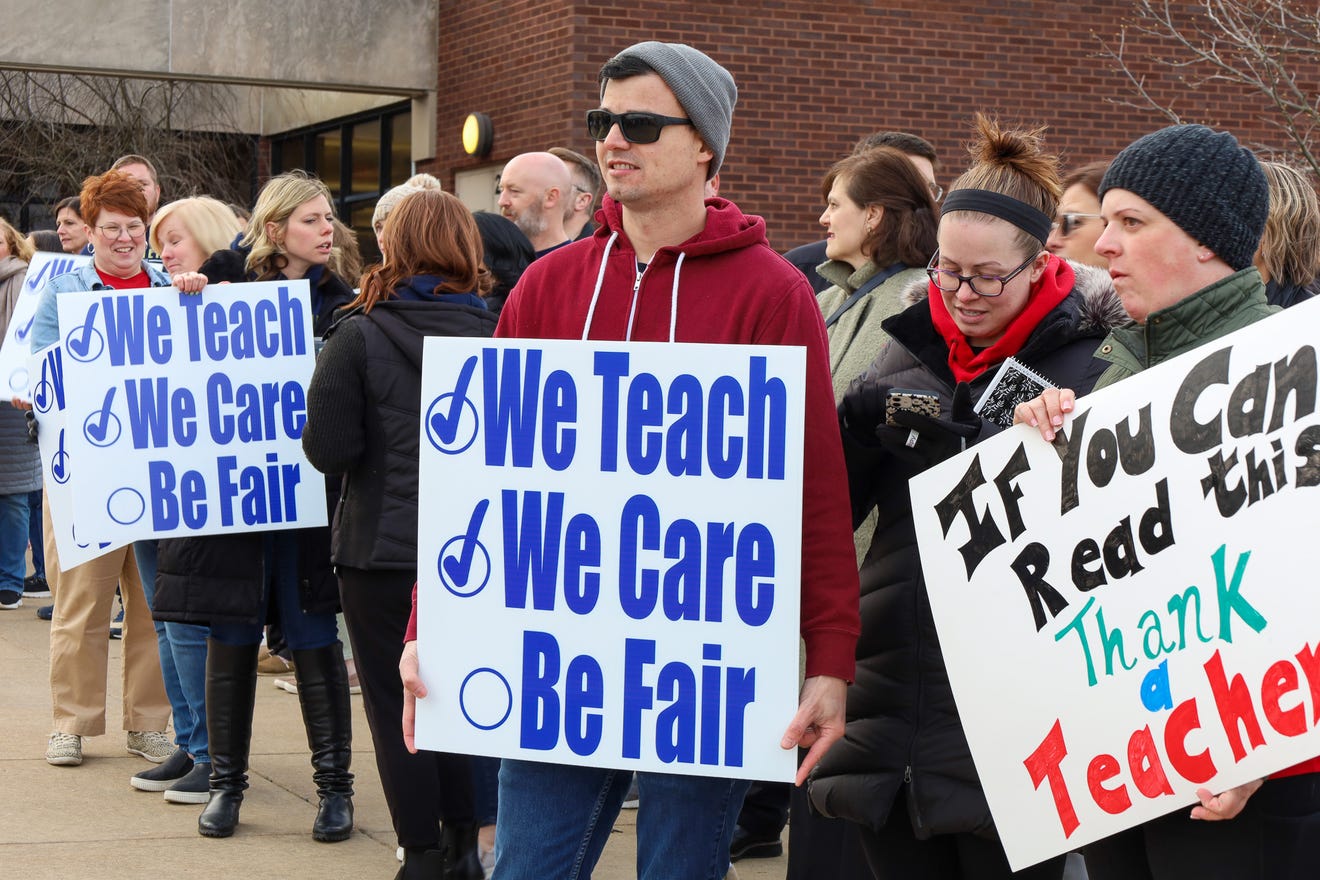
Amid contract negotiations, Hopewell Area School District teachers flood school board meeting
BY JENNIFER BORRASSO
MARCH 28, 2023
CBS PITTSBURGH
HOPEWELL, Pa. (KDKA) — A group of teachers crashed the Hopewell Area School Board meeting on Tuesday to put pressure on the board.
The president of the teachers union said teachers have gone without a contract since July 1, 2022. About 200 people showed up Tuesday to the meeting, including parents.
“I want to make sure they know they are valued and thank them for what they are doing for our students,” one parent said.
“All I’m asking for is our teachers get a fair contract. We need to do whatever it is to keep our kids in school,” another parent said.
Hopewell Education Association Union President Jeffrey Homziak said so far there have been 15 negotiating sessions since November 2020 but no deal has been reached.
Homziak said they want a five-year deal and a meaningful pay increase, more than the 2 percent increase the district is offering. They also don’t want to pay more for their health care and don’t want to work longer hours and not be compensated, Homziak added.
“Salary and health care are the biggest sticking points for any district,” Homziak said. “They want an extended school year and more time throughout the week for us to work without giving us salary.”
School board president Danny Santia talked to KDKA-TV after the meeting.
“Be fair to the community, be fair to the taxpayers and the teachers,” Santia said. “I want to give them a fair contract, but it has to be fair to the whole community.”
Between 1,800 and 2,000 students attend schools in the district.
KDKA-TV’s Jennifer Borrasso: “Are these teachers prepared to strike?”
Homziak: If it comes down to that. … We don’t want to do that to our students. We want to be in the classroom.”
There are three more negotiating meetings scheduled, with both sides back at the bargaining table on Thursday.
By Joseph Minott Special to The Beaver County Times
If the first three months of operations at Shell’s petrochemical plant are any indication, the next 30 years are going to be stressful and hazardous for nearby Beaver Country residents.
The community is locked into a lasting and significant source of plastics production and dirty air pollution that will degrade the Commonwealth’s air quality and our environmental legacy for decades to come. Shell clearly isn’t interested in operating safely or responsibly – so it’s up to regulators and citizens to force them to get emissions in check.
The Shell Polymers Monaca plant in Potter Township officially began operations in November of last year. Even before opening day, the plant was already posing a threat to the surrounding community. From the very beginning, Shell has not managed to keep its pollution to safe and legal levels. It has set a terrible precedent for decades to come, and there’s no reason to expect Shell will act differently – unless it’s forced to do so.
The Environmental Integrity Project and Clean Air Council are taking steps to force Shell to take their responsibility to residents and the environment seriously. Our organizations have filed a notice of intent to sue Shell for the consistent violation of air pollution limits.
In September 2022, the plant emitted 512 tons of volatile organic compounds, nearly reaching in that one month the 12-month permitted limit of its approved volatile organic compound emissions (516.2 tons in any consecutive 12-month period). These chemicals contribute to smog and can cause nausea, nerve damage and other health problems. Shell also emitted the dangerous pollutants nitrogen oxides and carbon monoxide from sources at the plant in the final months of 2022 at rates that exceed permit limits.
It’s important to note that these limits were agreed upon by Shell and the Pennsylvania Department of Environmental Protection (DEP) through an in-depth permitting process. The fact that Shell began violating them immediately underscores just how little regard its leaders have shown for the residents harmed by the massive facility.
Those residents have had to be extra vigilant in ensuring their families are safe. The plant has caused unexpected noises in the middle of the night, odd smells, unexpected flaring activities, and more. With few official updates from Shell, community members and environmental advocates have taken to sharing information on social media and elsewhere to stay informed and connected. Eyes On Shell is one group monitoring the refinery’s actions and keeping local residents updated.
Clearly, it shouldn’t be left up to citizens and nonprofit groups to decipher flames brightening the skies or chemical odors and figure out how to protect their loved ones. Shell should be updating the community and taking every action to protect surrounding residents through safer operations and no environmental violations. The public should be able to rely on DEP to force Shell to do better.
The Shell petrochemicals complex is ground zero for an identity crisis playing out in the fossil fuel space. As the world recognizes the need to transition away from dirty fossil fuels to renewable forms of energy, companies like Shell are pivoting to massive investments in plastics manufacturing. The cracker plant on the Ohio River is a prime example: it can produce as much as 3.5 billion pounds of plastic pellets in a single year. Yet Shell’s own leaders have been caught questioning the impact of three more decades of single-use plastic production and wondering if the company will one day “take responsibility” for all that environmental damage.
We demand that Shell take responsibility now. It’s time for Shell to take responsibility for the unsafe pollution and start operating under the permitted emissions limits. It’s time for Shell to take responsibility to inform and protect the community it joined when it began this massive project. It’s time for Shell to take responsibility for the generations of Pennsylvania families it threatens with its reckless operations and environmental destruction. Tell your local lawmakers and DEP that it’s time to hold Shell accountable.
Joseph O. Minott is executive director and chief counsel of the Clean Air Council, one of the leading nonprofit advocates for Pennsylvania’s environmental protection.
Photo: A large plume of smoke rises over East Palestine, Ohio, after a controlled detonation of a portion of a derailed Norfolk Southern freight train carrying toxic chemicals, February 6, 2023., Gene J. Puskar/AP Photo
Freight rail companies are running their trains ragged to boost profits. Sometimes they crash.
In the village of East Palestine, on a late Friday evening, a Norfolk Southern freight train derailed on the Ohio side of the Pennsylvania border, causing tanker cars to rupture and catch fire, releasing thousands of tons of hazardous chemical compounds into the surrounding land and atmosphere.
At the time of the crash, the known chemicals aboard included the highly toxic vinyl chloride and hydrogen chloride. An EPA document dump on February 12 revealed additional carcinogenic chemicals were aboard too, as well as some highly flammable solvents and gases. Public documents reveal that four tank cars containing vinyl chloride were stacked together.
Responding before the reveal of the cargo’s manifest, Jason Trosky, a resident of East Palestine, told the Prospect: “A $56 billion corporation knows where every one of its assets is at any given time … The reason [Norfolk Southern] didn’t show us the manifest is because the train was overloaded.”
Twenty miles earlier, grainy security footage from an equipment plant in Salem, Ohio, showed flashes of white rising from the train tracks, sparks and flames—a possible indication of fire or malfunction. Before the derailment, Michael Graham, a spokesperson for the National Transportation Safety Board (NTSB), said the crew on board was notified of mechanical failure, prompting them to activate the emergency brakes, which caused the derailment. At time of writing, it was not known whether the hotbox detector, a device used to assess the parts of a rail car, in Salem or the one in East Palestine alerted the crew on board.
In the following days, reporting from The Lever detailed how Norfolk Southern lobbied against transportation safety rules designed to prevent the exact sort of disaster that happened in East Palestine. They spent big to block new rules requiring rail companies to replace conventional air brakes with electronically controlled pneumatic brakes on cars carrying volatile or dangerous material. The new technology is far more effective at braking—unsurprising given that air brakes were designed in the 19th century—but the upgrades would have cost money.
Ben Ratner, a resident of East Palestine, recalled the immediate moments after the freight train derailed to the Prospect. He and his family arrived home from his daughter’s basketball game. The phones buzzed and sirens rang overhead. From the Ratner home, the train tracks are visible from the backyard. He looked outside and saw flames.
“I wasn’t fully sure what was going on for our family and friends who live over there.” So he stepped outside and walked toward the smoke and flames until he was stopped by firefighters. “I tried getting over to my friend’s house and they weren’t letting me cross the intersection,” he said, solemnly, “I was very close to their house, but they were actually getting ready to leave as well.” He then returned home.
By midnight, Ratner and his family decided they’d shelter in place. “Some people were leaving town, but our kids were getting ready for bed. We didn’t know how serious it was.” The following morning, Ratner relocated his family to his mother-in-law’s house, just over two miles away from the crash site, as he went to work for the day. His wife called him, telling Ratner that evacuation for children was mandatory, citing alleged potential charges for child endangerment. Ratner described frantically running around town, being stopped from entering East Palestine, and eventually picking up the family’s dog.
By Sunday, his family had rented an Airbnb next to the family-owned coffee shop in Salem. At the time of the interview, he said his house was on a wait list for air quality testing and he was unsure of returning. He said: “Our kids are supposed to return to school on Monday.”
Norfolk Southern lobbied against transportation safety rules designed to prevent the exact sort of disaster that happened in East Palestine.
An ominous FAQ document, with no company or government letterhead, appeared on the exterior doors of the residents of East Palestine. The document tells residents not to worry about their air quality or drinking water, and compared the inhalation of the chemicals in the air to breathing in smoke from a wood fire. Under the “Is my drinking water safe?” section, the document states:
“It is improbable that substances from the derailment will impact the groundwater or drinking water wells in the area.” Meanwhile, according to the EPA, trace amounts of the chemicals aboard the Norfolk Southern train have been identified in the Ohio River and along the creeks sprouting off the river.
Additionally, the document states that children, the elderly, and other immunocompromised people are not at risk from exposure to the substances released from the derailed train. The document states: “While smoke from any type of fire can exacerbate asthma or other breathing difficulties, no long-term effect is expected from short-term exposure.”
Butler Focus: Will the Real G.O.P. Please Stand Up? A National Power Struggle Goes Local.
In one deep-red pocket of rural Pennsylvania, three warring factions each claim to represent the Republican Party. Tensions boiled over in a scuffle over a booth at a farm show.
BUTLER, Pa. — Zach Scherer, a 20-year-old car salesman and Republican activist in Pennsylvania’s Butler County, decided to run for a seat on the county commission this year — a move that ordinarily would mean seeking the endorsement of local Republican Party leaders.
In Butler County, this raised an unusual question: Which Republican Party?
Last spring, the officially recognized Butler County Republican Committee was divided by a right-wing grass-roots insurgency, then divided again by a power struggle among the insurgents. There have been a lawsuit, an intervention by the state Republican Party and a dispute over a booth at the local farm show.
Butler, a rural county in western Pennsylvania where Donald J. Trump won nearly twice as many votes as Joseph R. Biden Jr. in 2020, now has three organizations claiming to be the true tribune of local Republicans. All of them consider the others illegitimate.
“There is, in effect, no committee,” said Al Lindsay, a four-decade veteran of the local party, who was ousted as committee chairman last year.
The partisans in Pennsylvania agree about one thing, if not much else: Their fight is a microcosm of the national struggle for control over the Republican Party, one that began with Mr. Trump but has been inflamed by the party’s weak showing in the midterm elections.
That struggle has played out in national arenas like Kevin McCarthy’s days-long fight to win the speakership of the U.S. House of Representatives, and in a contentious race for the chair of the Republican National Committee ahead of this week’s meeting.
But it is being fought just as intensely at state and county levels, as Trump loyalists and right-wing activists who took control of party organizations in recent years face resistance from rivals who blame them for the party’s losses in November.
Such conflicts often occur below the radar of even local news outlets. But they are likely to shape state parties’ abilities to raise money, recruit candidates, settle on a 2024 presidential nominee and generally chart a path out of the party’s post-Trump presidency malaise.
“We believe that the way we’re going to change our national scene is by changing our local committees,” said Bill Halle, the leader of one of the two insurgent factions within the Butler party.
What to Know About the Trump Investigations
Card 1 of 6
Numerous inquiries. Since leaving office, former President Donald J. Trump has been facing several investigations into his business dealings and political activities. Here is a look at some notable cases:
Jan. 6 investigations. In a series of public hearings, the House committee investigating the Jan. 6 attack laid out a comprehensive narrative of Mr. Trump’s efforts to overturn the 2020 election. This evidence could allow federal prosecutors, who are conducting a parallel criminal investigation, to indict Mr. Trump.
Georgia election interference case. Fani T. Willis, the Atlanta-area district attorney, has been leading a wide-ranging criminal investigation into the efforts of Mr. Trump and his allies to overturn his 2020 election loss in Georgia. This case could pose the most immediate legal peril for the former president and his associates.
New York State’s civil case. Letitia James, the New York attorney general, has accused Mr. Trump, his family business and his three adult children of lying to lenders and insurers, fraudulently inflating the value of his assets. The allegations, included in a sweeping lawsuit, are the culmination of a yearslong civil investigation.
Manhattan criminal case. Alvin L. Bragg, the Manhattan district attorney, has been investigating whether, among other things, Mr. Trump or his family business intentionally submitted false property values to potential lenders. As a result of the inquiry, the Trump Organization was convicted on Dec. 6 of tax fraud and other crimes.
Tensions Flare After Midterm Losses
The current rifts date most directly to Mr. Trump’s loss in 2020, when his relentless claims of a stolen election divided Republican leaders between those who took up Mr. Trump’s cause and those who wanted to move on.
In several closely contested states, state party leaders loudly supported his election claims, and backed the Republican candidates who earned Mr. Trump’s endorsements by doing the same. But many of those candidates were extreme or erratic politicians who would go on to lose in November, and their nominations have caused enduring divisions.
A sign for the Butler PA Patriots, a grass-roots group involved in challenging county Republicans’ leadership.Credit…Justin Merriman for The New York Times
In Michigan, major G.O.P. donors pulled back after the state party co-chair, Meshawn Maddock, took the unusual step of openly supporting election deniers favored by Mr. Trump ahead of the party’s nominating convention. Those candidates all lost in a statewide G.O.P. rout in November.
In Georgia, Brian Kemp, the Republican governor seeking re-election, went so far as to build his own political organization separate from the state Republican Party, whose chairman, David Shafer, backed Trump-endorsed Republican primary candidates. Mr. Shafer is among the targets of a special grand jury investigating whether Mr. Trump and his allies interfered in the 2020 election.
“I think it’s unforgivable,” Jay Morgan, the Georgia party’s executive director in the 1980s, said of Mr. Shafer’s handling of the party. Mr. Morgan, who is now a lobbyist in Atlanta, said he has not recommended that any of his corporate clients donate to the state party. “It breaks my heart,” he said.
Mr. Shafer did not respond to a request for comment.
In Nevada, multiple former officials in the state party have called on its current chair, Michael McDonald, to resign after the party backed several losing election-denying candidates.
“The Republican Party could be great here; it really could,” said Amy Tarkanian, the former chairwoman of the Nevada G.O.P., who was expelled from her county Republican committee after endorsing the Democratic attorney general candidate last summer. “But they made themselves irrelevant with their toxicity.”
House Republican Leader Bryan Cutler, R-Lancaster, speaks to reporters beside a map of three vacant Allegheny County legislative districts that will be the subjects of special elections next year. (Capitol-Star photo by Peter Hall)
Long-delayed justice for abuse victims has become hostage to the GOP’s partisan attack on voting, abortion rights
By J.J. Abbott
PA Cap[itol-Star
Jan 11, 2023 – Last week, Harrisburg Republicans, who suffered an overwhelming defeat at the ballot box in 2022, celebrated the election of new state House Speaker Mark Rozzi. We’ve learned in the days since that they did so not for Rozzi, a Berks County Democrat, or the hope of finding bipartisan consensus but for their own cynical, purely political reasons.
Rozzi, nominated and supported by both Republicans and Democrats, ran for speaker to advance his life’s work: creating an opportunity for justice for fellow adult victims of child sexual abuse. GOP leaders calculated, instead, that Rozzi’s election to the speakership would further their own political goal of advancing a series of unrelated constitutional amendments covering partisan policy proposals that failed to garner enough support to become law through the usual channels.
In 2022, this GOP package included two election changes borne out of the GOP’s 2020 election denialism, a legislative power-grab around regulations, and a complete ban on abortion rights without any exceptions. Then Republicans lost the governor’s race, nearly all competitive federal races, and 12 House seats and their majority in the state House
The amendment allowing victims of childhood sexual abuse an extended window to sue their attackers garnered wide bipartisan support in three previous legislative sessions. However, the GOP, fresh off losing up-and-down the ticket, now seems to be threatening to withhold their support for a final vote unless they leverage it to add their hyper-partisan agenda into the state constitution, effectively holding victims of abuse hostage to conspiracies spun by former President Donald Trump.
To assuage the fears of victims and advocates and try to prevent bitter fights over unrelated policies, Gov. TomWolf – with Rozzi’s backing – called a special session to focus on getting the window to justice on the ballot by the May primary. Some thought this would help avoid partisan fights over elections and abortion amendments that lack the same urgency or consensus.
Republican leaders were incensed at the prospect of losing this leverage and immediately attacked the governor for calling the special session. Senate Republicans went as far as to say their politically-charged amendments were “equally important” as justice for these victims.
According to a report by NBC10 in Philadelphia, “House Republican Leader Bryan Cutler says there are other, more urgent things they need to prioritize ahead of child sex abuse.”
Seriously? Have they no shame?
In openly admitting they want to hold justice hostage, GOP leaders justified the need for a special session focused on the most urgent matter: justice for these victims.
In addition to no moral comparison between their partisan amendments and justice for abuse victims, there is no urgent need or policy rationale for these election and regulation changes other than the political goals of the Republican Party.
Pennsylvania law already requires ID to vote and mandates state-run audits of every election. Voter impersonation almost never happens and audits typically find only small computation errors, if anything at all. So while nearly three-in-four Pennsylvania voters said in 2022 exit polls that they were confident PA had fair elections, GOP leaders continue to push these amendments because Republicans think they will help them win elections.
For years, Pennsylvania’s counties outlined urgently needed election policy updates. Unfortunately, in a similar act of political gamesmanship, those bipartisan, consensus changes also remain victims to GOP hostage-taking.
A much more responsible approach would be to engage in the traditional legislative process of building consensus towards some sort of comprehensive elections reform bill, instead of ramming bad policy into the constitution because you failed to pass it the right way.
GOP leaders seem ready to force their members to engage in a raw political exercise of derailing and delaying justice for abuse victims over these other amendments.
In 2018, four incumbent Republican senators lost re-election after they voted against a statutory change similar to the proposed constitutional amendment. The GOP’s latest legislating by hostage-taking creates a tough partisan pill for these members to swallow with huge political risks.
This unseemly approach is a reminder of why voters overwhelmingly rejected the GOP last election after decades of their control of Harrisburg lawmaking.
Voters are tired of business as usual in Harrisburg and clearly rejected the GOP’s extreme agenda in 2022. But Republican leaders in Harrisburg prove once again that they don’t care what the voters think.
J.J. Abbott served as press secretary and deputy press Secretary for Gov. Tom Wolf from 2015 until 2020. He now serves as executive director of Commonwealth Communications, a Pennsylvania progressive communications non-profit.
An image of a mock gallows on the grounds of the Capitol on Jan. 6, 2021, is shown during a House committee hearing (AP Photo/J. Scott Applewhite/The Conversation).
After interviewing more than 1,000 witnesses, reviewing millions of materials, and holding 10 public hearings, a U.S. House committee released its final 854-page report detailing the Jan. 6, 2021, attack on the U.S. Capitol and how former President Donald Trump influenced efforts to overturn the 2020 election.
Thousands of supporters, fueled by misinformation about the election results, traveled to Washington, D.C. for a “Save America Rally” hosted by Trump that ended with a deadly riot at the U.S. Capitol and hundreds facing arrest for their actions on Jan. 6.
Two Pennsylvania Republicans — U.S. Rep. Scott Perry and Sen. Doug Mastriano — played a role in casting doubt on the results that elected now-President Joe Biden and helped further efforts to overturn the 2020 election results, the U.S. House committee outlined in its final report released last month.
Here’s a look at what the committee said about the role played by Perry, R-10th District, and Mastriano, R-Franklin, in the days leading up to the U.S. Capitol attack:
‘A key congressional ally’
Perry, a Trump ally and early supporter of the “Stop the Steal” campaign, refused to testify before the House committee, dismissing it as “illegitimate,” a decision that resulted in lawmakers on the bipartisan panel referring him — and four other Republicans — for ethics charges last month.
Despite his lack of participation in the committee’s investigation into Jan. 6, he played a key role in the findings outlined in its final report, which identifies him as a “key congressional [ally]” in Trump’s efforts to overturn the election results.
Perry was one of 27 Republican lawmakers who signed a Dec. 9, 2020, letter asking Trump to appoint a special counsel to “investigate irregularities” in the 2020 election. He also attended a Dec. 21 meeting at the White House, alongside 10 other Republican lawmakers, to strategize objections to the electoral results on Jan. 6.
The House report also further outlines previously detailed efforts by Perry to push for the appointment of Jeffrey Clark, an environmental lawyer, as acting attorney general to block election certification and spread election disinformation.
Perry introduced Clark to Trump, which violated Justice Department and White House policies. He also texted Mark Meadows, Trump’s former chief of staff, from Dec. 26, 2020, to Dec. 28, pressing him to call Clark.
“Eleven days to 1/6 and 25 days to inauguration,” Perry wrote in a text. “We gotta get going.”
Perry also called acting U.S. Deputy Attorney General Richard Donoghue to suggest that the Justice Department wasn’t doing anything to address election allegations, identifying Clark as someone who “would do something about this.”
On. Dec. 27, Perry emailed Donoghue and alleged that Pennsylvania election officials counted 205,000 more votes than were cast. However, the claim — also made by Trump and other supporters — was false.
Cassidy Hutchinson, a former Trump White House aide, testified last year that Perry was among a handful of Republicans who sought a presidential pardon after the Jan. 6 attack. Perry has denied the claim.
Close contact with Trump
Mastriano, a vocal Trump supporter and failed gubernatorial candidate in Pennsylvania, received a subpoena from the House panel last year and appeared to testify. However, the committee said he “logged out before answering any substantive questions” or taking an oath.
It’s no surprise that Mastriano was an asset to Trump’s attempt to cast doubt on the 2020 election results. But the final committee report details just how much the Republican senator was in contact with the former president and his staff before Jan. 6.
The report details the unofficial hearing Mastriano organized after the 2020 election in Gettysburg to discuss unsubstantiated claims of fraud. Trump was expected to attend but instead called in. The former president called Mastriano on Nov. 30, interrupting a radio interview, and telling listeners: “Doug is the absolute hero.”
On Dec. 5, Mastriano emailed Trump’s executive assistant with a Supreme Court brief to support a lawsuit filed by U.S. Rep. Mike Kelly, R-16th District, to throw out mail-in ballots.
On Dec. 14, Trump’s executive assistant sent Mastriano an email “from POTUS” that included talking points promoting election conspiracy theories related to voting machines. One week later, Mastriano emailed the president again, attaching a “killer letter” that detailed the Nov. 25 Gettysburg hearing and claiming “rampant election fraud in Pennsylvania.”
Mastriano, along with a group of lawmakers, traveled to the White House on Dec. 23. He then sent emails that suggested he spoke with the former president on Dec. 27, 28, and 30.
The House committee said Trump spoke to Mastriano on Jan. 5, telling the White House operator that Mastriano “will be calling in for the vice president.” The report states that Mastriano also sent two more emails for Trump with letters to former Vice President Mike Pence and U.S. House and Senate Republican leaders.
Mastriano funded a bus trip to the “Save America Rally” and has denied engaging in the violent attack on the U.S. Capitol. However, video footage shows he was closer to the violence than he initially claimed.