Earth Day Protest at DEP Office April 22nd

Citizens celebrate Earth Day by protesting DEP

Posted: Thursday, April 18, 2013 10:45 pm

By Rachel Morgan rmorgan@timesonline.com |

PITTSBURGH — Most people celebrate Earth Day by planting trees. But a local coalition of environmentalists plans to celebrate the Earth by protesting actions of the state agency intended to protect it.

The coalition, made up of 60 organizations and individual citizens, is staging a statewide Earth Day protest Monday at six regional Pennsylvania Department of Environmental Protection offices. The groups are calling for the DEP to return to its mission, “to protect Pennsylvania’s air, land and water from pollution and to provide for the health and safety of its citizens through a cleaner environment.”

The group also has five demands for the regulatory agency, which has come under fire in recent months over its water-testing practices. It stems from a Public Accountability Initiative report that highlighted extensive ties between DEP leadership and the oil and gas industry, and its granting of a permit to Chesapeake Energy for hydraulic fracturing just 1 mile from the Beaver Valley Power Station, among others.

The Earth Day Protest Against Fracking has the following five demands:

• Appoint an environmental expert without industry ties as DEP Secretary to ensure DEP’s mission is fulfilled

• Place a moratorium on permits for gas wells, compressor stations, pipelines, water withdrawals, coal mines, and other infrastructure related to fossil fuel extraction

• Allow no more toxic secrets and full disclosure of water tests and other studies by DEP

• Provide justice for those harmed by the oil and gas industry

• Reopen the DEP Office of Energy and Technology Deployment to develop solar, wind and other renewable energy technologies

The local demonstration will take place at 2p.m. Monday at the DEP Southwest Regional Office, 400 Waterfront Drive, Homestead.

http://www.timesonline.com/news/local_news/citizens-celebrate-earth-day-by-protesting-dep/article_1940092e-1aa5-5ff0-a148-d9a750b16a67.html

US Government Interfering in Venezuela

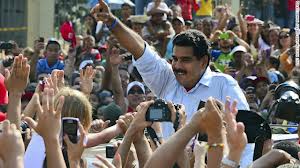
President Nicolas Maduro

U.S. Must Recognize Venezuela’s Elections

Posted: 04/18/2013 6:03 pm

by Dan Kovalik

The United States is refusing to recognize the results of the Venezuelan elections, insisting that Venezuela conduct a re-count of 100 percent of the votes in light of the narrow margin of victory for Nicolas Maduro. The facts surrounding the voting process and election outcome in Venezuela, the U.S.’s own experiences with close presidential elections, and the U.S.’s recent recognition of coup governments in Latin America demonstrate that the U.S.’s position in regard to Venezuela has nothing to do with the U.S.’s alleged concerns for democracy, but rather, its complete disdain for it.

I just returned from Venezuela where I was one of over 170 international election observers from around the world, including India, Guyana, Suriname, Colombia, Bolivia, Nicaragua, Scotland, England, the United States, Guatemala, Argentina, South Korea, Sri Lanka, Ethiopia, Jamaica, Brazil, Chile, Greece, France, Panama and Mexico. These observers included two former presidents (of Guatemala and the Dominican Republic), judges, lawyers and numerous high ranking officials of national electoral councils. What we found was an election system which was transparent, inherently reliable, well-run and thoroughly audited.

Indeed, as to the auditing, what has been barely mentioned by the mainstream press is the fact that around 54 percent of all votes are, and indeed have already been, audited to ensure that the electronic votes match up with the paper receipts which serve as back-up for these electronic votes. And, this auditing is done in the presence of witnesses from both the governing and opposition parties right in the local polling places themselves. I witnessed just such an audit at the end of election day on Sunday. And, as is the usual case, the paper results matched up perfectly with the electronic ones. As the former Guatemalan President, Alvaro Colom, who served as an observer, opined, the vote in Venezuela is “secure” and easily verifiable.

In short, the observers’ experience this past week aligns with former U.S. president Jimmy Carter’s observation last year that Venezuela’s electoral system is indeed the “the best in the world.”

Continue reading US Government Interfering in Venezuela

Venezuela Votes to Continue on Socialist Path

President Nicolas Maduro

Maduro’s Narrow Victory

A Wake-Up Call for Venezuela?

by MARK WEISBROT

After a short but bitterly fought, insult-laden campaign, Chavista standard-bearer Nicolás Maduro defeated challenger Henrique Capriles, thus assuring continuity in Venezuela after the death of President Hugo Chávez last month.  But the election was much closer than the polls predicted: a margin of just 1.6 percentage points, or about 275,000 votes.

Capriles is demanding an audit of 100 percent of all votes; Maduro has apparently agreed.  But the audit is unlikely to change the outcome. Unlike in the United States, where in a close election we really don’t know who won, the Venezuelan system is very secure. Since there are two records of every vote (machine and paper ballot), it is nearly impossible to rig the machines and stuff the ballot boxes to match. Jimmy Carter called Venezuela’s electoral system “the best in the world.”

Continue reading Venezuela Votes to Continue on Socialist Path

Germany Showing How to Move to Clean Energy

German housing producing its own electricity, and selling the excess to the grid

Is Renewable Energy’s Biggest Problem Solved?

By Paul Brown
SolidarityEconomy.net via Climate News Network

April 5, 2013 – Critics of renewables have always claimed that sun and wind are only intermittent producers of electricity and need fossil fuel plants as back-up to make them viable. But German engineers have proved this is not so.

By skillfully combining the output of a number of solar, wind and biogas plants the grid can be provided with stable energy 24 hours a day without fear of blackouts, according to the Fraunhofer Institute for Wind Energy and Energy System Technology (IWES) in Kassel.

For Germany, which has turned its back on nuclear power and is investing heavily in all forms of renewables to reduce its carbon dioxide emissions, this is an important breakthrough.

The country has a demanding industrial sector that needs a large and stable electricity supply, and some doubted that this could be achieved in the long term without retaining nuclear or large fossil fuel plants.

Solving the problem is becoming urgent. The latest figures show that on some days of the year the electricity being generated from sun, wind, biomass, water and geothermal production already accounts for more than half of the load required in the country.

The research is funded by the German Federal Ministry of the Environment and is aimed at showing that the entire electricity grid could be run on renewable energy.

Dr. Kurt Rohrig, deputy director of IWES, said: "Each source of energy – be it wind, sun or biogas – has its strengths and weaknesses. If we manage to skillfully combine the different characteristics of the regenerative energies, we can ensure the power supply for Germany.”

The idea is that many small power plant operators can feed their electricity into the grid but act as a single power plant using computers to control the level of power (see our story of 20 January, Renewables: The 99.9% solution).

Sharing the load

Scientists linked together 25 plants with a nominal power output of 120 megawatts. Surplus power could be used for charging electric vehicles and for pumped storage (pumping water uphill into a reservoir to produce hydropower later).

When many small producers work together, then regional differences when the wind blows or the sun is intermittent are balanced out in the grid and can be boosted by controllable biogas facilities.

If there is too much surplus energy then the power can also be used to create and store thermal energy to be used later.

Kasper Knorr, the project manager for the scheme, which is known as the Combined Power Plant2 research project, says the idea is to ensure that the consumer is supplied reliably with 230 volts at a frequency of 50 Hertz.

The current system of supplying the grid with electricity is geared to a few large producers. In the new system, with dozens of small producers, there will need to be extra facilities at intervals on the system to stabilize voltage. Part of the project is designed to find out how many of these the country will need.

The project has the backing of Germany’s large and increasingly important renewable companies and industrial giants like Siemans.  Researchers will be demonstrating the system at the Hanover Trade Fair from April 8 to 13.

Filling the ‘Green Jobs’ Bucket Needs More Than a Slow Dribble…

Monongahela locks and dams would get $2 million from spending plan

By Len Boselovic

Pittsburgh Post-Gazette

April 12, 2013 – President Barack Obama’s $3.8 trillion budget proposal calls for imposing annual per-vessel fees on the barge industry to pay for an $8 billion backlog in delayed and over-budget projects, including replacing aging locks and dams on the Monongahela River.

The White House proposal comes as a measure by Sen. Bob Casey, D-Pa., to bolster funding for the work and shift more of the costs to taxpayers could be taken up by the U.S. Senate as early as next week.

The budget proposal Mr. Obama submitted Wednesday includes $4.7 billion for the U.S. Army Corps of Engineers civil works program, which includes operating, maintaining and replacing more than 200 locks and related dams on the nation’s rivers. That is nearly 6 percent less than was called for in the last budget Congress approved for the fiscal year that ended in September.

The $4.7 billion includes $2 million for replacing locks and dams on the Monongahela River at Braddock, Charleroi and Elizabeth, a project that typifies the delays and cost overruns plaguing the nation’s deteriorating locks and dams.

Continue reading Filling the ‘Green Jobs’ Bucket Needs More Than a Slow Dribble…

House Democrats Reject President’s Social Security Cuts

The Hill Newspaper

House Dem leaders balk at Obama’s plan to cut Social Security
By Mike Lillis – 04/11/13 05:55 PM ET

House Democratic leaders pushed back Thursday against President Obama’s decision to include Social Security cuts as part of his 2014 budget request.

Several top-ranking Democrats — including Reps. Nancy Pelosi (Calif.), Steny Hoyer (Md.), James Clyburn (S.C.) and Xavier Becerra (Calif.) — questioned the wisdom of altering popular seniors benefits in the context of deficit reduction.

“I think there was general consensus that all of that discussion should be something for the table on which we preserve Social Security and not really part of this budget,” Pelosi said following a meeting Democrats held with budget experts on the White House plan to reduce future Social Security benefits by adopting a new way of calculating inflation.

Obama’s budget proposal has infuriated liberals for including the chained CPI proposal, which would change the formula used to calculate Social Security benefits and lower payments over the long term.

Most of pushback from rank-and-file members, she said, stemmed from concerns that the Social Security cut appeared to be “subsidizing … lesser priorities” rather than bolstering the program itself. That could have negative consequences on future efforts to strengthen the program, Pelosi lamented.

“What may happen, because of this debate, is that lines may be so drawn on this subject as part of the budget, that it might prejudice people as an approach,” she added. “It’s too bad it’s in the budget.”

Continue reading House Democrats Reject President’s Social Security Cuts

Nurses Vote to Strike over Patient Care Concerns at UMass Medical Center

P R E S S  R E L E A S E

Sandy Eaton, retired union nurse speaks at nurse's rally at UMass Medical Center
Sandy Eaton, retired union nurse speaks at nurse’s rally at UMass Medical Center

For Immediate Release

Date: April 11, 2013
UMass Medical Center Nurses Cast Overwhelming Vote to Authorize a Strike
Over Longstanding Concerns About Poor Patient Care Conditions

After Posting More Than $88 Million in Profits, UMass Memorial Medical Center Has Slashed its Nursing and Support Staff in the Last Two Years and Has Gone From Being the Best Staffed Hospital in the City to the Worst, While Also Posting Among the Lowest Rankings in the State for Quality Patient Care

WORCESTER, MA – In response to deteriorating patient care conditions, the registered nurses who work at the Worcester-based hospital campuses of UMass Memorial Medical Center (UMMMC) cast an overwhelming  vote tonight to authorize a one-day strike as management continues to refuse to agree to desperately needed improvements in staffing levels at this major tertiary care provider.

More than 2,000 nurses are represented by the Massachusetts Nurses Association/National Nurses United at UMass Memorial Medical Center.  The secret ballot vote was held throughout the day at Coral Seafood Restaurant in Worcester, with 83 percent of the nurses voting in favor of a strike.  The vote does not mean the nurses would strike immediately.  It gives the negotiating committees the authorization to call a one-day strike if and when they feel it is necessary.  Once the committee issues its official notice to strike, the hospital would then have 10 days before the nurses would go out on strike.

The strike vote was called after the nurses on the University Hospital and Memorial/Hahnemann campuses of UMMMC have been engaged in over a year of negotiations for a new union contract, with little progress on a number of key issues, including the nurses’ call for safer RN staffing levels. The nurses are outraged about poor patient care conditions, a lack of resources, and untenable patient loads following more than six layoffs involving hundreds of RNs and support staff over the last two years.

AFL-CIO Pres. Trumka Condemns Obama Budget

AFL-CIO Pres. Rich Trumka

Statement by AFL-CIO President Richard Trumka on FY 2014 Budget Proposal

April 10, 2013

A president’s budget is more than just numbers.  It is a profoundly moral document.  We believe cutting Social Security benefits and shifting costs to Medicare beneficiaries – while exempting corporate America from shared sacrifice – is wrong and indefensible.

The administration’s budget cuts cost-of-living increases for current and future Social Security beneficiaries by $130 billion over 10 years, and much more in future years.  It shifts $64 billion in health care costs to Medicare beneficiaries over 10 years.  Yet despite closing some loopholes, it calls for corporate income tax reform that is “revenue neutral” – meaning it fails to ask big, profitable corporations to pay their fair share of taxes.

richard-trumka-and-barack-obamaThe Obama budget also continues to demand more sacrifice from federal employees than from Wall Street.  Federal employees did not cause the Great Recession.  They did not cause the deficits that resulted from the Great Recession.  Yet their pay and their retirement keeps getting cut.  Why?

Putting aside the injustice of demanding sacrifice from the innocent while letting the guilty off scot free, the Obama budget falls short of putting our economy on a path towards higher wages and full employment.  As we have said many times, the greatest economic challenge facing America is the jobs crisis, not the deficit.  Yet the administration cuts the part of the budget that pays for investments in worker training and jobs, which has already been cut to its lowest level since the Eisenhower administration, by another $100 billion. This austerity budget is bad economic policy at a moment when the economy remains weak and we urgently need more job-creating investments.

Continue reading AFL-CIO Pres. Trumka Condemns Obama Budget

Sen. Elizabeth Warren Opposes Cut to Social Security

SenWarrenSen. Elizabeth Warren

by email

April 10, 2013

Hi everyone,

My brother David has always had the special spark in our family.

Like our two older brothers, David served in the military. When he got out, he started a small business — and when that one didn’t work out, he started another one. He couldn’t imagine an America where he wasn’t living by his wits every single day.

Year after year, my brother paid into Social Security. He never questioned it. He figured he was paying so that he — and a lot of other people — could have a secure retirement.

Today my brother lives on his Social Security. That’s about $1,100 a month. $13,200 a year.

I’m telling you my brother’s story not because it’s unusual, but because it’s like the story of so many other people. I can almost guarantee that you know someone — a family member, friend, or neighbor — who counts on Social Security checks to get by.

That’s why I was shocked to hear that the President’s newest budget proposal would cut $100 billion in Social Security benefits. Our Social Security system is critical to protecting middle class families, and we cannot allow it to be dismantled inch by inch.

The President’s policy proposal, known as “chained CPI,” would re-calculate the cost of living for Social Security beneficiaries. That new number won’t keep up with inflation on things like food and health care — the basics that we need to live.

In short, “chained CPI” is just a fancy way to say “cut benefits for seniors, the permanently disabled, and orphans.”

Two-thirds of seniors rely on Social Security for most of their income; one-third rely on it for at least 90% of their income. These people aren’t stashing their Social Security checks in the Cayman Islands and buying vacation homes in Aruba – they are hanging on by their fingernails to their place in the middle class.

My brothers and I grew up in an America that invested in its kids and built a strong middle class. An America that allowed millions of children to rise from poverty and establish secure lives. An America that created Social Security and Medicare so that seniors could live with dignity.

We can’t chip away at America’s middle class and break the promise we make to our seniors.

Thank you for being a part of this,

Elizabeth

(Sen. Elizabeth Warren)