Location of Hydraulic Fracturing of Shale Drilling Accidents, along with details, across the U.S.
Why we need a stronger EPA and DEP, and a hefty extraction tax to pay for them and the consequences. Beaver County Blue via earthjustice.org


Why we need a stronger EPA and DEP, and a hefty extraction tax to pay for them and the consequences. Beaver County Blue via earthjustice.org

By Tara Lohan
Beaver County Blue via AlterNet.org
April 14, 2011 – AlterNet recently received a document through a tip that appears to be right out of the playbook of an oil company. The document lays out the strategy for their field agents to convince landowners to give up drilling rights — despite how risky this may be for the landowners. We’re working on verifying its authenticity, but wanted to give our readers a chance to take a look and make your own assessment. (You can read the whole document here.) We’re not sure yet if this did indeed come from a gas company, nor which one, but if so, the information sure is damning.

Here’s more — everything in quotes is straight out of the document.
Don’t give them time to think: "It is critical to obtain a lease signature in the first meeting, or at least the agreement to sign and take the lease to a notary. Drive them to the notary if you have to."
Continue reading Lease Tricksters: ‘Don’t Let Them Talk About Fracking’

By Carl Davidson
Beaver County Blue
Working-class solidarity actions involving thousands of workers were among the lead news items in the headlines in nearly 1200 cities and town around the country over the April 4 weekend. The Western Pennsylvania, West Virginia and Eastern Ohio ‘rust belt’ region was no exception.
The occasion commemorated the anniversary of the April 4, 1968 assassination of Dr. Martin Luther King, Jr. during his effort to help striking sanitation workers in Memphis, Tennessee win union recognition. The entire U.S. labor movement seized the time to organize public protest against the outrageous rightwing attacks on worker rights in Wisconsin, Indiana and Ohio. The AFL-CIO knows full well that more attacks are coming, and its ‘We Are One’ campaign for the day was a grassroots dress rehearsal and consciousness-raising effort to prepare both its troops and its community-based allies for more battles to come.
 “We are one! We are one!’ and ‘What’s Disgusting? Union busting!’ were among the chants echoing off the concrete and glass walls of downtown Pittsburgh. Somewhere between 500 and 1000 marchers waved V-signs at passersby in cars and buses–but more often than in a long time, one saw a sea of the more militant clenched fist salutes as well. As usual, different contingents of workers wore their color coded T-Shirts for the day-camouflage for the UMWA, dark blue for the Steelworkers, red for Unite Here! hotel workers, and purple for SEIU service workers.
USW President Leo Gerard fired people up at the first stop, the Equitable Gas headquarters. “These rich bastards aren’t paying any taxes and sending the bills to us and giving themselves record-breaking bonuses. If tax cuts created jobs, Bush would have left office with full employment. The speculators gamble with our money and want us to cover their losses. Well, when they come around again, they can kiss my ass.”
The crowd loved it. “What do you think, why are you here?” I asked Pamela Maclin, a woman worker standing near Leo, “We fought and died for our union rights, our civil rights. We’re taking a stand; they’re not going to take them away.”
Continue reading Fighting for Our Future & Honoring Martin Luther King With Solidarity
New York Times investigation uncovers lax regulations, radioactivity and serious concerns about water contamination.
By Andrew Schenkel
Beaver County Blue via MNN.Com Bloggers
Mon, Feb 28 2011

Fracking concerns FRACKED UP: A recent expose by the New York Times reveals all sorts of problems with the process for extracting natural gas. (Photo: ltmayers/Flickr)
The New York Times and reporter Ian Urbina dropped a serious bomb on the fracking industry over the weekend with the first installment of a series of reports entitled Drilling Down.
Urbina’s story is the first must-read of the year when it comes to energy and environmental reporting. It reveals all sorts of damning nuggets about fracking in Pennsylvania, Wyoming and Colorado. I think anyone who cares about energy production should take a look. Here are a few highlights or, in this case, lowlights:
1. Radioactive material found in water
Wastewater is a major part of the fracking process. Millions of gallons of toxic water mixtures are necessary for the extraction of natural gas, and once the gas is extracted something has to be done with all that waste. The problem, according to the Times, is that the wastewater has been frequently found to contain amounts of radiation hundreds and sometimes thousands of times higher than what the federal government allows. This radioactive wastewater may be getting into drinking water because it is often hauled to sewage plants not designed to treat it and “discharged into rivers that supply drinking water.” That’s not good, even if you are a fan of the three-eyed fish from The Simpsons.
2. The EPA hasn’t done much
For everyone in Congress who has been clamoring to reduce the power of the Environmental Protection Agency, the Urbina piece reveals that the agency has been relatively powerless when it comes to fracking. The story alludes to several documents and interviews that “alarmed” EPA scientists, but were never made public. These findings included the revelation that many sewage treatment plants simply couldn’t remove the contaminants from the toxic fracking fluids. Perhaps even more damning is that scientists and consultants with the EPA have known about the radioactive problem since 2006 and have apparently not made much of an effort to call for testing for radioactivity. (The fracking boom began in 2008.) That’s not good, even if you are a fan of water that glows in the dark.
3. Concerns out West
Most of the Urbina story focused on Pennsylvania, which was described as “ground zero” for the fracking industry. While this is certainly true, the story did make some interesting and scary connections to the heavily fracked states of Colorado and Wyoming. As someone who has spent a few years in both states, I wasn’t surprised. But I was still disappointed to read, “In a sparsely populated Sublette County in Wyoming, which has some of the highest concentrations of wells, vapors reacting to sunlight have contributed to levels of ozone higher than those recorded in Houston and Los Angeles.” From my few trips to Sublette County, I can tell you that there isn’t much that it has in common with Los Angeles or Houston. The ozone connection is not a good one to make, even if you are a fan of awesome sunburns.
4. The natural gas industry doesn’t seem to care
While it’s easy to point to flaws in the regulatory process and within the EPA, let’s not ignore the industry that is doing this. I couldn’t help but notice that throughout the NY Times story, it seemed the industry not only knew about these serious concerns but kept operating despite them. An industry study going back to 1990 stated that “’using conservative assumptions,’ radium in drilling wastewater dumped off the Louisiana coast posed ‘potentially significant risks’ of cancer for people who eat fish from those waters regularly." This is of concern because radium may not just be getting into water in places like Pennsylvania, but also the food chain, as livestock is likely to ingest radium. Therefore anyone who eats that livestock may be exposed to the carcinogen. There are also several other instances of information that the industry was privy to in this report, followed by explanations of how they are not concerned. Perhaps most concerning of all is this statement that reveals how much regulators are depending on the very industry they are regulating for information. “’If we’re too hard on them,’ the inspector added, ‘the companies might just stop reporting their mistakes.’”
So there you have it — a few lowlights from a very depressing article. However, perhaps this is the beginning of getting energy right. You have to know what’s wrong before you can fix it. There’s certainly a lot wrong, but with accountability and transparency perhaps we can get it right. That’s a start.
By Ben Geman –
The Hill
02/27/11 – A top House Democrat is urging EPA to quickly toughen regulation of natural gas drilling following a New York Times report on the discharge of dangerous pollutants into rivers that supply drinking water.
The Times – citing internal documents from EPA and elsewhere – claims that chemicals and radioactive elements in wastewater from gas projects are creating “dangers to the environment and health [that] are greater than previously understood.”
Rep. Ed Markey (D-Mass.) sent EPA Administrator Lisa Jackson a detailed letter Saturday calling for “immediate action.”
“I am outraged that state and federal regulators were evidently well aware of the risks that the wastewater might pose, but instead chose to adopt a ‘see no evil, hear no evil’ approach to regulation by ignoring them,” writes Markey, the top Democrat on the Natural Resources Committee.
Continue reading Progressive Dems Start Calling Out Polluters and Their Apologists
By IAN URBINA
New York Times
Feb. 26, 2011 – The American landscape is dotted with hundreds of thousands of new wells and drilling rigs, as the country scrambles to tap into this century’s gold rush — for natural gas.
The gas has always been there, of course, trapped deep underground in countless tiny bubbles, like frozen spills of seltzer water between thin layers of shale rock. But drilling companies have only in recent years developed techniques to unlock the enormous reserves, thought to be enough to supply the country with gas for heating buildings, generating electricity and powering vehicles for up to a hundred years.
So energy companies are clamoring to drill. And they are getting rare support from their usual sparring partners. Environmentalists say using natural gas will help slow climate change because it burns more cleanly than coal and oil. Lawmakers hail the gas as a source of jobs. They also see it as a way to wean the United States from its dependency on other countries for oil.
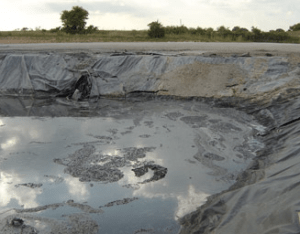
But the relatively new drilling method — known as high-volume horizontal hydraulic fracturing, or hydrofracking — carries significant environmental risks. It involves injecting huge amounts of water, mixed with sand and chemicals, at high pressures to break up rock formations and release the gas.
With hydrofracking, a well can produce over a million gallons of wastewater that is often laced with highly corrosive salts, carcinogens like benzene and radioactive elements like radium, all of which can occur naturally thousands of feet underground. Other carcinogenic materials can be added to the wastewater by the chemicals used in the hydrofracking itself.

By Carl Davidson
Nearly 2000 people gathered at the Marriott Wardman Park Hotel over three bitterly cold days in Washington, DC Feb 8-10 for the 4th Annual ‘Good Job, Green Jobs’ conference. The attendees were a vibrant mixture of seasoned trade union organizers, representatives of government agencies and young environmental activists waging a variety of battles around climate change and the green economy.
 “We want everyone to work at a green job in a green and clean economy,” declared David Foster, executive director of the sponsor, the Blue-Green Alliance, opening the first plenary. “But what stands in our way?” The answer was a new Congress stalemated by neoliberal resurgence centered in a bloc of the GOP and the far right. “It’s not going to be easy. We’re going to have to fight for it the old-fashioned way, from the bottom up, brick by brick, and floor by floor.”
The Blue-Green Alliance today is a coalition of hundreds of environmental groups, trade unions, and green business enterprises. It was founded less than five years ago, largely by the efforts of Carl Pope of the Sierra Club, one of the largest U.S. environmental nonprofits, and Leo Gerard, international president of the United Steel Workers, one of the country’s largest industrial unions.
“We’ve come a long way,” said USW’s Leo Gerard, the next speaker up. “Today we have dozens of affiliated sponsors and members with a combined membership of 14.5 million. Those fighting harder against us are going to meet some serious resistance.” The participants at the conference represented more than 700 organizations and came from 48 of the 50 states.
Continue reading Green Jobs: Frustration with Neoliberals over ‘Industrial Policy’

Photo: Typical PA Gas Drilling Site
By G. Jeffrey Aaron
Jan25, 2011- Talisman Energy has resumed its Marcellus drilling operations in Pennsylvania, a week after one of the company’s gas wells experienced a blowout that caused an uncontrolled discharge of sand and fracking fluids onto state forest lands in Tioga County.
As a result of the incident, Talisman shut down all of its hydraulic fracturing operations in North America while it conducted an internal investigation into the cause of the Jan. 17 blowout. Those operations have since resumed, with Talisman’s Pennsylvania drilling program being the last to be brought back online.
Meanwhile, the Pennsylvania Department of Environmental Protection has requested Talisman provide answers to nine questions related to the blowout as part of its investigation into the incident. The investigation could result in civil penalties levied against Talisman.
The well where the blowout occurred is on Pennsylvania State Forest lands in Ward Township, about nine miles southeast of Mansfield.

Foam on the Beaver River indicating pollutants. To start slide show, click HERE

By Carl Davidson
Beaver County Blue
“No Fracking Way! No Fracking Way!” was the chant resounding off the steel, granite and glass walls in downtown Pittsburgh on the sunny afternoon on Nov. 3, as nearly 500 environmental activists headed for the David Lawrence Convention Center. Their target was a gathering of 2000 natural gas drillers being addressed by Karl Rove, advisor to former President George W Bush.
Inside, the industry executives were meeting to discuss the “future” of hydro-fracking gas drilling and planning to use heavy explosives to blast apart the 4000-foot-deep Marcellus Shale formation to get the natural gas beneath.
“Only a dying soul,” said Stephen Cleghorn, “can contemplate the destruction of life that they’re discussing in that building right now!” Cleghorn is Reynoldsville, PA farmer, and his views reflected those of many semi-rural residents of Pennsylvania and other nearby states, where water was polluted and cattle died.

“They promise people all sorts of money,” said Bob Schmetzer, “but what’s your home worth if you have bad water? Nothing!” Schmetzer, carrying a placard demanding ‘prosecute the polluters,’ is the council president of South Heights in Beaver County, and the vice president of the 4th CD Progressive Democrats of America.
Continue reading Pittsburgh Rally Defends Clean Water, Opposes Natural Gas ‘Fracking’
 Beaver County Blue: Voice of the 17th CD of Progressive Democrats of America