All posts by carldavidson

Beaver County Still Battling Poverty Problem

Pickup day at a food pantry

By J.D. Prose
Beaver County Times

Sept 28, 2014 – Pastor Avril Vreen doesn’t need newly released data from the U.S. Census Bureau to tell her that poverty is a problem in Beaver County.

All she had to do was watch two young brothers split a free lunch at her Holy Spirit Fellowship Church in New Brighton this past summer. One of the boys agonized over precisely dividing a slice of bread, “which suggested to me that this child has done it before,” she said.

“Right there, I said, ‘This is more necessary than we thought,’” Vreen said of her church’s summer lunch program that served about 2,500 meals to children this year.

According to data recently released by the Census’ American Community Survey, nearly 20,700 Beaver County residents, or 12.4 percent, live below the poverty line, including 6,700 children. That total number represents about a 33 percent increase from 2007, when the county’s poverty rate was 9.1 percent.

In Allegheny County, nearly 13 percent of its 1.19 million residents, or more than 151,000 people, live below the poverty line while almost 14 percent of Lawrence County residents, about 12,200 people, do.
RELATED: How is the poverty level in Beaver County different from the state average? (Info graphic)

The national poverty rate is 14.5 percent, representing about 45 million Americans, according to TalkPoverty.org.

The government’s poverty line is based on annual income. For 2012, the poverty line for a family of four was $23,050 regardless of where the family lives in the United States.

Maj. Richard Lyle, the commander of the Salvation Army in Beaver Falls, said he’s seen the effects of poverty firsthand in the Army’s food pantries and soup kitchens. Five years ago in Beaver Falls the Salvation Army was servicing about 2,000 families a month, but that crept up before making “a significant jump” to about 2,600 18 months ago.

Continue reading Beaver County Still Battling Poverty Problem

‘Fracking’ Not So Danger-Free After All…Where Are Our Wind Turbines and Solar Arrays?

Fracking Fliud ‘impoundment’ in Washington, PA

Range Resources to pay $4M for violations at Western Pa. Impoundments

By Katie Colaneri

Beaver County Blue via NPR.org

Sept 18, 2014 – Range Resources will pay a $4.15 million fine for violations at six wastewater impoundments in Washington County. It is the largest penalty the state has imposed on a shale gas driller, the Department of Environmental Protection said Thursday.

The violations include leaks of flowback fluid – the liquid that comes back out of a well after hydraulic fracturing – into soil and groundwater. The DEP said drinking water supplies were not affected. Residents living near Range’s Yeager impoundment in Amwell Township dispute that claim and have filed suit against the company.

The Yeager impoundment is among the five the company has agreed to close as part of a consent agreement reached with the state. Range will also upgrade two others to meet what the DEP calls “next generation” standards.

“This landmark consent order establishes a new, higher benchmark for companies to meet when designing future impoundments, which is an environmental win for Pennsylvania,” said DEP secretary Chris Abruzzo in a press release.

The Texas-based company issued a nearly two-page statement outlining an “update” to its water management plans in Pennsylvania, including “thicker and better engineered liners” and real-time leak detection systems for two impoundments.

“While the company is deeply disappointed that these violations occurred, Range is excited to implement newly established best practices and technologies that have been jointly developed with the DEP over the last several months and years,” the statement reads.

Oct 18: PDA’s ‘Dinner and a Movie’

Join Us for

Dinner and a Movie

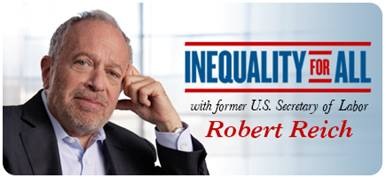
INEQUALITY FOR ALL

clip_image002

“Robert Reich Knows What He’s Talking About” – Daily Show

“Engaging and Passionate” – Wall St. Journal

“Smart, Funny and Articulate” – Los Angeles Times

Inequality for All is an entertaining and serious examination of the economic disparity in America today. President Clinton’s Secretary of Labor explains how the massive consolidation of wealth by a tiny minority threatens the viability of the American workforce and the foundation of democracy itself.

Saturday October 18, 2014

Cash Bar 5:30

Dinner 6:00

Movie 7:00 – 8:30

Serbian Club

2619 Brodhead Rd., Aliquippa, PA

Sponsored by:

PA 12th CD Chapter, Progressive Democrats of America

Buffet Dinner with two meats, vegetables, coffee, dessert

Tickets $22

Call to purchase or reserve tickets: Tina Shannon 724-683-1925

Why Can’t the U.S. Build a High-Speed Rail System? Connecting Philly, Pittsburgh and Cleveland Would be a Good Place to Start…

The problem isn’t geography, demographics, or money—it’s federal will.

By Yonah Freemark

SolidarityEconomy.net via CityLab.com

Aug 13, 2014 – Virtually every wealthy nation in the world has invested in a high-speed rail network—with the striking exception of the United States. From Japan to France, even from Turkey to Russia, trains travel through the country at speeds of 150 miles per hour or above, linking city centers and providing a desirable alternative to both air and automobile travel. Meanwhile, outside Amtrak’s 28 miles of 150-m.p.h. track in rural Massachusetts and Rhode Island, the American rail network is largely limited to speeds of 110 m.p.h. or less. There are few reasons to think the situation will change much in the coming decades.

So why has the United States failed to fund and construct high-speed rail?

The problem is not political process. Most of the countries that have built high-speed rail are democratic, and have submitted the projects to citizen review; others, like Germany and Russia, have federated governments similar to ours that divide general decision-making between levels of authority.

Nor is it geography. The British and French completed a 31-mile tunnel under the British Channel 20 years ago, while many American cities are located in flat regions with few physical construction obstacles.

Nor is it the characteristics of our urban areas. While U.S. cities are less dense than those of many other countries, the Northeast is denser, more transit reliant, and more populated than most areas served by high-speed rail abroad. Nor still is it money. Though the United States invests less in infrastructure than other developed countries do, America nevertheless remains an immensely wealthy nation perfectly capable of spending on new rail links if desired.

What’s missing is a federal commitment to a well-funded national rail plan.

Instead, we have a political system in which the federal government, having devolved virtually all decision-making power to states, cannot prioritize one project over another in the national interest. We have a funding system that encourages study after study of unfundable or unbuildable projects in places that refuse to commit their own resources. And we have a bureaucracy that, having never operated or constructed modern intercity rail, doesn’t understand what it takes. This helter-skelter approach to transportation improvements is fundamentally incapable of supporting large-expenditure, long-range projects like high-speed rail.

This wasn’t always the case. In 1956, Congress approved a significant increase in the federal gas tax, and with it a national plan for interstate highways. That plan, which included a steady stream of funding and a clear map of national priorities, was mostly completed over the next three decades. Though implemented by states, highway alignments were chosen at the national level, with the intention of connecting the largest cities, regardless of political boundaries. Funding came almost entirely (90 percent) from the national government and was guaranteed as long as a route was on the national map. Physical requirements for roadways were mandated at the national level and universally applied. And construction was completed by state departments of transportation that were technically knowledgeable, accustomed to building such public works, and able to make decisions about how to move forward.

The result was a system of roadways that most Americans rely on, often daily. The interstate system is unquestionably the nation’s transportation lifeblood.

Yet Americans do not have the same perspective on the role of the federal government that they had when this highway system was initially funded. Trust in Washington has declined from more than 70 percent during the 1950s to less than 20 percent today. So while President Dwight Eisenhower declared in 1955 that the federal government should “assume principal responsibility” for the highway system, its approach to a high-speed rail network has reflected this change in public thinking about Washington’s place in transportation planning. The response has been to reduce the federal government’s ability to commit to a long-term plan and associated funding.

Via Pew Research

Recent efforts to revive this federal role have been seriously flawed. Take the Obama administration’s attempt at a national plan of proposed intercity rail investments in 2009.

For starters, the map’s proposed routes were vague, a number of important connections were not identified, and some routes appeared to have been chosen at random—simply the consequence of previous state studies with no national outlook. Funding had been dedicated through an initial $8 billion included in the stimulus bill, but there was certainly no guarantee that railways on that map would be built in the long term. The definition of “high-speed rail” was not applied universally; the administration proposed some links at 90 m.p.h. and others at more than 250 m.p.h., with no explanation for why some would be fast and others not. Finally, many of the states that were supposed to be implementing these projects were woefully unprepared for the task, having made few such investments in the past. None had the experience of building 200 m.p.h. electric railways to the international standard.

Such an approach to national transportation doesn’t work. It leaves too many planning questions open to state decision making, and it fails to offer a financing source that actually produces the funds needed for intercity rail. Far from fulfilling Eisenhower’s mandate of assuming principal responsibility, the latest high-speed rail plan assumed too little.

It would be ridiculous to plan an intercity transportation system at the state level.

But the need is still there. With falling automobile vehicle miles traveled, rising transit use, and booming city centers, we need new ways to connect our cities. More highways are not the answer, not only because they pollute the environment and destroy the neighborhoods they pass through, but also because they’re relatively slow and become congested almost as soon as they’re built. With a growing population, the country needs an expanded transportation system. The United States must invest in clean, neighborhood-building, and congestion-relieving trains, but we cannot expect states to pick up the slack of an uncertain federal government.

The planning and funding of the interstate highway system was premised on the fact that the travel needs of Americans occur irrespective of state lines. Indeed, the 50 largest metropolitan areas, representing more than half of the country’s population, are located in 31 separate states and 15 of them actually straddle state borders. Given this reality, it would be ridiculous to plan an intercity transportation system at the state level. California’s high-speed rail progress—its proposed San Francisco-to-Los Angeles line remains the only truly fast train project in the country—is the exception that proves the rule; that state’s size makes it no example for the rest of the nation.

It’s time for the United States to commit to national planning, funding, coordination, and prioritization of rail investment. Intercity transportation systems require active federal engagement to guarantee the development of routes that reflect national needs and national priorities. Yet without political consensus on the need to develop national goals and focus investments, high-speed rail will remain a pipe-dream for decades to come.

This article is part of ‘The Future of Transportation,’ a CityLab series made possible with support from The Rockefeller Foundation.

Where Is Plan B? How About Manufacturing for Clean and Green Renewables if the ‘Cracker’ Fails? Or Even if It Doesn’t?

Site of proposed Shell ‘cracker’ plant across from Beaver and Vanport

Shell Acquires Pennsylvania Shale Gas Rights as Part of a $2.1B Deal

By Alex Nixon
Tribune Review

Aug. 14, 2014 – Royal Dutch Shell is shuffling its portfolio of natural gas holdings to increase attention on the Marcellus and Utica shale formations in northern Pennsylvania.

The energy giant announced on Thursday that it is selling drilling rights to mature gas producing areas in Wyoming and Louisiana in separate deals in exchange for $2.1 billion in cash and 155,000 acres in Potter and Tioga counties, where it operates gas wells.

The announcement followed a deal on Tuesday in which Shell said it was selling 208,000 acres in Western Pennsylvania and eastern Ohio to Rex Energy for $120 million.

“They already know what they have” in Potter and Tioga counties, said Lyle Brinker, director of equity research at IHS Energy in Norwalk, Conn. “It’s an area where they already know what they’re getting into.”

Shell spokeswoman Destin Singleton said the seemingly contradictory moves in Pennsylvania are part of the company’s regular review of its mix of energy production assets to improve value for its shareholders. Shell is working to focus its onshore drilling program on a few of the more prolific formations in an effort to boost profitability. The company wrote down the value of its shale acreage in the United States by $2.1 billion last year amid lower natural gas prices.

“We continue to restructure and focus our North America shale oil and gas portfolio,” Marvin Odum, Shell’s Upstream Americas Director, said in a written statement. “We are adding highly attractive exploration acreage, where we have impressive well results in the Utica, and divesting our more mature, Pinedale and Haynesville dry gas positions.”

In one of the two deals announced on Thursday, Shell said it will sell its Pinedale acreage in Wyoming to Houston-based Ultra Petroleum for $925 million plus the land in Potter and Tioga counties. Shell and Ultra have been partners in a joint venture in northern Pennsylvania. Shell will acquire 100 percent of the joint venture.

In the second deal, Shell will sell its gas assets in northern Louisiana, known as Haynesville, to Dallas-based Vine Oil & Gas LP for $1.2 billion.

Shell and other major oil and gas explorers regularly sell rights to fields where production is flat or declining. They then use that cash to fund exploration programs designed to discover new or more prolific fields that oil giants need to fuel growth. The Pinedale and Haynesville formations produce dry gas, which is less profitable than oil or so-called natural gas liquids, at relatively moderate rates.

“It’s a good sign that they’re still committed to the Marcellus,” Brinker said.

Continue reading Where Is Plan B? How About Manufacturing for Clean and Green Renewables if the ‘Cracker’ Fails? Or Even if It Doesn’t?

Congressional Progressive Caucus Increasingly Vocal, Critical of Obama

progressive-caucus

By Andrew Gripp

Beaver County Blue via IVN-US

August 4, 2014 – Since President Obama’s inauguration and Rick Santelli’s movement-making call to action that inspired the tea party, national politics has been a triangular affair, with the Republican “establishment” caught in the middle between an anti-incumbent reaction and a seemingly united Democratic front. This triangular dynamic guiding policymaking in the past few years — from the credit downgrade to the fiscal cliff to the government shutdown – has led to the exclusion of the progressive wing of the Democratic Party from having much of a say in legislative affairs.

Like the Republican Party, the Democratic Party is not without its own internal fissure – one that could widen and surface preceding the presidential primary process when the Democratic Party will have to reinvent itself in the waning months of the Obama era.

An ideological and organizational X-ray of the Democratic Party in Congress reveals a surprising split: there are approximately 20 members of the moderate Blue Dog Coalition in the legislature, while the Congressional Progressive Caucus (CPC) boasts more than 60 members. With progressive and even nonpartisan outlets and pundits calling for progressive candidates like Sen. Elizabeth Warren (D-Mass.) and Governor Martin O’Malley (D-Md.) to run, progressives – much ignored in the fracas of the last several years — might begin to find venues to ventilate their ideas.

"The Better Off Budget promised to create 8.8 million jobs by 2017 — including 4.6 million after one year."

The CPC — founded in 1991 and currently led by Rep. Keith Ellison (D-Minn.) and Raúl Grijalva (D-Ariz.) — has been especially active since the 111th Congress took its collective seat in 2009 and has not been afraid to challenge the president during his politically-mandated drift rightward since taking office.

Continue reading Congressional Progressive Caucus Increasingly Vocal, Critical of Obama

Stop the Massacre on Gaza! Vigil at the Courthouse, Saturday, Aug.2, Noon

The Steering Committee of Beaver County Peace Links

has decided to again gather at the Courthouse for a public vigil

for Peace in the Occupied Territories and Israel.


SATURDAY, AUGUST 2
at 12 NOON
in FRONT of the BEAVER COUNTY COURTHOUSE

Please make signs:


“Stop Supporting Israel”

"FREE GAZA"


"Stop the Massacre on Gaza"

"Sovereignty for Palestine"


"Self-determination for Palestinians"


"Justice for Gaza"

"Cease Fire!"

"Stop the Violence"

"Peace is the only Solution"

Resources:
Rep Keith Ellison, End the Blockade of Gaza! http://www.washingtonpost.com/opinions/keith-ellison-end-the-gaza-blockade-to-achieve-peace/2014/07/29/e5e707c4-16a1-11e4-85b6-c1451e622637_story.html
Collective Punishment in Gaza 
http://www.newyorker.com/news/news-desk/collective-punishment-gaza
http://www.endtheoccupation.org/
http://www.ifamericansknew.org/
http://www.bcpeacelinks.net/

Why We Need Solar and Wind

Drilling in Pennsylvania has damaged the water supply 209 times in last seven years

frackwell_marcellusshale

By Heather Smith

Beaver County Blue via Grist

July 24, 2014 – Whether or not you think that’s alright depends on your perspective. According to Patrick Creighton, those numbers are pretty good – so many oil and natural gas wells have been drilled in Pennsylvania in the past seven years that 209 problem wells is a mere 1 percent of the total. But Creighton happens to be the spokesperson for the Marcellus Shale Coalition, a trade group composed of natural gas drillers. So there’s that.

According to Steve Hvozdovich, 209 is a lot. “You are talking about somebody’s drinking water supply.” But then Hvozdovich works for the environmental group Clean Water Action. He would like clean drinking water.

However you feel about the 209 “instances,” that number wasn’t an easy one get. According to the Pittsburgh Post-Gazette, Pennsylvania’s Department of Environmental Protection (DEP) is legally required to get to the bottom of drilling-related water complaints, report its findings to the owner of the affected property, and issue orders to clean up or fix the damage — all within 45 days of the first complaint.

Continue reading Why We Need Solar and Wind

Youngstown Sets Example of Solidarity in Tough Times


ShareFest Supports a Culture of Sharing in Youngstown

By Cat Johnson

Beaver County Blue via Shareable.com

July 14, 2014 – The Mahoning Valley ShareFest in Youngstown, Ohio brought together over 60 people for an afternoon of sharing skills, knowledge, passions, books, clothing and hobbies. Hosted by lead organizer and Timebank Mahoning Watershed board member Tony Budak, as well as numerous volunteers, the event featured dozens of local organizations aligned with the mission to showcase local collaborative giving and receiving.

Among the goals of the ShareFest, which was supported by a grant from Shareable as part of our #SharingSpring initiative, was to change the local community’s conversation leading to a change of culture along the following indicators:

  • Passive engagement to active engagement
  • Staff and administration led to citizen led
  • Beneficiary of service to co-producer of service
  • Client or volunteer to member
  • Individualism to mutualism

Participants of the ShareFest shared skills, passions, hobbies and more.

Continue reading Youngstown Sets Example of Solidarity in Tough Times

Peace Rally in Pittsburgh

Rallying in suppport of Palestinians in Gaza Rallying in suppport of Palestinians in Gaza, protestors including Tavia LaFollette of Shadyside, left, and Susanne Slavick of Ross Township, right, cradling sheets wrapped to look like dead children

Rallying in suppport of Palestinians in Gaza, protestors including Tavia LaFollette of Shadyside, left, and Susanne Slavick of Ross Township, right, cradling sheets wrapped to look like dead children. Bill Wade/Post-Gazette

Oakland protesters rally for Palestinians against Israeli attacks in Gaza

By Amy McConnell Schaarsmith

Beaver County Blue via Pittsburgh Post-Gazette

July 19, 2014 – Protesters cradling sheets wrapped to look like dead children rallied in Oakland on Friday to call on the United States to withdraw financial support for Israel over that country‘‍s military assault in the Gaza Strip.

The group of about 100 protesters waved signs and Palestinian flags, and chanted slogans such as, “Make a choice, Obama, human rights or apartheid!” in front of the University of Pittsburgh’‍s Hillman Library on Forbes Avenue as evening traffic rushed by, with some cars honking in support. Holding the sheet-wrapped figures — one of which included what looked like the dangling legs and shoes of a young girl — the group then marched along Forbes and Fifth avenues to draw attention to their cause.

“Residents of Gaza have been under siege for such a long time, they‘‍re barely living to begin with,” said 21-year-old Pitt senior Hadeed Salaameh, a native Palestinian who said she helped organize the protest. “We as humans, we have to speak out, it’‍s our responsibility, and as Americans have to speak out because our tax dollars are funding this.”

Continue reading Peace Rally in Pittsburgh