All posts by carldavidson

Labor’s Campaigns and Action in Harrisburg Win a Round

Photo: Tartaglione with union allies

Senator Tartaglione Rises to Defeat ‘Paycheck Protection’ in Statehouse

HARRISBURG, Oct. 15, 2014 – State Sen. Christine M. Tartaglione today helped to quash a backdoor attempt to weaken unions by joining a bipartisan push to defeat an amendment that would have prohibited employers from automatically deducting membership dues from a worker’s paycheck.

Called “paycheck protection” by proponents, Tartaglione said the proposal, introduced by Sen. Scott Wagner (R-York) as an amendment to a bill designed to help children with food allergies, was not democratic.

“The only thing Sen. Wagner’s amendment would do is eliminate unions’ abilities to choose who they want to represent them in government,” Tartaglione said. “It would eliminate the voices of the men and women who work hard day-in and day-out to put food on the table for their families, just because they belong to a union.

“Union members can already decide whether or not they want to contribute to union political spending. The law protects them if they choose not to contribute.  And, she said, for every hour worked by a teacher, the money they earn for that work is no longer the state’s money; it is the employee’s.

“So, I ask you: why do we call this measure ‘paycheck protection?’” she said on the Senate floor.

Tartaglione added that voting in favor of the Wagner amendment would have handed control of the commonwealth to corporations “and their one-sided political agendas.”

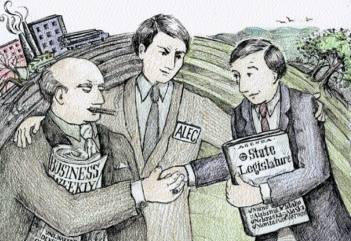
The Right Wing’s ALEC Takes a Hit in Harrisburg

Preserving Democracy in Pennsylvania

By: Ellen Bravo

Beaver County Blue via FireDogLake

Oct. 17, 2014 – It had all the trappings of an ALEC-backed attack on democracy:  Push out a bill prohibiting local governments from passing workplace protections in their own communities. If all else failed, tack the measure onto some popular bill as an amendment and hope the supporters of that bill would want it badly enough to allow the hostile amendment to stand.

Only this time the strategy didn’t work, thanks to the strong stand of progressive legislators and the smart organizing of a broad coalition – particularly the leadership of anti-violence advocates.

In this case, the state was Pennsylvania. The preemption attempt was aimed at stopping future passage of a municipal paid sick days ordinance. And the popular bill held hostage was one to aid those who experience domestic violence.

First Rep. Seth Grove, a member of the American Legislative Exchange Council or “ALEC,”  tried to pass a stand-alone bill that would take away the right of local units of government to pass laws ensuring workers could earn paid sick days – or even unpaid leave. Other legislators added multiple amendments to the bill that would have required every elected official to take votes that might have been unpopular with their constituents. The measure didn’t move.

So another ALEC member, John Eichelberger, decided to try a different tack:  stick the preemption provision as an amendment onto a bipartisan bill to help those experiencing domestic violence.  HB 1796 was written to exempt victims of domestic violence from “nuisance ordinances” that allow landlords to evict those who call 911 more than a certain number of times within a given period. The bill had passed the House with broad bipartisan support.

Continue reading The Right Wing’s ALEC Takes a Hit in Harrisburg

Booming Natural Gas Won’t Slow Global Warming

Natural gas burns more cleanly than coal, but that’s not enough to reduce global carbon emissions, researchers say.

Waste gas is burned off at a hydraulic fracturing site in March 2014 near Buttonwillow, Calif. Five research teams found that natural gas alone won't curb climate change.

Waste gas is burned off at a hydraulic fracturing site in March near Buttonwillow, Calif. Five research teams found that natural gas alone won’t curb climate change.

By Alan Neuhauser

Beaver County Blue via US News & World Report

Oct. 15, 2014 – Natural gas won’t save us.

Despite the lofty claims of industry groups and President Barack Obama, the so-called natural gas revolution will not discernibly reduce greenhouse gas emissions, putting the globe no closer to averting catastrophic climate change, according to five independently developed models conducted by teams of researchers around the world and summarized in a new paper Wednesday.

"The high hopes that natural gas will help reduce global warming because of technical superiority to coal turn out to be misguided,” study co-author Nico Bauer, of the Potsdam Institute for Climate Impact Research in Germany, said in a statement. “The main factor here is that an abundance of natural gas leads to a price drop and expansion of total primary energy supply."

For this very reason, most of the studies projected, widespread natural gas consumption actually will make global warming worse.  

“Abundant gas alone will not solve climate change on its own in the absence of climate change mitigation policy,” says economist Haewon McJeon of the Department of Energy’s Pacific Northwest National Laboratory, who helped lead the American research team. “These five models are very different in its architecture and assumptions. The one thing we agreed on is it’s not going to solve climate change.”

Continue reading Booming Natural Gas Won’t Slow Global Warming

At Visit To Aliquippa HS, Wolf Talks Schools And Taxes

Tom Wolf with Mayor Dwan Walker (Photo Credit: KDKA)

By Jon Delano

BEAVER COUNTY (KDKA) — Students in Aliquippa had the day off — except for the undefeated football team hard at practice.

But that didn’t stop Democratic gubernatorial candidate Tom Wolf from pushing his education plan at the high school.

“We’d like to welcome you all. If you’ve never been here before, this is Aliquippa,” quipped Mayor Dwan Walker.

Walker, with State Rep. Rob Matzie and school superintendent Dave Wytiaz, briefed the candidate before a short press conference.

“I’m here because this is important to me as a Pennsylvanian,” said Wolf.

“Education actually matters,” he added. “It doesn’t matter because I’m running for governor. It matters to all of us who want to build a business in Pennsylvania. It matters to all of us who want to build a family in Pennsylvania. It matters to all of us who actually care about a society where people can actually get a head. This is how we transform lives.”

By imposing an extraction tax on natural gas drilling, Wolf pledged to bring state funding of education back up to half of school spending

Continue reading At Visit To Aliquippa HS, Wolf Talks Schools And Taxes

Philly Students ‘Strike’ in Support of Teachers

Beaver County Blue via Inquirer Staff

Last updated: Wednesday, October 8, 2014, 10:39 AM
Posted: Wednesday, October 8, 2014, 8:32 AM

Students from at least two Philadelphia public high schools are refusing to go to classes this morning to protest the cancellation of their teachers’ labor agreement.

"We’re striking because every single teacher in the districts benefits are at risk and being played with through politics," organizers said in a Facebook post.

Dozens of students protested outside the High School for Creative and Performing Arts on South Broad Street and the Science Leadership Academy at 55 N. 22d St. in Center City.

The School Reform Commission on Monday canceled the labor contract with the Philadelphia Federation of Teachers in a move aimed at requiring the union’s members to contribute to their health care costs.

The action had the support of both Gov. Corbett and Mayor Nutter.

At CAPA, band members provided music for the protest.

Outside SLA, students were holding up hand made signs and beating drums in a buoyant, upbeat demonstration.

"This is why we’re striking," Ruby Anderson, 18, an SLA senior said as she offered information leaflets from Students4Teachers to passersby.

Throughout the morning, SLA students offered up a variety of chants, including: "SRC! Leave our teachers be!" and "Tom Corbett, shame on you! We deserve a future, too."

Striking students planned to remain outside the schools until noon, when the schools are to close for a scheduled half-day.

Beaver County Still Battling Poverty Problem

Pickup day at a food pantry

By J.D. Prose
Beaver County Times

Sept 28, 2014 – Pastor Avril Vreen doesn’t need newly released data from the U.S. Census Bureau to tell her that poverty is a problem in Beaver County.

All she had to do was watch two young brothers split a free lunch at her Holy Spirit Fellowship Church in New Brighton this past summer. One of the boys agonized over precisely dividing a slice of bread, “which suggested to me that this child has done it before,” she said.

“Right there, I said, ‘This is more necessary than we thought,’” Vreen said of her church’s summer lunch program that served about 2,500 meals to children this year.

According to data recently released by the Census’ American Community Survey, nearly 20,700 Beaver County residents, or 12.4 percent, live below the poverty line, including 6,700 children. That total number represents about a 33 percent increase from 2007, when the county’s poverty rate was 9.1 percent.

In Allegheny County, nearly 13 percent of its 1.19 million residents, or more than 151,000 people, live below the poverty line while almost 14 percent of Lawrence County residents, about 12,200 people, do.
RELATED: How is the poverty level in Beaver County different from the state average? (Info graphic)

The national poverty rate is 14.5 percent, representing about 45 million Americans, according to TalkPoverty.org.

The government’s poverty line is based on annual income. For 2012, the poverty line for a family of four was $23,050 regardless of where the family lives in the United States.

Maj. Richard Lyle, the commander of the Salvation Army in Beaver Falls, said he’s seen the effects of poverty firsthand in the Army’s food pantries and soup kitchens. Five years ago in Beaver Falls the Salvation Army was servicing about 2,000 families a month, but that crept up before making “a significant jump” to about 2,600 18 months ago.

Continue reading Beaver County Still Battling Poverty Problem

‘Fracking’ Not So Danger-Free After All…Where Are Our Wind Turbines and Solar Arrays?

Fracking Fliud ‘impoundment’ in Washington, PA

Range Resources to pay $4M for violations at Western Pa. Impoundments

By Katie Colaneri

Beaver County Blue via NPR.org

Sept 18, 2014 – Range Resources will pay a $4.15 million fine for violations at six wastewater impoundments in Washington County. It is the largest penalty the state has imposed on a shale gas driller, the Department of Environmental Protection said Thursday.

The violations include leaks of flowback fluid – the liquid that comes back out of a well after hydraulic fracturing – into soil and groundwater. The DEP said drinking water supplies were not affected. Residents living near Range’s Yeager impoundment in Amwell Township dispute that claim and have filed suit against the company.

The Yeager impoundment is among the five the company has agreed to close as part of a consent agreement reached with the state. Range will also upgrade two others to meet what the DEP calls “next generation” standards.

“This landmark consent order establishes a new, higher benchmark for companies to meet when designing future impoundments, which is an environmental win for Pennsylvania,” said DEP secretary Chris Abruzzo in a press release.

The Texas-based company issued a nearly two-page statement outlining an “update” to its water management plans in Pennsylvania, including “thicker and better engineered liners” and real-time leak detection systems for two impoundments.

“While the company is deeply disappointed that these violations occurred, Range is excited to implement newly established best practices and technologies that have been jointly developed with the DEP over the last several months and years,” the statement reads.

Oct 18: PDA’s ‘Dinner and a Movie’

Join Us for

Dinner and a Movie

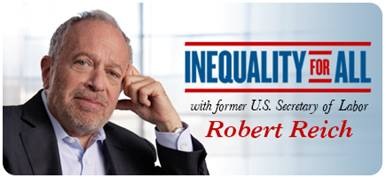
INEQUALITY FOR ALL

clip_image002

“Robert Reich Knows What He’s Talking About” – Daily Show

“Engaging and Passionate” – Wall St. Journal

“Smart, Funny and Articulate” – Los Angeles Times

Inequality for All is an entertaining and serious examination of the economic disparity in America today. President Clinton’s Secretary of Labor explains how the massive consolidation of wealth by a tiny minority threatens the viability of the American workforce and the foundation of democracy itself.

Saturday October 18, 2014

Cash Bar 5:30

Dinner 6:00

Movie 7:00 – 8:30

Serbian Club

2619 Brodhead Rd., Aliquippa, PA

Sponsored by:

PA 12th CD Chapter, Progressive Democrats of America

Buffet Dinner with two meats, vegetables, coffee, dessert

Tickets $22

Call to purchase or reserve tickets: Tina Shannon 724-683-1925

Why Can’t the U.S. Build a High-Speed Rail System? Connecting Philly, Pittsburgh and Cleveland Would be a Good Place to Start…

The problem isn’t geography, demographics, or money—it’s federal will.

By Yonah Freemark

SolidarityEconomy.net via CityLab.com

Aug 13, 2014 – Virtually every wealthy nation in the world has invested in a high-speed rail network—with the striking exception of the United States. From Japan to France, even from Turkey to Russia, trains travel through the country at speeds of 150 miles per hour or above, linking city centers and providing a desirable alternative to both air and automobile travel. Meanwhile, outside Amtrak’s 28 miles of 150-m.p.h. track in rural Massachusetts and Rhode Island, the American rail network is largely limited to speeds of 110 m.p.h. or less. There are few reasons to think the situation will change much in the coming decades.

So why has the United States failed to fund and construct high-speed rail?

The problem is not political process. Most of the countries that have built high-speed rail are democratic, and have submitted the projects to citizen review; others, like Germany and Russia, have federated governments similar to ours that divide general decision-making between levels of authority.

Nor is it geography. The British and French completed a 31-mile tunnel under the British Channel 20 years ago, while many American cities are located in flat regions with few physical construction obstacles.

Nor is it the characteristics of our urban areas. While U.S. cities are less dense than those of many other countries, the Northeast is denser, more transit reliant, and more populated than most areas served by high-speed rail abroad. Nor still is it money. Though the United States invests less in infrastructure than other developed countries do, America nevertheless remains an immensely wealthy nation perfectly capable of spending on new rail links if desired.

What’s missing is a federal commitment to a well-funded national rail plan.

Instead, we have a political system in which the federal government, having devolved virtually all decision-making power to states, cannot prioritize one project over another in the national interest. We have a funding system that encourages study after study of unfundable or unbuildable projects in places that refuse to commit their own resources. And we have a bureaucracy that, having never operated or constructed modern intercity rail, doesn’t understand what it takes. This helter-skelter approach to transportation improvements is fundamentally incapable of supporting large-expenditure, long-range projects like high-speed rail.

This wasn’t always the case. In 1956, Congress approved a significant increase in the federal gas tax, and with it a national plan for interstate highways. That plan, which included a steady stream of funding and a clear map of national priorities, was mostly completed over the next three decades. Though implemented by states, highway alignments were chosen at the national level, with the intention of connecting the largest cities, regardless of political boundaries. Funding came almost entirely (90 percent) from the national government and was guaranteed as long as a route was on the national map. Physical requirements for roadways were mandated at the national level and universally applied. And construction was completed by state departments of transportation that were technically knowledgeable, accustomed to building such public works, and able to make decisions about how to move forward.

The result was a system of roadways that most Americans rely on, often daily. The interstate system is unquestionably the nation’s transportation lifeblood.

Yet Americans do not have the same perspective on the role of the federal government that they had when this highway system was initially funded. Trust in Washington has declined from more than 70 percent during the 1950s to less than 20 percent today. So while President Dwight Eisenhower declared in 1955 that the federal government should “assume principal responsibility” for the highway system, its approach to a high-speed rail network has reflected this change in public thinking about Washington’s place in transportation planning. The response has been to reduce the federal government’s ability to commit to a long-term plan and associated funding.

Via Pew Research

Recent efforts to revive this federal role have been seriously flawed. Take the Obama administration’s attempt at a national plan of proposed intercity rail investments in 2009.

For starters, the map’s proposed routes were vague, a number of important connections were not identified, and some routes appeared to have been chosen at random—simply the consequence of previous state studies with no national outlook. Funding had been dedicated through an initial $8 billion included in the stimulus bill, but there was certainly no guarantee that railways on that map would be built in the long term. The definition of “high-speed rail” was not applied universally; the administration proposed some links at 90 m.p.h. and others at more than 250 m.p.h., with no explanation for why some would be fast and others not. Finally, many of the states that were supposed to be implementing these projects were woefully unprepared for the task, having made few such investments in the past. None had the experience of building 200 m.p.h. electric railways to the international standard.

Such an approach to national transportation doesn’t work. It leaves too many planning questions open to state decision making, and it fails to offer a financing source that actually produces the funds needed for intercity rail. Far from fulfilling Eisenhower’s mandate of assuming principal responsibility, the latest high-speed rail plan assumed too little.

It would be ridiculous to plan an intercity transportation system at the state level.

But the need is still there. With falling automobile vehicle miles traveled, rising transit use, and booming city centers, we need new ways to connect our cities. More highways are not the answer, not only because they pollute the environment and destroy the neighborhoods they pass through, but also because they’re relatively slow and become congested almost as soon as they’re built. With a growing population, the country needs an expanded transportation system. The United States must invest in clean, neighborhood-building, and congestion-relieving trains, but we cannot expect states to pick up the slack of an uncertain federal government.

The planning and funding of the interstate highway system was premised on the fact that the travel needs of Americans occur irrespective of state lines. Indeed, the 50 largest metropolitan areas, representing more than half of the country’s population, are located in 31 separate states and 15 of them actually straddle state borders. Given this reality, it would be ridiculous to plan an intercity transportation system at the state level. California’s high-speed rail progress—its proposed San Francisco-to-Los Angeles line remains the only truly fast train project in the country—is the exception that proves the rule; that state’s size makes it no example for the rest of the nation.

It’s time for the United States to commit to national planning, funding, coordination, and prioritization of rail investment. Intercity transportation systems require active federal engagement to guarantee the development of routes that reflect national needs and national priorities. Yet without political consensus on the need to develop national goals and focus investments, high-speed rail will remain a pipe-dream for decades to come.

This article is part of ‘The Future of Transportation,’ a CityLab series made possible with support from The Rockefeller Foundation.