CLEAN AND GREEN ENERGY FAIR TO SHOWCASE SUSTAINABLE ENERGY TODAY
FOR HOMES AND EVERYDAY LIVES IN LOCAL COMMUNITIES
The FUTURE of Renewable Energy is NOW
Beaver, PA, June 10, 2014 – June is “bustin’ out all over“ — with renewable energy on full display, just as it will be June 28 at the Clean and Green Energy Fair in Ambridge, PA.
On the last Saturday in June, Beaver County will celebrate the power of solar, wind and geothermal energies – not for somewhere over the rainbow, but for here and now – with energy efficiency and conservation strategies sharing the spotlight.
The Clean and Green Energy Fair will showcase vendors and organizations engaged in creating sustainable energy for everyday life. The Fair will be held from 10 a.m. to 4 p.m. in the Rt. 65 Farmer’s Market parking lot of Saint Mary’s Byzantine Catholic Church, 624 Park Road in Ambridge.
Now is the time for a new look at fossil-fuel alternatives in our homes and communities. As Tom Schuster, senior Pennsylvania representative of the Sierra Club said, “By moving to 100 percent clean energy sources, we’ll create tens of thousands of American jobs and billions of dollars in new investment.”
Randy Francisco, Sierra Club’s Pennsylvania Organizing Representative for the Greater Pittsburgh area, will speak on using Pennsylvania’s Alternative Energy Portfolio Standard, the EPA’s Carbon Standard Rule and legislation to grow renewable energy and resulting jobs. Other speakers will address geothermal and solar energy home resources.
Everyone is invited to explore the rise of renewable energy and the differences it can make. The Clean and Green Energy Fair will feature free solar snow cones, children’s activities, and – thanks to a donation by Ted Popovich, board of directors’ member of Allegheny County’s Group Against Smog and Pollution (GASP) – an iPad raffle.
Popovich donated the iPad to draw local people to Beaver County’s first-ever renewables energy fair. For sponsors Beaver County Marcellus Awareness Committee and Three Rivers Community Foundation, a strong showing could turn this “first” into a “historic first” that — with or without the chance to win an iPad — is renewable every June.
Date: Saturday, June 28 from 10 a.m. – 4 p.m.
Location: Farmer’s Market Parking Lot (on Rt. 65) of Saint Mary’s Byzantine Catholic church, 624 Park Road, Ambridge, PA 15003
Cost: The fair is free and open to the public. Parking is also free.
Speakers: Randy Francisco, Sierra Club’s Pennsylvania Organizing Representative for the Greater Pittsburgh area.
Teachers, Parents and Students Spotlight School Cuts
By Allison Steele and Julia Terruso Beaver County Blue via Philly Inquirer
June 10, 2014 – As many as 1,000 protesters, many angry about school funding, blocked traffic and waved signs in Center City on Monday afternoon, hoping to disrupt or at least deflect attention from a fund-raising stop by Govs. Corbett and Christie.
"Our members are here because they’re being mistreated," said Jerry Jordan, president of the Philadelphia Federation of Teachers.
Six people were arrested for obstructing the highway – a summary offense – after sitting down on 17th Street. Police did not use handcuffs as they led them away.
The names of those arrested were not available Monday night, but a statement from the coalition group Fight for Philly identified them as "parents, activists, and retired teachers."
The two Republican governors were scheduled to appear Monday evening at a private fund-raiser hosted by the Republican Governors Association. The association did not release details of the event, including its location.
June 6, 2014 – HARRISBURG — A north-central Pennsylvania waste cleanup firm and its owner improperly disposed of toxic natural gas drilling waste, the state attorney general’s office said in charges filed today.
Minuteman Environmental Services and Brian Bolus, who owns the Milton-based company, were charged in Union County with unlawful conduct, while Mr. Bolus was also facing conspiracy charges, prosecutors said.
Mr. Bolus, 43, could not immediately be reached for comment.
Witnesses told a grand jury that between 2010 and 2013, employees washed out trucks or equipment containing drilling wastewater, mud or cuttings onto the ground at company properties in Harrisburg and Milton. Prosecutors said they have evidence it drained into a small waterway by the Harrisburg property. They also said drilling waste was stored in leaking containers on company properties.
State environmental regulators said they had not issued permits for the activity.
“Brian Bolus and Minuteman blatantly exploited hard-working employees, dozens of businesses and the environment,” Attorney General Kathleen Kane said in a statement.
A 48-page grand jury presentment also recommended other charges against Mr. Bolus, two related firms and his mother, father, brother, sister and father’s fiancee stemming from other alleged conspiracies that do not involve environmental crimes.
In one alleged conspiracy, prosecutors accused Mr. Bolus and Minuteman of overbilling clients, including many of the major natural gas exploration companies that have flocked to Pennsylvania in the last five years to explore the Marcellus Shale, the nation’s largest-known natural gas formation. The alleged overbilling reaching into the hundreds of thousands of dollars, prosecutors said.
Meanwhile, in a separate alleged conspiracy, Bolus family members were essentially ghost employees at firms owned by Brian Bolus or his father, allowing them to submit a half-million dollars in fraudulent health insurance claims and drive up insurance premiums for company employees, prosecutors said.
All told, three companies owned by Brian Bolus and three companies owned by his father were charged, prosecutors said.
The investigation became public in May 2013, when the FBI and state Department of Environmental Protection searched Minuteman’s office in Milton.
Gov. Tom Corbett visited Minuteman in 2012 as part of an effort to drum up support for his state budget proposal, calling the company “an American success story.” The Central Pennsylvania Chamber of Commerce named Minuteman its business of the year in 2012.
On February 22, the elected president of Ukraine was overthrown in a coup which was supported by the Obama administration. Since then, the country has been torn apart and violence has escalated. On May 2 in the southern city of Odessa, supporters of the new unelected Kiev government, including members of the violent extremist Right Sector party, surrounded peaceful, unarmed anti-government protestors who had taken refuge in the city’s main union hall. The right-wing crowd then set the union hall on fire, and 46 people died by being burned alive or jumping to their deaths trying to escape.
We are troubled by this horrific atrocity, and by the fact that mass murder was committed by burning a union hall. We are concerned about the conflict in Ukraine, by the massing of Russian troops near Ukraine’s eastern border and U.S. and NATO troops and planes in neighboring Poland, Lithuania, Latvia and Estonia, which signal the return of the Cold War and the threat of a much hotter war.
A defining period in the history of UE was our union’s courageous opposition to the Cold War. At the end of World War II there was great hope among union members and other Americans for a continuation of FDR’s New Deal, with progressive social and economic policies including national healthcare, expanded Social Security, and progress against racial discrimination in employment. What we got instead was the anti-union Taft-Hartley Act and the Cold War. Military spending, including the nuclear arms race, continued to trump all other priorities. Local conflicts all over the world were treated as global showdowns between the U.S. and the U.S.S.R. In the name of “fighting communism,” the U.S. sided with the French and British colonial empires against independence movements, and backed many brutal dictators against their own people. The 40-year-long Cold War included some very hot wars – notably Korea and Vietnam. The CIA organized coups that overthrew democratic governments that dared to disagree with the U.S. government or corporations. On the domestic front, the Cold War was a massive attack on civil liberties and an effort to wipe out organizations, including UE, that refused to enlist in the Cold War.
UE said the U.S. government should direct its resources toward making life better for its own people. UE favored negotiations to resolve differences between the U.S. and the Soviets, and to end conflicts such as Vietnam. UE said the arms race robbed human needs on both sides of the Cold War divide. As UE President Albert Fitzgerald often said, “You can’t have guns and butter.”
The Cold War supposedly ended with 1991 breakup of the Soviet Union and the Warsaw Pact, which had been composed of the USSR and its Eastern European allies. A key event was the 1990 agreement between the U.S., West Germany and the Soviet Union allowing the reunification of Germany. In those negotiations, President George H.W. Bush promised Soviet President Mikhail Gorbachev that NATO – the U.S.-led anti-Soviet military alliance – would not expand any further east than Germany.
Yet despite that promise, and despite Russia and its former allies no longer having communist governments, NATO has moved steadily eastward toward Russia. NATO now includes the former socialist states of Hungary, Poland, the Czech Republic, Slovakia, Slovenia, Romania and Bulgaria, as well as three former republics of the U.S.S.R. which border Russia – Lithuania, Latvia and Estonia. Two more former Soviet republics, Ukraine and Georgia, have been promised eventual NATO membership. NATO is now clearly an alliance against Russia, sitting on Russia’s doorstep.
In late 2013 the U.S. began expressing hostility toward Ukrainian President Viktor Yanukovych, and sympathy with the often violent anti-government protestors in Kiev. Yanukovych was not an exemplary leader – we now know that he’d been feathering his own nest – but he was elected in a fair election, and the U.S. supports many governments that are more corrupt and undemocratic than his.
What made Yanukovych a target for regime change was his decision in November to reject harsh loan terms from the European Union (EU) and International Monetary Fund (IMF) – including the kind of pension cuts and austerity that have driven Greece into poverty. Yanukovych instead accepted a more favorable offer of economic aid from Russia. His proposal that Ukraine have good economic relations with both Russia and the EU was rejected by the EU and the U.S., which wanted a Ukrainian government hostile to Russia.
U.S. Assistant Secretary of State Victoria Nuland met in December 2013 with Oleh Tyahnybok, head of the far-right Svoboda Party. In a 2012 resolution the European Parliament had called Svoboda “racist, anti-Semitic and xenophobic” and appealed to democratic parties in Ukraine “not to associate with, endorse or form coalitions with this party.” In May 2013 the World Jewish Congress labeled Svoboda “neo-Nazi” and called for the party to be banned. Svoboada leader Tyahnybok has called for ridding Ukraine of the influence of “the Moscow-Jewish mafia.” Svoboda is also anti-gay, anti-black, and hostile to equal rights for women.
But since the overthrow of Yanukovych, Svoboda holds four cabinet ministries in Ukraine’s “provisional government” (including deputy prime minister.) In a Feb. 4 conversation caught on tape, Nuland and the U.S. ambassador to Kiev discussed who would get which positions in the new government, including cabinet seats for Svoboda.
In Europe since the end of World War II, there has been a political taboo against allowing fascist and neo-Nazi parties into any government. The Obama administration has now broken that taboo and allied our country with fascists in Ukraine. According to German media reports, about 400 elite mercenaries from the notorious U.S. private security firm Academi (formerly Blackwater) are taking part in Ukrainian military operations against anti-government protesters in southeastern Ukraine. News that Vice President Joe Biden’s son Hunter Biden has joined the board of directors of Ukraine’s largest private gas company adds the element of conflict of interest. Obama’s policies toward Ukraine and Russia have significantly increased the chances of military confrontation between the U.S. and Russia, the world’s two nuclear superpowers. This threatens world peace.
It is unclear whether the presidential election conducted on May 25, under conditions of near-civil war, will help to defuse the crisis in Ukraine.
We reaffirm UE’s historic position. We favor peace and friendly, equitable economic relations between nations. We favor negotiations rather than military confrontation to resolve disputes, including this one. We believe the countries that defeated Nazism in World War II, including the U.S. and Russia, should work together against any resurgence of racism, anti-semitism and fascism in Europe.
Bruce Klipple, General President
Andrew Dinkelaker, General Secretary-Treasurer
Bob Kingsley, Director of Organization
May 25, 2014 – Since the financial crisis in 2008, state, county and municipal governments across the nation, with the notable exception of North Dakota, have found it increasingly difficult to manage their budgetary responsibilities. Pittsburgh and surrounding communities are no exception.
Some are struggling worse than others, yet all are finding it difficult to balance their budgets and provide necessary services and infrastructure upgrades. Tax revenues are down and taxes have been raised to the hilt in many parts of the country.
Most of the cuts in personnel, purchasing, infrastructure maintenance and programs which can be made have been made. Stimulus grants from federal and state agencies which helped for a while are gone or shrinking.
Many governmental bodies have tried privatization as a solution, selling off valuable community assets, but this generally hasn’t worked out as well as its proponents have claimed. Some, as in Detroit and Jefferson County, Alabama, have simply given up and filed for bankruptcy.
Privatization frequently trades a temporary revenue increase for a long-term decline in public services and increased costs of use. Privatized employees are generally paid lower wages and receive few if any benefits, placing an even greater burden on already overstretched local social services while driving less money into local economies.
So where will the money come from? The answer can be found in North Dakota.
TRADE UNIONS WORLDWIDE SAY STRONG CLIMATE ACTION COULD DELIVER 48 MILLION JOBS
DATE
23 MAY 2014
LONDON: A new international campaign, Unions4Climate action, has been launched at the World Congress of the International Trade Union Confederation (ITUC) this week. The movement aims to draw attention to the potential of the low carbon economy, with a focus on green job creation.
More than 50 trade unions across the globe are demanding that governments deliver an ambitious climate agreement at the UNFCCC 21st Conference of the Parties (COP21) in Paris next year. The international gathering is the deadline for determining the post 2020 climate framework and widely recognized as a crucial meeting for delivering meaningful climate action.
Józef Niemiec, Deputy General Secretary of the European Trade Union Confederation (ETUC), commented: “The ETUC urges governments to agree to an ambitious and legally binding agreement in Paris next year. A global framework, built on common but differentiated responsibilities, is the cornerstone of the just transition we are calling for.”
The leaders of the unions involved in the campaign are arguing that acting on climate change will lead to an industrial revolution which will create new jobs for the millions of workers they represent.
A recent report from the International Renewable Energy Agency highlighted that 6.5 million people worldwide are employed in the clean energy industry, with solar PV being the main renewable sector of employment. The ITUC believe that with the right policy framework even more jobs could be created.
Pointing to its own research, the ITUC state that by taking action to mitigate climate change, 48 million new jobs could be created in just 12 countries. In the last two years in Germany up to 400,000 new renewable energy jobs have been created, the union highlight. Similarly, data released by the American Solar Foundation, revealed that 23,682 new US solar jobs were added in 2013 giving a growth rate of 19.9% on the comparable figure for 2012.
The unions have said that they will use the new campaign to demand that governments strengthen their climate policies. In addition, Unions4Climate action will facilitate the development of coherent global strategy for delivering an industrial revolution and boosting employment.
“The mission of the trade union movement to ensure jobs, rights and social equality requires that we embrace the cause of a just transition towards sustainable development – a transition that must start now”, Sharan Burrow, General Secretary of the ITUC explained.
The trade unions are the latest cross-border body to voice their support for climate action. Just this week, the CEOs of over 60 leading insurance firms pledged their committment to principles relating to climate change risk.Similarly, health professionals, the Global Climate and Health Alliance (GCHA),used the publication of the IPCC AR5 report to argue that the risks to human health posed by the rise in temperature are now too serious to ignore.
May 19, 2014 – A friend of mine is suffering from excruciating anticipatory pain. He’s heading to New York to attend his daughter’s graduation, which should be a glorious moment in life. But her commencement speaker is Fed Chair Janet Yellen. “Gotta find some thorazine to take before the ceremony,” he muttered. He paid for his daughter’s education. Not many students are that lucky.
Student loan balances soared 362% to $1.1 trillion since 2003, during a period when mortgage debt – including the effects of the current Housing Bubble 2 – rose “only” 65% to $8.2 trillion and credit card debt actually declined by 4.2% to $660 billion (chart). The burden of servicing that increasing pile of student loans is eating into other forms of borrowing and spending, such as the American classic, reckless consumption on credit cards, or the purchase of a home. And so the proportion of first-time buyers – the single most important sign of a healthy housing market – has been shrinking for years.
Turkey swept by protests as anger grows over fatal mine explosion
Thousands join strike and crowds heckle president while relatives begin to bury the nearly 300 coalminers killed in Soma
Relatives mourn on Thursday during the funeral of one of the coalminers killed in Soma, Turkey. Photograph: Ahmet Sik/Getty Images
Anger at the deadly mine explosion in Turkey spread across the country on Thursday as thousands of workers joined a protest strike, demonstrators clashed with security forces, and families began to bury scores of men killed in the disaster.
As the death toll at the Soma coalmine pushed towards 300, with hopes extinguished for at least 100 more miners thought to be trapped deep in the pit, fury was directed at the Turkish prime minister, Recep Tayyip Erdoğan – and fuelled by pictures of one of his aides violently assaulting a protester, and claims that Erdoğan himself had struck a teenage girl.
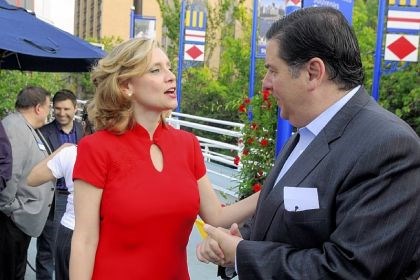
PA-12 Democrat candidate Erin McClelland with Pittsburgh Mayor Bill Peduto
With just over a week left until the primary election, the 12th Congressional District’s Democratic candidates Erin McClelland and John Hugya took the stage at The University of Pittsburgh-Johnstown to debate the issues and try to set themselves apart from each other.
And boy, did they.
McClelland, a healthcare professional specializing in orthomolecular addiction treatment, quickly established her bona fides as a policy wonk and portrayed herself as forward-looking problem-solver from the private sector.
Hugya, a retired Marine Colonel and former district director for the late Congressman Jack Murtha, spoke solemnly about veterans issues and proudly promised to put his Murtha-modeled pork prowess to work for voters.
These two different perspectives led to two varying lines of answering the questions put to them by the moderator and the audience.
Job Creation and Economic Development
Hugya explained his jobs platform as following the example set by Congressman John Murtha, who Hugya said was unfairly chastised for his earmarks. “All the jobs we have in Johnstown came from earmarks,” Hugya said. “Look at China, they’re building everything. Ten years ago, you look at a picture of Peking, you saw a rickshaw and a bicycle. They have pulled ahead and we have not done anything in 20 years.”
McClelland said that the number one thing she would want to do in Congress is vote for a jobs bill, explaining that we currently have “policies that support free trade but not fair trade,” and “we need to change that so we can bring jobs back home.” And, McClelland added, when you bring jobs back home, you expand our tax base and begin to solve a lot of our economic issues in that way.”
Both candidates said that infrastructure maintenance and construction were crucial to economic development. McClelland said that currently “we are neglecting [our infrastructure] to the point of complete disrepair, and if it keeps deteriorating, rebuilding will cost more down the road and affect my son’s generation.”
Hugya, however, explained that in his view, “we need money disbursed from commercial banks to get our infrastructure going,” namely by passing a 21st century Glass-Steagall Act to keep traditional banks separate from investment banks and hedge funds.
Natural Gas
McClelland began her discussion by saying that “the biggest issue we have [at the federal level] is closing the Halliburton loophole.” The Halliburton loophole allows hydraulic fracturing companies to withhold details about the makeup of their fracking fluid.
“You know what’s in your pastry at Giant Eagle, but doctors don’t know how to treat health issues related to fracking because they don’t know the chemicals,” McClelland explained.
Hugya focused on the need to create more jobs in the district because “they don’t have coal mines anymore in the western part of the state.” Hugya said that people in Beaver County need a commitment from the drillers as much as they need health protections.
Coal and the EPA
McClelland began her answering by saying that “I have a 13 year old boy with asthma, and one of the most terrifying moments of my life was watching my son grasp for air.” And according to McClelland, the incumbent Congressman, Keith Rothfus, is a “climate change denier.”
McClelland proposed incentivizing companies who innovate on pollution reduction, and pointed out that America’s trade partners are “literally dumping garbage into the air.”
“We have to implement CO2 regulations based on a process of continuous improvement… not incentivize our trading partners to keep polluting,” McClelland said.
Hugya responded to the question by attacking the regulations on emissions from new power plants.
“The rules and regulations are done within the EPA,” said Hugya. “That’s not the law. They can work out any kind of deal they need to make jobs happen. They got to be able to work out a deal not to hurt the people and not to hurt the atmosphere.”
Reforming Social Security and Medicare
According to McClelland, “this is our biggest issue.”
“Medicaid and Medicare costs are exploding at twice the rate of our GDP,” McClelland said. “If you want to solve that problem, that solution is error reduction. We have 300 million medical errors every year,” which McClelland said is a massive part of the cost problem.
“Keith Rothfus says the only answer to not killing patients is tort reform,” McClelland said. “He wants to change the way you can sue after a medical error. I taught hospitals how to reduce medical errors and save lives.”
Hugya said that his “proposal to keep the fund perpetuated is to lower the percentage that we’re all paying, but pay the whole year through.” That way, Hugya said, “the system would not run out of money. And we need to eliminate fraud.”
How to Keep People in the District
For Hugya, the best solution to the district’s brain drain is simple: “earmarks.”
“We have to have the jobs here for them to come back to,” he said.
McClelland said that her solution would be the same thing that kept people in the district for decades: “a good reasonable wage, good schools, and a good home life with maybe enough left over for a ball game.”
McClelland added that Pennsylvania has “zero Congressmen and zero Senators who are female in a state that is 52% female,” and she hoped to be an inspiring example for Keystone State women.
Minimum Wage Bill
Hugya said that he finds the $10.10 minimum wage bill to be “questionable,” adding that “I remember being paid $1.37 when I got out of the military.”
“If you give them the $10 dollars, and they’re living in public housing, the public housing goes up,” Hugya said. “It’s a good thing to say it, but it’s not going to increase the economic welfare of people.”
McClelland said that raising the minimum wage “is an issue of being a human being.”
“I own a business and the lowest paid employee makes $13.25 an hour,” McClelland said. “When people go to work and put in a hard day’s work, they should have enough money to live off of.”
Affordable Care Act
When asked if she was in favor of keeping, reforming, or repealing Obamacare, McClelland said she “absolutely support[s] maintaining the Affordable Care Act.”
“There are now 8 million more people in this country that can live their life knowing they can rely on the security of health insurance,” McClelland said, adding that health security is “a fundamental human right.”
Hugya spent most of his answer comparing Obamacare to TriCare, the health care program for military personnel and dependents. As to Obamacare generally, Hugya said that at this point “we have to have it, but we have to get into certain sections of it, test it out like we did Tricare, [and] if it’s no good fix it.”
Veterans
The veterans portion of the debate got heated quickly.
Hugya began by saying that “Mr. Rothfus doesn’t understand the difference between a corporal and a colonel.”
He then demanded to know how many members of McClelland’s family were in the military. McClelland said that her two grandfathers had served.
Hugya awkwardly responded with, simply, “okay,” and the moderator, Ray Wrabley, broke in after a few awkward seconds of silence, saying “moving on…”
Improving Education
Hugya began by saying that “from my past experience, I can tell you that in the 12th Congressional District we had before, it’s where the best schools were,” but he wasn’t sure if it was due to “smarter kids or teachers.”
“I know teachers don’t like to get evaluated, but I know that I had to get evaluated in a fitness report all my life,” Hugya said. “They worry about making jocks out of them and not making them technically qualified. You get a job because you’re damn qualified.”
McClelland took on the way we currently analyze schools, and what she sees as the perverse incentives of federal funding.
“We test our students to try and ascertain how they are working, and then bureaucrats in D.C. use that data to punish schools and teachers and take money away, and who suffers? It’s our children,” she said.
“We need to use the data to make improvements,” McClelland added. “When we use testing, we should ask whether student has shown continuous improvement.”
Foreign Policy
McClelland said that we are currently “in a pattern of reactionary foreign policy, which is a dangerous place to be because it allows our enemies to dictate our decisions.” McClelland also criticized the manner in which Congress handles defense spending.
According to McClelland, Congress fails to do defense spending “in a modular fashion, which is what businesses use.” Instead, McClelland said we are spending in a way that asks for “a bunch of this and a bunch of that, but not what our people need.”
Hugya began his response by talking about his former boss, saying “Mr. Murtha was right about Iraq,” and that after Murtha criticized President Bush’s decision, “you have no idea the hell that happened on him. They came after him, me, and our whole staff.”
Hugya was referencing the various ethics investigations that we brought against Murtha. He also added that “I carried a top secret clearance in the Marine Corps and on the Hill, and I can tell you that you have no idea what went on, but Mr. Murtha was not happy.”
Finally, Hugya went on a tirade against the incumbent 12th District Congressman, Keith Rothfus, saying he “isn’t smart, his staff is,” and that Rothfus “pretends he’s a military guy, but he is not.”
“Keith has never had his hands dirty,” Hugya said. “I worked in a coal furnace. I know what it’s like to work hard.”
Best Concluding Remarks
Each candidate gave a conclusion summarizing their experience, and each candidate had a memorable one-liner.
Hugya ended by saying that “I’ve fought with some of you before, and I’ve drank with some of you before. What you see is what you get.”
McCelland said that “we need to mobilize the greatest weapon in our economic arsenal, and that is the American middle class.”
Post-Debate Conspiracy Theory
After the debate, I was walking toward McClelland’s campaign manager, Adam Stokes, when Colonel Hugya approached him and accused McClelland of wearing an “ear bud” during the debate. Hugya said to him that her answers were too quick and cited too many statistics.
While I did not hear the entirety of the conversation, McClelland’s campaign manager confirmed to me that Hugya was not at all kidding around, but was making a serious accusation.
McClelland’s campaign manager said the accusation was “ridiculous.” A quick scan of McClelland’s ear revealed no ear bud.
Union member from Brody Mine…Thanks to John Case of Harpers Ferry for sending this…
WHARTON, W.Va. — Officials from the federal Mine Safety and Health Administration said Tuesday that two workers had been trapped and killed in an accident at a West Virginia coal mine.
One official with the agency, Amy Louviere, said in an email Tuesday morning that a ground failure occurred at the mine around 8:30 p.m. Monday. She said the miners’ bodies had been recovered, and personnel from the agency are on the site.
The accident occurred at Brody Mine No. 1, in Boone County, which is in the southwest part of West Virginia. It is owned by the St. Louis-based Patriot Coal.
In October, the safety agency designated the mine as a pattern violator, meaning it had repeatedly broken federal health and safety regulations in the previous year. Patriot said in a statement at the time that it believed the mine did not qualify for the status and that it intended to contest it.

 Beaver, PA, June 10, 2014 – June is “bustin’ out all over“ — with renewable energy on full display, just as it will be June 28 at the Clean and Green Energy Fair in Ambridge, PA.
 Everyone is invited to explore the rise of renewable energy and the differences it can make. The Clean and Green Energy Fair will feature free solar snow cones, children’s activities, and – thanks to a donation by Ted Popovich, board of directors’ member of Allegheny County’s Group Against Smog and Pollution (GASP) – an iPad raffle.