Category Archives: elections

Wall Street Echoes People’s Cry: “Healthcare Not Warfare!”

By Tim WheelerPeople’s Weekly World

March for Healthcare on Wall St.


New York—About 10,000 protesters marched through the Wall Street financial district April 4 chanting “Money for Healthcare not for war, that is what we’re marching for.”

It was the 42st anniversary of Dr. Martin Luther King’s famed “Beyond Vietnam” speech at Riverside Church April 4, 1967. Many banners and signs bore photos of Dr. King with the message “Beyond War, A New Economy is Possible. Yes We Can.”
The marchers assembled on Broadway above Canal Street and streamed down the avenue at noon led by a contingent of Veterans for Peace, Military Families Speak Out, and Iraq Veterans Against the War. “Hands off Afghanistan” “Fund Human Needs not War” and “Give Me A J-O-B so I can E-A-T” were some of the thousands of signs and placards.

Rose Taylor of Baltimore was one of many people in wheelchairs who rolled past the New York Stock Exchange. She was holding a sign that read, “We Need a People’s Bank.”

Continue reading Wall Street Echoes People’s Cry: “Healthcare Not Warfare!”

Central Kentucky Building & Construction Trades Council Endorsed HR 676

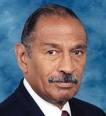
Cong. John Conyers
Cong. John Conyers

Lexington, Kentucky.   The Central Kentucky Building & Construction Trades Council has endorsed HR 676, single payer healthcare legislation introduced by Congressman John Conyers (D-MI), reports Council President Robert Akin.

The endorsement resolution said in part:  “The cost of healthcare continues to spiral out of control with no end in sight damaging families’ economic stability and adding tremendous burdens on the U.S. to compete in the world economically.  As long as health care is treated as a for profit commodity this will never end.”

“We hereby resolve that the Central Kentucky Building & Construction Trades Council endorses HR 676 which will provide for a single payer universal health care system to cover all of the citizens of the U.S,” the resolution continued.  “We encourage all elected officials from local, state and national governments to support this common sense, equal to all, and just effort to solve one of the greatest problems that the U.S.A. faces at this time,” the resolution concluded.

Hundreds of French workers take bosses hostage

art_cat

PARIS, France (CNN) — Hundreds of French workers, angry about proposed layoffs at a Caterpillar factory, were holding executives of the company hostage Tuesday, a spokesman for the workers said.

Caterpillar’s French staff say they are angry about a lack of negotiations over layoffs.

It is at least the third time this month that French workers threatened with cutbacks have blockaded managers in their offices to demand negotiations. Executives were released unharmed in both previous situations.

The latest incident started Tuesday morning at the office of the construction equipment company in the southeastern city of Grenoble.

The workers were angry that Caterpillar had proposed cutting more than 700 jobs and would not negotiate, said Nicolas Benoit, a spokesman for the workers’ union.

Continue reading Hundreds of French workers take bosses hostage

Texas IAM Local is 500th Union to Endorse HR 676

Houston, Texas. 

IAMAW Local Lodge 2339H in Houston, representing 5,000 flight attendants at Continental and Express Jet Airlines, is the 500th union organization to endorse HR 676, single payer healthcare legislation introduced by Congressman John Conyers (D-MI).

Christine Diaz, the Local’s Legislative Committee Chairperson, said:  “It was important for our local to stand in solidarity with the hundreds of
other labor organizations who have already endorsed HR 676.  We are going to win this fight at the grass roots level, and it is going to take
educating not only our members, but the general public, on the truth about single payer health care.”

Rosalie Canton, President of Local Lodge 2339H, said:  “When our membership has to stop work for whatever reason, it is not uncommon to
hear, ‘Well, I will just have to risk not having health insurance for three months.  I cannot afford to pay for COBRA.’  The system must change
so that your health insurance is not tied to your employer.  It just doesn’t work anymore.”

The Legislative Committee has met with Rep. Gene Green but has not yet secured his agreement to sign on as a co-sponsor of HR 676.

American Postal Workers Union Makes Single Payer Legislative Priority

Washington, DC.   The American Postal Workers Union (APWU) has adopted
single payer health care as a legislative priority for 2009.

A copy of the APWU’s booklet “Legislative Priorities 2009” has just been
placed on the union’s website.  On page ten of the booklet, under the
heading “Universal Healthcare:  A Basic Human Right,” the APWU states the
following:

SINGLE PAYER

The labor movement supports the “single-payer” system under which all
healthcare revenue goes into a single public fund that pays for all
medical services.  A single-payer system would:

*  Guarantee the same coverage for all citizens, regardless of employment
status or wealth;

*  Provide a free choice in the selection of a caregiver;

*  Reduce administrative costs; and,

*  Leave decision-making tasks in the hands of the public.

And, it can be done.  Systems like this have been adopted by all other
industrialized nations.
APWU will support legislation that provides affordable – and adequate –
single-payer healthcare coverage for all.

The full booklet can be found at:

http://www.apwu.org/dept/legis/leg-prioritiesbrochure_feb2009.pdf

The APWU is the world’s largest postal union, representing more than
330,000 United States Postal Service employees and retirees, and nearly
2,000 private-sector mail workers.  APWU has 1600 state and local unions
and retiree chapters in every state and territory.

Single-payer Health Reform Bill Introduced in U.S. Senate

March 26, 2009, Washington, DC

Would save $400 billion on bureaucracy, enough to cover all 46 million uninsured Americans

Challenging head-on the powerful private insurance and pharmaceutical industries, Vermont’s Sen. Bernie Sanders introduced a single-payer health reform bill, the American Health Security Act of 2009, in the U.S. Senate Wednesday. The bill is the first to directly take on the powerful lobbies blocking universal health reform in the Senate since Sen. Paul Wellstone’s tragic death.

The single-payer approach embodied in Sanders’ new bill stands in sharp contrast to the reform models being offered by the White House and by key lawmakers like Senators Max Baucus (D-Mont.) and Edward Kennedy (D-Mass.). Their plans would preserve a central role for the private insurance industry, sacrificing both universal coverage and cost containment during the worst economic crisis since the Depression.

In contrast, Sanders’ new legislation would cover all of the 46 million Americans who currently lack coverage and improve benefits for all Americans by eliminating co-pays and deductibles and restoring free choice of physician. The most fiscally conservative option for reform, single payer slashes private insurance overhead and bureaucracy in medical settings, saving over $400 billion annually that can be redirected into clinical care.

“This is excellent news for the nation’s health,” said Dr. Quentin Young, national coordinator of Physicians for a National Health Program and a past president of the American Public Health Association. “There is now an affordable cure for our dysfunctional health care system. In the face of our present economic calamity, this is an urgent necessity.”

Highlights of the bill include the following:

  • Patients go to any doctor or hospital of their choice.
  • The program is paid for by combining current sources of government health spending into a single fund with modest new taxes amounting to less than what people now pay for insurance premiums and out-of-pocket expenses.
  • Comprehensive benefits, including coverage for dental, mental health, and prescription drugs.
  • While federally funded, the program is to be administered by the states.
  • By eliminating the high overhead and profits of the private, investor-owned insurance industry, along with the burdensome paperwork imposed on physicians, hospitals and other providers, the plan saves at least $400 billion annually – enough money to provide comprehensive, quality care to all.
  • Community health centers are fully funded, giving the 60 million Americans now living in rural and underserved areas access to care.
  • To address the critical shortage of primary care physicians and dentists, the bill provides resources for the National Health Service Corps to train an additional 24,000 health professionals.

“We are confident that Sen. Sanders’ bill will accelerate the national drive for the only reform that we know will work,” Young said. “A majority of physicians endorse such an approach. Fifty-nine percent of U.S. physicians support national health insurance. Two-thirds of the public also supports such a remedy. We remember well that President Obama once acknowledged that single-payer national health insurance was the best way to go. It still is.”

Sanders, who serves on the Senate Committee on Health, Education, Labor, and Pensions, is a longtime advocate of fundamental health care reform. His new bill draws heavily upon the single-payer legislation introduced by the late Sen. Paul Wellstone (D-Minn.) in 1993, S. 491, and closely parallels similar legislation pending before the House, H.R. 1200, introduced by Rep. Jim McDermott (D-Wash.).

A single-payer bill introduced by Rep. John Conyers Jr. (D-Mich.), H.R. 676, obtained 93 co-sponsors in the House during the last session. It has been reintroduced in the new Congress as the U.S. National Health Care Act with the same bill number.

Real AIG Scandal: the Banks Are Cleaning Up

The Real AIG Scandal…It’s not the bonuses.

It’s that AIG’s counterparties are getting paid back in full.

American International Group Inc. Click image to expand.AIG’s Manhattan, N.Y., office

Everybody is rushing to condemn AIG’s bonuses, but this simple scandal is obscuring the real disgrace at the insurance giant: Why are AIG’s counterparties getting paid back in full, to the tune of tens of billions of taxpayer dollars?

For the answer to this question, we need to go back to the very first decision to bail out AIG, made, we are told, by then-Treasury Secretary Henry Paulson, then-New York Fed official Timothy Geithner, Goldman Sachs CEO Lloyd Blankfein, and Fed Chairman Ben Bernanke last fall. Post-Lehman’s collapse, they feared a systemic failure could be triggered by AIG’s inability to pay the counterparties to all the sophisticated instruments AIG had sold. And who were AIG’s trading partners? No shock here: Goldman, Bank of America, Merrill Lynch, UBS, JPMorgan Chase, Morgan Stanley, Deutsche Bank, Barclays, and on it goes. So now we know for sure what we already surmised: The AIG bailout has been a way to hide an enormous second round of cash to the same group that had received TARP money already.

It all appears, once again, to be the same insiders protecting themselves against sharing the pain and risk of their own bad adventure. The payments to AIG’s counterparties are justified with an appeal to the sanctity of contract. If AIG’s contracts turned out to be shaky, the theory goes, then the whole edifice of the financial system would collapse.

But wait a moment, aren’t we in the midst of reopening contracts all over the place to share the burden of this crisis? From raising taxes—income taxes to sales taxes—to properly reopening labor contracts, we are all being asked to pitch in and carry our share of the burden. Workers around the country are being asked to take pay cuts and accept shorter work weeks so that colleagues won’t be laid off. Why can’t Wall Street royalty shoulder some of the burden? Why did Goldman have to get back 100 cents on the dollar? Didn’t we already give Goldman a $25 billion capital infusion, and aren’t they sitting on more than $100 billion in cash? Haven’t we been told recently that they are beginning to come back to fiscal stability? If that is so, couldn’t they have accepted a discount, and couldn’t they have agreed to certain conditions before the AIG dollars—that is, our dollars—flowed?

The appearance that this was all an inside job is overwhelming. AIG was nothing more than a conduit for huge capital flows to the same old suspects, with no reason or explanation.

Continue reading Real AIG Scandal: the Banks Are Cleaning Up

A Letter to an AIG Executive

s-aigct-large

To AIG from “Faith,” a caring daughter

My mother is an 83-year-old single woman suffering from Post Polio Syndrome. She has been waiting for more than one year for payment of the money AIG approved for damage due to a broken pipe that destroyed the first floor of her single family, two-story house in January, 2008. During the past year, AIG has done everything in their power NOT to pay the money due, including subjecting her to a 5+ hour deposition for which she had to hire an attorney. I would like to ask one of the AIG executives who received a $1M+ bonus: would you consider giving my mother a loan while your adjusters and underwriters at AIG continue to delay the payment AIG has already approved? Because right now, she’s living on balance transfers and hand-outs from her children — taxpayers who paid for your bonus. After spending a lifetime at work so that she could afford to pay her homeowner’s insurance premium each month, on time, every year for the last 49 years, do you think you could do her this one little favor?

South St. Paul, MN and Tigard, OR UFCW Local Unions Endorse Single Payer Healthcare

Two UFCW Locals Voice Support for HR 676

Two United Food & Commercial Workers (UFCW) local unions have joined the growing list of labor organizations voicing support for HR 676, single payer healthcare legislation introduced by Congressman John Conyers (D-MI).

In South St. Paul, Minnesota, the Executive Board of UFCW Local 789 overwhelmingly endorsed HR 676 on March 10.  The 7,000 member local represents workers in retail, grocery, long term care and meat packing.

Bernie Hesse, Local 789 Director of Special Projects, spoke of the endorsement:  “Healthcare is a right not a privilege, and Medicare for all
is the right direction for us to follow.  We call upon elected officials to move legislation which will benefit all workers and strengthen our
economy.  We stand ready to educate, agitate, and build power to pass healthcare for all.”

In Tigard, Oregon, the Active Ballot Club (ABC) of UFCW Local 555 voted to recommend to the UFCW International Union that it endorse HR 676.  The Active Ballot Club is the political arm of the 18,000 member UFCW Local.

In a letter to UFCW International President Joseph Hansen, UFCW Local 555 President Dan Clay wrote:  “We would like to take this opportunity to encourage you to review, and if possible, to endorse HR 676 on a national level.”  The letter continued:  “Health care, as you are well aware, is on the verge of bankrupting this country.  In its current form, if allowed to continue, it will decimate people’s lives and make annual budgets a
nightmare for anyone to allocate for.”  In concluding his letter asking for the International Union to endorse HR 676, President Clay said that HR 676 “.will also provide the best benefit to a system that is exhausted and on the verge of collapse.”

Dr. Quentin Young, Longtime Obama Confidante, Criticizes Administration’s Refusal to Consider Single-Payer Healthcare (2 parts)

Go to next page for rest of interview

Continue reading Dr. Quentin Young, Longtime Obama Confidante, Criticizes Administration’s Refusal to Consider Single-Payer Healthcare (2 parts)