Category Archives: elections

Next PA Lt Gov? Domestic-Abuse Allegation Haunts Law-and-Order MAGA Candidate

Teddy Daniels, a GOP primary candidate for lieutenant governor in Pennsylvania–Zach D Roberts/NurPhoto/AP

Teddy Daniels is running for Pennsylvania lieutenant governor as an award-winning officer, but court records and news archives obtained by Rolling Stone reveal he was caught committing “unbecoming conduct” at one police department and suspended at another

By HUNTER WALKER
Rolling Stone

As he asks voters to make him Pennsylvania’s next lieutenant governor, Teddy Daniels has promoted himself as an Army combat veteran, a former police officer, and a successful businessman. He also, perhaps above all, wants them to know that he stands with Donald Trump. Daniels’ support for the former president has included promoting conspiracy theories about the last election and posting video from the steps of the U.S. Capitol on Jan. 6, 2021.

What Daniels is not advertising is that, according to court documents, his personal history includes domestic-abuse allegations, and the law-enforcement career that he’s made a cornerstone of his campaign has multiple major blemishes. Daniels’ ex-wife claimed in court that he was “physically and mentally abusive” during their marriage and later harassed her at her workplace, and both she and another woman have accused him of being negligent in paying child support.

Court records reveal that during his career as an officer he was the subject of an “internal affairs investigation” that concluded he had engaged in “unbecoming conduct” by “providing deceptive information to an investigator” and “using official state record for personal reasons.” Local newspaper accounts also indicate that Daniels was suspended and ultimately agreed to separate from a different police department in 2010.

But in the modern Republican Party, extreme does not mean fringe. Within the past year, Daniels has scored prime-time appearances on Fox News and a personal meeting with Trump. As he runs for lieutenant governor, Daniels has the support of Doug Mastriano, a MAGA-minded legislator and gubernatorial candidate who’s a close second in early primary polling.

The primary is in May, and as voters weigh whether to nominate Daniels to be the number-two official in the country’s fifth most-populous state, his personal history merits a close review.

Daniels declined an interview request from Rolling Stone and declined to answer a string of written questions about the specific allegations detailed in the court documents, his view of the 2020 election, and his activities on Jan. 6. Instead, he sent Rolling Stone a short statement: “Given that the Liberal rag Rolling Stone idolizes the Boston bomber, it is no surprise they’d grasp at non existent straws in printing FALSE, and MALICIOUS ALLEGATIONS to try to defame a wounded combat veteran, decorated police officer, and leading candidate in Pennsylvania just like they did to Donald Trump with the Russia Hoax and Brett Kavanaugh on the Supreme Court.”

In November 2000, Daniels married a woman in Maryland whose identity Rolling Stone is withholding. The pair had a child together in April 2002, and separated roughly three months later. That separation was the beginning of a contentious, decade-long-plus legal saga as the pair argued over child support and visitation, according to the court records reviewed by Rolling Stone.

As their court fight dragged on, in 2013, the ex-wife asked the district court of Maryland for an order of protection citing alleged “domestic violence.” In written statements accompanying the petition, Daniels’ ex-wife claimed he was “physically and mentally abusive during marriage” and that he “pushed, kicked, and hit” her, including an incident where he allegedly “kicked in” a door and left her forearm “bruised.” The court denied the petition and said she “could not meet the required burden of proof” about the alleged physical abuse a decade earlier. The ex-wife did not respond to multiple requests for comment.

However, the ex-wife’s petition for protection documented allegations of Daniels harassing her in 2013 by contacting the hospital where she worked to accuse her of violating a “court order.” The petition included messages Daniels purportedly wrote to a general email address for the president of the hospital to demand his ex-wife’s contact information. “Could you please forward me her office number? I am filing papers next week for her to be served by the Sheriff at work since I have no other contact info,” Daniels wrote. “I do not wish her or the hospital any public embarrassment and hopefully with her office line, things can be worked out before things are brought into the public eye.”

The petition included a follow up email from the hospital’s director of security, who “strongly urge[d]” Daniels not to “continue to harass” his ex-wife “at her place of employment.”

The publicly accessible court records reviewed by Rolling Stone did not contain any response from Daniels and his attorneys to this alleged workplace harassment. In other court documents, Daniels repeatedly suggested his motivation in his dealings with his ex-wife was to see his child. Lawyers who represented Daniels and his ex-wife did not respond to requests for comment.

Daniels’ legal battle with his ex-wife was not his first. In 1999, Daniels sued a woman he’d had a child with in 1996 to get custody and visitation rights and work out child support. During the subsequent legal battle, the woman’s lawyer accused Daniels of having previously “engaged in conduct which has been threatening” to the woman and made her feel “justifiably unsafe.” The presiding court official rebuffed that line of argument, saying that the woman had previously agreed in a consent order to Daniels visiting their child. The woman, whose name Rolling Stone is withholding, could not be reached for comment. Her attorney declined to comment and said they had no recollection of the case from two decades ago.

In both the cases involving his ex-wife and the other woman, Daniels was accused of failing to keep up with child support, the court documents reveal. Court records confirm that Daniels was in “arrears” with child support to his ex-wife in 2002 and 2006. In court documents from 2009, Daniels’ ex-wife described him as “a chronic offender of continuous failed payments” for child support. Daniels’ lawyers contested this claim. Court documents in the legal fight between Daniels and the woman he had a child with in 1996 reveal he was in arrears on his child support to that woman during 2000 and 2001.

Daniels’ police experience is a central part of his campaign. His website boasts that he “was awarded the accolade of Law Enforcement Officer of the Year in 2002.” Daniels declined to answer inquiries about the specifics of the award, including question about where it was presented and by whom.

Court records and newspaper articles suggest Daniels ran into professional trouble at multiple police departments during his law-enforcement career. Daniels’ ex-wife provided the court with a pair of documents indicating he was disciplined for “unbecoming conduct by providing deceptive information to an investigator” and “abuse” of “state record for personal reasons” in 1999 while he was an officer with the police department in Bel Air, Maryland. The court records, which the ex-wife included in her request for the order of protection, did not provide further detail about the alleged violations or include a response to the accusations from Daniels and his attorneys. Daniels did not address specific questions about the allegations from Rolling Stone.

According to the materials Daniels’ ex-wife provided to the court, he received a “letter of reprimand” from Bel Air Police Chief Leo Matrangola in December 1999. “Improper behavior is a matter of habit,” Matrangola wrote to Daniels. “I would like you to understand that any future misuse of police information or untruthfulness will be considered grounds for termination.” A representative for the Bel Air Police Department did not respond to a request for comment. Matrangola passed away in 2015.

In the 2009 court document in which his ex-wife accused Daniels of failing to provide child support, she also alleged he was once “FIRED within 6 months” of taking a job with the police force in Douglass Township, Pennsylvania. The records do not reflect whether Daniels and his attorney responded to that allegation. Daniels did not respond to specific questions about the alleged firing. The chief of the Douglass Township Police Department did not immediately respond to a request for comment.

Daniels also had issues at another police job, this time with the department in Minersville, Pennsylvania. According to a November, 2010 report in a local paper, Daniels was suspended from that department over unspecified allegations in August of that year. The suspension was extended after a confidential hearing, and again following a subsequent session of the town council. Daniels left the department via a separation agreement that the council approved that November.

“The allegations that led to the suspension were not made public,” the local Pottsville Republican Herald reported, adding: “The details of the agreement are being kept confidential by the council at Daniels’ request.” Daniels did not respond to specific questions about his reported suspension from the police department in Minersville. The town’s current police chief did not immediately respond to a request for comment.

Along with his law-enforcement and military credentials, Daniels has built his political career around support for Trump. He first ran for Congress in 2020, but he lost a crowded, contested primary. He started running for Congress again in 2022, but he instead jumped into the lieutenant governor’s race last month. Daniels announced the lieutenant-governor campaign after Mastriano, the gubernatorial candidate running with Daniels’ support, launched his bid for governor.

Mastriano was subpoenaed by the House select committee investigating the Jan. 6 attack on Tuesday, due to his alleged involvement in a plan to put forward a slate of “alternate electors” to overturn Trump’s loss and public statements indicating he was “present during the attack on the U.S. Capitol on Jan. 6, 2021.” He and Daniels are part of a wave of GOP candidates who seem to have attended the protests against Trump’s election loss that turned violent on Jan. 6, 2021. As the U.S. Capitol was attacked that day, Daniels seemed to be front and center. He posted a video showing crowds swarming the building that appeared to be shot from the east front steps, well inside the barricades that were set up that day.

“I am here,” he wrote. “God bless our patriots.”

And Daniels has made support for the broader effort to challenge Trump’s loss — and opposition to the investigation of the attack on the Capitol — part of his campaign. In addition to questioning Trump’s defeat and suggesting he would change voting systems to guarantee future Republican victory, Daniels appeared on One America News Network last year, where he said the House select committee investigating Jan. 6 “has to stop immediately.”

Daniels also apparently objects to investigations into his own past. In January, after he became aware of the reporting for this story, he posted a video to Facebook, claiming the article was a set up by either the “liberal left” or the “establishment right” because he had “upset the powers to be at a very, very, very high level.”

“Rolling Stone magazine with their unlimited budget is now preparing, researching, and writing to do a hit piece on me,” he declared in the video, seated beneath an assault rifle and a photo of him with Trump. “Who put them up to it? I can tell you this, there’s only two entities out there that hate the America First agenda, and it’s the establishment right and the liberal left.”

“Every shit rag liberal paper in the country has come after me,” Daniels said. “I survived combat. Nothing that these man bun wearing purple-haired sissies can do to me can hurt me.”

In the video, Daniels urged Rolling Stone to “come get some.”

“All right shitbag, I know your deal. What do you got? Let’s sit down. Let’s meet, and go ahead and write,” Daniels said. “Rolling Stone, you know how to contact me. … I dare you to try that strong-arm shit with me, because we will meet in person, and it won’t be a good meeting. I promise you that.”

Continue reading Next PA Lt Gov? Domestic-Abuse Allegation Haunts Law-and-Order MAGA Candidate
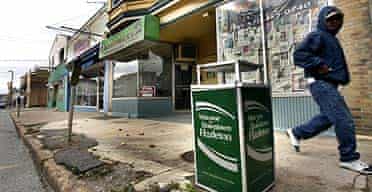
Western Pennsylvania Is Dying – Or Is It?

By Andrew Cuff

TribLive

Dec. 18, 2021 – To many Americans, the regions surrounding Pittsburgh have become a collection of “ghost towns” to avoid or a lost culture to elegize. Western Pennsylvania is now a socially acceptable target for stereotypes conjuring images of blighted vacant lots, shuttered mills and welfare recipients addicted to painkillers.

Even the familiar term “Rust Belt” lends itself to images of decline. Showtime’s new small-town Pennsylvania drama “American Rust,” which one reviewer called a “badly written chunk of misery porn,” subjects viewers to tropes like teen criminality, desperate and unemployed parents with starving kids, and cold, unloving neighbors. The show dramatizes every cherry-picked anecdote and caricature wielded by Politico in one 2017 report on the Trump voters of Johnstown.

But Johnstown community leaders responded brilliantly to Politico’s depiction of their neighborhoods. Their argument — that focusing only on the negative is disingenuous — holds true in 2021, too. While pessimists insist that 2020 census data herald demographic disaster in Pittsburgh’s outlying counties, including Johnstown’s Cambria County, a balanced look at the numbers tell a different story.

It’s true that three of Pennsylvania’s eight western counties, the most rural ones, saw a significant decline in population from 2010 to 2020. This 6% average decline likely is due to aging, death or outmigration. The region as a whole grew, but only by 0.5% — a rate that lags the state and national averages (2.4% and 7.4%, respectively).

But comparing these numbers with the 2000 and 2010 census shows these statistics are well within the margin of natural fluctuation or at least remain on steady pace with trends that date to the 1950s. If anything, Western Pennsylvania is not experiencing any truly worrying trend of “population drain” — at worst, it is seeing merely plodding growth.

Besides, population explosions are not always a good thing. Outgoing Pittsburgh mayor Bill Peduto has spent six years furiously trying to reverse the city’s seven-decade trend of population loss, focusing on quantity at the expense of quality. Mayor-elect Ed Gainey, who defeated Democrat Peduto in May’s primary, emphasized the city’s strengths — hospitality, flexibility and culture — as a blueprint for reform. Pittsburghers don’t want to create an unlivable city just to meet an arbitrary population goal.

This outlook is even more prevalent in Western Pennsylvania’s small towns. Ask any resident of Greensburg or Irwin, for example, if their priority is flooding their towns with new residents. If such places were in demographic crisis, that goal might make sense. Instead, these small towns have focused on stability during and after covid, especially for their small business communities.

A localist philosophy was key to these towns’ resilience during the pandemic. According to the Pennsylvania Economic League of Greater Pittsburgh’s Business Conditions Survey, 65% of the region’s small businesses (100 or fewer employees) reported steady or increased demand for their goods and services by December 2020. And this September, 89% of small businesses reported staffing remained steady or increased quarter over quarter in 2021, while 40% of small businesses have raised wages since May.

That’s because small-town consumers made it a point to buy local during and after the pandemic, a trend evidenced early on by April 2020 survey results from the National Retail Federation. The success of Community Supported Agriculture (CSA) co-ops also made an impact in Western Pennsylvania, where ubiquitous farmers markets constitute a genuine parallel grocery option.

One example of a business bolstered by loyal customers during the pandemic is Disobedient Spirits, a craft distiller in Indiana County’s Homer City. Manager Rachel Russell described the phenomenon as a “shutdown surge,” telling me that statewide pandemic restrictions lost them plenty of bar and table business, but individual sales shot up. “For a few weeks, orders were off the charts because we were the only place to buy liquor for miles in any direction,” she recalled. “It dropped some after the state-owned stores reopened, but we kept a lot of regulars.”

With this buy-in from the community, small-town leaders were able to invest in local initiatives spotlighting local distinctives. Forest County’s Marienville, for instance, has made the most of its unique snowmobiling trails, becoming a tourism and retirement destination with skyrocketing property values.

Downtown revitalization efforts like the Main Street beautification in my hometown of Latrobe generate unparalleled resilience and small business growth, according to the Brookings Institution.

Structural changes that will persist after the pandemic suggest that the region’s small towns are likely to get even stronger. Highly educated remote workers are exiting expensive cities in historic numbers, and small-town living is the best way to stretch their dollar — especially during the current hyperinflation and tight housing market. Others fleeing social unrest, politicized school districts or exorbitant covid restrictions will follow the same pattern.

Now is Pennsylvania’s moment to strengthen small towns by giving them room to be unique. Regulations, bureaucracy, and heavy taxes – whether imposed from Harrisburg or Washington — will only burden small towns with the same economic sluggishness as major cities. These places are a hedge against centralization and inequality, often representing the last sound option for millennials or minorities to own homes, start businesses and raise children.

Neither Showtime dramas nor census results capture the strength and resilience of western Pennsylvania. We don’t need an elegy — we need to stay the course of community, solidarity and commonsense policy.

Gov. Tom Wolf will appoint mail voting advocate Leigh M. Chapman to be Pa.’s new top elections official

By SEAN COLLINS WALSH Philadelphia Inquirer DECEMBER 28, 2021

Leigh M. Chapman will become acting secretary of the commonwealth on Jan. 8.
Leigh M. Chapman will become acting secretary of the commonwealth on Jan. 8.Read moreOffice of Gov.

Gov. Tom Wolf plans to appoint Leigh M. Chapman, a lawyer who leads a nonprofit that promotes mail voting, to be the state’s next top elections official, tasking her with overseeing a midterm election cycle that will bring national scrutiny to Pennsylvania while the state fends off continued GOP attacks stemming from the 2020 presidential election.

Chapman will become acting secretary of the commonwealth on Jan. 8, Wolf announced Monday. She previously served as policy director in the agency she will soon head, the Department of State, from 2015 to 2017.

“Throughout my career, I have worked to ensure that voting rights are protected, and to improve access to the ballot box,” Chapman said. “I look forward to continuing that work in my new role, and to build on the tremendously successful election reforms in Pennsylvania over the last several years.”

Chapman will replace Veronica Degraffenreid, who received praise from Wolf for overseeing the office in an acting capacity following the February resignation of the last permanent secretary, Kathy Boockvar.

Wolf originally intended to elevate Degraffenreid to a permanent role in the office but withdrew the nomination after she clashed with Senate Republicans over their controversial review of the 2020 presidential election. She will become a special adviser to Wolf after Chapman takes over the department.

Wolf’s announcement Monday was silent on whether he intended Chapman to assume the secretary role on a permanent basis, which would require legislative confirmation.

“She will be acting secretary, where she will be able to perform the full duties and responsibilities of a confirmed secretary,” Wolf spokesperson Elizabeth Rementer said in a separate statement.

The chain of events leading to Chapman’s appointment began with Boockvar, who oversaw the implementation of Pennsylvania’s 2019 mail voting law, which was passed with bipartisan support and administered the presidential election cycle amid the coronavirus pandemic. Decisions she made around mail balloting became the target of GOP attacks on the integrity of the 2020 election in Pennsylvania, fueled by false statements by former President Donald Trump and his Republican supporters.

She resigned unexpectedly months later due to an unrelated issue when it was revealed that her office bungled the administration of a referendum to extend the statute of limitations for civil claims filed by child sex abuse victims against their abusers. The Department of State is required to advertise state constitutional amendments before they are placed on the ballot but failed to do so in time for the 2021 primary.

Chapman, 37, who earned her law degree from Howard University and her undergraduate from the University of Virginia, has previously worked for the law firm Dewey & LeBoeuf and for the nonprofits Let America Vote, the Advancement Project, and the Leadership Conference on Civil and Human Rights.

Chapman’s appointment may draw objections from Republicans because she will be rejoining state government after serving as executive director of Deliver My Vote, a nonpartisan nonprofit organization that helps voters obtain mail ballots and researches the impact of voting by mail.

The group’s website lists Brian Dunn as a founder. He is a partner in a firm called Field Strategies, which on its website says it “has been instrumental in securing victories for Democratic Presidents, Governors, U.S. Senators, U.S. Representatives and statewide ballot initiatives” and runs voter registration and “vote-by-mail signup drives, helping to reshape the electorate favorably for Democratic causes.”

Although Republicans and Democrats worked together to pass the state’s mail balloting law before the pandemic, it became a partisan issue largely thanks to Trump baselessly questioning whether voting by mail allowed Democrats to steal the election from him. Trump’s lies about mail balloting have caused many GOP voters to abandon voting by mail despite using it in the past in roughly equal numbers as Democrats.

In 2020, more than 2.6 million Pennsylvanians voted by mail in the presidential election, while fewer than 300,000 voted by mail in 2016, before the law took effect. Most of the growth was in Democratic ballots, analysts say.

Further complicating matters for Chapman, the department she will soon lead is still facing attacks from Republicans over the 2020 election, with GOP lawmakers in the state Senate pursuing a controversial review of the results.

“I have full confidence that Leigh M. Chapman will continue the Department’s efforts to lead Pennsylvania through a smooth election process and ensure that Pennsylvania voters continue to experience free and fair elections, among many responsibilities,” Wolf, a Democrat, said in a statement.

That scrutiny is likely to increase next year, as Pennsylvania voters will pick a new governor and U.S. senator and play a key role in deciding control of Congress. Additionally, state leaders are hashing out new district maps for the legislature and U.S. House delegation.

Republican leaders in the General Assembly did not return requests for comment Monday.

What The Infrastructure Bill Could Mean For PA Amtrak Expansion

Amtrak train at Bryn Mawr, Pa. traveling westbound towards Pittsburgh
Wikimedia Commons photo by Tam0031

By Ryan Deto
Pittsburgh City Paper

President Joe Biden signed the $1.2 trillion infrastructure bill on Nov. 15, which would funnel federal funds to a bevy of infrastructure projects across the country. Pennsylvania is due to get money for roads, bridges, public transit, broadband, and more. For Pittsburgh, it could mean funding busway extensions, new highway interchanges, and sewage and stormwater improvements.

But another big winner in the bill is Amtrak. The national train provider is set to receive $66 billion in funding that will go to fleet acquisition, state grants, rail projects, and improvements across the Amtrak system, says Amtrak CEO Bill Flynn in an interview with NBC News.

What that means for Pennsylvania is likely to be worked out over time, as agreements have to be reached with private rail companies and likely additional state funding should be allocated.

However, Amtrak has already provided a plan for expansion in case the infrastructure bill was passed. And Amtrak officials have said the funding allocated should be enough to move forward with these plans.

And Pennsylvania is a clear winner in that Amtrak proposal. The Keystone State could see 15 new train round trips under Amtrak’s 2035 Vision Plan, and that includes three new routes serving cities in Eastern Pennsylvania, as well as additional trips to and from Pittsburgh.

The 15 additional train round trips in Pennsylvania as proposed by Amtrak are:


1 new round trip between Pittsburgh and New York City, which includes an extension to Cleveland
1 new round trip between Cleveland and Buffalo, that would travel through Erie
3 new round trips between Scranton and NYC
3 new round trips between Reading and Philadelphia
2 new round trips between Allentown and NYC
5 new round trips between Harrisburg and NYC on the Keystone Service

For Pittsburgh, this would add intercity service to Cleveland that leaves and arrives at a reasonable hour. Currently, rail travel between the two Rust Belt cities is done between midnight and 5 a.m.

Adding another round trip between Pittsburgh and New York City could also provide options for commuters in Westmoreland or Cambria counties to travel by rail into Pittsburgh. Currently, the Pennsylvanian train arrives in Pittsburgh at 8 p.m. and leaves towards Harrisburg at 7:30 a.m.

But Eastern Pennsylvania is the real winner in the Amtrak proposal. Three new lines have been proposed that would expand train service into Scranton, Allentown, and Reading.

Final alignments are not complete, but the proposal says the Scranton line will connect the Northeastern Pennsylvania city, which is the birthplace of President Biden, to New York City. The route includes stops in Tobyhanna, Mt. Pocono, and East Stroudsburg before entering New Jersey.

The proposed Allentown line would connect the Lehigh Valley city, now the third largest in the state, to New York City, and includes stops in Bethlehem and Easton before entering New Jersey.

A line from Reading is proposed to connect to Philadelphia (with eventual passage to New York City) and proposed stops include Pottstown, Phoenixville, King of Prussia, and Norristown.

Erie will see additional roundtrip traveling from Cleveland to Buffalo. This route doesn’t have any additional stops in Pennsylvania but does add stops in Ashtabula, Ohio, and Westfield, N.Y.

The proposal, which still has many details to work out, has garnered support from Pennsylvania politicians State Reps. Joe Ciresi (DMontgomery) and Manuel Guzman (DBerks). who represent areas that would get additional train service under the proposal. They praised the plan after the infrastructure bill passed the U.S. House on Nov. 10.

Gov. Tom Wolf met and spoke with Amtrak officials on Sept. 10 and he said the proposed expansion will “improve equity, accessibility, and reliability in transportation” for the commonwealth. He also called on the state government to match the federal response.

“We need statelevel transportation solutions to match this federal leadership so we can build and sustain this vision,” said Wolf in a September press release. “I am pleased to support this plan which would expand services to many more Pennsylvanians, strengthen local businesses, the regional economy, and the commonwealth as a whole.”

GOP State Lawmakers File Lawsuit to Have Mail-in Voting Tossed Out

By J D Prose

Beaver County Times

Sept 3, 2021 – Lawmakers argued in the suit filed late Tuesday in Pennsylvania Commonwealth Court that Act 77, under which no-excuse mail-in voting was allowed, violates the state and U.S. constitutions and should have been pursued through a state constitutional amendment, even though 11 of them voted for the legislation in 2019.

The GOP legislators on the lawsuit are: 

  • Timothy Bonner, Mercer County, who was not in office when Act 77 passed. 
  • Mike Jones, York County, who voted for Act 77. 
  • David Zimmerman, Lancaster County, who voted against Act 77. 
  • Barry Jozwiak, Berks County, who voted for Act 77. 
  • Kathy Rapp, Warren County, who voted for Act 77. 
  • David Maloney, Berks, who voted for Act 77. 
  • Barbara Gleim, Cumberland County, who voted for Act 77. 
  • Bob Brooks, Westmoreland County, who voted for Act 77. 
  • Aaron Bernstine, Lawrence County, who voted for Act 77. 
  • Timothy Twardzik, Schuylkill County, who was not in office when Act 77 passed. 
  • Dawn Keefer, York County, who voted for Act 77. 
  • Dan Moul, Adams County, who voted for Act 77. 
  • Frank Ryan, Lebanon County, who voted for Act 77. 
  • Bud Cook, Washington County, who voted for Act 77. 

“Last year, over 2.5 million Pennsylvanians embraced mail-in voting and other safe secure and modern forms of voting which Act 77 allowed for the first time in the commonwealth,” said Lyndsay Kensinger, a spokesperson for Democratic Gov. Tom Wolf. 

“The fact that members of the General Assembly who voted for Act 77 and were chosen for office in elections in which it was in effect are now suing to overturn it is hypocritical and a betrayal of voters,” Kensinger said. “We should continue to modernize our election system and make it more convenient for voters to make their voices heard. Instead these members are seeking to silence voters as they perpetuate false claims of a stolen election.”

However, Attorney General Josh Shapiro, a likely Democratic candidate for governor in 2022, said Thursday on Twitter: “This lawsuit is not only the height of hypocrisy, but it also has real consequences and damages public trust in our elections.” 

After initially supporting mail-in voting, Republicans have followed former President Donald Trump’s calls against the practice and launched several legal attacks on the process, although none of them have been successful.  

Trump began baselessly warning about mail-in voting fraud last year before the November election when it became clear that Democrats were flocking to mailed ballots amid the COVID-19 pandemic.  

More:Wolf, Democrats say Pa. already had election audits — and Biden won

More:A bill overhauling Pa.’s election law could soon pass the House. What’s the fight over?

GOP election probe 

As Trump’s evidence-free claims continue, Republican lawmakers have repeatedly called into question the results of the presidential election, but not the races that they won. 

On Thursday, the state Senate Intergovernmental Operations Committee announced that it has created a webpage for Pennsylvania voters to submit sworn testimony about their voting experiences and any irregularities they have witnessed.  

The effort is part of what committee Chairman Sen. Cris Dush, R-Jefferson County, called an election integrity investigation. Testimony can be submitted at https://intergovernmental.pasenategop.com/electioninvestigation/.

Dush recently replaced state Sen. Doug Mastriano, R-Franklin County, as committee chairman after Mastriano was removed amid bickering with Senate President Pro Tempore Jake Corman over the committee’s efforts to subpoena records from York, Tioga and Philadelphia counties.

Mastriano has been at the forefront of the movement questioning the 2020 election results and was part of a Republican group that visited Arizona to review the GOP-led election audit there.  

Dush also said that the committee will hold public hearings and request documents from counties and the Pennsylvania Department of State “to conduct a comprehensive election investigation – including potentially using the committee’s subpoena powers,” according to a statement. 

Forget Pennsyltucky! Welcome to PArizona!

IF WE LET MASTRIANO GET HIS WAY

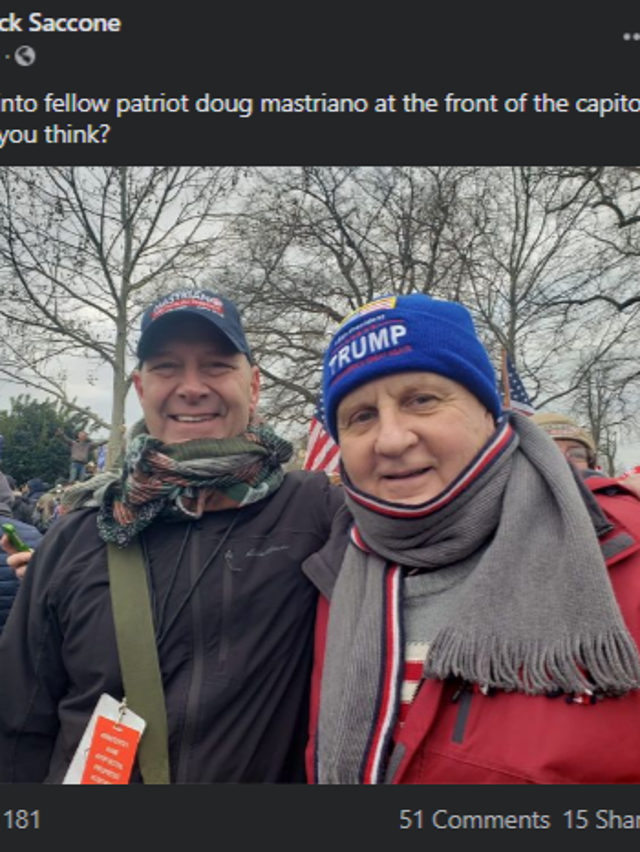
Mastriano at Jan 6 Attack on Congress

By Tony Norman

Pittsburgh Post Gazette

Opinion Columnist

July 16, 2021 – Somewhere in the multiverse of possibilities, there probably exists a place where state Sen. Doug Mastriano (R-Franklin) isn’t the Lex Luthor of Pennsylvania politics. Alas, that place isn’t here.

In this universe, Mr. Mastriano, who is expected to run for governor next year, is second to none in a party that has made fealty to Donald Trump and his cult of eternal grievance over a “stolen” election part of its brand.

Unlike most of his rivals who will also be vying for Mr. Trump’s blessings going into the primary next year, Mr. Mastriano isn’t just another dim bulb cursed with more ambition than imagination. That’s not to say he towers over his fellow Republicans intellectually, but he does possess a Trumpian canniness and disregard for reality that most don’t.

As Mr. Trump’s biggest hype man in this state, Mr. Mastriano has proven that by echoing and amplifying the ex-president’s Big Lie, he displays the shamelessness that all but guarantees he’ll be the gubernatorial choice for a party that signed away its conscience a long time ago. The Associated PressAnother county raises objection to Sen. Doug Mastriano’s Pennsylvania election audit

To be an elected Republican official in Pennsylvania these days requires a declaration that the 2020 presidential election was stolen from Mr. Trump and that massive election fraud took place in this state on Nov. 3, most likely in the form of mail-in ballots.

Though Republicans maintained their majority in the Legislature despite Biden winning the state, many of those who won reelection or took office for the first time are willing to cast doubt on the integrity of their own victories to bolster the wounded ego of ‘Dear Leader’ who, at a minimum, always demands a mindless parroting of the Big Lie that the entire election was illegitimate.

Mr. Mastriano’s history of enabling the former president’s paranoia and fear-mongering is particularly notorious for its indifference to reality ranging from criticism of the state’s COVID-19 mask and lockdown mandates at the height of the pandemic to the aftermath of the Capitol insurrection on Jan. 6.

On Nov. 27, Mr. Mastriano was one of the architects of a resolution that would permit the Legislature to appoint a new slate of delegates to the Electoral College that would be pledged to support Mr. Trump instead of President-elect Joe Biden. (Continued)

Continue reading Forget Pennsyltucky! Welcome to PArizona!

EVEN CONOR LAMB IS DONE WITH THE FILIBUSTER

The moderate Democrat says the Capitol riot changed his mind. Who’s next?

BY MARY HARRISJUNE 10, 20211:12 PM

SLATE.COM

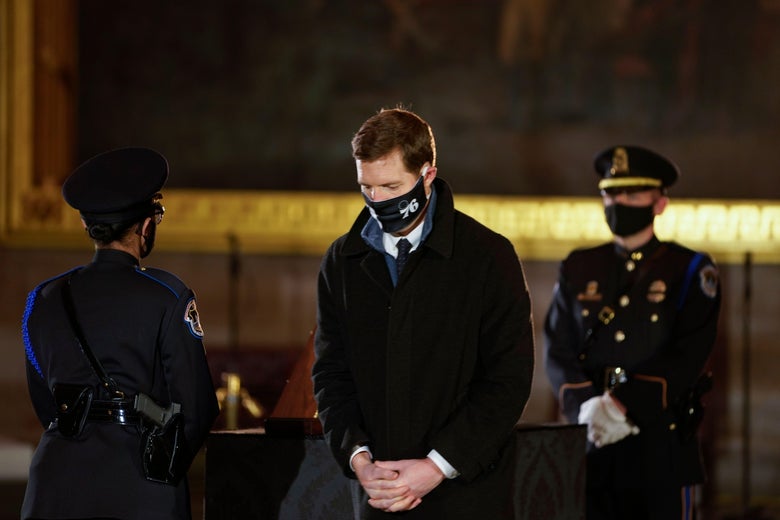
Lamb stands with his head bowed and hands clasped in front of him. One uniformed officer stands in front of him and one behind him.
Rep. Conor Lamb pays his respects to Capitol Police officer Brian Sicknick in the rotunda of the U.S. Capitol on Feb. 3. Demetrius Freeman/Pool/AFP via Getty Images

Some people call Democratic Pennsylvania Rep. Conor Lamb a conservative. He prefers to think of himself as a compromiser, a moderate in a polarized political world. Because he was first elected as a Democrat in a district that also elected Donald Trump, he’s often seen as a bellwether, an object lesson in reaching the voters Democrats have lost ground with over the last few years. So it surprised me that Lamb recently got on Twitter to voice his support for blowing up the filibuster. After watching the bipartisan push for a Jan. 6 commission fail spectacularly, Lamb says he felt like he had no choice—“the filibuster has to go.” On Thursday’s episode of What Next, I spoke to Lamb about why he’s taking this stand now, and what compromise means when there are fewer and fewer people to compromise with. This conversation has been condensed and edited for clarity.

Mary Harris: Right now the project of democracy is being politicized. Reforms that will increase the democratic project are seen as progressive or left-wing. But you’re trying to separate that out from your stances on issues like the environment or the economy. Are your constituents separating them out too? When you talk to them about the democratic values that you clearly hold, do they see those as apolitical values?

Conor Lamb: I think it’s still a little early in this process. I’ve noticed Washington, D.C., always moves a lot faster in conversation than people back here in my district, and so I am now every day on high alert for what’s happening to our democracy and what’s happening in these different states, and I’m not sure that the average person in my district is yet, particularly because you’re in Pennsylvania. We more or less are at a stalemate because we have a Democratic governor who’s not going to allow the legislature to do all these crazy things they’re doing elsewhere.

Even though the legislature is Republican-controlled.

Yes. And they have tried. We just had a bunch of state legislators travel to Arizona to watch the phony recount. But I can say with a lot of confidence, having got to know my constituents over the last three years, that they would expect me to continue working for achievements and compromises on issues like infrastructure, even as we debate the fundamental issues of our democracy. And that actually makes sense to me

In infrastructure, just to give you a quick example, there’s a lock on the Ohio River that makes it possible for barges to carry construction equipment and coal and all the things that they move on the river. It’s so old that it’s literally at a 50 percent chance of cracking in half and falling into the river in the next two years. And if that happened, not only the whole river would be shut down, but construction sites along the river would be shut down. People would lose their job. Traffic on the roads would increase. I mean, that’s a real scenario. If that happened, I don’t think anyone in my district is going to look at me and go, “Well, yeah, Conor, that’s not your fault because you were fighting with the Republicans about democracy.” I mean, there’s some basic stuff that we really have to try to get done for our people no matter what.

So you’re trying to make the case to your constituents that we need to be able to get these things passed because otherwise your stuff is going to break, and then it’s too late for us to fix it.ADVERTISEMENT

I would actually reverse it. I think that’s the case my constituents make to me on a pretty regular basis. And I agree with them. I think that we have to be able to do multiple things at once. But I’ll also say that my view on the filibuster, on the commitment to democracy that we have to have and the intensity with which we have to have that debate—that has evolved in three years. So I’m learning on the job and I’m trying to achieve this balance right now of working with the Republicans. And when I say the Republicans, really I’m mostly working with Republicans who did not vote to overturn the election. Many of the ones I’m working with voted to impeach Trump the second time.

Can you tell me about that evolution? You’ve said, “I practice bipartisanship because it’s supposed to get results.” But I think a lot of people would say it hasn’t been getting results for a while.

I always challenge people to make sure we know what we’re talking about when we say we’re not getting results, because we actually have, even in the depth of the Trump era, we’ve gotten bipartisan results on important topics. The same week that we did impeachment in the House the first time, we did the USMCA [United States–Mexico–Canada Agreement], probably the most important trade agreement in the United States in the last almost 30 years, by a massive bipartisan vote. And there have been other examples like that. So it still does happen, even though people correctly perceive that we’re in much more partisan times.

“If we can’t agree to have a peaceful transition of power, the rest of it doesn’t really matter.”— Rep. Conor Lamb

But I think the last three years have taught me that the Republicans have really made this whole attack on the ease of voting, and more generally an attack on telling the truth and meaning what you say and basing your statements on facts and true observations about the world—they’ve really made it a core pillar of their party because they have tied themselves so tightly to Trump. I don’t think every Republican walking around thinks that way, but they have all made the decision basically that he’s the head of their party, and so now all that really matters is what he wants or what pleases him. And Jan. 6 really revealed just how dangerous and sinister of a development that that is. …CONTINUED

Continue reading

Criminal Justice Reforms, Progressive Victories, and Other Takeaways From a Historic 2021 Pittsburgh Primary Election

Peduto, left, defeated by Gainey.

By Ryan Deto
Pittsburgh City Paper

History was made on May 18, 2021. Ed Gainey secured the Democratic nomination for Pittsburgh mayor, almost certain to become the city’s firstever Black mayor. He ran on progressive policies, and to the left of incumbent Mayor Bill Peduto on policing. He focused his campaign on racial and economic inequalities, promising to do more to address these glaring issues in the Steel City.

While this moment is truly historic for Pittsburgh — a city and region that are overwhelmingly white, and have many documented instances of racism against Black people — there are also several other impressive electoral wins that deserve recognition.

Criminal justice reforms

Pittsburgh voters overwhelmingly passed a ban on no-knock warrants for Pittsburgh Police officers. “Yes” on the ban secured more than 81% of the vote. This initiative was inspired by Breonna Taylor, who was shot five times and killed by police officers after police entered her apartment on a noknock warrant.

Allegheny County voters also approved a ballot initiative that would limit the use of solitary confinement at the Allegheny County Jail. A “yes” on that question received 69% of the vote.

Additionally, out of nine open seats for Allegheny County Common Pleas Court, voters selected five candidates who were endorsed by a coalition of criminaljustice reform groups. Common Pleas Judges are responsible for overseeing trials for criminal, civil, and family cases and delivering sentencing.

The coalition said back in March that electing these candidates would help move reforms like reducing the use of cash bail, increasing diversionary programs and alternatives to carceral punishment, and other mechanisms to combat mass incarceration and racial and other demographic disparities in the system.

There were also victories at the Magisterial District Judge level. The Magisterial District Judge court is directly below Common Pleas and is responsible for assigning bail conditions, deciding eviction cases, and is a defendant’s first introduction to the state’s criminal judicial system. In Lawrenceville, candidate Xander Orenstein narrowly defeated incumbent Anthony Ceoffe on a platform of being more compassionate in eviction cases and limiting cash bail. Orenstein, if they were to win the general election, would become the state’s first nonbinary magistrate judge.

Jehosha Wright also won his race for Magisterial District Judge in the North Side, after receiving the backing of some criminal justice reformminded politicians.

Progressive victories over incumbents

On top of celebrating Gainey’s victory, which many progressive advocates are boosting, there were a series of other wins in smaller races that portend more momentum for progressives in Pittsburgh.

In Mount Oliver, JoAnna Taylor ousted Mount Oliver Mayor Frank Bernardini, a conservative Democratic incumbent who was seen last year with Democratic Mount Oliver council member Nick Viglione, who was sporting a MAGA hat at a Allegheny County Democratic Committee meeting. State Rep. Jessica Benham (DSouth Side) also congratulated Lisa Pietrusza for winning a spot on Mount Oliver Council, and Jamie Piotrowski for winning her election for Pittsburgh Public Schools board member.

“I am so thrilled about the progressive movement we are building in South Pittsburgh JoAnna, Jamie, & Lisa represent the hard organizing work we are doing in areas that don’t get much progressive political attention,” tweeted Benham on May 19.

Continue reading Criminal Justice Reforms, Progressive Victories, and Other Takeaways From a Historic 2021 Pittsburgh Primary Election

U.S. Steel Cancels $1 Billion Upgrades to Local Facilities; Plans to Close High Emissions Batteries at Clairton Coke Works

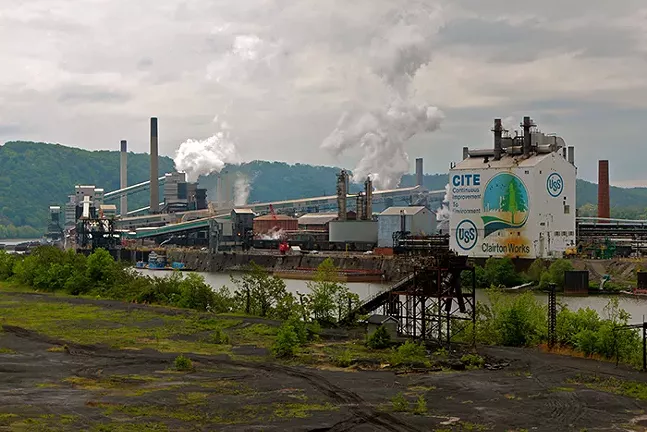
Clairton Coke Works

By Kimberly Rooney
Pittsburgh City Paper

April 30, 2021 – U.S. Steel Corporation is cancelling its $1 billion upgrades to its Mon Valley Works facilities, which includes Edgar Thomson Works in Braddock, Irvin Plant in West Mifflin, and the Clairton Coke Works in Clairton. While the cancellation will likely result in some job losses in the region, it will also reduce the levels of harmful air pollution in the Mon Valley and beyond.

The upgrades, which were announced May 2019, would have included a casting and rolling facility and a cogeneration plant. After several delays due to COVID in 2020 that increased the upgrade costs to a promised $1.5 billion, U.S. Steel pushed the start date of those upgrades to the fourth quarter of 2022. But today, the company announced it would be scrapping those plans entirely.

In addition to cancelling these updates, U.S. Steel plans to permanently idle batteries one through three at Clairton Coke Works by the first quarter of 2023. Batteries one through three are the oldest at the Coke Works and can allow twotothree times more emissions than the rest of the facility, according to environmental groups.

According to the EPA’s National Air Toxics Assessment, toxic air pollution contributes to high risk of cancer, and Clairton Coke Works is responsible for many of the airborne carcinogens in the region. Asthma rates among children in Clairton are three times higher than in the rest of the county.

“For too long, U.S. Steel has run roughshod over our environmental protections and churned out dangerous levels of harmful air pollution,” says PennEnvironment Research & Policy Center clean air advocate Zachary Barber. “Closing these batteries is a necessary and longoverdue step toward reducing that damage and cleaning our region’s air.”

Clairton Coke Works received a $1 million fine from the Allegheny County Health Department in 2019, as well as another $383,450 fine in March 2021. A study from the University of Pittsburgh also confirmed this week that the fire at the Coke Works in December 2018, which destroyed pollution controls, increased asthma exacerbations for residents in the surrounding area.

U.S. Steel President and CEO David Burritt cites the goal for the company to become carbon neutral by 2050 as a motivation for canceling the plan upgrades. As part of that goal, U.S. Steel will shift toward electric arc furnaces, such as Big River Steel, of which U.S. Steel bought a minority share in 2019, in Arkansas.

There are currently about 130 fulltime workers at the three Clairton Coke Works batteries that will be idled. U.S. Steel plans to avoid layoffs by reducing the workforce through retirements and reassignments. According to Pittsburgh Works Together, a cooperative venture mostly comprised of fossilfuel companies and the labor unions that represent their workers, the closures will result in the loss of hundreds of potential construction jobs for the region.

“I am deeply disappointed that the company has broken its promise to the Mon Valley and its own workers by scrapping a plan that would have made the Mon Valley Works the first project of its kind, provided cleaner air for our community and good jobs that would have helped this area prosper for decades,” says state Rep. Austin Davis (DMckeesport), whose district includes the Clairton Coke Works. “I believe that we can create familysustaining jobs and a clean environment.”

From March 30 to April 7, the Mon Valley was one of the top10 worst places for air quality in America. Advocates such as Barber have long criticized Clairton Coke Works’ dangerous emissions, and PennEnvironment had previously called for the batteries to be taken offline when air quality was poor.

“While we are pleased by this development, we still must remain vigilant — especially in light of U.S. Steel’s decadeslong history of legal violations and broken promises,” Barber says. “Local leaders must keep working to ratchet down industrial pollution to ensure that everyone has clean air to breathe every day of the year.”

And it’s possible these upgrade cancellations will have longterm effects on U.S. Steel’s future in the Mon Valley and the Pittsburgh region. As University of Pittsburgh economist Chris Briem notes on Twitter, the status of the Clairton Coke Works and the Edgar Thompson Works is bleak without any upgrades to those legacy facilities.

Aliquippa Secures Funding To Replace Lead Service Lines

Aliquippa workers repairing old water lines

By Chrissy Suttles
Beaver County Times

The Municipal Water Authority of Aliquippa will receive more than $2 million in state grant funding to replace the city’s lead service lines.

Gov. Tom Wolf on Wednesday announced $117 million had been released for 25 drinking water, wastewater and nonpoint source projects statewide through Pennsylvania’s Infrastructure Investment Authority.

The only Beaver County project to receive funding was Aliquippa, which will replace 184 existing lead water service lines with copper lines – eliminating the threat of corroded lines seeping lead into the water supply.

Following months of customer complaints, Pennsylvania’s Department of Environmental Protection ordered the authority to improve its testing for drinking water contaminants.

New testing last summer revealed elevated levels of lead in a handful of homes with old lead pipes. Those pipes were immediately replaced, but at least one homeowner reported elevated lead levels months after the replacement.

“People should not have to worry over the safety of their tap water,” said state Rep. Rob Matzie, D16, Ambridge. After testing last year showed elevated lead levels in a small number of samples, there was reason for concern. Securing this funding is going to eliminate that risk.”

Aliquippa’s water authority broke ground on a new $15 million water filtration plant earlier this year near its existing, decadesold facility. For years, hundreds of residents have protested the brown drinking water regularly streaming from their faucets alongside ongoing rate hikes.

The Municipal Water Authority of Aliquippa’s former administrative building was partly demolished Thursday at a groundbreaking ceremony for a new $15 million water filtration plant, expected to be completed within the next three years.
Many of the system’s lines are old castiron pipes first laid in the early 1900s when J&L Steel Corp. was building the town. They break often, resulting in “muddy” water.

“This historic investment in Pennsylvania’s clean water and healthy communities serves as a fitting celebration of Earth Week, when our country celebrates advances in environmental protection and committed stewardship of our lands and waters,” Wolf said.

Chrissy Suttles covers business, energy and environment for the Beaver County Times and the USAToday Network. Contact her at csuttles@timesonline.com and follow her on Twitter @ChrissySuttles.


Aliquippa water workers repairing old lines, some of which is lead and need replacing