Category Archives: elections

There is No Recovery

There is No Recovery

by Randy Shannon, Progressive Democrats of America Economic & Social Justice Team

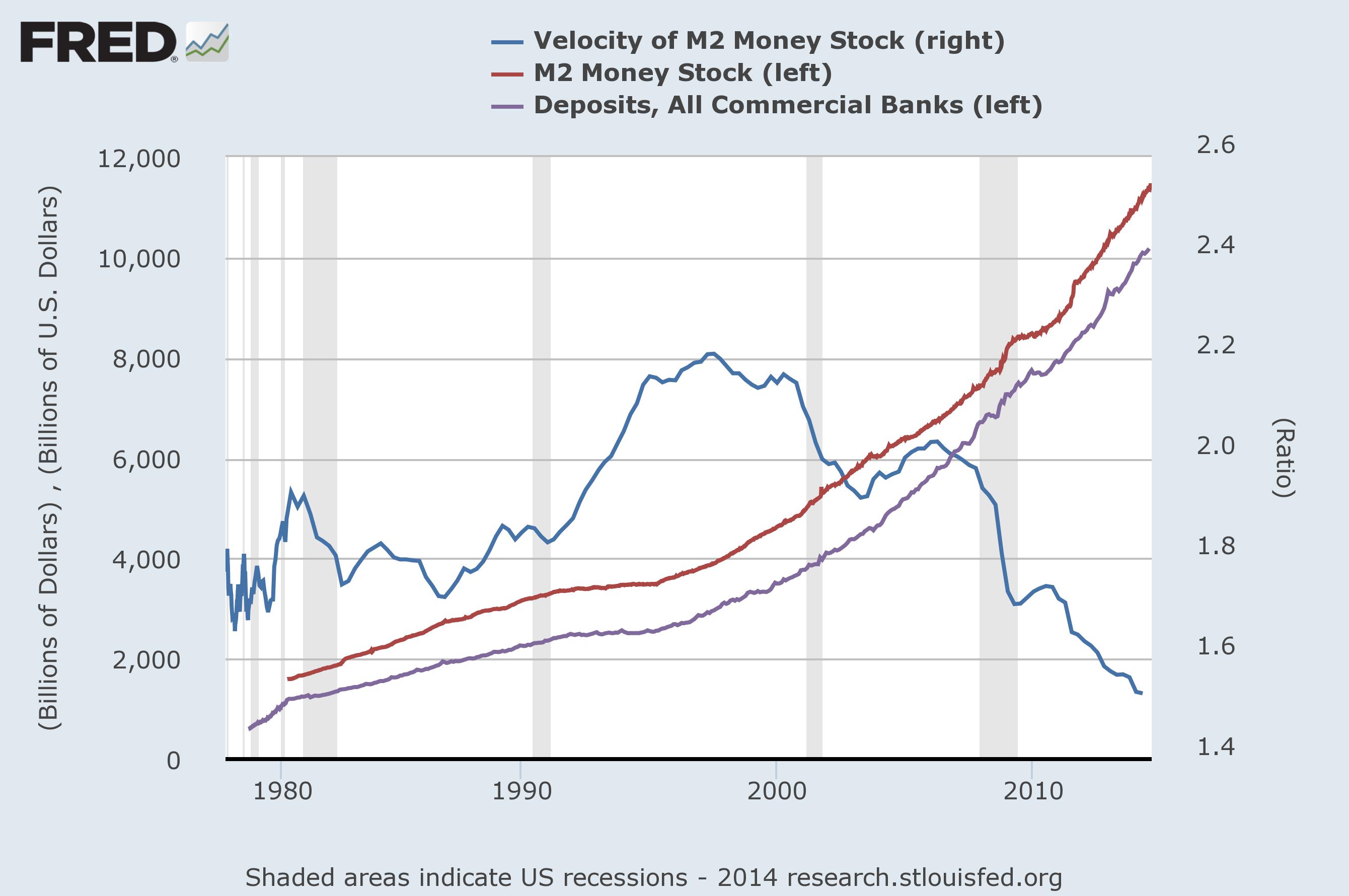
Data from St. Louis Federal Reserve Bank


The velocity of money is the number of times a dollar changes hands in a certain period of time. The blue line falling on the right side means money is hardly moving. Production, earnings, and spending are depressed.  

Folks, there is no recovery. Capitalism has failed. When it fails, the 1% panic and start militarizing the police, rigging elections, starting wars, and creating a surveillance state.

The red line shows that creation of money is at an all time high, and the rate of money creation is accelerating even now. The purple line shows that all this money is going to bank deposits of the 1%.

So the bankers policy of printing money and increasing their own wealth at our expense has not resulted in a recovery.

This is no recovery. This is another financial bubble, protected by systemic corruption, a lying corporate media, and an obstructionist Republican Congress owned by the 1%.

This is not stimulus. This is a fraud whose victims are the great majority – we who must work for a living, pay taxes, or deal with homelessness, hunger, depression, and violence.

This is not fate. Different economic systems benefit different classes. Figure out which class you belong to and make a choice. There’s a popular saying: “Those who show up decide.”

US Policy on Israel Needs to Change

3 Planks of U.S. Policy We Need to Change to End the Gaza Slaughter

 
[Nicolas Davies leads the Progressive Democrats of America issue team to End Wars and Occupations.]

US IsraelAmerican debate on the hundreds of civilian deaths in Gaza and the intractable Israeli-Palestinian conflict is polarized between feelings of sympathy with civilian victims on either side and mutual vilification of the Likud-led government of Israel and the Hamas-led government in Gaza.  But it may be more constructive for Americans to think about the role that the U.S. government plays in perpetuating this never-ending and heart-rending conflict.

Opinion polling during a crisis tends to reflect the passions of the moment, but Americans have told pollsters for decades that we want our government to take an even-handed position on the Israeli-Palestinian conflict.  A Chicago Council Global Views survey in 2012 found that 65% of Americans want the U.S. to “not take either side”, while only 30% want it to “take Israel’s side”. That majority rose to 74% vs 17% at the height of the U.S. war in Iraq in 2004.

But despite decades of presenting itself as an “honest broker” for Middle East peace, there are three ways that the U.S. unequivocally takes the Israeli side in the conflict and effectively supports the Israeli occupation of the Occupied Palestinian Territories (OPT) with all it entails, from illegal settlement building to horrific violence:

Continue reading US Policy on Israel Needs to Change

Why Can’t the U.S. Build a High-Speed Rail System? Connecting Philly, Pittsburgh and Cleveland Would be a Good Place to Start…

The problem isn’t geography, demographics, or money—it’s federal will.

By Yonah Freemark

SolidarityEconomy.net via CityLab.com

Aug 13, 2014 – Virtually every wealthy nation in the world has invested in a high-speed rail network—with the striking exception of the United States. From Japan to France, even from Turkey to Russia, trains travel through the country at speeds of 150 miles per hour or above, linking city centers and providing a desirable alternative to both air and automobile travel. Meanwhile, outside Amtrak’s 28 miles of 150-m.p.h. track in rural Massachusetts and Rhode Island, the American rail network is largely limited to speeds of 110 m.p.h. or less. There are few reasons to think the situation will change much in the coming decades.

So why has the United States failed to fund and construct high-speed rail?

The problem is not political process. Most of the countries that have built high-speed rail are democratic, and have submitted the projects to citizen review; others, like Germany and Russia, have federated governments similar to ours that divide general decision-making between levels of authority.

Nor is it geography. The British and French completed a 31-mile tunnel under the British Channel 20 years ago, while many American cities are located in flat regions with few physical construction obstacles.

Nor is it the characteristics of our urban areas. While U.S. cities are less dense than those of many other countries, the Northeast is denser, more transit reliant, and more populated than most areas served by high-speed rail abroad. Nor still is it money. Though the United States invests less in infrastructure than other developed countries do, America nevertheless remains an immensely wealthy nation perfectly capable of spending on new rail links if desired.

What’s missing is a federal commitment to a well-funded national rail plan.

Instead, we have a political system in which the federal government, having devolved virtually all decision-making power to states, cannot prioritize one project over another in the national interest. We have a funding system that encourages study after study of unfundable or unbuildable projects in places that refuse to commit their own resources. And we have a bureaucracy that, having never operated or constructed modern intercity rail, doesn’t understand what it takes. This helter-skelter approach to transportation improvements is fundamentally incapable of supporting large-expenditure, long-range projects like high-speed rail.

This wasn’t always the case. In 1956, Congress approved a significant increase in the federal gas tax, and with it a national plan for interstate highways. That plan, which included a steady stream of funding and a clear map of national priorities, was mostly completed over the next three decades. Though implemented by states, highway alignments were chosen at the national level, with the intention of connecting the largest cities, regardless of political boundaries. Funding came almost entirely (90 percent) from the national government and was guaranteed as long as a route was on the national map. Physical requirements for roadways were mandated at the national level and universally applied. And construction was completed by state departments of transportation that were technically knowledgeable, accustomed to building such public works, and able to make decisions about how to move forward.

The result was a system of roadways that most Americans rely on, often daily. The interstate system is unquestionably the nation’s transportation lifeblood.

Yet Americans do not have the same perspective on the role of the federal government that they had when this highway system was initially funded. Trust in Washington has declined from more than 70 percent during the 1950s to less than 20 percent today. So while President Dwight Eisenhower declared in 1955 that the federal government should “assume principal responsibility” for the highway system, its approach to a high-speed rail network has reflected this change in public thinking about Washington’s place in transportation planning. The response has been to reduce the federal government’s ability to commit to a long-term plan and associated funding.

Via Pew Research

Recent efforts to revive this federal role have been seriously flawed. Take the Obama administration’s attempt at a national plan of proposed intercity rail investments in 2009.

For starters, the map’s proposed routes were vague, a number of important connections were not identified, and some routes appeared to have been chosen at random—simply the consequence of previous state studies with no national outlook. Funding had been dedicated through an initial $8 billion included in the stimulus bill, but there was certainly no guarantee that railways on that map would be built in the long term. The definition of “high-speed rail” was not applied universally; the administration proposed some links at 90 m.p.h. and others at more than 250 m.p.h., with no explanation for why some would be fast and others not. Finally, many of the states that were supposed to be implementing these projects were woefully unprepared for the task, having made few such investments in the past. None had the experience of building 200 m.p.h. electric railways to the international standard.

Such an approach to national transportation doesn’t work. It leaves too many planning questions open to state decision making, and it fails to offer a financing source that actually produces the funds needed for intercity rail. Far from fulfilling Eisenhower’s mandate of assuming principal responsibility, the latest high-speed rail plan assumed too little.

It would be ridiculous to plan an intercity transportation system at the state level.

But the need is still there. With falling automobile vehicle miles traveled, rising transit use, and booming city centers, we need new ways to connect our cities. More highways are not the answer, not only because they pollute the environment and destroy the neighborhoods they pass through, but also because they’re relatively slow and become congested almost as soon as they’re built. With a growing population, the country needs an expanded transportation system. The United States must invest in clean, neighborhood-building, and congestion-relieving trains, but we cannot expect states to pick up the slack of an uncertain federal government.

The planning and funding of the interstate highway system was premised on the fact that the travel needs of Americans occur irrespective of state lines. Indeed, the 50 largest metropolitan areas, representing more than half of the country’s population, are located in 31 separate states and 15 of them actually straddle state borders. Given this reality, it would be ridiculous to plan an intercity transportation system at the state level. California’s high-speed rail progress—its proposed San Francisco-to-Los Angeles line remains the only truly fast train project in the country—is the exception that proves the rule; that state’s size makes it no example for the rest of the nation.

It’s time for the United States to commit to national planning, funding, coordination, and prioritization of rail investment. Intercity transportation systems require active federal engagement to guarantee the development of routes that reflect national needs and national priorities. Yet without political consensus on the need to develop national goals and focus investments, high-speed rail will remain a pipe-dream for decades to come.

This article is part of ‘The Future of Transportation,’ a CityLab series made possible with support from The Rockefeller Foundation.

Labor Party Opposes Israeli Attack on Gaza

British Labour Party Leader: ‘We Oppose The Israeli Incursion Into Gaza’

Posted: 07/21/2014 5:24 pm EDT Updated: 8 minutes ago
ED MILIBAND
 WASHINGTON — The British Labour Party opposes Israel’s ground invasion of Gaza, the party’s leader Ed Miliband told The Huffington Post on Monday.

Miliband met with President Barack Obama and National Security Adviser Susan Rice at the White House Monday afternoon, and said that Gaza was among the issues discussed.

“We oppose the Israeli incursion into Gaza,” Miliband said.

Polls show that Miliband is a strong candidate to become British prime minister in next year’s general election in May, as his party is currently ahead in the parliamentary race.

Miliband said the incursion into Gaza is likely to help Hamas’ recruiting efforts, and undermines Israel in the eyes of the international community. “I don’t think it will help win Israel friends,” he said. “I don’t think this will make the situation better. I fear it will make it worse.”

Over the weekend, Miliband criticized the loss of innocent lives resulting from the Israeli invasion. “As a party we oppose the further escalation of violence we have seen with Israel’s invasion of Gaza,” he said. “I defend Israel’s right to defend itself against rocket attacks. But I cannot explain, justify or defend the horrifying deaths of hundreds of Palestinians, including children and innocent civilians.”

Miliband said the current violence highlights the dangers inherent in a broken peace process.

He said the violence was partially the result of the collapse of peace talks. “What this horrendous, terrible last few weeks has shown is the vacuum of not having a process is incredibly dangerous,” he said. “That vacuum means any restraint breaks down. And so you’ve got to restart a [peace] process.”

Israeli Prime Minister Benjamin Netanyahu recently told Israeli reporters that there “cannot be a situation, under any agreement, in which we relinquish security control of the territory west of the River Jordan,” which observers took to mean he rejected the idea of a sovereign Palestinian state, and therefore the two-state solution.

Asked about the remarks, Miliband said it is useful to highlight Netanyahu’s past public support of a two-state solution, referencing a landmark speech he delivered in 2009. . “I read his public statements about the two-state solution as important. He said he’s in favor of a two-state solution,” Miliband said. I genuinely believe there is not another possibility.”

The continuing growth of Israeli settlements, he said, threatens that process. “I am concerned that the more settlements there are the more the growth of settlements can become a problem in relation to” the peace process, he said.

A senior Israeli official, who asked to speak on background, said that Netanyahu’s comments had been over-interpreted and needed to be understood in the context of the current conflict, and that he may soften his position after the operation ends. But he stood by Netanyahu’s assertion that Israel would only agree to a Palestinian state with significant security restrictions, referencing the long troop presences in South Korea, Japan and Germany.

This article has been updated to include Miliband’s reaction to Israeli Prime Minister Benjamin Netanyahu’s recent comments on a two-state solution.

Progressive Dem Rep. Ellison: Make Union Organizing a Civil Right

Rep. Keith Ellison, D-Minn., speaks at a news conference, Dec. 20, 2012, in Washington, D.C.
Tom Williams/CQ Roll Call/Getty

Rep. Keith Ellison wants to make union organizing a civil right

07/19/14 03:27 PM

DETROIT – Minnesota Democratic Rep. Keith Ellison plans to unveil legislation that would make unionization into a legally protected civil right, the congressman said on Saturday.

The bill, which he plans to formally introduce on July 30, would make it easier for workers to take legal action against companies that violate their right to organize.

It is already illegal to fire workers in retaliation for union activities, but enforcing workers’ right to organize can be a tricky process under current law. Currently, wrongfully terminated employees must file an unfair labor practice claim with the National Labor Relations Board (NLRB), which will then determine whether to represent the worker in a legal fight against the employer.

But workers are not able to directly sue their employers for anti-union retaliation, and the process of bringing forward a successful unfair labor practice claim can take years.

Ellison’s legislation would maintain the unfair labor practice system, but also allow workers to individually sue their employers over allegations of illegal retaliation.

“If it’s a civil rights action, it’s vindicating your personal right, first of all to freedom of assembly and freedom of expression,” Ellison told msnbc Saturday at the Netroots Nation conference here. “And it’s your individual right to say what you want. Whether or not there’s ever even a vote, you shouldn’t be fired for expressing an intent to support union activity.”

Ellison said he got the idea for the bill from a book called Why Labor Organizing Should Be A Civil Right,written by Century Foundation fellows Richard Kahlenberg and Moshe Marvit. Shortly before the book’s release in early 2012, the two authors presented a synopsis of its core argument in an op-ed for The New York Times.

“Our proposal would make disciplining or firing an employee ‘on the basis of seeking union membership’ illegal just as it now is on the basis of race, color, sex, religion and national origin,” they wrote in the op-ed.“It would expand the fundamental right of association encapsulated in the First Amendment and apply it to the private workplace just as the rights of equality articulated in the 14th Amendment have been so applied.”

The full details of Ellison’s bill remain to be seen, but the proposal set forward by Kahlenberg and Marvit would “provide that after 180 days, a plaintiff can move his or her case from [the NLRB] to federal court.” That’s how the Equal Employment Opportunity Commission currently operates with regard to accusations of workplace discrimination.

Kahlenberg told msnbc that he was “delighted” by Ellison’s announcement.

“I think it’s a terrific development and Congressman Ellison’s the right person to advance this idea,” Kahlenberg said. “He has a strong record on civil rights and a strong record on labor.”

Ellison had not spoken directly with either Kahlenberg or Marvit about the idea, but Kahlenberg said he had been in contact with Ellison’s staff. According to Ellison, a recent Supreme Court decision has made it more important than ever to strengthen collective bargaining rights.

“In the aftermath of Harris v. Quinn, there’s no doubt that organizing rights are under as much threat as ever,” he said. “And now even from the Supreme Court.”

AFSCME Convention Celebrates Rapid Growth

AFSCME grows by 90,000 since January

CHICAGO – AFSCME President Lee Saunders today announced that the American Federation of State, County and Municipal Employees nearly doubled the goal set in January 2014 when the union launched its “50,000 Stronger” organizing campaign.

“Today, we are 92,155 members stronger, with new members from EMTs to home care workers, and we will continue our fight for the middle class and the future of this country,” Saunders declared. Delegates to the union’s 41st International Convention who heard his opening day remarks yesterday jumped to their feet and roared their approval, applauding, stomping their feet and clapping for several minutes. “Our opponents want to deplete the labor movement of resources, steal our power and silence our voices,” he said.

The better-than-planned results of the 50,000 Stronger campaign, which was launched at an internal leadership summit in January, were particularly sweet for the union and its members, coming as they do on the heels of Harris v. Quinn, a Supreme Court decision that undermines AFSCME’s ability to represent home and child care workers.

Included in the 90,000-plus new members are more than 20,000 of those home care workers, who were the target of the lawsuit which was funded by the National Right to Work Committee.

“Just two weeks ago, the U.S. Supreme Court undermined the freedom of home care workers and child care workers. But if anybody thinks we are giving up because things got harder, they are wrong,” Saunders declared.

The union sees its successful organizing campaign as a clear indication that face-to-face organizing is the proper response to what has been an onslaught of attacks on public service workers.

Continue reading AFSCME Convention Celebrates Rapid Growth

Gas Site Threatens Beaver Organic Farm: July 23 Hearing

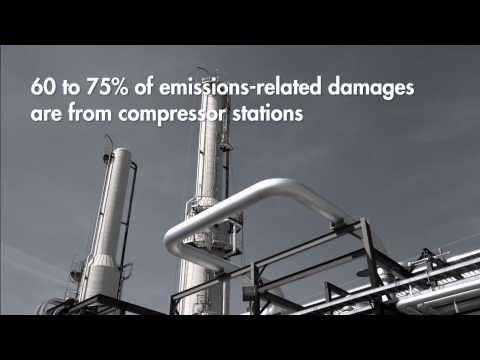
DEP saw an increase in emissions of volatile organic compounds from 2,800 tons in 2011 to 4,000 tons in 2012. Most of that increase came from compressor station engines, as well as from pumps and equipment leaks. The U.S. Environmental Protection Agency reports that volatile organic compounds "include a variety of chemicals, some of which may have short- and long-term adverse health effects." Lung-damaging pollution is created by chemical reactions between nitrogen oxides and volatile organic compounds, especially during warmer times of the year. "There are some significant emissions, as we expected when we decided to require the emission inventory," Mr. Rudawski said during a meeting of the Air Quality Technical Advisory Committee.
DEP saw an increase in emissions of volatile organic compounds from 2,800 tons in 2011 to 4,000 tons in 2012. Most of that increase came from compressor station engines, as well as from pumps and equipment leaks. The U.S. Environmental Protection Agency reports that volatile organic compounds “include a variety of chemicals, some of which may have short- and long-term adverse health effects.” Lung-damaging pollution is created by chemical reactions between nitrogen oxides and volatile organic compounds, especially during warmer times of the year.
“There are some significant emissions, as we expected when we decided to require the emission inventory,” Mr. Rudawski said during a meeting of the Air Quality Technical Advisory Committee.

Hearing: Compressor station proposed near farms in New Sewickley Twp:

July 23, 2014 – 6:30pm
New Sewickley Township Municipal Building
233 Miller Road
Rochester, PA 15074

Kretschmann Farm is an organic farm serving many of us in the greater Pittsburgh area. This isn’t just about Kretschmann Farm, this is about ALL of the farms and their ability to continue providing us with produce that is free of frack toxin.

The production of healthy food with the benefit of clean water and air is one of the values of the environment and the most treasured of resources.

THE ISSUE: 7/23/14 conditional use hearing on a Marcellus gas compressor station that would be built adjacent to Kretschmann’s farm – this meeting might be the one where the supervisors grant permission for the plant.

TAKE ACTION:

EMAIL: the New Sewickley Board of Supervisors: manager@newsewickley.com and cc: kretschmann@verizon.net

ATTEND: RESIDENTS OF NEW SEWICKLEY TOWNSHIP AND ALL INTERESTED PERSONS:
Hearing on proposed construction of the Pike Compressor Station Facility by Cardinal PA Midstream, LLC on an 11.2 acre gravel pad on Teets Road in New Sewickley Township.

The New Sewickley Township Board of Supervisors will continue the public hearing from Wednesday, July 2, 2014 at 6:30 p.m. at the New Sewickley Township Municipal Building, 233 Miller Road, Rochester, PA 15074 to July 23, 2014 at 6:30 to obtain any additional public comment on the Conditional Use

LETTER FROM THE KRETSCHMANS
July 15, 2014
Greetings from the Kretschmanns,

I wish I could talk about the what might shape up to be the best early potato crop in years, or how nice the tomatoes look, picture perfect fields of broccoli and cauliflower, or how excited we are to see the winter squash growing beautifully after being planted using our innovative new no-till system.

But unfortunately we are totally preoccupied with stopping a Marcellus gas compressor station from being sited on a property adjoining our farm in the rear. We are shell shocked and beside ourselves after the surprise phone call last Wednesday from a neighbor about a meeting of the township board of supervisors at which they were to decide the issue.

In eight hours we and several other neighbors came up with enough questions for the board to delay decision and continue the hearing on 7/23 at the township building. But we are told it will be an uphill battle. The small group of neighbors calling ourselves the Bulldogs for New Sewickley Health has alerted hundreds of residents, who also knew nothing about these plans.

We don’t like to bother our subscribers with issues outside our farmer to consumer relationship and deny many requests by outside groups to contact you. But this is about the future of your food supply–make no mistake.

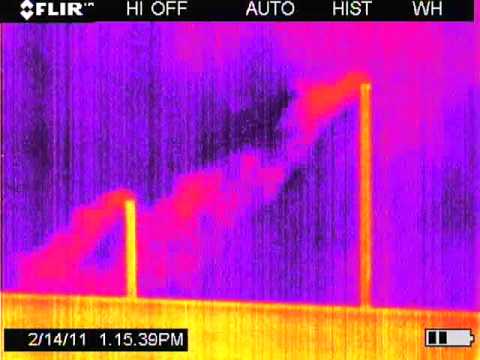
Gas compressor station emissions are visible using FLIR camera technology.

It’s about the future of our farm. Thus, we respectfully ask, beg, that you write the board of supervisors voicing your concerns about the safety and integrity of your organic food supply. As citizens of Pennsylvania, we all have “a right to clean air, pure water, and to the preservation of the natural, scenic, historic and aesthetic values of the environment.” (Art.27Sec1PA Constitution) The state, and thus the township is the trustee of these common resources to preserve them for all of us.

Surely the production of healthy food with the benefit of clean water and air is one of the values of the environment and the most treasured of resources. We know you are busy-with-life. Please consider taking the time to send a letter to the supervisors insisting they fulfill their duty to protect the safety of your food supply. We are taking this very seriously and have engaged legal talent including the attorney who successfully confronted the free reign of the gas industry all the way to the PA Supreme Court. We need your help now, as the 7/23 conditional use hearing might be the one where the supervisors grant permission for the plant. If you’re a parent, also appeal on behalf of your children who grow nourished by this wholesome food. If you’re a doctor or health professional appeal on the basis of prudent concern for one’s health. Other professionals can lend a hand as appropriate. If you know anyone who could help out in the media, political, business, or legal arenas please let us know. We certainly are not asking for this kind of response based on the basis of NIMBY–not in my backyard. It’s simply that an extra-ordinary number of Pittsburgh area consumers are consuming food from our farm in a raw and unprocessed form. That’s a special case and you have a right to it’s quality.

We will be setting up a more automated a petition line, but you can send petitions to the Board of Supervisors c/o twp manager, New Sewickley Twp. Importantly, CC us in the e-mail, or simply send it to us and we’ll print and forward it. Please be respectful. Don served for many years on this board with the current Chairman. Please put “NST petition” in the subject line so we can make sure it is introduced into the official record. We thank our many subscribers who have supported us for decades by buying our organic produce and thus making us the thriving organic farm which we are.

This has allowed us to laugh at the lease agreements sought by the “land men”. We haven’t and won’t sign. We need your help at this time in this special way. Salient talking points are the potential danger to your organically raised food supply and the farm which produces it. We are confident the public good can prevail if we all step forward together. We will be putting together more information as we get a little ahead of this breaking wave.

Busy as bees, we are sincerely, Don, Becky, & the Farm Crew

Sen. Sanders to Speak in Philadelphia

SandersPhila


Join U.S. Senator Bernie Sanders in Philadelphia!

Please join us in welcoming U.S. Senator Bernie Sanders to Philadelphia, PA!

Thursday, July 24, 2014
7:00 PM
1199C/AFSCME Union Hall
1319 Locust Street
Philadelphia, PA
Click here for a map.

$25 Suggested Donation
Click here to donate and RSVP

Or, if you prefer to donate at the event, please RSVP by emailing Tina Scanlon at tina@bernie.org

Please join us in thanking Bernie for his outstanding national
leadership standing up to corporate power and right-wing extremism.
Drinks and appetizers will be served, and Bernie will be speaking
about what’s going on in Washington and how we can best
move forward in this challenging political period.

HOW CAN WE CONTINUE THE FIGHT:
for an economy that creates decent paying jobs
for health care for all
to protect and expand Social Security, Medicare and Medicaid
to boldly address the crisis of climate change
to end the obscene level of income inequality
We hope to see you in Philadelphia on Thursday, July 24!

The Emerging Democratic Debate

The Emerging Democratic Debate

Different voices among Democrats.

July 9, 2014 – Over at the Washington Post, the usually sensible Greg Sargent endorses the notion that divisions among Democrats are “mostly trumped up.” The tension between the Wall Street wing of the party and the Warren (as in Elizabeth) wing is an overblown fiction of a press corps desperate for some action.

SSAIt’s true that the prior divisions on social issues have dissipated, as liberals have swept the field. Obama’s halting attempts to wean the U.S. from its foreign wars have garnered widespread support. And on economics, Sargent argues that Democrats “largely agree on the menu of policy responses to the economic problems faced by poor, working and middle class Americans – a higher minimum wage, universal pre-K, higher taxes on the wealthy to fund a stronger safety net, job creation and job training – whatever the broader rhetorical umbrella is being used.” Even Hillary says she agrees with Thomas Piketty that extreme inequality is a “threat” to our democracy.

There are differences on how aggressively to go after the big banks or whether to expand Social Security, Sargent admits, and a debate underway about “whether to push the Democratic Party in a more populist direction,” which he declines to define. But generally, he argues, there’s broad agreement that Hillary or any Democratic candidate will run on.

All of this is true except the conclusion. There is a broad agreement on what might be called a “populist lite” agenda – one that has been put forth repeatedly by Obama and frustrated by Republican obstruction. And the reforms – from the minimum wage to universal pre-K – are important and will make a difference.
Continue reading The Emerging Democratic Debate