Category Archives: Economy

Hard-Pressed Rust Belt Cities Go Green to Aid Urban Revival

A community farm in Detroit, which has been a leader in green urban renewal.

Gary, Indiana is joining Detroit and other fading U.S. industrial centers in an effort to turn abandoned neighborhoods and factory sites into gardens, parks, and forests. In addition to the environmental benefits, these greening initiatives may help catalyze an economic recovery.

By Winifred Bird

Beaver County Blue via Environment 360 Yale.edu

May 31, 2016 – Depending on how you look at it, Gary, Indiana is facing either the greatest crisis in its 110-year history, or the greatest opportunity. The once-prosperous center of steel production has lost more than half its residents in the past 50 years. Just blocks from city hall, streets are so full of crumbling, burned-out houses and lush weeds that they more closely resemble the nuclear ghost town of Pripyat, near Chernobyl, than Chicago’s glitzy downtown an hour to the northwest. Air, water, and soil pollution are severe.

Yet in the midst of this, Gary has quantities of open space that more prosperous cities can only dream of, and sits on a stretch of lakeshore where plant biodiversity rivals Yellowstone National Park. Now, the big question for Gary, and for dozens of other shrinking cities across the United States’ Rust Belt — which collectively have lost more than a third of their population since the middle of the 20th century — is how to turn this situation to their advantage.

The answer that is beginning to emerge in Gary and other cities of the Rust Belt — which stretches across the upper Northeast through to the Great Lakes and industrial Midwest — is urban greening on a large scale. The idea is to turn scrubby, trash-strewn vacant lots into vegetable gardens, tree farms, stormwater management parks, and pocket prairies that make neighborhoods both more livable and more sustainable.

These types of initiatives have been evolving at the grassroots level for decades in places like Detroit and Buffalo; now, they are starting to attract significant funding from private investors, non-profits, and government agencies, says Eve Pytel, who is director of strategic priorities at the Delta Institute, a Chicago environmental organization active in Gary and several other Rust Belt cities. “There’s a tremendous interest because some of these things are lower cost than traditional development, but at the same time their implementation will actually make the other land more developable," she said.

Or, as Joseph van Dyk, Gary’s director of planning and redevelopment, put it, “If you lived next to a vacant house and now all of a sudden you live next to a forest, you’re in better shape.”

Van Dyk noted that city planning in the U.S. had long been predicated on growth. But, he added, “That’s been turned on its head since the Seventies — Detroit, Cleveland, Youngstown, Flint, Gary have this relatively new problem of, how do you adjust for disinvestment? How do you reallocate your resources and re-plan your cities?”

Detroit, which has at least 20 square miles of abandoned land, has been a leader in envisioning alternative uses for sites that once would have been targeted for conventional redevelopment. The city has 1,400 or more urban farms and community gardens, a tree-planting plan so ambitious the local press says it “could serve as a model for postindustrial cities worldwide,” and $8.9 million from the U.S. Department of Housing and Urban Development to implement green infrastructure projects and install solar panels on other vacant lots.

But while demolition itself has added an estimated

$209 million to the equity of remaining homes in Detroit, Danielle Lewinski, vice president and director of Michigan Initiatives for the Flint-based Center for Community Progress, said hard data on the value of greening projects is more difficult to come by.

“There’s opportunity in Detroit to see an impact in surrounding property values, and therefore people’s interest in that area,” said Lewinski, who has been involved in land-use planning there. “The key, though, is that it needs to be done in a way that is strategic and links to other attributes that would attract a person to move into a neighborhood. My concern is that green reuse, absent a connection to a broader vision, may not be nearly as successful from an economic value standpoint.”

In Gary, the broader vision is to concentrate economic development in a number of “nodes,” each of which would be surrounded by leafy corridors of “re-greened” land. The corridors would separate the nodes, helping to give each neighborhood a more distinct identity, as well as bring residents the benefits of open space and serve as pathways for wildlife moving between existing natural areas. A land-use

plan for preserving Gary’s core green space is already in place, and officials are currently revising the city’s Byzantine zoning regulations to make redevelopment of the nodes easier. Continue reading Hard-Pressed Rust Belt Cities Go Green to Aid Urban Revival

Where Is Plan B? How About Manufacturing for Clean and Green Renewables if the ‘Cracker’ Fails? Or Even if It Doesn’t?

Site of proposed Shell ‘cracker’ plant across from Beaver and Vanport

Shell Acquires Pennsylvania Shale Gas Rights as Part of a $2.1B Deal

By Alex Nixon
Tribune Review

Aug. 14, 2014 – Royal Dutch Shell is shuffling its portfolio of natural gas holdings to increase attention on the Marcellus and Utica shale formations in northern Pennsylvania.

The energy giant announced on Thursday that it is selling drilling rights to mature gas producing areas in Wyoming and Louisiana in separate deals in exchange for $2.1 billion in cash and 155,000 acres in Potter and Tioga counties, where it operates gas wells.

The announcement followed a deal on Tuesday in which Shell said it was selling 208,000 acres in Western Pennsylvania and eastern Ohio to Rex Energy for $120 million.

“They already know what they have” in Potter and Tioga counties, said Lyle Brinker, director of equity research at IHS Energy in Norwalk, Conn. “It’s an area where they already know what they’re getting into.”

Shell spokeswoman Destin Singleton said the seemingly contradictory moves in Pennsylvania are part of the company’s regular review of its mix of energy production assets to improve value for its shareholders. Shell is working to focus its onshore drilling program on a few of the more prolific formations in an effort to boost profitability. The company wrote down the value of its shale acreage in the United States by $2.1 billion last year amid lower natural gas prices.

“We continue to restructure and focus our North America shale oil and gas portfolio,” Marvin Odum, Shell’s Upstream Americas Director, said in a written statement. “We are adding highly attractive exploration acreage, where we have impressive well results in the Utica, and divesting our more mature, Pinedale and Haynesville dry gas positions.”

In one of the two deals announced on Thursday, Shell said it will sell its Pinedale acreage in Wyoming to Houston-based Ultra Petroleum for $925 million plus the land in Potter and Tioga counties. Shell and Ultra have been partners in a joint venture in northern Pennsylvania. Shell will acquire 100 percent of the joint venture.

In the second deal, Shell will sell its gas assets in northern Louisiana, known as Haynesville, to Dallas-based Vine Oil & Gas LP for $1.2 billion.

Shell and other major oil and gas explorers regularly sell rights to fields where production is flat or declining. They then use that cash to fund exploration programs designed to discover new or more prolific fields that oil giants need to fuel growth. The Pinedale and Haynesville formations produce dry gas, which is less profitable than oil or so-called natural gas liquids, at relatively moderate rates.

“It’s a good sign that they’re still committed to the Marcellus,” Brinker said.

Continue reading Where Is Plan B? How About Manufacturing for Clean and Green Renewables if the ‘Cracker’ Fails? Or Even if It Doesn’t?

Youngstown Sets Example of Solidarity in Tough Times


ShareFest Supports a Culture of Sharing in Youngstown

By Cat Johnson

Beaver County Blue via Shareable.com

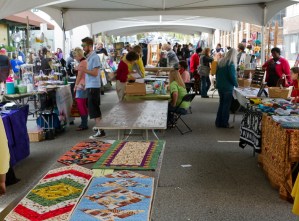
July 14, 2014 – The Mahoning Valley ShareFest in Youngstown, Ohio brought together over 60 people for an afternoon of sharing skills, knowledge, passions, books, clothing and hobbies. Hosted by lead organizer and Timebank Mahoning Watershed board member Tony Budak, as well as numerous volunteers, the event featured dozens of local organizations aligned with the mission to showcase local collaborative giving and receiving.

Among the goals of the ShareFest, which was supported by a grant from Shareable as part of our #SharingSpring initiative, was to change the local community’s conversation leading to a change of culture along the following indicators:

  • Passive engagement to active engagement
  • Staff and administration led to citizen led
  • Beneficiary of service to co-producer of service
  • Client or volunteer to member
  • Individualism to mutualism

Participants of the ShareFest shared skills, passions, hobbies and more.

Continue reading Youngstown Sets Example of Solidarity in Tough Times

Income Gap Widens as American Factories Shut Down: the Case of Reading, PA

Beaver County Blue via AP

June 15, 2014 – READING PA – In August 2008, factory workers David and Barbara Ludwig treated themselves to new cars – David a Dodge pickup, Barbara a sporty Mazda 3. With David making $22 an hour and Barbara $19, they could easily afford the payments.

A month later, Baldwin Hardware, a unit of Stanley Black & Decker Corp., announced layoffs at the Reading plant where they both worked. David was unemployed for 20 months before finding a janitor job that paid $10 an hour, less than half his previous wage. Barbara hung on, but she, too, lost her shipping-dock job of 26 years as Black & Decker shifted production to Mexico. Now she cleans houses for $10 an hour while looking for something permanent.

They still have the cars. The other trappings of their middle-class lifestyle? In the rear-view mirror.

The downfall of manufacturing in the United States has done more than displace workers and leave communities searching for ways to rebuild devastated economies. In Reading and other American factory towns, manufacturing’s decline is a key factor in the widening income gap between the rich and everyone else, as people like the Ludwigs have been forced into far lower-paying work.

It’s not that there’s a lack of jobs, but gains often come at either the highest end of the wage spectrum – or the lowest.

“A loss of manufacturing has contributed to the decline of the middle class,” said Howard Wial, an economist with the Brookings Institution and the University of Illinois at Chicago. “People who are displaced from high-paying manufacturing jobs spend a long time unemployed, and when they take other jobs, those jobs generally pay substantially less.”

Continue reading Income Gap Widens as American Factories Shut Down: the Case of Reading, PA

Job Builder: Create a Pittsburgh Public Bank


North Dakota’s has strengthened the state economy and government finances, explains an attorney


By John E. Hemington Jr.

Beaver County Blue via Pittsburgh Post-Gazette

May 25, 2014 – Since the financial crisis in 2008, state, county and municipal governments across the nation, with the notable exception of North Dakota, have found it increasingly difficult to manage their budgetary responsibilities. Pittsburgh and surrounding communities are no exception.

Some are struggling worse than others, yet all are finding it difficult to balance their budgets and provide necessary services and infrastructure upgrades. Tax revenues are down and taxes have been raised to the hilt in many parts of the country.

Most of the cuts in personnel, purchasing, infrastructure maintenance and programs which can be made have been made. Stimulus grants from federal and state agencies which helped for a while are gone or shrinking.

Many governmental bodies have tried privatization as a solution, selling off valuable community assets, but this generally hasn’t worked out as well as its proponents have claimed. Some, as in Detroit and Jefferson County, Alabama, have simply given up and filed for bankruptcy.

Privatization frequently trades a temporary revenue increase for a long-term decline in public services and increased costs of use. Privatized employees are generally paid lower wages and receive few if any benefits, placing an even greater burden on already overstretched local social services while driving less money into local economies.

So where will the money come from? The answer can be found in North Dakota.

Continue reading Job Builder: Create a Pittsburgh Public Bank

Obama Pledges $600M for Job Training Programs in Oakdale Speech

Obama CCAC

April 16, 2014 — President Barack Obama talks about job training and the workforce of the future during an appearance Wednesday afternoon at the Community College of Allegheny County’s West Hills campus in Oakdale. Obama was joined by Vice President Joe Biden. (Joe Wojcik/Pittsburgh Business Times).

By Paul J. Gough
Pittsburgh Business Times

President Barack Obama and Vice President Joe Biden announced $500 million in job training and $100 million in apprenticeship programs Wednesday during a stop at the Community College of Allegheny County in Oakdale.

The programs would help train workers for the high-demand jobs of today and the future in what the president and vice president said would be high-paying, high-benefit employment to get more Americans into the middle class. Neither would require congressional approval, Obama said.

As part of the $500 million program, competitive grants will be offered to community colleges with job-driven training.

Obama said he envisioned skills-based education that "train Americans with the skills employers need, not something that looks good on paper and doesn’t give you a job."

"In today’s economy it’s never been more important to make sure that our folks are trained for the jobs that are there, and for the jobs of the future," Obama said during the speech that was also webcast on WhiteHouse.gov.

Continue reading Obama Pledges $600M for Job Training Programs in Oakdale Speech

Pittsburgh ‘New Economy’ Gathering a Success, New Projects in the Works

In addition to the account below of the points made by featured speaker Gar Alperovitz, Beaver County’s Carl Davidson joined with Rob Witherell of the United Steel Workers in leading a workshop on the Mondragon Cooperatives in Spain and their growing influence in the US, including cooperative enterprises in Cleveland, Cincinnati and Pittsburgh.

Heard off the Street: Economist touts employee-owned companies

By Len Boselovic

Pittsburgh Post-Gazette

March 23, 2014 – Political economist and historian Gar Alperovitz was in Pittsburgh last week, promoting the idea of rebuilding communities through cooperatives, employee-owned companies and other economic models that he believes would create a more democratic, equitable, sustainable economy.

“One of the things about employee-owned companies that people don’t focus on is that they don’t move,” he said. “There’s a lot of reasons why this new model makes economic and political sense.”

Mr. Alperovitz, who was the featured speaker at a three-day event celebrating Pittsburgh’s new economy, said many of the topics discussed during the event can be traced back to Youngstown, Ohio, in September 1977, when Youngstown Sheet and Tube announced it was closing its mill there. The news devastated the Mahoning Valley economy, putting 5,000 steelworkers out of work and marking the start of seismic upheavals that wrought havoc in the Mon Valley and other Rust Belt communities.

“Youngstown faced the problems other cities are facing now,” said Mr. Alperovitz, who was enlisted in an ill-fated attempt by the mill workers to buy their company.

Even though the effort failed, he said, it laid the groundwork for future employee buyouts, cooperatives and other forms of collaborative ownership that are helping to revive communities following the Great Recession.

“All of that is traceable to that fight,” he said.

Continue reading Pittsburgh ‘New Economy’ Gathering a Success, New Projects in the Works

‘New Economy’ Events in Pittsburgh, March 21-22

We Need a New Economy

East End Food Coop is one small piece of the ‘new economy’

By Molly Rush
Post-Gazette Op-Ed

March 17, 2014 – More and more people have come to distrust our economic system. Low wages, job insecurity, underemployment and loss of pensions stress the social fabric. Compounding the effects on our communities is a growing distrust of a political system driven by the power of major financial donors to candidates and officeholders.

The billionaire Koch brothers, for instance, not only have a war chest of $400 million for targeted campaign contributions, but they also manipulate public discourse by underwriting so-called think tanks that justify legislation benefiting Koch investments in extractive industries, petrochemicals and poisonous pesticides.

The Koch brothers are just one powerful vested interest bent on confusing the public about complex political and social challenges. Add the power of banks and mega-corporations to stack the deck against small businesses and families, and you have a collision between the public good and an unsustainable economy. It is no wonder that so many people feel overwhelmed and discouraged.

“What Is to Be Done?”

That is the title of a book by political economist Gar Alperovitz. He is behind what is being called the New Economy, which is taking root around the United States and right here in Western Pennsylvania.

The idea is to develop an economy that gives people a decent livelihood in a thriving community. We already have the makings of a new economy here in Western Pennsylvania due to some creative initiatives now underway.

Continue reading ‘New Economy’ Events in Pittsburgh, March 21-22

TPP Trade Deal Puts U.S. Workers’ Rights and Jobs at Risk


A dangerous deal for labor, the Trans Pacific Partnership free trade agreement, gained a key endorsement from the NYTimes on the eve of VP Biden’s trip to China. Ed Schultz and Leo Gerard discuss the effect.

"A US-led trade deal is currently being negotiated that could increase the price of prescription drugs, weaken financial regulations and even allow partner countries to challenge American laws. But few know its substance."

‘Clean and Green’ Industrial Laundry Comes to Pittsburgh as a Worker Cooperative

By CUNY CED

Pittsburgh, PA is the home of a new worker cooperative, the ‘Clean and Green Laundry.’  The industrial-scale cleaning firm was brought into being by a joint effort of the United Steel Workers and the City University of New York School of Law’s Community Economic Development (CED) Clinic, both of whom are in a new partnership with the Mondragon Cooperatives, the largest worker-owned cooperative in the world, located in Spain.

Under the new partnership, the CED Clinic, in collaboration with Pennsylvania-based Regional Housing Legal Services, will help launch the job-creating effort, an eco-friendly laundry based on Mondragon’s cooperative model.

Pittsburgh Clean & Green aims to re-employ 100 primarily minority laundry workers, who were laid off when their Sodexho Corporation laundry closed. They will work in a new state-of-the-art facility in Pittsburgh’s Central District.


Photo: Industrial laundry similar to ‘Clean & Green’

CUNY’s CED Clinic will provide legal support for a new model of unionized worker cooperatives—called “union coops”—recently launched by Mondragon, the United Steelworkers union (USW), and the Ohio Employment Ownership Center (OEOC).

“Union coops can create well-paying, democratically run workplaces in communities hard hit by the economic recession,” explains Carmen Huertas-Noble, associate professor and director of the CED Clinic. “The union component of the model provides front line worker-owners with the security of a collective bargaining agreement and leverages the organizational expertise and economic power of the labor movement.”

Continue reading ‘Clean and Green’ Industrial Laundry Comes to Pittsburgh as a Worker Cooperative