July PDA Progressive Roundtable on Capitol Hill


Join U.S. Senator Bernie Sanders in Philadelphia!
Please join us in welcoming U.S. Senator Bernie Sanders to Philadelphia, PA!
Thursday, July 24, 2014
7:00 PM
1199C/AFSCME Union Hall
1319 Locust Street
Philadelphia, PA
Click here for a map.
$25 Suggested Donation
Click here to donate and RSVP
Or, if you prefer to donate at the event, please RSVP by emailing Tina Scanlon at tina@bernie.org
Please join us in thanking Bernie for his outstanding national
leadership standing up to corporate power and right-wing extremism.
Drinks and appetizers will be served, and Bernie will be speaking
about what’s going on in Washington and how we can best
move forward in this challenging political period.
HOW CAN WE CONTINUE THE FIGHT:
for an economy that creates decent paying jobs
for health care for all
to protect and expand Social Security, Medicare and Medicaid
to boldly address the crisis of climate change
to end the obscene level of income inequality
We hope to see you in Philadelphia on Thursday, July 24!

July 9, 2014 – Over at the Washington Post, the usually sensible Greg Sargent endorses the notion that divisions among Democrats are “mostly trumped up.” The tension between the Wall Street wing of the party and the Warren (as in Elizabeth) wing is an overblown fiction of a press corps desperate for some action.
 It’s true that the prior divisions on social issues have dissipated, as liberals have swept the field. Obama’s halting attempts to wean the U.S. from its foreign wars have garnered widespread support. And on economics, Sargent argues that Democrats “largely agree on the menu of policy responses to the economic problems faced by poor, working and middle class Americans – a higher minimum wage, universal pre-K, higher taxes on the wealthy to fund a stronger safety net, job creation and job training – whatever the broader rhetorical umbrella is being used.” Even Hillary says she agrees with Thomas Piketty that extreme inequality is a “threat” to our democracy.
There are differences on how aggressively to go after the big banks or whether to expand Social Security, Sargent admits, and a debate underway about “whether to push the Democratic Party in a more populist direction,” which he declines to define. But generally, he argues, there’s broad agreement that Hillary or any Democratic candidate will run on.
All of this is true except the conclusion. There is a broad agreement on what might be called a “populist lite” agenda – one that has been put forth repeatedly by Obama and frustrated by Republican obstruction. And the reforms – from the minimum wage to universal pre-K – are important and will make a difference.
Continue reading The Emerging Democratic Debate
Connecticut Machinists
The Connecticut State Council of Machinists delegates who voted to support the March represent more than 10,000 active and retired Machinists Union members in Connecticut from industrial sites including Pratt & Whitney, Hamilton Sundstrand, Electric Boat, Stanley Works and other IAM-represented workplaces around the state.
CT State Council President John Harrity said: “Let’s be clear. Climate change is the most important issue facing all of us for the rest of our lives. And as the resolution points out, working families and the poor will bear the brunt the catastrophic consequences we are already beginning to experience.”
Harrity continued, “I am proud of the CSCM delegates, and their clear understanding of how crucial this issue is. I am hoping that hundreds of Connecticut Machinists can make the short trip to New York for this historic event. When our kids, and grandkids, ask ‘What did you do to help stop this disaster?’ which they will surely ask if we do not take drastic steps immediately – Machinists Union activists can say, ‘We helped save the world. We were there on September 21.’”
Here is the text of the Connecticut Machinists’ resolution:
RESOLUTION IN SUPPORT OF THE PEOPLE’S CLIMATE MARCH
WHEREAS, world leaders are coming to New York City on September 23 for a historic United Nations summit on climate change and Secretary-General Ban Ki Moon will call for governments to agree on an ambitious agreement to reduce greenhouse gas emissions before the end of 2015; and
WHEREAS, an unprecedented array of groups representing climate, economic justice, environmental justice, human rights, labor, faith, and the arts are uniting for the People’s Climate March on Sunday, September 21; and
WHEREAS, the rapidly changing climate is impacting union members and working communities in New York as we experienced firsthand with the devastating impacts of Sandy; and
WHEREAS, we recognize that working people will suffer disproportionately from the current patterns of investment and neglect that do not prioritize good jobs, clean air, and healthy communities;
THEREFORE BE IT RESOLVED, to endorse the People’s Climate March and support the demand for an ambitious, binding, and fair agreement for emission reductions to foster a sustainable adaptation to the effects of climate change; and
BE IT FURTHER RESOLVED, to encourage union members, and also their families and friends, to participate in the march as proud union members and also encourage participation in the other events around the UN Climate Summit on September 23rd movement to address the challenge of climate change.
PASSED UNANIMOUSLY BY CT STATE COUNCIL OF MACHINISTS DELEGATES ON JUNE 21, 2014.
 |
||
|

WE know the science is unequivocal.
The world’s temperature is rising, current trends will lead us to a 4°C average increase or more in this century and without urgent, ambitious action we will face irreversible changes in our climate.
WE have policy
The ITUC wants the world’s governments to agree on climate action and give us a fighting chance to limit the temperature rise to 2 degrees or less.
WE are out of time
Climate-related catastrophes such as cyclones, floods, drought, fires, melting glaciers, season changes and more are increasing and hurting working people now. Their impacts will only become stronger within 15 years – this will destroy more communities and jobs.
WE demand industrial transformation
Science tells us we need to urgently stabilise carbon emissions at 44 GigaTonnes.Business as usual gets us to 59 GigaTonnes by 2020. It doesn’t add up. All our economic sectors must change. We demand to be part of the industrial transformation with universal access to breakthrough technologies that will make our industries and our jobs sustainable for workers everywhere.
WE demand a just transition
We have played our role in UN negotiations and fought and won commitments to ‘Just Transition’. Now we want to see the transition happen on the ground, including through investment in new green jobs, skills, income protection and other necessary measures implemented everywhere, with funding for the poorest and most vulnerable of nations.
WE need your voice
Climate change is a trade union issue – it threatens everything the labour movement stands for: fairness, social justice and decent work.
We need a global agreement and national actions to transform our industries, create jobs and support our people.
From the UN Climate Change talks in Lima 2014 – to Paris in 2015 we are building the movement for an ambitious global agreement.
|
The Next Page: Dark days in the Electric Valley
Historian and former chief union steward Charles McCollester revisits the little-known Westinghouse walkout of 1914 |
|||

A man addresses strikers at St. Anselm Church. , Historic Pittsburgh,
|
|||
|
In fall 1985, during the last days of the Union Switch & Signal complex in Swissvale, I was chief steward of local 610 of the United Electrical, Radio and Machine Workers of America. Most days, after some hours as a laborer in the machine shop, I made a tour of the plant, listening to anxious workers, meeting with management over grievances and monitoring the dismantlement of the plant. As I walked one day across the 40-acre site — between the five-story electronics assembly and shipping building and the machine shop and final assembly area for switches, crossing gates and railway signals — a tough millwright steward pulled alongside me in his maintenance vehicle. “I thought you might be interested in this,” he said, indicating a box filled mostly with company magazines from the 1920s. On top of the stash was a plant manager’s photo album. Though the photos were not annotated, some of what they depicted became clear as I uncovered the chain of events. There were photos of a mass march outside the gates, of workers in large groups walking out of the plant and of strikers in a nearby ballfield behind St. Anselm Church. There were photos taken inside the plant of hundreds of non-strikers being fed. It was evidence of a dramatic labor conflict largely lost to labor and Pittsburgh history. In June 1914, about 12,000 Westinghouse Electric workers went on strike. More than 1,000 workers from Union Switch & Signal joined them in a solidarity strike. The workers organized themselves into an independent industrial union in which women played a key role in the ranks and leadership. For over a month, the strike fashioned an impressive non-violent resistance to one of the giants of the new corporate age. The strike illustrates the reaction of workers to the practices of scientific management in modern industry and raises issues of worker participation in the workplace that remain relevant today. The most visible spokesperson, Bridget Kenny, an intense Irish worker, was dubbed the “Joan of Arc of the Strikers.” ▪ ▪ ▪ Union Switch & Signal — the property today is Edgewood Towne Centre — was the second of the three core facilities on which the far-flung Westinghouse empire was built. George Westinghouse’s original business was Westinghouse Air Brake Co., located in the Strip District and later in Wilmerding. His innovative braking systems, which used compressed air to stop long strings of railcars, enabled trains to travel much faster, and with heavier loads and more cars, than before. But with the increased speed and complexity of rail operations came the need for a panoply of switches, signals, crossing gates and electronic control systems. At a plant at Penn Avenue and Garrison Alley, Downtown, Westinghouse began to apply the theoretical work on alternating current pioneered by Serbo-Croatian genius Nikola Tesla. These experiments led in the 1890s to the construction of a massive complex containing the electric, machine and meter works in East Pittsburgh and Turtle Creek (later consolidated as Westinghouse Electric or “the Electric”) and the switch plant (“the Switch”) in Edgewood and Swissvale. The area became known as the “Electric Valley.” From Solitude, his mansion in Homewood, Westinghouse could access his air brake, electric and switch complexes via Pennsylvania Railroad. Westinghouse was a down-to-earth man who had empathy and respect for skilled craftsmen. Unlike the overwhelmingly foreign workers who toiled 12 or more hours a day, seven days a week, at the neighboring Edgar Thomson Works of U.S. Steel, the Westinghouse force worked 10 hours a day, six days a week, until the company scaled back to a half-day on Saturday. Featuring indoor plumbing, Westinghouse housing also was significantly above steel-mill standards. There were hopes that Westinghouse might welcome organized labor, but in a 1903 letter to Samuel Gompers, president of the American Federation of Labor, he declined to unionize the work force voluntarily. He said “the fair and honorable treatment of employees” — including the partial work day on Saturday, described as unique in the country; the standard 54-hour week; and an openness to settling grievances — precluded the need for outside representation. He noted that he had refused to join anti-union organizations of employers and offered to work with Gompers to assure a “comprehensive and beneficial system” for retirement security. Most surprising, he shared Gompers’ letter — and his reply — with all employees in his plants. During the 1907 economic crisis, however, Westinghouse, who regularly plowed profits back into expanded production facilities, was forced to relinquish control of the Electric to a consortium of Pittsburgh and New York bankers that included the Mellons. He died three months before labor strife broke out in June 1914. ▪ ▪ ▪ To reduce the autonomy of skilled machinists and mechanics, new ownership began to impose a rigorous version of Frederick Taylor’s scientific management system. Time and motion studies and piecework systems were calibrated to drive production and control every aspect of worker effort. Health and safety concerns of Westinghouse workers were reported by Elizabeth Beardsley Butler in her “Women and the Trades” volume of the 1909 Pittsburgh Survey. Aside from the hated piecework system, which pushed the women to the limits of their endurance, the central issues she cited concerned poor ventilation for female core molders in the foundry, mica dust exposure for insulators and copper dust and bad air for hundreds of women who wound coils for electric motors. In early 1914, tensions bubbled to the surface at the Electric. Layoffs and reductions in hours led to a large street protest and then to organization of the Allegheny Congenial Industrial Union. Asserting that Pittsburgh had become “a synonym of slavery” among the workers of America and that “of all the working hells in this district, Westinghouse is recognized as the chief penitentiary,” the ACIU called on workers in the Pittsburgh region to raise the flag of industrial revolt. Women came to be well represented among the leadership, a fact that underscored the aim of the new industrial union to present a non-violent, disciplined and patriotic front to the public. Demands for progressive political reform were increasing. The Socialist Party, led by railroad union man Eugene Debs, had out-polled the two major parties in the Turtle Creek Valley in 1910 and 1912. While socialists and two factions of the Industrial Workers of the World were active among workers here, the ACIU was a unique, homegrown entity. Record heat and polluted air triggered a walkout June 3 by 23 men in the Electric’s machine shop. After an unsuccessful meeting with management the following day, a mass meeting called for a strike on June 5. Women, who numbered 1,200 of the initial 7,000 strikers, were noted for their enthusiasm; 1,000 of them became the core of the picket line and the leaders of marches. In the spring, company supporters had tried to slow the popularity of socialist ideas by sponsoring a mass revival that brought former baseball player and nationally known preacher Billy Sunday to the Turtle Creek playground. The large wood-and-canvas “tabernacle” built for the revival meetings was still standing in June, when strikers took it over and proclaimed an “industrial revival” in a “labor tabernacle.” Many local religious figures supported the workers. An Episcopal priest in Wilmerding was threatened with excommunication for preaching “Christian Socialism.” He asserted: “The issue is a better manhood for all or money for the few. Whether the present degrading capitalism shall continue or whether humanity shall realize a decent type of human society.” Numerous attempts to import guards and replacement workers at the Electric were thwarted by pickets blocking egress from trains. The appearance of armed guards at the Electric prompted a June 11 meeting of ACIU Local 2 at the Switch and a vote by workers there to strike in solidarity with their East Pittsburgh and Turtle Creek counterparts. Buoyed by the action of the Switch workers, the Electric’s strikers decided to march to Swissvale. About 5,000 strikers with bagpipe bands and a caravan of automobiles arrived at noon June 12, a beautiful sunny day. Newspapers estimated that three-quarters of the Switch shop men walked out in support of the Electric. Unlike the more hard-line Electric management, the Switch management addressed workers’ grievances. They made some concessions on premium pay, for example, and agreed to meet with committees of workers from each department to address problems. On June 27, the Switch agreed to return to work. Two days later, armed gunmen reappeared at the Electric and began hurling insults at strikers. This provocation had the intended effect; some strikers roughed up two company men on motorbikes and then the East Pittsburgh police chief when he tried to intervene. These events provided the rationale for the Allegheny County sheriff to summon the state constabulary. The same day, 30 mounted troopers entered East Pittsburgh. “As the dust-covered troopers rode two abreast along Braddock Avenue, a flag-waving striker, tears flowing down her cheeks, sprang out in front of the horses. At a sharp command, the horses were reined in. The girl cried out, “Oh, have you come here to shoot us down? Capt. L.G. Adams raised his hat with one hand and saluted the flag with the other. Other troopers did the same. Adams said, “We, young lady, we came here to keep peace and order.” The strike began to weaken by week’s end. On July 6, the company began hiring replacement workers in Cleveland, Detroit and Philadelphia. When the final several thousand strikers returned to work July 13, the company sent many of them home. ▪ ▪ ▪ Few foresaw that a horrific European war would break out in weeks. Indeed, in Pittsburgh newspapers, the entry of troopers into the Turtle Creek Valley had overshadowed the assassination of an Austrian duke by an anarchist in a Balkan backwater named Sarajevo. The Westinghouse Strike of 1914 was a tragedy in Pittsburgh labor history because it marked a moment when a more flexible and intelligent management philosophy might have met organized skilled workers halfway and created an alternative to the class-war methodology that has dominated America labor relations. If Andrew Carnegie had lived up to his own pronouncements on labor rights in 1892, if George Westinghouse had been alive to moderate a settlement in 1914, perhaps a more collaborative industrial labor relations system might have evolved. Instead, the issues of the 1914 walkout remained unresolved, and all thoughts of congeniality disappeared. Two years later, another, better-known strike erupted at the Electric. This one was militant, with three killed and 30 wounded.
Charles McCollester (charlie.mccollester@gmail.com) is president of the Battle of Homestead Foundation and a retired professor and director of the Pennsylvania Center for the Study of Labor Relations at Indiana University of Pennsylvania. He lives in Mount Washington. |
|||
PRESS RELEASE
CLEAN AND GREEN ENERGY FAIR TO SHOWCASE SUSTAINABLE ENERGY TODAY
FOR HOMES AND EVERYDAY LIVES IN LOCAL COMMUNITIES
The FUTURE of Renewable Energy is NOW
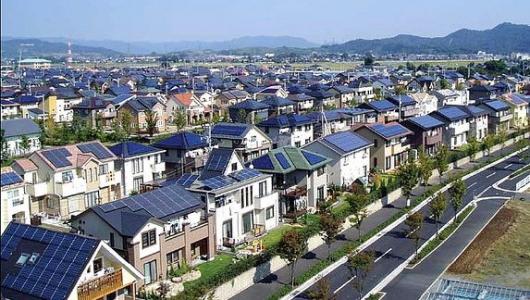 Beaver, PA, June 10, 2014 – June is “bustin’ out all over“ — with renewable energy on full display, just as it will be June 28 at the Clean and Green Energy Fair in Ambridge, PA.
On the last Saturday in June, Beaver County will celebrate the power of solar, wind and geothermal energies – not for somewhere over the rainbow, but for here and now – with energy efficiency and conservation strategies sharing the spotlight.
The Clean and Green Energy Fair will showcase vendors and organizations engaged in creating sustainable energy for everyday life. The Fair will be held from 10 a.m. to 4 p.m. in the Rt. 65 Farmer’s Market parking lot of Saint Mary’s Byzantine Catholic Church, 624 Park Road in Ambridge.
Now is the time for a new look at fossil-fuel alternatives in our homes and communities. As Tom Schuster, senior Pennsylvania representative of the Sierra Club said, “By moving to 100 percent clean energy sources, we’ll create tens of thousands of American jobs and billions of dollars in new investment.”
Randy Francisco, Sierra Club’s Pennsylvania Organizing Representative for the Greater Pittsburgh area, will speak on using Pennsylvania’s Alternative Energy Portfolio Standard, the EPA’s Carbon Standard Rule and legislation to grow renewable energy and resulting jobs. Other speakers will address geothermal and solar energy home resources.
 Everyone is invited to explore the rise of renewable energy and the differences it can make. The Clean and Green Energy Fair will feature free solar snow cones, children’s activities, and – thanks to a donation by Ted Popovich, board of directors’ member of Allegheny County’s Group Against Smog and Pollution (GASP) – an iPad raffle.
Popovich donated the iPad to draw local people to Beaver County’s first-ever renewables energy fair. For sponsors Beaver County Marcellus Awareness Committee and Three Rivers Community Foundation, a strong showing could turn this “first” into a “historic first” that — with or without the chance to win an iPad — is renewable every June.
Date: Saturday, June 28 from 10 a.m. – 4 p.m.
Location: Farmer’s Market Parking Lot (on Rt. 65) of Saint Mary’s Byzantine Catholic church, 624 Park Road, Ambridge, PA 15003
Cost: The fair is free and open to the public. Parking is also free.
Speakers: Randy Francisco, Sierra Club’s Pennsylvania Organizing Representative for the Greater Pittsburgh area.
On February 22, the elected president of Ukraine was overthrown in a coup which was supported by the Obama administration. Since then, the country has been torn apart and violence has escalated. On May 2 in the southern city of Odessa, supporters of the new unelected Kiev government, including members of the violent extremist Right Sector party, surrounded peaceful, unarmed anti-government protestors who had taken refuge in the city’s main union hall. The right-wing crowd then set the union hall on fire, and 46 people died by being burned alive or jumping to their deaths trying to escape.
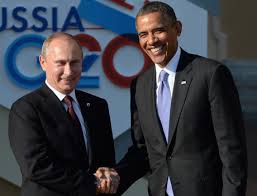 We are troubled by this horrific atrocity, and by the fact that mass murder was committed by burning a union hall. We are concerned about the conflict in Ukraine, by the massing of Russian troops near Ukraine’s eastern border and U.S. and NATO troops and planes in neighboring Poland, Lithuania, Latvia and Estonia, which signal the return of the Cold War and the threat of a much hotter war.
A defining period in the history of UE was our union’s courageous opposition to the Cold War. At the end of World War II there was great hope among union members and other Americans for a continuation of FDR’s New Deal, with progressive social and economic policies including national healthcare, expanded Social Security, and progress against racial discrimination in employment. What we got instead was the anti-union Taft-Hartley Act and the Cold War. Military spending, including the nuclear arms race, continued to trump all other priorities. Local conflicts all over the world were treated as global showdowns between the U.S. and the U.S.S.R. In the name of “fighting communism,” the U.S. sided with the French and British colonial empires against independence movements, and backed many brutal dictators against their own people. The 40-year-long Cold War included some very hot wars – notably Korea and Vietnam. The CIA organized coups that overthrew democratic governments that dared to disagree with the U.S. government or corporations. On the domestic front, the Cold War was a massive attack on civil liberties and an effort to wipe out organizations, including UE, that refused to enlist in the Cold War.
UE said the U.S. government should direct its resources toward making life better for its own people. UE favored negotiations to resolve differences between the U.S. and the Soviets, and to end conflicts such as Vietnam. UE said the arms race robbed human needs on both sides of the Cold War divide. As UE President Albert Fitzgerald often said, “You can’t have guns and butter.”
The Cold War supposedly ended with 1991 breakup of the Soviet Union and the Warsaw Pact, which had been composed of the USSR and its Eastern European allies. A key event was the 1990 agreement between the U.S., West Germany and the Soviet Union allowing the reunification of Germany. In those negotiations, President George H.W. Bush promised Soviet President Mikhail Gorbachev that NATO – the U.S.-led anti-Soviet military alliance – would not expand any further east than Germany.
Yet despite that promise, and despite Russia and its former allies no longer having communist governments, NATO has moved steadily eastward toward Russia. NATO now includes the former socialist states of Hungary, Poland, the Czech Republic, Slovakia, Slovenia, Romania and Bulgaria, as well as three former republics of the U.S.S.R. which border Russia – Lithuania, Latvia and Estonia. Two more former Soviet republics, Ukraine and Georgia, have been promised eventual NATO membership. NATO is now clearly an alliance against Russia, sitting on Russia’s doorstep.
In late 2013 the U.S. began expressing hostility toward Ukrainian President Viktor Yanukovych, and sympathy with the often violent anti-government protestors in Kiev. Yanukovych was not an exemplary leader – we now know that he’d been feathering his own nest – but he was elected in a fair election, and the U.S. supports many governments that are more corrupt and undemocratic than his.
What made Yanukovych a target for regime change was his decision in November to reject harsh loan terms from the European Union (EU) and International Monetary Fund (IMF) – including the kind of pension cuts and austerity that have driven Greece into poverty. Yanukovych instead accepted a more favorable offer of economic aid from Russia. His proposal that Ukraine have good economic relations with both Russia and the EU was rejected by the EU and the U.S., which wanted a Ukrainian government hostile to Russia.
U.S. Assistant Secretary of State Victoria Nuland met in December 2013 with Oleh Tyahnybok, head of the far-right Svoboda Party. In a 2012 resolution the European Parliament had called Svoboda “racist, anti-Semitic and xenophobic” and appealed to democratic parties in Ukraine “not to associate with, endorse or form coalitions with this party.” In May 2013 the World Jewish Congress labeled Svoboda “neo-Nazi” and called for the party to be banned. Svoboada leader Tyahnybok has called for ridding Ukraine of the influence of “the Moscow-Jewish mafia.” Svoboda is also anti-gay, anti-black, and hostile to equal rights for women.
But since the overthrow of Yanukovych, Svoboda holds four cabinet ministries in Ukraine’s “provisional government” (including deputy prime minister.) In a Feb. 4 conversation caught on tape, Nuland and the U.S. ambassador to Kiev discussed who would get which positions in the new government, including cabinet seats for Svoboda.
In Europe since the end of World War II, there has been a political taboo against allowing fascist and neo-Nazi parties into any government. The Obama administration has now broken that taboo and allied our country with fascists in Ukraine. According to German media reports, about 400 elite mercenaries from the notorious U.S. private security firm Academi (formerly Blackwater) are taking part in Ukrainian military operations against anti-government protesters in southeastern Ukraine. News that Vice President Joe Biden’s son Hunter Biden has joined the board of directors of Ukraine’s largest private gas company adds the element of conflict of interest. Obama’s policies toward Ukraine and Russia have significantly increased the chances of military confrontation between the U.S. and Russia, the world’s two nuclear superpowers. This threatens world peace.
It is unclear whether the presidential election conducted on May 25, under conditions of near-civil war, will help to defuse the crisis in Ukraine.
We reaffirm UE’s historic position. We favor peace and friendly, equitable economic relations between nations. We favor negotiations rather than military confrontation to resolve disputes, including this one. We believe the countries that defeated Nazism in World War II, including the U.S. and Russia, should work together against any resurgence of racism, anti-semitism and fascism in Europe.
Bruce Klipple, General President
Andrew Dinkelaker, General Secretary-Treasurer
Bob Kingsley, Director of Organization
May 27, 2014
Continue reading United Electrical Workers Union: US & Russia Should Work Together

LONDON: A new international campaign, Unions4Climate action, has been launched at the World Congress of the International Trade Union Confederation (ITUC) this week. The movement aims to draw attention to the potential of the low carbon economy, with a focus on green job creation.
More than 50 trade unions across the globe are demanding that governments deliver an ambitious climate agreement at the UNFCCC 21st Conference of the Parties (COP21) in Paris next year. The international gathering is the deadline for determining the post 2020 climate framework and widely recognized as a crucial meeting for delivering meaningful climate action.
Józef Niemiec, Deputy General Secretary of the European Trade Union Confederation (ETUC), commented: “The ETUC urges governments to agree to an ambitious and legally binding agreement in Paris next year. A global framework, built on common but differentiated responsibilities, is the cornerstone of the just transition we are calling for.”
The leaders of the unions involved in the campaign are arguing that acting on climate change will lead to an industrial revolution which will create new jobs for the millions of workers they represent.
A recent report from the International Renewable Energy Agency highlighted that 6.5 million people worldwide are employed in the clean energy industry, with solar PV being the main renewable sector of employment. The ITUC believe that with the right policy framework even more jobs could be created.
Pointing to its own research, the ITUC state that by taking action to mitigate climate change, 48 million new jobs could be created in just 12 countries. In the last two years in Germany up to 400,000 new renewable energy jobs have been created, the union highlight. Similarly, data released by the American Solar Foundation, revealed that 23,682 new US solar jobs were added in 2013 giving a growth rate of 19.9% on the comparable figure for 2012.
The unions have said that they will use the new campaign to demand that governments strengthen their climate policies. In addition, Unions4Climate action will facilitate the development of coherent global strategy for delivering an industrial revolution and boosting employment.
“The mission of the trade union movement to ensure jobs, rights and social equality requires that we embrace the cause of a just transition towards sustainable development – a transition that must start now”, Sharan Burrow, General Secretary of the ITUC explained.
The trade unions are the latest cross-border body to voice their support for climate action. Just this week, the CEOs of over 60 leading insurance firms pledged their committment to principles relating to climate change risk.Similarly, health professionals, the Global Climate and Health Alliance (GCHA), used the publication of the IPCC AR5 report to argue that the risks to human health posed by the rise in temperature are now too serious to ignore.
 Dear constituents,
 The natural gas industry and corporations in Pennsylvania continue to make unprecedented profits while our schools close and veterans are without health care. Pennsylvania has the lowest tax rate of any oil and gas producing state in our nation, and we refuse to ask them to pay their fare share!
 Beaver County Blue: Voice of the 17th CD of Progressive Democrats of America