All posts by randyshannon

Ambridge Citizens Meet with Sen. Vogel on Reservoir Protection

Sen. Elder Vogel Meets with Citizens to Protect the Ambridge Reservoir

November 20, 2014

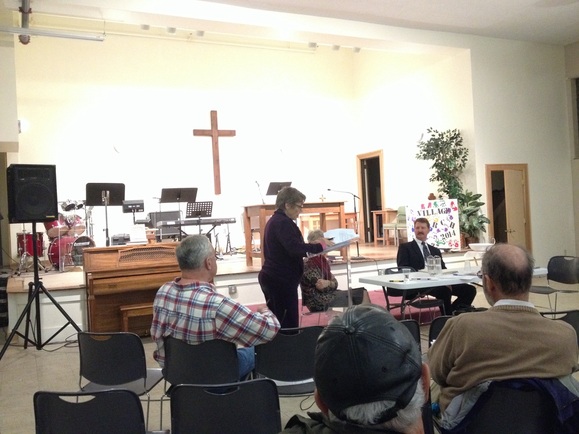
Marcia Lehman addresses concerns with Sen. Elder Vogel.

Rev. Jim Hamilton said a natural gas fracking spill at the Ambridge Reservoir would put thousands of homes, businesses and schools who depend on the water at risk of closure.

“There may be no alternative sources of drinking water for Ambridge, Baden, Harmony Township, Economy, Edgeworth, Bell Acres, Leet Township and Leetsdale,” said Hamilton of Ambridge.

He was one of several from the Citizens to Protect the Ambridge Reservoir (CPAR) who addressed concerns to Sen. Elder Vogel during a discussion about protecting the reservoir from surface drilling, water withdrawals and other risks associated with natural gas fracking.

Vogel, R-New Sewickley, met with constituents Thursday at the Church of the Savior in Ambridge. Leaders of the organization presented Vogel a petition containing more than 4,500 signatures and 66 letters asking to protect the reservoir and watershed.

Marcia Lehman of CPAR pointed out that Republican Sen. Joe Scarnati of Jefferson County was proactive in ending Marcellus drilling operations in the Brockway Reservoir where he gets his drinking water.

Scarnati, the Senate president pro tempore, said in an August news release that he reached out to the state Department of Environmental Protection to express serious reservations with allowing any further drilling at the proposed site or any nearby site that could potentially compromise the reservoir.

“He put a stop to the drilling there immediately with 300 signatures. We’re giving you almost 5,000 signatures,” Lehman said.

Hamilton said the Service Creek Watershed and the Ambridge Reservoir are designated as protected for cold water fishes and specially protected for high-quality water by the state Clean Streams Law.

Vogel told the group he was unaware of what Scarnati did, but agreed he would look into it and talk to the senator.

“Obviously drinking water and water in general is a precious commodity,” Vogel said. “At the same time you also have the private landowners who own the property around the reservoir, so that’s another issue we’ll have to try to deal with at some point in time.”

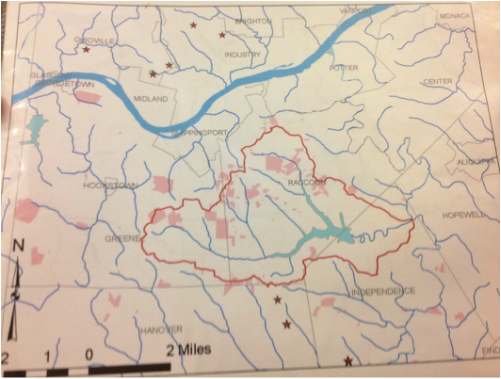
This topical map shows the Service Creek watershed in red and the Ambridge reservoir in blue.


http://www.ambridgeconnection.com/local-news/vogel-meets-with-citizens-to-protect-ambridge-reservoir

This topical map shows the Service Creek watershed in red and the Ambridge reservoir in blue.


Massey CEO Blankenship Indicted for Upper Big Branch Mine

Longtime Massey Energy CEO Don Blankenship Indicted

by Ken Ward, Jr. / West Virginia Gazette Blankenship
Thursday, November 13th, 2014

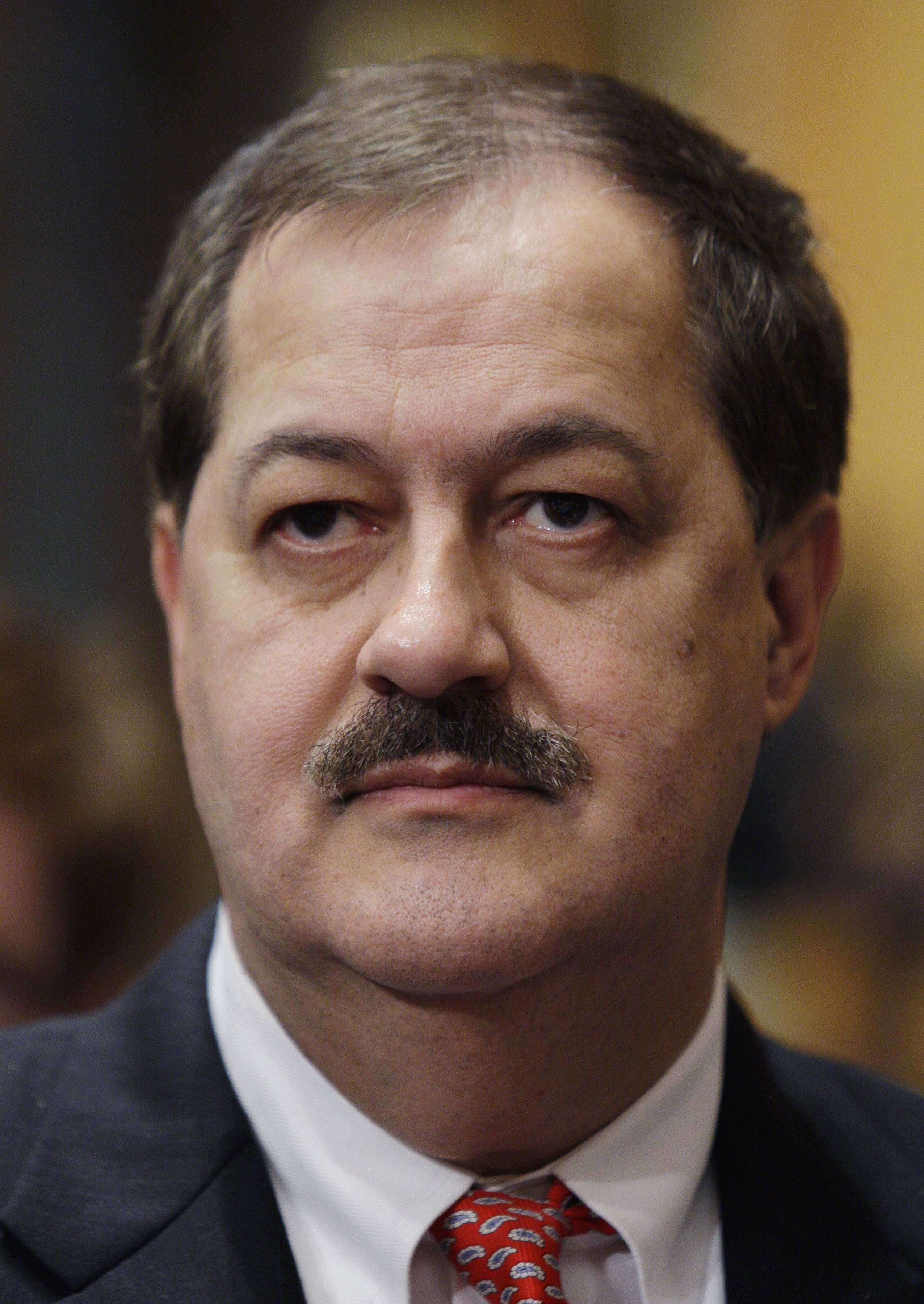
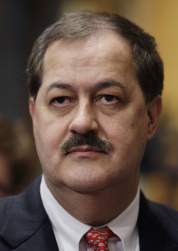
Don Blankenship, the longtime chief executive of Massey Energy, was indicted today on charges that he violated federal mine safety laws at the company’s Upper Big Branch Mine prior to an April 2010 explosion that killed 29 miners.

A federal grand jury in Charleston charged Blankenship with conspiring to cause routine and willful violations of mandatory federal mine safety and health standards at Upper Big Branch during a period from Jan. 1, 2008, to April 9, 2010, U.S. Attorney Booth Goodwin said.

The four-count indictment, filed in U.S. District Court, also alleges Blankenship was part of a conspiracy to cover up mine safety violations and hinder federal enforcement efforts by providing advance warning of government inspections. The indictment also alleges that, after the explosion, Blankenship made false statements to the U.S. Securities and Exchange Commission about Massey’s safety practices prior to the explosion.

“Blankenship knew that UBB was committing hundreds of safety-law violations every year and that he had the ability to prevent most of the violations that UBB was committing,” the indictment states. “Yet he fostered and participated in an understanding that perpetuated UBB’s practice of routine safety violations, in order to produce more coal, avoid the costs of following safety laws, and make more money.”

The four counts charged carry a maximum combined penalty of 31 years’ imprisonment, Goodwin said in a prepared statement. Goodwin declined to comment beyond the prepared statement.

The indictment comes after a more than four-year investigation that began following the mine disaster on April 5, 2010, but expanded to examine a troubled safety record that critics have long argued put coal production and profits ahead of worker protections.

Assistant U.S. Attorney Steve Ruby has led an unprecedented government effort to link major safety lapses at Upper Big Branch and other Massey mines up the corporate ladder to Blankenship, who was known for keeping a firm grip on every aspect of Massey’s operations during nearly two decades at the company’s helm.

Blankenship has previously denied any wrongdoing, insisted that Massey put the safety of its miners first, and promoted his theory that the Upper Big Branch explosion was fueled by an uncontrollable flood of natural gas that inundated the Raleigh County mine.

“If they put me behind bars … it will be political,” Blankenship wrote in a May 2013 article posted on a blog he has used to defend his record and attack his critics.

In a statement issued late this afternoon, Blankenship’s attorney, William W. Taylor III, said, “Mr. Blankenship is entirely innocent of these charges. He will fight them and he will be acquitted.”

“Don Blankenship has been a tireless advocate for mine safety,” Taylor said. “His outspoken criticism of powerful bureaucrats has earned this indictment. He will not yield to their effort to silence him. He will not be intimidated.”

Two government and two independent investigations, though, blamed the Upper Big Branch deaths on a pattern by Massey Energy of violating federal standards concerning mine ventilation and the control of highly explosive coal dust, both of which set the stage for a small methane ignition to turn into a huge coal-dust-fueled explosion.

Those investigations all generally agreed that the explosion erupted when the mine’s longwall machine shearer cut into a piece of sandstone. The resulting spark, investigators said, ignited a pocket of methane gas. Investigators concluded that worn-out bits on the cutting shearer contributed to the explosion, while missing water sprays allowed the ignition to spread. Illegal levels of coal dust had not been cleaned up, providing fuel that sent the blast ricocheting in multiple directions throughout more than two miles of underground tunnels, investigators said.

“While violations of particular safety standards led to the conditions that caused the explosion, the unlawful policies and practices implemented by [Massey] were the root cause of the tragedy,” the U.S. Mine Safety and Health Administration concluded in its report on Upper Big Branch. “The evidence accumulated during the investigation demonstrates that [Massey] promoted and enforced a workplace culture that valued production over safety, including practices calculated to allow it to conduct mining operations in violation of the law.”

Blankenship invoked his Fifth Amendment rights and refused to answer questions from MSHA, the state Office of Miners’ Health, Safety and Training and an independent team appointed by then-Gov. Joe Manchin to probe the Upper Big Branch disaster.

Already, Goodwin’s investigation has produced four convictions — including plea agreements with an Upper Big Branch superintendent and a Massey unit president — and a more-than-$200-million settlement with Alpha Natural Resources, which bought Massey in 2011, that required Alpha to fund major safety improvements and create a foundation to support mine safety and health research.

For years, Blankenship has been not only a powerful voice in the coal industry, but a power broker whose involvement in West Virginia politics could cut both ways.

At a time when a major verdict against Massey was headed for the state Supreme Court, his personal funds helped defeat then-Justice Warren McGraw’s re-election effort and his personal friendship with Blankenship likely helped cost then-Justice Spike Maynard his seat on the court. Republican operatives who helped engineer their party’s takeover of both houses of the West Virginia Legislature in this year’s election got their start working for Blankenship-funded political efforts.

Less than a year after the mine disaster, Massey announced in December 2010 that Blankenship would retire from the company at the end of the year. The following month, Alpha announced its plans to buy Massey.

Reach Ken Ward Jr. at kward@wvgazette.com, 304-348-1702 or follow @kenwardjr on Twitter.

Labor-Community Push Wins Wage Hike in MN

Minimum-wage victory showcases potential of labor-community partnerships

Surrounded by legislative supporters and members of the Raise the Wage Coalition, Minnesota Gov. Mark Dayton signed a bill increasing the minimum wage to $9.50 by 2016 – and indexing it to inflation.

On April 14, Gov. Mark Dayton signed a bill gradually raising Minnesota’s minimum wage to $9.50 per hour by 2016 and indexing the wage so that it keeps pace with inflation beginning in 2018.

The bill signing was a victory for more than 350,000 workers statewide who are expected to see a raise as a result of the bill. But it also marked a victory for the coalition of unions, religious groups and other non-profits that united to push the minimum-wage hike across the finish line.

“We’ve seen what an impact we can make when we come together,” Minnesota AFL-CIO President Shar Knutson said after the bill-signing ceremony in the Capitol rotunda. “It felt good.”

The Minnesota AFL-CIO, the state’s largest labor federation, was one of several union groups that took a leadership role in the Raise the Wage Coalition, which united more than 70 diverse organizations behind a minimum-wage increase.

After DFL majorities in the House and Senate failed to agree on a minimum-wage bill last spring, unions and labor federations pledged to invest energy, resources and political capital into seeing a meaningful increase pass before the 2014 session gaveled to a close. They made the commitment despite the fact, as Knutson pointed out, “the vast majority of Minnesota’s union workforce makes well above the minimum wage.”

“The labor movement is committed to improving the lives of all working people,” Knutson said. “Like Paul Wellstone said, ‘We all do better when we all do better.’”

RaisetheWageWeb_0A step toward ‘enduring partnerships’

Unions’ leadership role in the Raise the Wage Coalition reflected local action on a nationwide directive put forth at the AFL-CIO Convention in Los Angeles last year. Known as “Resolution 16,” the directive calls on state and local labor federations to build “enduring partnerships” with community groups that share values and goals with the labor movement.

With the minimum-wage campaign, Minnesota unions backed up the AFL-CIO’s talk with action, said St. Paul Regional Labor Federation President Bobby Kasper, whose office coordinated 96 volunteer shifts on behalf of the minimum-wage push this year.

“Building a movement for economic justice isn’t possible unless we look beyond our own unions and reach out to our allies in that struggle,” Kasper said. “Whether it’s fighting Right to Work or defending prevailing wage, our position will only be stronger if we have members of the broader community behind us, but we can’t expect their support if we don’t step up when they need us.”

Continue reading Labor-Community Push Wins Wage Hike in MN

Progressive Democrats Call for Executive Action on Wages

Progressive Dems: Obama Should Push Economic Executive Actions After Midterm Losses

Posted: 11/10/2014 2:04 pm EST Updated: 4 hours ago
RAUL GRIJALVA
 WASHINGTON — Republican leaders have warned President Barack Obama that pursuing more executive actions after last week’s midterm drubbing would be like playing with fire. But Rep. Raul Grijalva (D-Ariz.), co-chair of the Congressional Progressive Caucus, said on Monday that unilateral action by the president on economic issues is more necessary than ever.

“The president is in a pivotal position to go assertively with executive orders to create a political balance and an economic balance,” Grijalva told reporters on a conference call. “I’m one member that urges them to use that as a balancing tool and a leadership tool in these next two years.”

Grijalva and his fellow caucus co-chair, Rep. Keith Ellison (D-Minn.), are putting their weight behind two proposals in particular: one executive order that would give federal contracting preference to firms that pay a living wage of $15 and provide basic benefits to workers, and another guaranteeing that contractors wouldn’t interfere with worker efforts to unionize. Branded as “More Than the Minimum,” the proposals are being pushed by Good Jobs Nation, a labor group backed by the Change to Win union federation, and other progressive allies.

Ellison and Grijalva, along with Good Jobs Nation, already have a couple of executive-action victories under their belts. They successfully pressured the White House to institute two executive actions that were signed by the president earlier this year — onesetting a minimum wage of $10.10 for federal contractors, and another that would effectively bar firms that have committed wage theft against their workers from receiving federal contracts.

Most of the president’s unilateral moves on the economy have been panned by congressional Republicans. After Democrats were trounced in elections around the country last week, House Speaker John Boehner (R-Ohio) warned Obama against formulating executive action on immigration reform, saying he was “going to burn himself if he continues down this path.”

Grijalva suggested that the president and fellow Democrats would burn themselves if they didn’t. The way for Democrats to regain power, the congressman argued, is by aggressively pursuing liberal economic policies that have broad support, like raising the minimum wage and extending sick leave to more workers. Despite the Republican gains, ballot initiatives based on those issues passed by wide margins last week, including in red states.

“The American people, I think, voted against the lack of an economic agenda for working families, against not having a clear vision of what we want and where the government should be in promoting income equality,” Grijalva said of the Democratic loss.

Under the proposal pushed by Grijalva on Monday, the White House would issue new guidelines that give preference to firms with higher labor standards in the federal procurement process. Such rules only apply to contracts involving federal money, rather than the private sector at large, but left-leaning administrations have often used procurement rules as a way to set standards in the broader economy.

Robert Borosage, co-director of the progressive Campaign for America’s Future, said on the call with Grijalva that Obama ought to continue promoting his wider agenda through his power of procurement rules.

“President Obama has already established his authority over federal procurement,” Borosage said. “Now he can and should take another bold step. He can put the government on the side of working people and good employers, rather than favoring exploitative employers.”

ILWU Slowdown Squeezes Maritime Owners

Work Slowdown at Busiest U.S. Port Prompts Plea to Obama

Portside Date:
November 10, 2014
Author:
Lynn Doan
Date of Source:
Friday, November 7, 2014
Bloomberg

U.S. retailers appealed to President Barack Obama [1] to intervene in contract negotiations between West Coast dockworkers and maritime companies after a work slowdown spread to the nation’s largest container hub ahead of the holiday shopping season [2].

The National Retail Federation [3], the world’s largest retail trade association, asked Obama to step in and ensure that tensions between the International Longshore and Warehouse Union and the Pacific Maritime Association, representing terminal operators and shipping lines, don’t “escalate to a complete shutdown of West Coast ports.”

Goods destined for holiday shoppers are being unloaded at 29 ports from San Diego [4] to Bellingham, Washington [5], by workers who have been without a contract since July 1. The maritime association said a slowdown that began in Seattle and Tacoma spread to Los Angeles [6] and Long Beach [7], the busiest port complex in the U.S. Those ports already face congestion from equipment shortages and rail delays.

“This is adding to the already substantial list of issues contributing to congestion,” Bruce Chan, associate transportation and logistics analyst at Stifel, Nicolaus & Co., said yesterday by telephone from Baltimore. “We’re OK as far as items on the shelves are concerned. What we’ll probably see is some cost pressure for shippers and retailers potentially filtering down to consumers.”

The maritime association says the longshore union refused to supply workers to operate so-called yard cranes that place cargo containers on trucks and railcars.

20,000 Dockworkers

The slowdown [8] came after the maritime association responded to a union proposal, Wade Gates, a San Francisco-based spokesman for the shippers, said yesterday by e-mail, without elaborating. Negotiations have been under way since May to replace a six-year contract that expired July 1.

Craig Merrilees, a spokesman for the 20,000-member union in San Francisco, said the two sides met for negotiations yesterday and the day before.

“That’s the way to get the problem solved and the contract resolved so that everything can get back on track,” Merrilees said. “The problems in Southern California [9] with congestion and mismanagement go back months and years, and the industry needs to address those self-inflicted causes and not just point fingers at the union.”

‘Crisis Levels’

The retailers, joined by the Consumer Electronics Association [10] and Toy Industry Association, said in a letter to Obama that congestion at the ports has reached “crisis levels” and described the potential impact on businesses as catastrophic.

In 2002, President George W. Bush [11] invoked the Taft-Hartley Act to obtain a court order to reopen the ports after a 10-day lockout when contract talks broke down. Obama’s press office didn’t immediately respond to telephoned and e-mailed requests for comment.

The Port of Los Angeles accounted for 31.2 percent of tonnage entering the West Coast in 2013, while the neighboring Port of Long Beach accounted for 29.7 percent, according to a report [12] by the maritime association.

Phillip Sanfield, a spokesman for the Port of Los Angeles, declined yesterday to comment on the maritime group’s assertions. Art Wong, a spokesman for Long Beach, said the number of ships waiting to anchor at the port rose by two yesterday.

On Nov. 5, “we only had one ship waiting and, for a few days before that, we had none,” Wong said by telephone. “I don’t know if it’s related to this. I was hoping it was going to be just a one-day thing, until I saw this thing about a slowdown.”


Minimum Wage Hike Passes in 4 Red States

Unbundling the Democratic Agenda

 http://go.bloomberg.com/market-now/2014/11/06/unbundling-democratic-agenda/

Fast food workers on strike for a $15 an hour wage.

Is it a coincidence that all four states that voted to raise the minimum wage yesterday are Republican strongholds? At least one of those states (Arkansas) and most likely two (Alaska, where Mark Begich is behind but has not conceded) are replacing Democratic incumbents with Republican senators. Nebraska, where Republican Ben Sasse was elected to the Senate with 64.8 percent of the vote, and South Dakota are among the reddest states in the country.

Yet all four voted to raise their minimum wage, three of them by margins that could fairly be described as overwhelming. Moreover, they raised those minimum wages a lot, to levels that more liberal states would envy. One useful way to look at it is to consider not only the new minimum wage numbers, but place them in a national context by adjusting them withgovernment data on the cost of living:

Alaska, January 2016 minimum: $9.75
adjusted for cost of living: $9.10
Arkansas, January 2017 minimum: $8.50
adjusted for cost of living: $9.70
Nebraska, January 2016 minimum: $9.00
adjusted for cost of living: $9.99
South Dakota, January 2015 minimum: $8.50
adjusted for cost of living: $9.64

For comparison, the $10.00 an hour minimum wage that is set to kick in for California comes to $8.86 adjusted for local prices. In other words, Nebraska — Nebraska — will have the highest real minimum wage in the country. The National Employment Law Project, a supporter of the initiative, estimates the $1.75 an hour minimum wage boost will directly affect 143,000 workers in a state of 1.9 million and raise total wages by $117 million a year.

Two lessons might drawn here. The obvious: There may be support out there in more liberal states for substantially higher minimums. If $9.00 can pass in Nebraska, it’s worth asking if, say, $11.25 — roughly the same in real-dollar terms — or even higher can pass in California.

The less obvious lesson: Political parties in a losing position can succeed by unbundling their policies and try to pass the most marketable parts of their agenda without the legislature.
By and large, political agendas are sold like cable packages, as a big take-it-or-leave-it raft of policies. Much as with the cable packages, the customers (ie. voters) take them while gnashing their teeth and complaining that there are no other options.

In this case, Democrats, seeing no market for the full party package have had to take a good look at the policies they are selling and pitch thee most attractive ones a la carte via ballot initiatives. By definition all ballot initiatives take issues directly to the voters. What’s different here from marijuana or gun control votes is that, despite the support of a few Republicans like Mitt Romney, the minimum wage is a central Democratic issue, and the campaigns were financed mainly by the party’s core contributors.

In Nebraska $600,000 of the $1.2 million cost of the minimum wage initiative (big h/t to the indispensable Ballotpedia) was underwritten by Dick Holland, who’s been called the Nebraska Democratic Party’s “most generous and dependable contributor.” In Arkansas thebiggest contributor was the Interfaith Alliance, a consortium of Democratic-leaning religious groups.

The reddest states are the places where the Democrats have the most incentive to unbundle their policies and sell them through ballot initiatives, and so they’ve wound up passing aggressive increases in the minimum wage. This is not a totally new phenomenon — for many years Republicans in California went directly to voters with tax cuts. What’s new is just how effective it has proven to be. Fully 65 percent of Arkansas voters and 59 percent of Nebraska voters marked the ballot for higher minimum wages. So what percent may vote for other especially palatable slices of the Democratic agenda, like expanded health care for poor children? We may get to find out in 2016.

Credit Unions’ PAC Finances Mitch McConnell Campaign

Oppose Credit Unions’ Support for Politicians Who Oppose Working Families’ Interests

by Randy Shannon

Most of our credit unions are members of CUNA – the Credit Union National Association. CUNA’s political action committee has donated $20,000 to right wing Republican Senator Mitch McConnell. They plan to spend another $300,000 in radio and TV adds for McConnell in hopes that he will become Senate Majority leader.

McConnell is in a tight race against Democrat Alison Grimes in Kentucky.

Please sign and circulate this petition. Contact your credit union officers and ask them to pass a resolution against this expenditure of our money. 

Sign Petition HERE


McConnell Bid Earns $300K CULAC Support

Mitch McConnell

CUNA told CU Times on Thursday that its political action committee, CULAC, filed notice with the FEC of a $300,000 independent expenditure on behalf of Sen. Mitch McConnell (R-Ky.) in his re-election campaign.

McConnell is locked in a tight race against Kentucky Secretary of State Alison Lundergan Grimes (D-Ky.). If the current minority leader wins his midterm bid, and Republicans win a majority of Senate seats, McConnell would presumably become majority leader, setting the Senate’s agenda.

CULAC, CUNA’s PAC, has already donated $10,000 to McConnell’s campaign as well as $10,000 to his leadership PAC, according to Trey Hawkins, CUNA vice president of political affairs.

NAFCU’s PAC contributed $7,500 to McConnell, according to NAFCU Vice President of Political Affairs Katie Marisic.

CUNA plans to spend approximately $274,000 on television advertisements for McConnell and $25,000 in radio ads.

A CUNA spokesperson told CU Times they have not planned independent expenditures for additional candidates at this time.

PA Auditor General: DEP Fails to Protect Our Water

Ambridge Reservoir Arial Photo by Steve White

Auditor General Issues Critical PADEP Audit

Pennsylvania Environmental Organizations Applaud Investigation’s Goals

Report’s findings mirror concerns raised by Pennsylvanians dealing with water contamination

Harrisburg, PAPennsylvania’s Auditor General office released a highly anticipated audit of the Department of Environmental Protection’s performance regarding shale gas development today. 

Auditor General Eugene DePasquale stated that the audit “…shows that the meteoric growth of the shale gas industry caught the Department of Environmental Protection unprepared to effectively administer laws and regulations to protect drinking water and unable to efficiently respond to citizen complaints”.

The report is available here:

 http://www.delawareriverkeeper.org/resources/Reports/PA%20AG%20audit%20DEP072114.pdf

For the last 18 months, environmental and citizens groups have been in touch with DEP regarding our grave concerns about procedures and policies for water quality monitoring, testing, and response in the face of the shale gas boom. It has long been clear that:

  • they lack transparency;
  • result in the withholding of vital data from affected households and the public;
  • force residents to undergo prolonged exposure to contaminants that can impact health;
  • and delay action necessary to correct pollution and ensure that operators provide clean drinking water to those who need it. 
  • The audit confirms that basic reforms are needed to address the harms communities are experiencing from shale gas development in the Commonwealth.

“The Auditor General’s inspection is not just a capture of deficiencies within the agency in present time but a call to the future to take actions that will improve agency policies & operations so that public confidence in the agency can be restored & we can better protect drinking water & public health”, said Steve Hvozdovich, Marcellus Shale Policy Associate, Clean Water Action.

“For countless Pennsylvanians in the Marcellus and Utica, the Auditor General’s findings come as no surprise. His frank assessment of the deficiencies within the DEP accurately tells the story of an agency that was unprepared to deal with shale gas development’s impacts on our water supply and, by extension, our communities. The tenor of the agency’s response included in the report is discouraging in its denial of many of the problems the Auditor General has cited and its misguided belief that it has satisfactorily addressed some of the other issues, particularly those dealing with transparency and public access to critical data,” said Karen Feridun, founder of Berks Gas Truth.


Continue reading PA Auditor General: DEP Fails to Protect Our Water

Students Plan City-wide Strike to Defend Philly Schools

PHL Students Announce Plans to Strike as Mayor Praises SRC

Students vow to be truant until SRC restores union’s contract.

October 7, 2014
By Flood the Drummer
CLICK HERE to read "PHL Students Announce Plans to Strike as Mayor Praises SRC."By Christopher “Flood the Drummer®” Norris 10.7.14: Philadelphia – (Politics): The reason the Philadelphia School Reform Commission quietly voted to cancel their labor contract with the Philadelphia Federation of Teachers yesterday was to push them into contributing to their healthcare and reinvest the savings back into the classroom, particularly ensuring nurses and counselors would be on sight and that school buildings are stocked with the appropriate supplies, like pencils, pens and toilet paper.

But in response to the news, students didn’t cheer and applaud the five-member, state controlled board, instead they announced their intentions to strike on Wednesday, October 8th 2014, and every day after that until their teacher’s contracts are restored. As organizers noted on their Facebook event page, the peaceful protest(s) will include students arriving to their schools, but not entering the buildings.

City Hall nor school district headquarters have responded to the threat of widespread truancy, however, the mayor did express his support for the SRC and hopes others can see this for what it is: “another consequence of this horrible situation our schools have had to face year after year.”

Mr. Nutter, in his statement which was released this afternoon, brings attention to Principal Linda Carroll of Northeast High School who has a operating budget that breaks down to $5 a student.

“That’s inexcusable,” said Mayor Nutter, who noted he was pleased that Dr. Hite has chosen to reinvest the savings in schools.

Mr. Nutter wants the PFT and the School District back at the negotiating table, as does PFT President Mr. Jerry Jordan and his attorneys. Mr. Jordan yesterday said the last proposal to cross the table was from the union, and they’re waiting on the district to respond.

In the meantime, the students in Philadelphia – who all this political maneuvering is allegedly for – are organizing themselves in support of the teacher’s union and hope their voices and opinions will one day matter as much as politicians and their appointees