AFL-CIO Suspends Campaign Donations to Stop Trade Deal

AFL-CIO Suspends Political Contributions to Focus on Trade Fight Against White House

Mar 11, 2015 2:43 PM EDT
The labor organization says it will focus on fighting the White House over President Obama’s trade deals.
trade protester

A protester makes her case against the Trans-Pacific Partnership during a Senate hearing on the trade deal.

The AFL-CIO, which has spent heavily to support Democrats at the ballot box, said Wednesday it was freezing its political-action committee donations to federal candidates so it could focus on upcoming trade fights.

The labor group will fight trade deals with countries in the Pacific Rim that the White House has been pushing. Such deals, the organization said in a February statement, have promised higher wages and bigger markets to American workers but instead resulted in jobs being sent overseas.

“U.S. trade deals—from NAFTA and CAFTA to Korea and Colombia—form a mountain of broken promises made to workers,” the statement said.

President Obama, who twice received endorsements from the AFL-CIO, has faced resistance from his own party on the deals, including from Representatives Keith Ellison and Rosa Delauro and Senators Elizabeth Warren, Sherrod Brown, and Bob Casey.

“I have real concerns about it,” Casey told Bloomberg on Wednesday. “I just look at this from the perspective of Pennsylvania: We seem to be getting the short end of every stick after each trade agreement is entered into.”

Although GOP congressional leaders support the deals, conservative Republicans have expressed concerns that negotiating the trade deal would mean extending to the president more power than they would like because he is requesting authority to “fast-track” the deals, meaning Congress could only vote on them but not amend them.

“For Congress to cede oversight on such a sweeping agreement could have grave implications,” freshman Representative Steve Russell, an Oklahoma Republican, wrote on Wednesday in theHill.

AFL-CIO EXECUTIVE COUNCIL LETTER URGES CONGRESS TO STAND WITH WORKERS BY OPPOSING FAST TRACK

The labor movement will be closely monitoring how members of Congress vote on a forthcoming Trade Promotion Authority bill also known as “Fast-Track”. In a letter from the national AFL-CIO Executive Council to members of Congress, which you can view HERE, national union leaders expressed strong opposition to this bill, which would shut the public out of major trade negotiations that impact American wages and jobs as well as undermine global working conditions, environmental standards, and labor rights.

In addition to this letter, the AFL-CIO Executive Council agreed to a proposal to suspend political contributions to lawmakers until after the Fast-Track vote in Congress. According to a story by Press Associates, Inc. (PAI), union leaders also agreed that lawmakers’ votes on Fast-Track would be an important factor in determining future financial support for candidates.

Fast-Track is a reckless and undemocratic policy that allows for the authorization of trade deals with a simple up-or-down vote. This process has resulted in one-sided trade deals like NAFTA and CAFTA that have cost our country millions of jobs, reduced wages, and suppressed working standards around the world in order to clear the way for massive corporate profits. President Obama and Congressional leaders are now seeking to use Fast-Track authority to pass an equally destructive trade deal call the Trans Pacific Partnership (TPP) which you can learn more about HERE. You can also take action now by sending a message asking your members of Congress to oppose Fast-Track.

The message being sent by the national labor movement to Congress is clear: Fast-Track trade deals mean fewer jobs, lower wages, and a declining middle class. Members of Congress who are committed to strengthening the middle class through good jobs and fair trade must stand up to oppose Fast-Track.

2016’s Untold Story: How The Election Could Bring A New Wave Of Progressive Warriors


While the presidential contest consumes much of our attention, down-ballot races could power a liberal revival

By Luke Brinker
Progressive America Rising via Salon.com

March 10, 2015 – As America marches inexorably toward a presidential election that will almost certainly feature another Clinton, possibly pitted against yet another Bush, a sense of resignation and fatalism has taken hold among many observers on both the progressive left and the anti-establishment right.

While Jeb and Hillary would trade barbs on such perennial wedges issues as abortion and same-sex marriage, and Clinton may be more supportive than Bush of what passes for a social safety net in this country — just don’t mind that bit about ending welfare as we knew it, and try not to focus on that pesky vote for bankruptcy “reform” — neither Wall Street-friendly candidate poses a threat to the plutocratic powers that be. Indeed, the masters of the universe can’t quite decide which of the two they’d prefer to see elected. Either way, they rest assured, they win.

Dispiriting as the coming national contest can be, however, it should not obscure one of the less-discussed dynamics of the 2016 elections: Across the country, a crop of unapologetically progressive candidates promises to infuse a new populist energy into the fight for the U.S. Senate, and may well transform the terms of debate within a Democratic Party that has spent the better part of the past three decades reconciling itself to the Reagan Revolution and embracing neoliberalism.

Rep. Donna Edwards (D-The Elizabeth Warren Wing) is the latest progressive to toss her hat into the Senate ring, announcing today that she will seek the seat being vacated by Maryland Democrat Barbara Mikulski. Though she has served in Congress for six years now, Edwards is fundamentally an insurgent: The community activist won her seat after toppling a hawkish, centrist incumbent in the Democratic primary, and as a member of the Congressional Progressive Caucus and the Populist Caucus, she’s been at the forefront of the effort to move the Democrats leftward on issues like austerity, a living wage, foreign policy, and civil liberties. Befitting her congressional service, Edwards plans to run as an unabashed progressive populist.

“The corporate interests are gonna come at me with all their money,” Edwards tells voters in her announcement video. “But if you’ll join me in this fight there’s no way we can’t win. and when I step into Barbara Mikulski’s shoes as your next senator, you’ll always know where I stand — with you.”

Edwards won’t enjoy a clear Democratic field: Fellow Rep. Chris Van Hollen has already launched his bid for Mikulski’s seat, and he has secured the backing of Senate Minority Leader Harry Reid.

Though Van Hollen has put forth some worthy proposals on economic issues, he’s hardly the most progressive nominee Democrats could field in a race their candidate is almost certain to win: Liberals haven’t forgotten, for instance, that he backed the Simpson-Bowles deficit reduction framework, which would have cut Social Security benefits. Edwards, by contrast, supports Sen. Warren’s proposal to expand the program. The congresswoman has also staked out more civil libertarian positions than Van Hollen; whereas she supported the Amash-Conyers amendment to overhaul the National Security Agency’s surveillance practices, Van Hollen voted against it.

While the Edwards-Van Hollen contest sets up a potentially epic clash, former Wisconsin Sen. Russ Feingold is unlikely to face any serious Democratic challengers as he vies to reclaim his old job next year. Feingold recently stepped down from his role as an African envoy for the State Department, stoking speculation that he’ll seek a rematch with Sen. Ron Johnson (R-WI), the man who ousted him in the 2010 Tea Party wave election. The former senator has done nothing to discourage such speculation, pointedly referring to his “once, current, and I hope future chief of staff” in his final State Department speech and planning a “listening tour” of his state.

Feingold’s return would mark a particularly sweet victory for progressives, whose 2010 defeat ranked among the most devastating blows for Democratic liberals. (Continued)

Continue reading 2016’s Untold Story: How The Election Could Bring A New Wave Of Progressive Warriors

Trade Unions Condemn US Sanction of Venezuela

Venezuela: ITUC Criticises US “National Security” Decision

The ITUC has strongly criticised a US decision to declare Venezuela a “risk to national security and foreign policy”, as diplomatic relations between the two countries deteriorate further.

Sharan Burrow, ITUC General Secretary, said, “The US faces real threats to national security on many fronts and from within many countries, but there’s no evidence that Venezuela is one of them. Allegations of human rights abuses and corruption made by the US against seven Venezuelan officials should be dealt with according to the rule of law, and not trial by media. We urge both the US and Venezuela to accept the jurisdiction of the Inter-American Court on Human Rights which was established for just this kind of situation. They should also respect the role of the Inter-American Commission on Human Rights.”

UNASUR, the regional government grouping, has been trying to re-start dialogue between the Venezuelan government and opposition, with allegations of opposition efforts to mount a coup and counter-criticism of the government’s crackdown on the opposition dominating Venezuelan politics in recent months.

During a visit to Caracas last week, UNASUR Secretary General Ernesto Samper was reported as saying “With the evidence of U.S. meddling presented us by President Maduro, we want to emphasize that all UNASUR nations, without exception, reject any attempts, either internal or from abroad, to destabilize Venezuela’s democracy. With the upcoming parliamentary elections in Venezuela, we believe it is the best scenario for both political forces to express their political differences and sort out the controversies.”

Victor Baez, General Secretary of the ITUC Regional Organisation for the Americas, TUCA, said, “Sanctions from outside will not solve the internal problem in the country and will contribute to worsening it. The way out of the problem will be through dialogue and respect of the democratically elected authorities.”

http://www.ituc-csi.org/

47 Republican Senators Violate Logan Act

ztvxxvWE PETITION THE OBAMA ADMINISTRATION TO:

File charges against the 47 U.S. Senators in violation of The Logan Act in attempting to undermine a nuclear agreement.

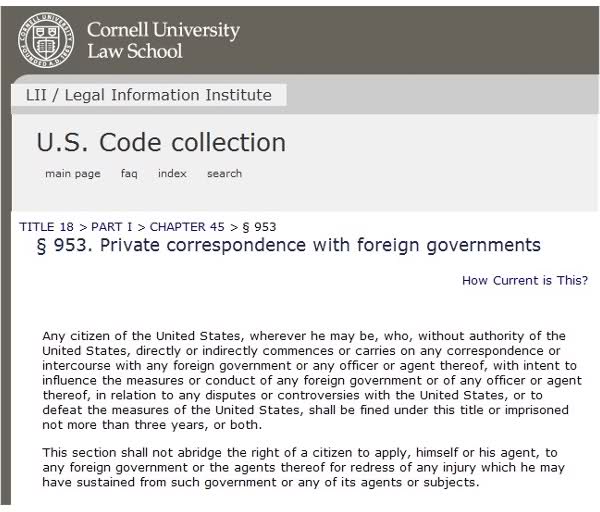
On March 9th, 2015, forty-seven United States Senators committed a treasonous offense when they decided to violate the Logan Act, a 1799 law which forbids unauthorized citizens from negotiating with foreign governments. Violation of the Logan Act is a felony, punishable under federal law with imprisonment of up to three years.

At a time when the United States government is attempting to reach a potential nuclear agreement with the Iranian government, 47 Senators saw fit to instead issue a condescending letter to the Iranian government stating that any agreement brokered by our President would not be upheld once the president leaves office.

This is a clear violation of federal law. In attempting to undermine our own nation, these 47 senators have committed treason.

Sign here.

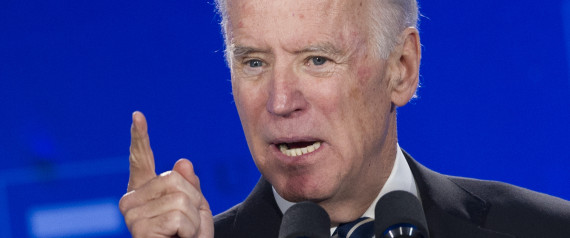
Joe BidenWASHINGTON — Vice President Joe Biden is furious.

Biden, who also serves as president of the Senate, Monday night blasted Senate Republicans in a long, angry statement for their letter to Iran’s leaders, which he described as “beneath the dignity of an institution I revere.”

Forty-seven Republicans on Sunday wrote directly to Tehran to suggest that any nuclear deal with the Obama administration would not be constitutionally binding because a future president or Congress could take steps to revoke it. Biden called the move an unprecedented affront “designed to undercut a sitting president.”

“In thirty-six years in the United States Senate, I cannot recall another instance in which Senators wrote directly to advise another country — much less a longtime foreign adversary — that the President does not have the constitutional authority to reach a meaningful understanding with them. This letter sends a highly misleading signal to friend and foe alike that that our Commander-in-Chief cannot deliver on America’s commitments — a message that is as false as it is dangerous,” Biden said in a statement released by the White House.

“The decision to undercut our President and circumvent our constitutional system offends me as a matter of principle. As a matter of policy, the letter and its authors have also offered no viable alternative to the diplomatic resolution with Iran that their letter seeks to undermine,” he added.

The kind of executive agreements to which Biden refers are a consistent feature of U.S. foreign policy important for purposes like basing U.S. troops abroad, protecting those soldiers from prosecution in foreign countries and enabling intelligence and defense cooperation with other governments. They have historically been upheld by U.S. courts.

Biden, a longtime senator and former chairman of the Senate Foreign Relations Committee, also criticized the author of the letter, freshman Sen. Tom Cotton (R-Ark.), for willfully sabotaging the negotiations. Cotton admitted as much at a conservative conference in January.

“If talks collapse because of Congressional intervention, the United States will be blamed, leaving us with the worst of all worlds,” Biden argued. “Iran’s nuclear program, currently frozen, would race forward again. We would lack the international unity necessary just to enforce existing sanctions, let alone put in place new ones. Without diplomacy or increased pressure, the need to resort to military force becomes much more likely — at a time when our forces are already engaged in the fight against ISIL.”

Iranian Foreign Minister Javad Zarif dismissed the letter as a “propaganda ploy” on Monday. “I wish to enlighten the authors that if the next administration revokes any agreement ‘with the stroke of a pen’ … it will have simply committed a blatant violation of international law,” he said in a statement.

http://www.huffingtonpost.com/2015/03/09/joe-biden-iran-letter-republicans_n_6836146.html

Anniversary March Commemorates Selma, Stresses the Importance of Voting

By Justin Criado

Beaver County Times

March 9, 2015 – BEAVER FALLS — Upwards of 100 people marched from New Brighton to Beaver Falls on Sunday afternoon to commemorate the 50th anniversary of "Bloody Sunday," which took place March 7, 1965, in Selma, Ala., as civil rights activists marched to the state capital of Montgomery for voting rights.

"Things like this sparks into the people to get out there and vote, and that we have a chance to get out there and make a difference," said Abe Askew, of Aliquippa.

Askew believed that Sunday’s march and similar acts of empowerment can have positive impacts on people and communities alike, saying he will spread the word regarding the importance of voting.

"(I’ll tell) all the people that I know from Aliquippa and it’ll go from here to there," Askew said. "It goes into a stream and a stream into a river."

The march began at New Brighton’s Townsend Park, across from the borough building at Third Avenue and Sixth Street, and crossed the bridge over the Beaver River to Beaver Falls, before concluding at Beaver Falls Memorial Park at Sixth Avenue and 11th Street, where several guest speakers addressed the crowd, including event organizer Olivia Ryan.

Ryan, a graduate of Beaver Falls High School and Kent State University, decided to organize the event after a panel discussion on law, race and the community last weekend at Geneva College. (Continued)

Continue reading Anniversary March Commemorates Selma, Stresses the Importance of Voting

U.S. Geological Survey: Fracking Waste Is the Primary Cause of the Dramatic Rise in Earthquakes

By Jen Hayden
Beaver County Blue via DailyKOS

Feb 23, 2015 – The U.S. Geological Survey has backed-up what scientists have been suggesting for years–that deep injection of wastewater is the primary cause of the dramatic rise in detected earthquakes:

    Large areas of the United States that used to experience few or no earthquakes have, in recent years, experienced a remarkable increase in earthquake activity that has caused considerable public concern as well as damage to structures. This rise in seismic activity, especially in the central United States, is not the result of natural processes.

    Instead, the increased seismicity is due to fluid injection associated with new technologies that enable the extraction of oil and gas from previously unproductive reservoirs. These modern extraction techniques result in large quantities of wastewater produced along with the oil and gas. The disposal of this wastewater by deep injection occasionally results in earthquakes that are large enough to be felt, and sometimes damaging. Deep injection of wastewater is the primary cause of the dramatic rise in detected earthquakes and the corresponding increase in seismic hazard in the central U.S. 

    “The science of induced earthquakes is ready for application, and a main goal of our study was to motivate more cooperation among the stakeholders — including the energy resources industry, government agencies, the earth science community, and the public at large — for the common purpose of reducing the consequences of earthquakes induced by fluid injection,” said coauthor Dr. William Ellsworth, a USGS geophysicist.

Emphasis added. In the last five years alone, Oklahoma has detected a staggering 2500 earthquakes. Scientists involved in the study are calling for a dramatic increase in transparency and cooperation:

    “In addition to determining the hazard from induced earthquakes, there are other questions that need to be answered in the course of coping with fluid-induced seismicity,” said lead author of the study, USGS geophysicist Dr. Art McGarr. “In contrast to natural earthquake hazard, over which humans have no control, the hazard from induced seismicity can be reduced. Improved seismic networks and public access to fluid injection data will allow us to detect induced earthquake problems at an early stage, when seismic events are typically very small, so as to avoid larger and potentially more damaging earthquakes later on.”

Postal Workers Propose Public Banking Option

(Kevork Djansezian / Getty Images)

Banking Goes Postal

Sixty-four unions and community groups are demanding a banking public option—at the post office.

BY DAVID MOBERG

In one year, the underbanked and unbanked pay out more in financial service charges than the federal government spends on all domestic food aid.

American Postal Workers Union (APWU) president Mark Dimondstein has an offer that should be hard to refuse, especially for the 10 million American households, mostly low-income, that do not have a checking account or other basic banking services.

Through its network of 30,000 post offices and other outlets, the United States Postal Service (USPS) could readily and cheaply provide many banking services (just as it now provides money orders), no matter where you live or what you earn. This could save people without bank access from paying the exorbitant interest and fees at currency exchanges, payday lenders, rent-to-own dealers, pawn shops and other subprime financial institutions.

Postal workers would also win: Expanding postal services would create more jobs. Moreover, the additional revenue would strengthen USPS’s finances, bolstering the four major postal unions’ ongoing fight against management’s austerity measures. Although the postal service earned a surplus on operations in 2014, it ran a deficit overall because of perverse requirementsCongress imposed in 2006 that retiree healthcare benefits for the next 75 years be fully pre-funded within a decade, a standard far more demanding than those required by any other retirement systems. Much more than the decline in first class mail, that manufactured budget crisis has fueled USPS management’s campaign of job cuts. The postal workforce dropped from about 700,000 in 2006 to less than 500,000 last year, and management hopes to reduce it by as many as 15,000 more this year. USPS management’s campaign of job cuts also involves service degradation, post office closings and privatization—such as delivering postal services at the office-supply store Staples, where jobs are low-wage and non-union. If postal unions can implement banking and roll back the retiree pre-pay requirement, they will return the postal service to solvency while expanding the public sector to address private market shortcomings.

When talks for a new APWU contract start in February, Dimondstein intends to make establishing postal banking a major demand, even though it falls outside the bread-and-butter issues unions typically bring up in bargaining. He plans to argue that creation of the bank would profoundly affect the mandatory bargaining issues of wages, hours and working conditions.

The negotiations come on the heels of a new campaign, launched this week by the postal unions—in partnership with community groups such as National People’s Action, Public Citizen, USAction and Interfaith Worker Justice—to mobilize the public in favor of a postal bank.

Continue reading Postal Workers Propose Public Banking Option

Bernie Sanders Lights a Fire under Pennsylvania Democrats at Keystone Progress’s Annual Summit in Harrisburg

By Carl Davidson

BeaverCountyBlue.org

Feb 8, 2015, Harrisburg, PA. If the vote were taken for the Democratic presidential candidate at the Harrisburg Hilton on Saturday, Feb. 7, Senator Bernie Sanders, Independent of Vermont, would likely have won by a landslide.

That was the spirit in the hotel ballroom as Sanders addressed the 800 people gathered for the PA Progressive Summit. The annual meeting, sponsored by Keystone Progress, brought together progressive activists—community and trade union organizers, women’s right and civil rights groups, hopeful candidates and door knockers—all of whom made up the democratic wing of the Democratic Party, from all across the Keystone State.

“I’m going to try something a little different this morning,” said Sanders to start things rolling, “I’m going to tell you the truth.” He got a wave of laughter and cheers from people who often got something else from politicians.

Sanders with Tina Shannon

Sanders started off with the ‘Citizen United’ Supreme Court decision taking limits off the superrich in funding elections and candidates. “It will go down is history as one of the worse ever made in modern times” Sanders said by way of description. “By a five-to-four vote, it undermined the very foundations of democracy. I know you think the situation is bad, believe me, it’s worse than you think it is.” Billionaires are not satisfied with owning the economy, he explained. They were buying government as well.”

The Koch Brothers, with 85 billion in wealth, were taken as the case in point. Sanders explained that they alone intended to spend over 900 million dollars on the 2016 election—more than the combined total of Obama and Romney in 2012. This meant these “counter-revolutionaries with a far right agenda” would wield more power than both political parties in the recent past.

Turning to the economy, Sanders said while the economy was clearly in better shape than when Obama, first took office, it was still clearly in bad shape. He explained the different meanings of official unemployment figures, with 5.8 percent being the most common number cited, but double that, near 12%, was more accurate.

Then he broke it down further: “We talk a lot about Ferguson, as we should. But we also need to talk more about Black youth unemployment, which is 30 percent. Nobody should be satisfied with where we are today. We have 45 million people living in poverty, another word we need to talk more about today.”

For those worried about deficits, Sanders noted that they had been reduced under Obama. But he also insisted that if they were truly concerned about deficits, they would have stood up against the Iraq war. This remark got wild cheers and everyone out of their seats.

Unfair Impact of Technological Change

Sanders went on to examine ‘the explosion in technology,’ not only i-Phones and i-Pads, but robotics in factories. “All of this has led to a tremendous growth in productivity on the part of American workers.” Such changes logically might suggest workers were paid more or worked shorter hours, he added, “but all of you know, tens of millions of Americans today are working longer hours for less pay.”

This meant anger and stress among workers—impacting both men and women, even if in slightly different ways—needed discussion as a national issue. There was a time, “ancient history” said Sanders, when one worker could work 40 hours and support a family reasonably well. Now women were working along with men, sometimes at two or three jobs, at long hours and low pay, to hobble together enough to support a family. “This causes a lot of anger, and often it’s being angry at the wrong people for the wrong reasons,” he added. “The average male worker, right in the center of the economy, now makes $800 a year less in inflation adjusted dollars than he did 40 years ago. The average female worker in the center makes $1300 a year, even less. They have a lot to be angry about. They want to know why, and our job is to explain it to them.”

Continue reading Bernie Sanders Lights a Fire under Pennsylvania Democrats at Keystone Progress’s Annual Summit in Harrisburg

Wolf to Expand Medicaid, Dump Corbett’s “Healthy PA”

Gov. Wolf to ditch Healthy PA, institute straight Medicaid expansion

Updated just now

Pennsylvania Gov. Tom Wolf, long a critic of his predecessor’s version of Medicaid expansion under the Affordable Care Act, on Monday took the first step toward replacing it.

That step was directing the state Department of Human Services to withdraw a pending piece of the Healthy PA program from further federal consideration. Wolf proposes to replace Healthy PA’s three benefit plans with a single one that the DHS is working with the federal government to develop.

“Today is the first step toward simplifying a complicated process and ensuring hundreds of thousands of Pennsylvanians have greater access to the health insurance they need,” Wolf said in a news release.

Former Gov. Tom Corbett billed Healthy PA, which took effect Jan. 1, as a simplification of the state’s 14 existing Medicaid plans.

Wolf disagreed, with his release citing “people not receiving important treatment, confusion among recipients, and special populations being placed into the wrong plans” as examples of “complications under Healthy PA.”

“Our approach will alleviate confusion, remove unnecessary red tape, and streamline the system so that people can see a doctor when they are sick and health care professionals have more time to concentrate on providing quality care,” Wolf said.

Continue reading Wolf to Expand Medicaid, Dump Corbett’s “Healthy PA”