Category Archives: elections

Steelworkers Have Bus Seats for DC Antiwar Demo March 20

Labor Unions Speak Out:

‘Why We’re Marching on March 20’

By Bill Hackwell
March 13, 2010

The statement below was released by the ANSWER Coalition:

Labor organizations and unions are joining with thousands of others who will be marching on Washington, D.C., on Saturday, March 20.

Among the over 1,500 endorsers of the National March on Washington are U.S. Labor Against the War, New York City Labor Against the War, North Carolina Labor Against the War and New Jersey Labor Against War.

The United Steelworkers (USW) are sponsoring a bus to D.C. leaving from their headquarters in downtown Pittsburgh.

Dan Kovalik, the senior associate general counsel for USW, said:

“The USW will be sending a bus of protesters from its headquarters in Pittsburgh to the March 20 demonstration for peace. The time is long overdue that our nation’s resources be spent on real health care reform, a social safety net and job creation rather than on weapons of mass destruction and senseless wars. We march for that change in our government’s set of priorities.”

United University Professions (UUP)—the union representing more than 34,000 academic and professional faculty on 29 State University of New York campuses and several other New York State schools—passed a resolution at its 2010 Winter Delegate Assembly calling on UUP leaders, chapters and members to build UUP participation in the March 20 demonstration in D.C. as part of the labor contingent. Continue reading Steelworkers Have Bus Seats for DC Antiwar Demo March 20

Christiana Wants No Fed Oversight on Drilling

Gas Drilling Rig with Holding Tank for ‘Fracturing’ Sludge

GOP Whitewashes
Marcellus Shale Dangers
In Western Pennsylvania

By Carl Davidson
Beaver County Blue

If you’re looking for a full-throttled booster of the natural gas industry to be your representative in the Pennsylvania legislature, then Jim Christiana’s clearly your man.

But if you’re looking for a representative that puts the general public of Beaver County’s largely working-class 15th District in first place, and then brings local business into line with their common interests, you’ll be happy there’s an election this year.

That’s the main conclusion I drew from Christiana’s ‘Informational Event’ on the Marcellus Shale and the natural gas industry held at the Shadow Lakes County Club in Aliquippa, PA, at 8am in the morning, Friday, March 5, 2010. Continue reading Christiana Wants No Fed Oversight on Drilling

EPA Tip Line for Gas Driller Contamination or Dumping

Natural Gas Drilling Tip Line

EPA’s Mid-Atlantic Region has a natural gas drilling tip line for reporting dumping and other illegal or suspicious hauling and/or disposal activities.

Tip line number (toll free): 877-919-4372 (877-919-4EPA)

Tip email address:       eyesondrilling@epa.gov

Tip mailing address:    EPA Region 3
                                   1650 Arch Street (3CEOO)
                                    Philadelphia, PA 19103-2029

Continue reading EPA Tip Line for Gas Driller Contamination or Dumping

Unregulated Shale Gas Drilling Will Destroy Pennsylvania Native Brook Trout Habitat – Trout Unlimited Calls for Moratorium

Brook Trout Fishing in North Central Pennsylvania - A Unique Pennsylvania Resource

Trout Unlimited opposes gas drilling in the Monongahela National Forest

Marcellus Shale drilling would destroy native Eastern brook trout habitat

February 24, 2010
Huntington News

Arlington, VA (HNN) — In a unanimous vote, Trout Unlimited’s (TU) West Virginia Council voted in favor of a moratorium on natural gas leasing in the Monongahela National Forest.
 
The vote, which occurred at the council’s general membership meeting on February 20, was the first decision made by the state council regarding drilling in the Marcellus Shale formation, a region that is rich in natural gas resources and includes portions of West Virginia, Pennsylvania, New York, Maryland, Virginia and Ohio.
 
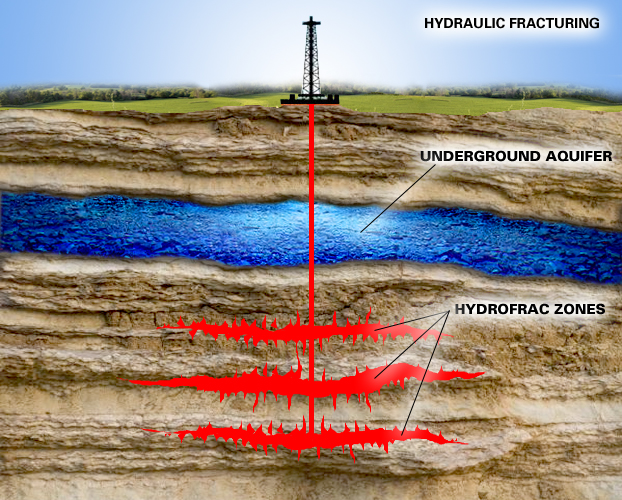
The hydro-fracturing process used to release gas from the Marcellus Shale formation requires up to 8 million gallons of water per well to extract the gas from deep underground. In addition, an undisclosed blend of chemicals is used in hydro-fracturing. Water withdrawal from streams and rivers, and particularly the treatment of the chemically-laden wastewater from drilling sites, has proven to be of significant concern in several areas in Pennsylvania where Marcellus drilling has occurred.

Continue reading Unregulated Shale Gas Drilling Will Destroy Pennsylvania Native Brook Trout Habitat – Trout Unlimited Calls for Moratorium

PA Commonwealth Court Upholds Authority of Municipal Zoning Boards to Hear Challenges to Municipal Ordinances by Gas Drillers

The Explosive Fracking Can Break Through to Water Table or to Reservoirs Such as the Ambridge Reservoir

by Randy Shannon

The Pennyslvania Commonwealth Court has ruled that gas drillers must present their appeals of Municipal regulations to the local zoning board first and not to the Court of Common Pleas.

The Commonwealth Court also specifically upheld six regulations affecting the use of land by shale gas drillers. These six regulations are:

1. identifying a zoning district in which gas production activities can be conducted;

2. establishing setback requirements in relation to public buildings, public or private streets, property lines, and properties designated as landfills or properties that contain hazardous substances;

Continue reading PA Commonwealth Court Upholds Authority of Municipal Zoning Boards to Hear Challenges to Municipal Ordinances by Gas Drillers

PA Supreme Court Affirms Authority of Municipal Zoning Boards to Regulate Gas Drilling

A ruling by the Pennsylvania Supreme Court has established that local municipal zoning boards have the power to regulate and permit shale gas drilling in areas under their authority. The municipal zoning regulation of gas drilling supersedes and is superior to permits issued by the Pennsylvania Department of Environmental Protection. Also the preemptions of the Pennsylvania Oil and Gas Act do not apply to local zoning control of land use.

The following article by a partner in a Delaware Legal partenership discusses the details of this decision. The article was published at http://marcellusshale.saulnews.com/archives/category/municipalandzoning 

  Continue reading PA Supreme Court Affirms Authority of Municipal Zoning Boards to Regulate Gas Drilling

“We can’t sell off our water supplies for some short-term financial gain” New York City Council passes resolution against unregulated shale gas drilling

H2Ohhhhh, No You Don’t!

By Jessica Lee
From the November 20, 2009 issue | Posted in Jessica Lee , Local | Email this article

WATER DEFENSE: Hundreds rally at a natural gas drilling hearing in Lower Manhattan Nov. 10. PHOTO: JAISAL NOOR

WATER DEFENSE: Hundreds rally at a natural gas drilling hearing in Lower Manhattan Nov. 10. PHOTO: JAISAL NOOR

Several hundred New Yorkers attended the New York State Department of Environmental Conservation (DEC ) hearing Nov. 10 at Stuyvesant High School in Lower Manhattan to protest the state’s plan to allow natural gas drilling in the Marcellus shale geologic formation. Permits would be issued to companies using controversial hydraulic fracturing and horizontal drilling techniques near drinking water sources, such as the Catskill Mountains north of the city. The DEC recently announced an extension for public comments to the draft Supplemental Generic Environmental Impact Statement from Nov. 30 until Dec. 31.

On Nov. 16, the New York City Council passed a non-binding resolution (Res. 1850) requesting that state policy makers ban the drilling practice within the New York City drinking water watershed. “We can’t sell off our water supplies for some short-term financial gain,” said Councilmember James Gennaro (D-Queens). Councilmember Tony Avella (D-Queens) proposed another resolution (Res. 2191) that would call for a statewide drilling ban.

Peruvian Farmers Blockade Gas Drillers – No Drilling without “Informed Consent”

‘No oil drilling without tribes’ consent’, UN tells Peru 2 September 2009

An Indian blockade at Bagua.
© David Dudenhoefer

The UN has told Peru’s government it should not allow oil and gas drilling on indigenous peoples’ land without their ‘informed consent’.

If the government agrees to the UN’s call, it would mean that no drilling could take place in rainforest inhabited by uncontacted Indians, as they are unable to give their consent. This is something that indigenous organisations, Survival and many others have long been calling for.

Continue reading Peruvian Farmers Blockade Gas Drillers – No Drilling without “Informed Consent”

Farmers Blockade Driller Access to Prime Farmland in New South Wales to Demand Protection of Water Quality

Back off, BHP

MATTHEW CAWOOD AND ALAN DICK

24/07/2008 8:52:00 AM

Simmering tensions over BHP Billiton’s controversial plans to mine coal in a huge area of prime Liverpool Plains farming country boiled over on Monday, when landholders turned up in force to blockade a mining exploration site.

They barred BHP’s access to Tim Duddy’s property, “Rossmar Park” at Caroona, where the giant mining corporation wants to undertake exploratory drilling.

Locals say they are determined to maintain the blockade on a rolling roster until BHP agrees to a special set of land-use terms drafted by the Caroona Coal Action Group (CCAG).

BHP was granted coal exploration rights in 2006 over 250 square kilometres of some of Australia’s best farming land on the northern plains, north-west of Quirindi.

The coal resource under the plains has been estimated at half a billion tonnes, with a mine life of up to 60 years.

Local farmers and residents, led by CCAG, have waged a protracted campaign to ensure that mining doesn’t damage the plain’s agricultural interests, and are demanding an independent survey of the region’s underground terrain because of fears mining will damage the region’s water resources.

Continue reading Farmers Blockade Driller Access to Prime Farmland in New South Wales to Demand Protection of Water Quality