All posts by randyshannon

2016 “People’s Budget: A Raise for America” Unveiled

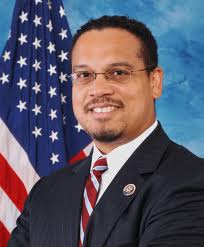
keith ellisonDueling Visions: The CPC People’s Budget vs. the Budget for the 1%
MARCH 18, 2015

The Congressional Progressive Caucus unveiled its fiscal 2016 “People’s Budget: A Raise For America” one day after House Republicans released their “A Balanced Budget for a Stronger America” proposal. The CPC touted a $1.9 trillion investment in America’s future and over 8 million new jobs. The House Republicans bragged about cutting $5 trillion over 10 years. The sharp contrast between the two reflect stark differences in values and ideology – and a basic choice of whether government will serve the many or the few.

The Republican budget is rightly scorned as a fantasy, a dishonest, Orwellian document,packed with magic asterisks and budget sleight of hand. But what is interesting is what Republicans claim that they value.

Republicans believe the rich and corporations have too little money and pay too much in taxes. They believe that Wall Street needs more freedom and less regulation. They believe that too many Americans have health insurance, that the poor have too much support, that schools need less money, that college should be less affordable to children from low-wage families. They believe that the Pentagon should get more money, and fight more wars. They believe that coal and oil need subsidy, not regulation.

They argue that the economy will grow faster if government spending is cut, regulations rolled back, and budgets balanced. Balancing the budget over 10 years is important enough that they sacrifice all credibility by packing the budget with omissions and distortions in order to reach the goal nominally. But balancing the budget is not important enough to ask the rich and corporations to pay an additional dime in taxes.

The CPC budget is fiscally cautious: It would bring America’s annual deficits down and begin to reduce the national debt as a percentage of GDP. But it is grounded in the reality that America faces major challenges that can no longer be ignored.

The CPC believes that our infrastructure is dangerously outmoded, so it makes a down payment on rebuilding America. It believes climate change is real, so invests in new energy and in aiding communities already staggered by extreme weather events. It believes education is vital, so it invests in universal pre-k, aid to schools and debt-free four-year college.

The CPC believes workers need a raise. So it lifts the minimum wage, calls for strengthening the workers right to organize, and lifts the floor with paid sick days, family leave, a crackdown on wage theft, revised overtime and more. It would continue health care reform, preserve Medicare and expand Social Security.

To pay for this, the CPC exacts savings from areas of massive waste. It would trim the Pentagon budget, and require an audit for the first time. It would end subsidies to Big Oil and limit them to agribusiness. It would empower Medicare to negotiate bulk discounts on prescription drugs, and create a public option in Obamacare to keep insurance companies honest.

And the CPC insists that the rich and corporations pay their fair share of taxes. It would create new tax brackets for those making a million or more. The People’s Budget raises the estate tax for the super-wealthy. It taxes the income of investors at the same rates as the income of workers. It terminates deferral, which allows multinationals to avoid taxes on money they report as earned abroad.

And the CPC argues we should tax “bads” to reduce them. It would impose a tax on polluters for carbon emissions, rebating a quarter of the revenue to protect low-wage families. It would hike taxes on cigarettes. It would impose a tax on speculation – a financial transactions tax – to curb destabilizing, computer-driven trading. It would end tax breaks for perverse CEO compensation policies.

The CPC argues the economy suffers from an absence of demand, partly driven by extreme inequality and the hollowing out of the middle class. Government investment in vital areas provides good jobs, moves the economy towards full employment and boosts demand. Government action to lift the floor under workers will help generate demand. Government crackdown on Wall Street speculation, CEOs looting companies and multinationals shipping jobs abroad will help drive investment into the real economy, not the financial casino.

The question really is who is the master? Who does government serve? Revealingly, the CPC People’s Budget provides for public financing of elections, seeking to limit the corruptions of big money. Republicans, not surprisingly, oppose any restriction on money politics.

The Republican budget – gimmicks, perverse priorities and all – will pass the House. The CPC People’s Budget will struggle to win 100 votes on the floor. But the former only reinforces what ails us. The latter offers an alternative that makes sense, that adds up. There is a way up. The rules don’t have to be rigged to favor the few. But it will take a sea change in Washington for common sense to gain majority support.


AFL-CIO Suspends Campaign Donations to Stop Trade Deal

AFL-CIO Suspends Political Contributions to Focus on Trade Fight Against White House

Mar 11, 2015 2:43 PM EDT
The labor organization says it will focus on fighting the White House over President Obama’s trade deals.
trade protester

A protester makes her case against the Trans-Pacific Partnership during a Senate hearing on the trade deal.

The AFL-CIO, which has spent heavily to support Democrats at the ballot box, said Wednesday it was freezing its political-action committee donations to federal candidates so it could focus on upcoming trade fights.

The labor group will fight trade deals with countries in the Pacific Rim that the White House has been pushing. Such deals, the organization said in a February statement, have promised higher wages and bigger markets to American workers but instead resulted in jobs being sent overseas.

“U.S. trade deals—from NAFTA and CAFTA to Korea and Colombia—form a mountain of broken promises made to workers,” the statement said.

President Obama, who twice received endorsements from the AFL-CIO, has faced resistance from his own party on the deals, including from Representatives Keith Ellison and Rosa Delauro and Senators Elizabeth Warren, Sherrod Brown, and Bob Casey.

“I have real concerns about it,” Casey told Bloomberg on Wednesday. “I just look at this from the perspective of Pennsylvania: We seem to be getting the short end of every stick after each trade agreement is entered into.”

Although GOP congressional leaders support the deals, conservative Republicans have expressed concerns that negotiating the trade deal would mean extending to the president more power than they would like because he is requesting authority to “fast-track” the deals, meaning Congress could only vote on them but not amend them.

“For Congress to cede oversight on such a sweeping agreement could have grave implications,” freshman Representative Steve Russell, an Oklahoma Republican, wrote on Wednesday in theHill.

AFL-CIO EXECUTIVE COUNCIL LETTER URGES CONGRESS TO STAND WITH WORKERS BY OPPOSING FAST TRACK

The labor movement will be closely monitoring how members of Congress vote on a forthcoming Trade Promotion Authority bill also known as “Fast-Track”. In a letter from the national AFL-CIO Executive Council to members of Congress, which you can view HERE, national union leaders expressed strong opposition to this bill, which would shut the public out of major trade negotiations that impact American wages and jobs as well as undermine global working conditions, environmental standards, and labor rights.

In addition to this letter, the AFL-CIO Executive Council agreed to a proposal to suspend political contributions to lawmakers until after the Fast-Track vote in Congress. According to a story by Press Associates, Inc. (PAI), union leaders also agreed that lawmakers’ votes on Fast-Track would be an important factor in determining future financial support for candidates.

Fast-Track is a reckless and undemocratic policy that allows for the authorization of trade deals with a simple up-or-down vote. This process has resulted in one-sided trade deals like NAFTA and CAFTA that have cost our country millions of jobs, reduced wages, and suppressed working standards around the world in order to clear the way for massive corporate profits. President Obama and Congressional leaders are now seeking to use Fast-Track authority to pass an equally destructive trade deal call the Trans Pacific Partnership (TPP) which you can learn more about HERE. You can also take action now by sending a message asking your members of Congress to oppose Fast-Track.

The message being sent by the national labor movement to Congress is clear: Fast-Track trade deals mean fewer jobs, lower wages, and a declining middle class. Members of Congress who are committed to strengthening the middle class through good jobs and fair trade must stand up to oppose Fast-Track.

Trade Unions Condemn US Sanction of Venezuela

Venezuela: ITUC Criticises US “National Security” Decision

The ITUC has strongly criticised a US decision to declare Venezuela a “risk to national security and foreign policy”, as diplomatic relations between the two countries deteriorate further.

Sharan Burrow, ITUC General Secretary, said, “The US faces real threats to national security on many fronts and from within many countries, but there’s no evidence that Venezuela is one of them. Allegations of human rights abuses and corruption made by the US against seven Venezuelan officials should be dealt with according to the rule of law, and not trial by media. We urge both the US and Venezuela to accept the jurisdiction of the Inter-American Court on Human Rights which was established for just this kind of situation. They should also respect the role of the Inter-American Commission on Human Rights.”

UNASUR, the regional government grouping, has been trying to re-start dialogue between the Venezuelan government and opposition, with allegations of opposition efforts to mount a coup and counter-criticism of the government’s crackdown on the opposition dominating Venezuelan politics in recent months.

During a visit to Caracas last week, UNASUR Secretary General Ernesto Samper was reported as saying “With the evidence of U.S. meddling presented us by President Maduro, we want to emphasize that all UNASUR nations, without exception, reject any attempts, either internal or from abroad, to destabilize Venezuela’s democracy. With the upcoming parliamentary elections in Venezuela, we believe it is the best scenario for both political forces to express their political differences and sort out the controversies.”

Victor Baez, General Secretary of the ITUC Regional Organisation for the Americas, TUCA, said, “Sanctions from outside will not solve the internal problem in the country and will contribute to worsening it. The way out of the problem will be through dialogue and respect of the democratically elected authorities.”

http://www.ituc-csi.org/

47 Republican Senators Violate Logan Act

ztvxxvWE PETITION THE OBAMA ADMINISTRATION TO:

File charges against the 47 U.S. Senators in violation of The Logan Act in attempting to undermine a nuclear agreement.

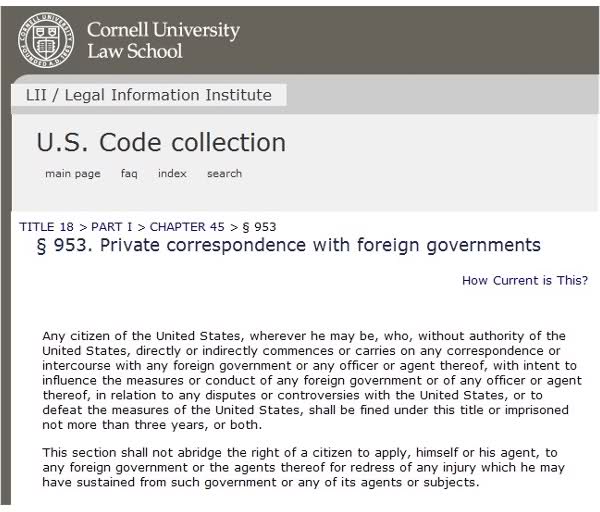
On March 9th, 2015, forty-seven United States Senators committed a treasonous offense when they decided to violate the Logan Act, a 1799 law which forbids unauthorized citizens from negotiating with foreign governments. Violation of the Logan Act is a felony, punishable under federal law with imprisonment of up to three years.

At a time when the United States government is attempting to reach a potential nuclear agreement with the Iranian government, 47 Senators saw fit to instead issue a condescending letter to the Iranian government stating that any agreement brokered by our President would not be upheld once the president leaves office.

This is a clear violation of federal law. In attempting to undermine our own nation, these 47 senators have committed treason.

Sign here.

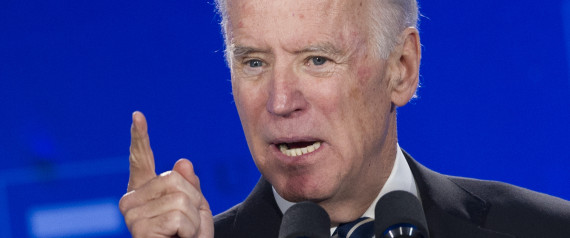
Joe BidenWASHINGTON — Vice President Joe Biden is furious.

Biden, who also serves as president of the Senate, Monday night blasted Senate Republicans in a long, angry statement for their letter to Iran’s leaders, which he described as “beneath the dignity of an institution I revere.”

Forty-seven Republicans on Sunday wrote directly to Tehran to suggest that any nuclear deal with the Obama administration would not be constitutionally binding because a future president or Congress could take steps to revoke it. Biden called the move an unprecedented affront “designed to undercut a sitting president.”

“In thirty-six years in the United States Senate, I cannot recall another instance in which Senators wrote directly to advise another country — much less a longtime foreign adversary — that the President does not have the constitutional authority to reach a meaningful understanding with them. This letter sends a highly misleading signal to friend and foe alike that that our Commander-in-Chief cannot deliver on America’s commitments — a message that is as false as it is dangerous,” Biden said in a statement released by the White House.

“The decision to undercut our President and circumvent our constitutional system offends me as a matter of principle. As a matter of policy, the letter and its authors have also offered no viable alternative to the diplomatic resolution with Iran that their letter seeks to undermine,” he added.

The kind of executive agreements to which Biden refers are a consistent feature of U.S. foreign policy important for purposes like basing U.S. troops abroad, protecting those soldiers from prosecution in foreign countries and enabling intelligence and defense cooperation with other governments. They have historically been upheld by U.S. courts.

Biden, a longtime senator and former chairman of the Senate Foreign Relations Committee, also criticized the author of the letter, freshman Sen. Tom Cotton (R-Ark.), for willfully sabotaging the negotiations. Cotton admitted as much at a conservative conference in January.

“If talks collapse because of Congressional intervention, the United States will be blamed, leaving us with the worst of all worlds,” Biden argued. “Iran’s nuclear program, currently frozen, would race forward again. We would lack the international unity necessary just to enforce existing sanctions, let alone put in place new ones. Without diplomacy or increased pressure, the need to resort to military force becomes much more likely — at a time when our forces are already engaged in the fight against ISIL.”

Iranian Foreign Minister Javad Zarif dismissed the letter as a “propaganda ploy” on Monday. “I wish to enlighten the authors that if the next administration revokes any agreement ‘with the stroke of a pen’ … it will have simply committed a blatant violation of international law,” he said in a statement.

http://www.huffingtonpost.com/2015/03/09/joe-biden-iran-letter-republicans_n_6836146.html

Postal Workers Propose Public Banking Option

(Kevork Djansezian / Getty Images)

Banking Goes Postal

Sixty-four unions and community groups are demanding a banking public option—at the post office.

BY DAVID MOBERG

In one year, the underbanked and unbanked pay out more in financial service charges than the federal government spends on all domestic food aid.

American Postal Workers Union (APWU) president Mark Dimondstein has an offer that should be hard to refuse, especially for the 10 million American households, mostly low-income, that do not have a checking account or other basic banking services.

Through its network of 30,000 post offices and other outlets, the United States Postal Service (USPS) could readily and cheaply provide many banking services (just as it now provides money orders), no matter where you live or what you earn. This could save people without bank access from paying the exorbitant interest and fees at currency exchanges, payday lenders, rent-to-own dealers, pawn shops and other subprime financial institutions.

Postal workers would also win: Expanding postal services would create more jobs. Moreover, the additional revenue would strengthen USPS’s finances, bolstering the four major postal unions’ ongoing fight against management’s austerity measures. Although the postal service earned a surplus on operations in 2014, it ran a deficit overall because of perverse requirementsCongress imposed in 2006 that retiree healthcare benefits for the next 75 years be fully pre-funded within a decade, a standard far more demanding than those required by any other retirement systems. Much more than the decline in first class mail, that manufactured budget crisis has fueled USPS management’s campaign of job cuts. The postal workforce dropped from about 700,000 in 2006 to less than 500,000 last year, and management hopes to reduce it by as many as 15,000 more this year. USPS management’s campaign of job cuts also involves service degradation, post office closings and privatization—such as delivering postal services at the office-supply store Staples, where jobs are low-wage and non-union. If postal unions can implement banking and roll back the retiree pre-pay requirement, they will return the postal service to solvency while expanding the public sector to address private market shortcomings.

When talks for a new APWU contract start in February, Dimondstein intends to make establishing postal banking a major demand, even though it falls outside the bread-and-butter issues unions typically bring up in bargaining. He plans to argue that creation of the bank would profoundly affect the mandatory bargaining issues of wages, hours and working conditions.

The negotiations come on the heels of a new campaign, launched this week by the postal unions—in partnership with community groups such as National People’s Action, Public Citizen, USAction and Interfaith Worker Justice—to mobilize the public in favor of a postal bank.

Continue reading Postal Workers Propose Public Banking Option

Wolf to Expand Medicaid, Dump Corbett’s “Healthy PA”

Gov. Wolf to ditch Healthy PA, institute straight Medicaid expansion

Updated just now

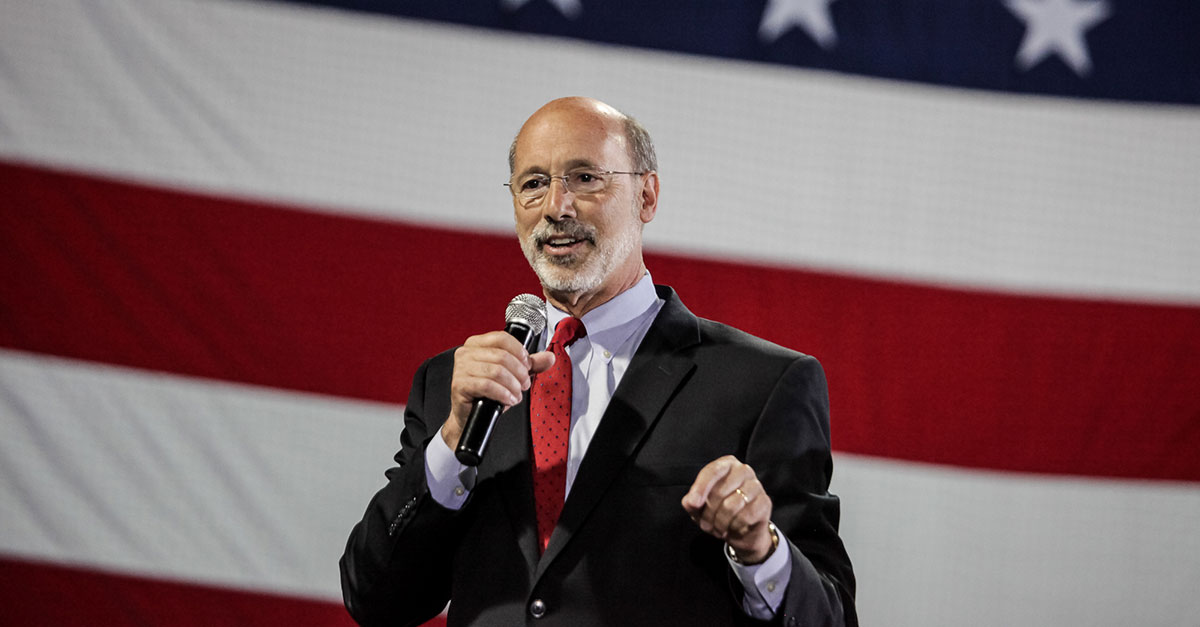
Pennsylvania Gov. Tom Wolf, long a critic of his predecessor’s version of Medicaid expansion under the Affordable Care Act, on Monday took the first step toward replacing it.

That step was directing the state Department of Human Services to withdraw a pending piece of the Healthy PA program from further federal consideration. Wolf proposes to replace Healthy PA’s three benefit plans with a single one that the DHS is working with the federal government to develop.

“Today is the first step toward simplifying a complicated process and ensuring hundreds of thousands of Pennsylvanians have greater access to the health insurance they need,” Wolf said in a news release.

Former Gov. Tom Corbett billed Healthy PA, which took effect Jan. 1, as a simplification of the state’s 14 existing Medicaid plans.

Wolf disagreed, with his release citing “people not receiving important treatment, confusion among recipients, and special populations being placed into the wrong plans” as examples of “complications under Healthy PA.”

“Our approach will alleviate confusion, remove unnecessary red tape, and streamline the system so that people can see a doctor when they are sick and health care professionals have more time to concentrate on providing quality care,” Wolf said.

Continue reading Wolf to Expand Medicaid, Dump Corbett’s “Healthy PA”

Rep. Keith Rothfus Votes Against Disabled Americans

Wednesday, January 07, 2015

‘Hostage-Takers’: Republicans Go After Social Security on Very First Day

Advocacy groups vow to fight back against what they believe is a preliminary “stealth attack” that portends a wider assault on a program that makes survival possible for millions of vulnerable Americans

Defenders of Social Security worry that if history is a guide, this latest “stealth attack” on the program’s solvency signals the “groundwork is being laid in advance” by the Republican Party for a larger attack on the program as a whole. (Photo: File)

As Los Angeles Times columnist Michael Hiltzik immediately remarked: “Well, that didn’t take long.”

An attack by the Republican Party on the nation’s Social Security program took less than one full working day. Included in a new set of rules passed by the House of Representatives on Tuesday was a new measure making it more difficult to move funds between separate accounts maintained by the Social Security Administration. A seemingly technical provision on the surface, critics says it puts millions of disabled and elderly Americans at risk and sets the stage for further attacks aimed at the wider program.

“The GOP is inventing a Social Security crisis that will threaten benefits for millions and put our most vulnerable at risk.” —Sen. Elizabeth WarrenAccording to Hiltzik:

The rule hampers an otherwise routine reallocation of Social Security payroll tax income from the old-age program to the disability program. Such a reallocation, in either direction, has taken place 11 times since 1968, according to Kathy Ruffing of the Center on Budget and Policy Priorities.

But it’s especially urgent now, because the disability program’s trust fund is expected to run dry as early as next year. At that point, disability benefits for 11 million beneficiaries would have to be cut 20%. Reallocating the income, however, would keep both the old-age and disability programs solvent until at least 2033, giving Congress plenty of time to assess the programs’ needs and work out a long-term fix.

The procedural rule enacted by the House Republican caucus prohibits the reallocation unless it’s accompanied by “benefit cuts or tax increases that improve the solvency of the combined trust funds,” as paraphrased by the National Committee to Preserve Social Security and Medicare.In practical terms, the advocacy committee says, that makes the reallocation impossible; it mandates either benefit cuts across the board, which aren’t politically palatable, or a payroll tax increase, which isn’t palatable to the GOP.

In response to approval of the new rule, Sen. Elizabeth Warren (D-Mass.) chastised Republicans in the House.

“The GOP is inventing a Social Security crisis that will threaten benefits for millions and put our most vulnerable at risk,” Warren fumed via her Twitter account. “This is ridiculous. 233k people in MA receive Social Security disability benefits that could be threatened by these political games.”

“All of these divide-and-conquer strategies are intended to turn Americans against each other so that all of their benefits can be cut.” —Nancy Altman & Eric Kingson, Social Security Works

Advocacy groups like AARP and the National Committee to Preserve Social Security and Medicare expressed outrage.

“It is difficult to believe that there is any purpose to this unprecedented change to House rules other than to cut benefits for Americans who have worked hard all their lives, paid into Social Security, and rely on their Social Security benefits, including disability, in order to survive,” said Max Richtman, president of the NCPSSM, who also sent a letter to Congress expressing his concerns.

According to Nancy Altman and Eric Kingson, authors of the book Social Security Works! and members of the advocacy group of the same name, what would otherwise have been the “dry, mundane exercise” of adopting new rules in the House was “turned into a stealth attack on America’s working families.”

Like previous “stealth attacks” on Social Security, write Altman and Kingson, the small rule change shows “the groundwork is being laid in advance” for a larger attack on the program as a whole and described the tactics of Republicans determined to destroy the program, regardless of the costs, as “hostage-taking.” In their analysis, the GOP ploy involves playing disparate groups within the system off one another with the ultimate goal of drastically reducing the program for everyone—current and future beneficiaries alike. They write:

One of the strengths of Social Security is its universality.  It is based on the principle that we are stronger together.  It is an old tactic of the program’s opponents to seek to divide and conquer.  They seek to turn young against old by falsely claiming that too much is being spent on the old.  They seek to turn African Americans against whites with the preposterous claim that Social Security is unfair to blacks.  (We document and refute these and many other claims in our new book).  This time they seek to drive a wedge between retired workers and disabled workers by claiming that reallocation helps the disabled at the expense of the old – another preposterous claim.  All of these divide-and-conquer strategies are intended to turn Americans against each other so that all of their benefits can be cut.

Sen. Sherrod Brown (D-Ohio) also condemned the rule, calling it not only contentious, but dangerous. “Re-allocation has never been controversial, but detractors working to privatize Social Security will do anything to manufacture a crisis out of a routine administrative function,” Brown said in a statement. “Re-allocation is a routine housekeeping matter that has been used 11 times, including four times under Ronald Reagan. Modest re-allocation of payroll taxes would ensure solvency of both trust funds until 2033. But if House Republicans block reallocation, insurance for disabled Americans, veterans, and children could face severe cuts once the trust fund is exhausted in 2016.”

For their part, Altman and Kingson said groups like Social Security Works and their allies will take this signal from the Republican Party and use it to re-energize their campaign to strengthen, not destroy, what they consider the single most successful social program in the nation’s history.

“If senior, disability, workers, women’s, veterans, civil rights, faith-based and other groups stand together – as they have in opposition to privatization and recent benefit cut proposals,” they concluded, “this stealth effort to pull apart our Social Security will be defeated. And if citizens from around the country let their representatives know that it’s time to expand Social Security to address the nation’s retirement income crisis, not cut it, all of us will be better off.”

Progressive Democrats in Congress Oppose Gov’t Funding Deal

Progressive Caucus Co-Chair Statement on Government Funding Deal

keith ellisonWASHINGTON-Congressional Progressive Caucus (CPC) Co-Chairs Reps. Raúl M. Grijalva (D-AZ) and Keith Ellison (D-MN), released the following statement ahead of a House Rules Committee hearing on a deal to partially fund the government through September of next year.

“We support a government funding bill that invests in creating jobs and American families. Unfortunately, the CROmnibus fails to do that.

“Republicans, who learned nothing from the financial crisis of 2008, included a provision that allows Wall Street to engage in some of the same risky practices that crashed the world economy. The short-term funding of the Department of Homeland Security sets up another government shutdown battle in February and is motivated by Republicans who refuse to fix our broken immigration system.  Continuing cuts to education and environmental protections while spending billions on endless wars is the wrong priority for American families.  Sneaking in last minute provisions, like turning our democracy into an auction house by raising campaign contribution limits, is the wrong way to govern.

“Republicans are once again using a potential crisis with the federal budget to hurt working families. The Progressive Caucus stands with the American people and opposes the bill.”

Gov-elect Wolf Appoints John Hanger Sec’y for Policy and Planning

December 10, 2014

Randy Shannon

Its hard not to get a little hopeful about the incoming administration of Governor Tom Wolf. He has appointed John Hanger, an opponent in the primary that we supported, as the Governor’s Secretary for Policy and Planning.

John Hanger certainly has a lot of connections among progressives in PA. He visited Beaver County as a guest of our Progressive Democrats of America chapter and he walked the picket line downtown with UPMC workers early this year.

What we need to do now is work for a hike in the PA minimum wage, protection of our water, expansion of medical care, and boosting our educational sector. While doing that we must find some good candidates to run in our local legislative districts. Wolf and Hanger will have a hard time getting a lot done with the right wing dominating the PA Republican Party.

tom-wolfGovernor-elect Wolf announces key staff

December 10, 2014 by Wolf Transition Press

York, PA – Governor-elect Tom Wolf today announced key staff that will join him in the Office of the Governor. Wolf announced that John Hanger will serve as secretary of planning and policy, Mary Isenhour will serve as secretary of legislative affairs, and Obra S. Kernodle IV will serve as deputy chief of staff and director, Office of Public Liaison.

“I am proud to announce that John, Mary, and Obra will be joining my staff in the governor’s office,” said Governor-elect Tom Wolf. “As governor, I intend to get things done on behalf of all the people of Pennsylvania. These senior members of my team will be key to this mission because they are seasoned and have deep relationships on both sides of the aisle. I look forward to working with them to move our commonwealth forward.”

John Hanger – Secretary of Planning and Policy

Born in Nairobi, Kenya, John Hanger came to America in 1970 as an immigrant from Ireland. After graduating from Duke University in 1979, where he majored in Public Policy and History, John attended the University of Pennsylvania School of Law and then became a legal services attorney at Community Legal Services in Philadelphia.

John was appointed as the Public Advocate for customers of Philadelphia’s municipal utilities prior to being nominated by Governor Casey as a commissioner of the Pennsylvania Public Utility Commission. John served as commissioner at PUC from 1993 to 1998, where he expanded low-income and energy conservation programs and led efforts to restructure Pennsylvania’s electricity and gas industries.

From 1998 to 2008, John was the president of Citizens for Pennsylvania’s Future and then served as secretary of the Pennsylvania Department of Environmental Protection from 2008 to 2011. Since then, John has been an attorney at Eckert Seamans. John resides in Hershey, Pennsylvania.

Mary Isenhour – Secretary of Legislative Affairs

Mary Isenhour began her career as a staffer in the Kansas House of Representatives, where from 1991 to 1995, Mary was chief of staff to the Democratic Leader. It was here where Mary worked across party lines to advance legislation that improved the lives of the citizens of Kansas.

In this role, Mary worked with leadership and committee members to develop and implement committee and floor strategies, and she worked on developing legislative strategy and building coalitions that resulted in legislation in numerous areas. Mary also served as liaison between the Leader and other elected officials, agencies, and political entities.

From 1995 to 1999, Mary served as a national political director for the Washington, D.C. based Democratic Legislative Campaign Committee, and from 1999 to 2003, Mary served as executive director of the Pennsylvania House Democratic Campaign Committee (HDCC). Following her time at HDCC, Mary served as executive director of the Pennsylvania Democratic Party and as state director for Hillary Clinton’s Presidential Campaign.

Mary owns a consulting firm and served as senior strategist to Tom Wolf for Governor. Currently, Mary is co-chair of Governor-elect Wolf’s Inaugural Committee.

Obra S. Kernodle IV – Deputy Chief of Staff and Director, Office of Public Liaison

Born and raised in Philadelphia, Obra S. Kernodle IV is a graduate of Roman Catholic High School. He obtained his Bachelor of Arts in Education from Florida Agricultural & Mechanical University in 2002.

Before serving in his current position as senior advisor for Governor-elect Tom Wolf’s transition team, Obra played a key role on the Wolf campaign as both deputy campaign manager and political director.

Before joining the Wolf for Governor campaign, Obra worked in Philadelphia Mayor Michael Nutter’s Administration as deputy of legislative affairs, helping to coordinate the city’s Actual Value Initiative. In 2012, Obra was part of President Obama’s reelection effort as the Pennsylvania southeast political director. Obra previously served as the political director for both Mayor Nutter’s 2011 reelection bid and District Attorney Seth Williams’ race in 2009.

http://www.wolftransitionpa.com/

Trade Unions’ Address Climate Change

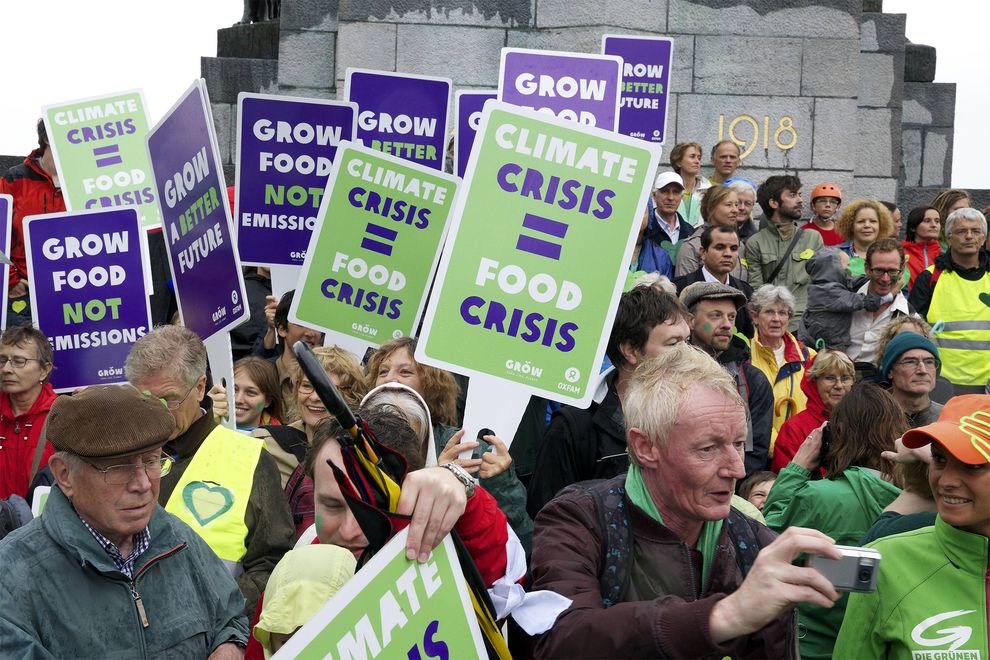
This Statement was submitted to the 20th Conference of Parties to the United Nations Framework Convention on Climate Change (COP20), currently meeting in Lima, Peru, by theInternational Trade Union Confederation (ITUC)


83938_990x742-cb1411319345WORKERS AND CLIMATE CHANGE

2015: A just, ambitious and legally binding agreement

The international community shares today more scientific evidence than it needs to inform decision-making on climate change. The impacts on people’s lives, livelihoods and prosperity if we fail to act now will be calamitous. Yet the opportunities for social progress and decent work behind an ambitious climate protection agenda are such that it would be irrational to let go this unique time in history where we can still solve the problem.

The international labor movement has supported the UNFCCC convinced that it is the place for delivering a fair, ambitious and binding global Agreement on climate change. But time is running out. Solutions must be found at all levels: from community based diversification to sectoral transformations, from macroeconomic planning at the national level to an international deal that sets a global goal for inspiring massive action.

css_home_badge_itucThe global crisis of climate change comes in parallel with another global crisis, the crisis of inequality. Never in history has humanity has created so much wealth and concentrated it in such a small number of hands – according to recent data the 66 wealthiest people in the Planet have the same amount of wealth than the poorest 3.5 billion!

Tackling these two challenges together requires bold measures, and most important, ensuring efforts towards the improvement of one goal are coherent with addressing the other. Climate measures must contribute to protecting the weakest in society; equality measures must put the need for moving towards a sustainable future at its heart.

Trade unions are convinced that only a massive demand from citizens will be able to correct the current unambitious path in which leaders have set their comfort zones. That said, it is our duty as workers’ representatives to expect leadership and vision from the very people we elect.

A renewed climate change agreement is needed for 2015. It must ensure the stabilization of GHG concentrations in the atmosphere, at a level which will avoid the worst effects of human-driven interferences in the climate system.

It must ensure a high likelihood that it will keep the rise in global temperatures to below 2 degrees, or 1.5° if possible, above pre-industrial levels.

The Paris 2015 agreement must include contributions in the form of targets, commitments and actions within a framework that provides sufficient support to countries with low capacity and ensures sustained and predictable funding for those particularly vulnerable to the impacts of climate change. It should also develop strong rules including on accounting and compliance.

The Lima negotiations, which will lead to the Paris COP21 are not about negotiating a full new climate regime, but about building on UNFCCC principles, in a way that the outcome responds to the climate challenge looking at present and future planetary realities. They are also about filling the gaps of the Convention when it comes to the linkages between climate action and the world of work.

arton15226A renovated framework for climate action will have to be informed by science, based on equity, be environmentally effective and ensure broad participation of all countries, while respecting their different responsibilities and capacities. It will have to provide clarity on emission reduction and the 2° degrees global temperature objectives, adaptation, support (financial, technological and human), strengthen its commitment to just transition and develop strong mechanisms for verification, compliance and review.

Trade unions consider fundamental that

  • Just transition: The new UN agreement honors the commitment made by Parties in COP17 on the importance of ensuring a “Just Transition which will create decent work, good quality jobs in the transition towards a low emission and climate-resilient society.” We welcomed the support for Just Transitionprinciples in the Global Commission on the Economy & Climate as well as ongoing work on the ILO. A strong message to the working people in the UNFCCC is key to show government’s commitment to fight climate change in a socially sound manner.

We suggest the following wording: Parties commit to accompany their climate policies and actions with the promotion of decent work opportunities arising from a low-emission society as well as with a strategy aimed at ensuring a just transition for workers, contributing to protecting them in times of hardship, strengthening social dialogue, securing their rights, growing new sectors and promoting prosperity and sustainable development.

  • Parties should support the introduction of this commitment in the section of the Durban Platform for Enhanced Action (ADP) draft negotiating text that confirms the commitment to 2°C. In doing so it gives a signal to all Parties on how to implement their climate policies in a worker-friendly way.
  • In preparing their “contributions” for the post-2020 period, governments are encouraged to introduce data on employment impacts of climate measures (both, positive in terms of job creation, as well as the identification of sectors which will need support in the transition).
  • Social Protection policies are brought to the center of climate action. Income security, unemployment benefits, child care and maternity protection, health care and pensions, including for people with disabilities, and respect for human rights, including internationally recognized labor rights, are critical for ensuring the sustainability of climate policies. This must be reflected in the new agreement.

The labor movement positions itself clearly among the actors calling for climate ambition:

  • Trade unions support a global regime which ensures a high likelihood that it will keep the rise in global temperatures to below 2 degrees, or 1.5° if possible, above pre-industrial levels.
  • Following the Convention’s commitment from all Parties to reduce emissions, trade unions believe that all countries should take mitigation commitments and actions, within a multilaterally agreed, ambitious and equitable framework. Since 2007, the ITUC supports a reduction in global emissions by 2050 consistent with the likelihood of keeping average global temperature increase below 2°C or less. Therefore, developed countries should increase the ambition of their economy-wide targets, and go well beyond the 25-40% reduction compared to 1990 levels which was necessary by 2020. We also call on them to take the lead in taking commitments for 2025 and 2030, in such a way of aligning them to the Fifth IPCC report. major emitters in developing countries and countries that have surpassed a certain development threshold should take mitigation commitments and actions at a level compatible with an emissions’ pathway likely to achieve the 2°C objective.
  • A sound emission reductions’ regime must be designed in parallel with a responsible strategy for transforming and developing clean industries, empowering workers to access jobs created in them and supporting them and their families in the transition (see under just transition above). In this regard, emission reduction commitments could be complemented by commitments to public policies, which will give broader public visibility and positive flavor to climate action, and could include commitments to energy efficiency or renewable energies targets, to incorporate full climate cost accounting to public procurement, investment in sustainable water and land management, sustainable urban planning, among others.
  • Even though the entry into force of the future agreement will only take place in 2020, parties must urgently increase the ambition of their mitigation policies and plans in all possible sectors and at all relevant levels: local, national, regional, international and global.
  • Trade unions ask for a global regime which supports a properly financed global adaptation goal, aimed at ensuring citizens are resilient to climate impacts through coordinated action on sustainable infrastructure, social protection and disaster risk reduction policies.
  • Developed countries, according to the commitments they made, to mobilize the scale of funding required to face the impacts of climate change and help developing countries shift to low-emission development paths.
  • Knowledge-transfer must be a key part of technology sharing initiatives. All Parties should strengthen their efforts to increase the global exchange of clean and sustainable technologies and thereby support the development of alternatives to conventional ones.
  • Democratic ownership of energy is needed if we are to achieve ambitious climate action. energy, along with other common goods that belong to humanity (air, water) must be brought, administered and kept under public control. Energy companies need to be restructured in order to allow for broad democratic control and oversight, including a strong scheme of workers’ participation. reclaimed by the public, utilities and municipal bodies can be required to drive decentralized systems of power generation. Renewable energy cooperatives established to meet community energy needs also have an important role to play. energy transition plans at the national and subnational levels need to be developed in ways that serve the public good, meet science-based emissions reduction targets, end energy poverty and facilitate cross-border cooperation in research and development. These plans should attempt to shift decision-making to the local level while at the same time ensuring that the energy transformation is equitable and sustainable according to the principles of just transition and participatory democracy.
  • The transition towards a sustainable, decarbonized society must provide a means to pivot decisively away from ecologically and socially destructive methods of fossil fuel extraction (as in the case of ‘fracking’ for shale gas, tar oil exploitation, among others) towards renewable energy under public and democratic control. The energy transition must include an end to fossil fuel subsidies. It requires prioritizing the global common good against greed of large fossil fuel companies that continue to promote the uninterrupted use of ever greater quantities of coal, oil and gas.