All posts by randyshannon

Progressive Elements of the 2016 Democratic Party Platform

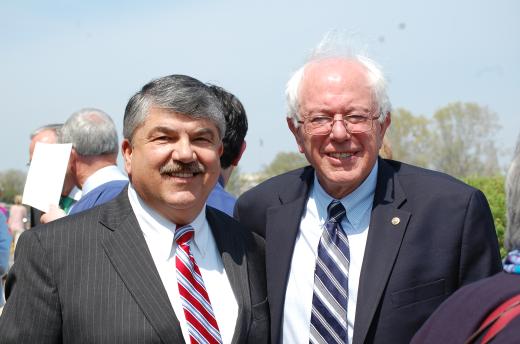
AFL-CIO Pres. Richard Trumka with Sen. Bernie Sanders

Progressive Elements of the 2016 Democratic Party Platform

by Tina Shannon, President 12th CD Chapter, Progressive Democrats of America

Here are the progressive highlights from the Dem Party Platform. I provide this as an easy way to know what’s in the platform without having to slog through it.
 
I will be working on a much shorter, 1-page, popularized version of more specific highlights in here to use at our Progressive Dems table at the Big Knob Fair. 
 
Progressive Democrats will demand that our elected officials and candidates support this platform to force our Party to allocate resources away from multi-national corporations & banks and towards serving us and our communities. Many of these points are very concrete and doable. In my opinion, making all Democrats in Beaver County and Pennsylvania aware of what’s in this platform, from elected officials to regular voters, is the next step of the political revolution.  


  1. Health Care
    1. Medicare opt-in for those 55 and older
    2. Public insurance option to compete with private insurance in ACA
    3. Allow states to set up single-payer healthcare system
    4. Repeal excise tax on high cost insurance plans
    5. Renew and expand community health centers
    6. Tax relief for caregivers to aging, disabled, or chronically ill family members
    7. Prohibit practices that keep generic drugs off the market
    8. Allow import of prescription drugs from Canada
    9. Fund Zika prevention and research
  2. Social Security
    1. Raise the cap on taxable income
    2. No cuts by raising retirement age, COLA adjustments, benefit reduction
    3. Adjust COLA to include healthcare costs
  3. Veterans
    1. Support the VA with full funding
    2. Oppose privatization of VA
  4. Workers and Unions
    1. Union certification w/ card count
    2. $15 minimum wage
    3. Oppose right-to-work laws
    4. Dues checkoff
    5. Limited use of forced arbitration
    6. 12 weeks paid family leave
    7. 7 days paid sick leave
  5. Jobs
    1. Independent infrastructure bank
    2. Build America bonds
    3. Clear backlog in land management agencies
    4. Make It In America plan
    5. Support Export-Import Bank
    6. Connect households to high speed internet
    7. Support NASA
    8. Federal funds for local youth employment programs
    9. Expand Americorps
  6. Economic Inequality
    1. Funding for family farms and environmentally sustainable farming
    2. Stronger agricultural worker protections
    3. Expand New Markets tax credits for small business
    4. Target 10% of fund to long term high poverty communities
    5. Protect SNAP
    6. Expand Earned Income Credit
    7. Index Child Tax Credit to inflation
    8. Ratification of Convention on the Rights of Persons with Disabilities
  7. Education
    1. Free Community College tuition
    2. Quantifiable affirmative action at higher education institutions
    3. Refinance college debt at lower rates with income based repayment
    4. Allow bankruptcy discharge of student loan debt
    5. Create fund to support Historic Black Colleges
    6. Restore year round Pell Grants
    7. Increase funding of Head Start, Summer, and after school programs
    8. Fund Individuals with Disabilities Education Act
    9. Oppose high stakes standardized testing
    10. Support restorative justice instead of school to prison pipeline
    11. Oppose for-profit charter schools
  8. Housing
    1. National Housing Trust Fund
    2. Expand Neighborhood Stabilization Program
    3. Defend Consumer Financial Protection Bureau
  9. Postal Service
    1. End prefunding of retiree benefits
    2. Restore services
    3. Restore supportive Commission and Board of Governors
    4. Add postal savings
    5. Vote by mail
  10. Criminal Justice
    1. Reform mandatory minimum sentences
    2. Close private prisons
    3. De-escalate use of force training
    4. Body Cameras
    5. No military armaments for police
    6. DOJ investigate all police shootings
    7. Improve public defender funding and standards
    8. Reform civil asset forfeiture
    9. Executive action against solitary confinement
    10. Expand re-entry programs; restore voting rights
    11. Prioritize treatment and prevention for drugs
    12. Remove marijuana from Schedule I
    13. Remove obstacles to state legalization of marijuana
    14. Abolish death penalty
  11. Immigration
    1. Clear family backlogs
    2. Implement DACA – Deferred Action for Childhood Arrivals
    3. Implement DAPA – Deferred Action for Parents of Americans
    4. DREAMERS – support state drivers licenses and in-state tuition
    5. Guarantee state-funded counsel for unaccompanied children
    6. Reject religious test
  12. Gender Equality
    1. Pass the Equal Rights Amendment
    2. Ratify the Convention on the Elimination of All Forms of Discrimination Against Women
    3. Appoint judges who support right to legal safe abortion
    4. Lift the bar on US assistance for safe legal abortions in developing countries
    5. Comprehensive Federal non-discrimination legislation for LGBT
    6. Support International Initiative to Advance Human Rights of LGBT persons
  13. American Indian
    1. Streamline land trust process
    2. Address chronic underfunding of Indian Governments
    3. Funding for Bureau of Indian Education plus self-determination
    4. Full funding for Indian Health Services, Tribal Health Services, and Urban Health Services
    5. Hold annual White House Tribal Nations Conference
    6. Establish tribal representation in the federal government
  14. Public Lands
    1. Establish American Parks Trust Fund
    2. Double size of outdoor economy
    3. Oppose Atlantic Coast and Arctic drilling
    4. Phase out drilling in public lands
    5. Protect the Endangered Species Act
    6. Support restrictions on discharges to Alaska’s Bristol Bay
  15. Puerto Rico and US Protectorates
    1. Equal access to federal benefit programs
    2. Debt restructuring
    3. Extend ACA to Guam, Samoa, Virgin Islands, Northern Marianna Islands
  16. Elections and Voting
    1. Restore Voting Rights Act
    2. Expand early voting and vote by mail
    3. Implement universal automatic voter registration (Oregon)
    4. Election day national holiday
    5. Fund HAVA
    6. Voter verified ballots
    7. Constitutional amendment against Citizens United decision
    8. Improve Census Bureau
  17. Climate & Environment
    1. National Technology Climate Summit in first 100 days
    2. Reduce greenhouse gas to 80% below 2005 levels by 2050
    3. 50% of electricity from clean energy in 10 years
    4. Eliminate tax breaks and subsidies for fossil fuels
    5. Include cost of pollution in pricing fossil fuels
    6. Convert Federal Government to clean energy
    7. Build and install half billion solar panels in 4 years
    8. Close Halliburton loophole in environmental protection regulations
    9. Honor local community bans on fracking
    10. Incentivize power line permitting for wind, solar, renewable energy
    11. Reduce methane emissions 45% below 2005 levels by 2025
    12. Support rejection of Keystone pipeline
    13. Oppose mountaintop removal mining
    14. National priority to eliminate lead poisoning in drinking water
  18. Wall Street
    1. More funding for regulatory agencies
    2. Defend Consumer Financial Protection Bureau
    3. Reinstate Glass-Steagall
    4. Restriction from lobbying for 2 years
    5. Regulate bank execs serving on regional board
    6. End tax deferral on foreign profits
    7. Eliminate tax breaks to fund jobs programs
      1. Tax free overseas jobs
      2. Big oil and gas tax credits and subsidies
      3. Overseas tax inversions
      4. Billionaire tax loopholes
  19. Trade
    1. Review existing trade agreements
      1. Eliminate private courts
      2. Accountability on currency manipulation
      3. Strong labor and environmental standards
      4. Access to life saving medicines
      5. Protect free and open internet
      6. No contravention of local & national laws on environment, safety, food, health
  20. Guns
    1. Expand and strengthen background checks
    2. Ban assault rifles and large capacity magazines
  21. Military, Nuclear, Foreign Policy
    1. Strengthen the Nuclear Non Proliferation Treaty
    2. Ratify the Nuclear Test Ban Treaty
    3. Reduce spending on nuclear weapons programs
    4. Support nuclear agreement with Iran
    5. Limit troop presence in Afghanistan
    6. Lead assistance to war refugees from Middle East
    7. Update AUMF – Authorization for Use of Military Force – to be more precise vs ISIS
    8. Audit Pentagon and take action against fraud
    9. Close Guantanamo Bay facility

September US Prison Strikes vs Slave Labor

“A Call to Action Against Slavery”—We’re About to See the Largest Prison Strikes in US History

attica

August 9th, 2016

On September 9, a series of coordinated work stoppages and hunger strikes will take place at prisons across the country. Organized by a coalition of prisoner rights, labor, and racial justice groups, the strikes will include prisoners from at least 20 states—making this the largest effort to organize incarcerated people in US history.

The actions will represent a powerful, long-awaited blow against the status quo in what has become the most incarcerated nation on earth. A challenge to mass incarceration and the prison-industrial complex in general, the strikes will focus specifically on the widespread exploitation of incarcerated workers—what the Incarcerated Workers Organizing Committee (IWOC) describes as “a call to action against slavery in America.”

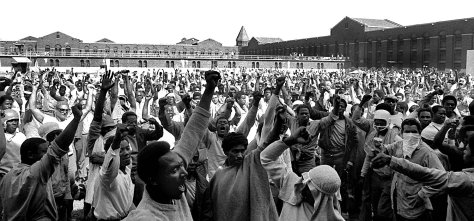
The chosen date will mark 45 years since the Attica prison uprising (pictured above), the bloodiest and most notoriousUS prison conflict. The 1971 rebellion—which involved 1,300 prisoners and lasted five days—and the state’s brutal response claimed the lives of dozens of prisoners and guards. The events left a lasting scar, but have inspired a new generation among today’s much larger incarcerated population.

Tomorrow (August 10), information campaigns, speaking events, and solidarity demonstrations will take place in Georgia, Alabama, Mississippi, Texas, Virginia, Wisconsin, Oklahoma, Missouri, Illinois, Minnesota, California and elsewhere.

The organizing coalition includes The Ordinary People Society (TOPS), Free Alabama Movement (FAM), Free Virginia Movement, Free Ohio Movement, Free Mississippi Movement, New Underground Railroad Movement (CA), Formerly Incarcerated, Convicted People, and Families Movement (FICPFM), and IWOC—which has chapters across the country and with which I’ve been involved for several years.

FICPFM has scheduled a national conference September 9-10 to coincide with the main strikes, which have also been endorsed by the National Lawyers Guild.

These widespread and coordinated actions haven’t happened overnight; they’re the result of years of struggle by people on both sides of the prison walls. Significantly, it’s incarcerated people who are taking the reins in organizing the strikes this time around—despite intimidation by the state.

If history is an indicator, the state will do all it can to limit media coverage. So organizers inside and outside are organizing communication via YouTube, Facebook and Twitter. The “revolution” may not be televised, but these strikes will be accessible in real-time via social media, despite prison officials’ efforts to keep them hidden.


Leaning on History and Technology

Organizing incarcerated people on such a large scale is unprecedented for a reason. As recently as 2009, during my two-year stay with the Georgia Department of Corrections, simply talking about unions was unthinkable for fear of retaliation and isolation.

Now, not only are incarcerated workers in Georgia and across the country talking about fighting back against an unjust system—they’re actually doing it.

Many of us involved with organizing this wave of strikes weren’t even born when Attica happened. But we do have the twin resources of plenty of history to learn from and modern communications—especially mobile phones and social media—to lean on as we seek to shape resistance.

Attica happened at a time when, like today, racial tensions and conflict between police and people of color and poor people were high. In 1971, the Civil Rights Movement and the assassinations of Martin Luther King, Jr. and Malcolm X were fresh in the public mind, and the government was systematically targeting and eliminating leaders of more militant groups like the Black Panthers.

Three months before the Attica Uprising, President Richard Nixon had declared his War on Drugs. The combined US state and federal prison population then hovered below 200,000 people.

Through the Reagan and Clinton years—which ramped up the drug war and introduced mandatory minimum sentencing—until today, that number ballooned to over 1.5 million. In total, over 2.2 million people now behind bars—in jail, prison,immigration detention, or youth detention—on any given day.

This makes the United States the world’s number one prison state and massively raises the stakes for organized resistance. Millions of people’s lives and freedom are on the line.


Earlier Uprisings and the Long March to Reform

The few improvements we’ve seen to the US incarceration system have been painfully slow in coming—and they frequently occur only after resistance from inside or public pressure from outside, like the 2009 Rockefeller drug law reforms

The Attica uprising led to sweeping changes in New York’s penal system, but many of the particpants’ grievances remain problems today. The demands of recent prison strikers strongly echo Attica’s Manifesto of Demands and the earlierdemands of inmates at Folsom in California: basic medical care; fair pay for work; an end to abuse and brutality by prison staff; fair decisions by parole boards; sanitary living conditions; and adequate and nutritious meals.

One of the clearest, and least known, examples of prison workers striking to improve conditions came from North Carolina Correctional Institute for Women (NCCIW) in 1975, four years after Attica. Incarcerated women there staged a sit-in strike against conditions at the state’s only prison laundry facility.

Their nonviolent protest was met with force by prison guards, who corralled them into a gymnasium and assaulted them. The women fought back, triggering the state to send in 100 guards from other prisons to quell the uprising. The prison resumed normal operations four days after the strike began, but the prison laundry was closed shortly after the incident. [1. & 2.]

The NCCIW strike, the Attica Uprising, and the Lucasville, Ohio prison rebellion of 1993—the only major prison uprising in the US to be resolved peacefully— provide vital lessons for prisoners and their allies on the outside.

Siddique Abdullah Hassan, who participated in the Lucasville uprising and remains incarcerated, was recently interviewed by IWOC members. He expressed the need for solid support from the outside during prisoner resistance:

“[I]t is a sad commentary on our part, meaning both those people behind enemy lines and on the outside who are activists. When people step up to the plate and fight in a righteous cause, I think that we should not leave those people for dead.”


2010: A Flashpoint in Georgia

The wave of hunger strikes and work stoppages that have built up to the September 9 coalition began in December 2010, when inmates at six Georgia prisons refused to report for meals and work assignments.

Since almost all the work that allows Georgia’s prison system to function comes from unpaid inmate labor—cooking meals, maintaining facilities, picking up trash, repairing storm damage, and doing other work for county government that would otherwise be filled by members of the community (many incarcerated workers work alongside workers from the free world), even building new prisons and handling administrative tasks for prison officials—the strike made an immediate and lasting impact.

The strikers’ demands were simple and familiar. So was the State’s response. The Georgia Department of Corrections reacted by shutting off water and electricity to the strikers’ living quarters. Most of them quickly succumbed to these harsh measures, but a handful dug in and continue to resist.

The state retaliated against 37 inmates who were identified as organizers with extreme isolation and punishment.

Prison guards at Smith State Prison in South Georgia were captured on film brutally beating Kelvin Stevenson and Miguel Jackson with hammers [caution: graphic violence]. In what prisoners say is a long-running practice, the two men were isolated from public view and denied visits from family members and legal counsel until their wounds healed.

Three Georgia corrections officers were convicted in 2014 for an earlier beating, but justice continues to elude Jackson, Stevenson and their families. The Georgia Department of Corrections responded to the beatings by asking Google to censor the YouTube video.

Four of the original Georgia strikers, now under close security, staged another hunger strike in 2015. This time their only demand was that their security level be reconsidered, per state policy.


The Rising Tide

The Southeast, which incarcerates more of its residents than any other US region, has been a focal point of prison organizing.

Inspired by the actions of their Georgia neighbors, incarcerated workers and supporters in Alabama began organizing work stoppages and hunger strikes of their own under the banner Free Alabama Movement (FAM). Since its inception, FAM has organized for a flurry of work stoppages and minor uprisings at St. Clair, Holman and Staton Correctional Facilities in 2014, 2015 and earlier this year.

FAM organizers explain in this YouTube video why they’re organizing incarcerated workers:

“They [Alabama Dept. of Corrections] not gonna make this man go to school if he needs a GED. They’re not gonna make him get a skill or trade. They’re not gonna make him do the things that will help him be successful when [he] gets back to the streets. They gonna make him work for them and provide free labor. And that’s where Free Alabama Movement comes in.”

FAM developed a manifesto called “Let the Crops Rot in the Fields,” which lays out a framework that’s spread to prisons across the country. Instead of relying on support from the outside or passive actions like hunger strikes, incarcerated workers are utilizing the most powerful tool they have: their labor.

Incarcerated workers are paid pennies an hour—or not at all in Georgia and Texas—for often-backbreaking labor that keeps prisons operating and benefits the state and, increasingly, private corporations.

If they refuse or are unable to work, inmates say they’re subject to punishment, including “isolation, restraint positions, stripping off our clothes and investigating our bodies as though we are animals.”

FAM is also working within the system to enact legislation geared toward improving conditions for incarcerated people in Alabama. They recently presented the Alabama Freedom Bill, which would expand access to education, rehabilitation, and reentry services—services which are already supposed to exist on paper, but rarely do in practice.

Pastor Kenneth Glasgow, a formerly incarcerated person whose organization, The Ordinary People’s Society (TOPS), was a critical player in the early resistance in Georgia and Alabama, says: “They created the School-to-Prison Pipeline, we want to flip that and organize a Re-entry Pipeline.”

Considering the barriers to employment, education and housing created by a criminal record, reentry services are vital, yet the state rarely gives them priority—if they provide them at all.


An Alternative to the Silence of Mainstream Unions 

At a time of high tension, this coalition finds itself at a critical intersection of racial, structural and economic oppression.

Mainstream unions have been largely silent on the issue of inmate labor. In fact, major unions like American Federation of State, County, and Municipal Employees (AFSCME), Service Employees International Union (SEIU), American Federation of Government Employees (AFGE), and the Teamsters represent corrections officers and police across the country—placing them in direct conflict with prison workers and the most marginalized people in our society.

These unions frequently fight to keep prisons open, even when their members are guaranteed work elsewhere. This effectively puts them in the same boat as private prison companies like Corrections Corporation of America and GEO Group, whose contracts often contain quotas which require a certain percentage of beds remain filled.

IWOC currently counts about 1,000 incarcerated members, a number which continues to grow as September 9 approaches. This  makes it the largest area of organizing within Industrial Workers of the World—a labor union controlled directly by workers which operates outside the mainstream union model.

Most, though not all incarcerated people have committed crimes—or at least, what are considered “crimes” under our current system. But they often do so out of necessity, sometimes to support drug problems where treatment or harm reduction services don’t exist and, too often, to support families or just survive in a system which discriminates by race, gender, sexuality and economic status, and robs anyone with a criminal record of opportunities.

Incarcerated workers are still workers, regardless of criminal records. Other than by ending or massively reducing incarceration itself, it is only by building connections between workers behind bars and in the free world that will we begin to reform a system that feeds on human suffering.


A Canary in the Coal Mine

September 9 could be the most powerful call in over a generation to reform—or dismantle—a system that IWOC organizer and Ohio prisoner Sean Swain calls a “third world colony” within the US and a “canary in the coal mine.” Conditions in prison today foreshadow what workers on the outside might face in the future, because the oppression inside is merely an amplified version of the oppression faced by poor people everywhere. In this way and others, this issue impacts allworking people, not just those living in prison.

Most incarcerated people will be released one day. Do we want people who are bitter, humiliated, lacking work skills and education, desperate just to put food on the table and at great risk of reoffending living next door?

Or do we want people who can work, who have ties to their communities, have maintained relationships with loved ones, and who have a vested interest in helping build stronger, more socially and economically just communities when they return home?

If we succeed in making the US pay attention to the events of September 9, it might just help the country decide which of those paths to pursue.


References:

1. The New York Times, “Women Inmates Battle Guards in North Carolina,” June 17, 1975.

2. Dixie Be Damned: 300 Years of Insurrection in the American South, “On the 1975 Revolt at the North Carolina Correctional Center for Women,” Neal Shirley and Saralee Stafford


Jeremy Galloway is harm reduction coordinator at Families for Sensible Drug Policy, program director at Southeast Harm Reduction Project, co-founder of Georgia Overdose Prevention, and a state-certified peer recovery specialist. He lives in North Georgia with his wife and three cats. He writes and speaks regionally about drug policy reform, harm reduction, his experiences, and the importance of including the voices of directly impacted people in policy decisions. His last article for The Influence was “Let’s Abandon the Assumption That If You’ve Been Addicted to a Drug, Total Abstinence Is Essential.”

Labor Mourns Death of Philando Castile

PhilandoAFL-CIO, Teamsters mourn shooting death of Philando Castile

July 7, 2016
ST. PAUL

The Minnesota AFL-CIO(link is external) and Teamsters Local 320(link is external) have issued statements mourning the shooting death of Philando Castile, who was killed Wednesday night after his car was stopped by police in Falcon Heights.

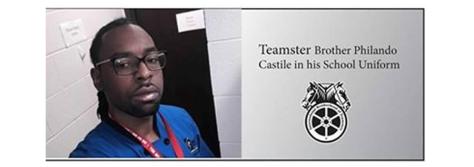
Castile was a member of Local 320 since 2002 and worked as a nutrition services supervisor at J.J. Hill Montessori Magnet School in St. Paul.

“The 11,000 members of Teamsters Local 320 are saddened and grieving the loss of Teamster brother Philando Castile,” Local 320 said in a statement. “This is a tragedy on every level and all Teamsters are encouraged to keep the Castile family in our thoughts and prayers.”

Secretary-Treasurer and Principal Officer Brian Aldes said, “Last night, Teamsters Local 320 lost a union brother and my deepest condolences are with his family in their time of grief.”

Teamsters Local 320 President Sami Gabriel said, “I have known Philando ‘Phil’ Castile since he joined the Teamsters back in 2002 and he was an amazing person who did his job at St. Paul Public Schools because he loved the children he served. He will be deeply missed by his colleagues and his community.”

The union also said that, while it represents law enforcement personnel in some jurisdictions in Minnesota, it did not represent the officer involved in the shooting.

Minnesota AFL-CIO President Bill McCarthy issued the following statement:

“Words cannot even begin to describe what Philando Castile’s family and friends must be going through right now. Minnesota’s labor movement grieves for the loss of yet another young African-American man.

“While our thoughts and prayers are with Philando’s family and friends, we know that thoughts and prayers aren’t enough.

“We need to begin by giving state and federal authorities time to do their jobs, conduct impartial investigations, and let due process take its course.

“However, we must acknowledge that a double standard exists for African-American men when interacting with law enforcement. Whether the bias is intentional or not, too many African-American men find themselves on the receiving end of deadly force.

“There are no quick and easy solutions to this all too familiar incident. These are complex problems that will require tough conversations and decisions.

“Minnesota’s labor movement remains committed to helping address the racial inequalities, in both the economic and criminal justice systems, that continue to persist in our state and nation.”

The Minnesota AFL-CIO is the state labor federation made up of more than 1,000 affiliate unions, representing more than 300,000 working people throughout Minnesota.

Donna Smith, Single Payer Activist, is new Executive Director of PDA

DonnaSmithandJohnConyers
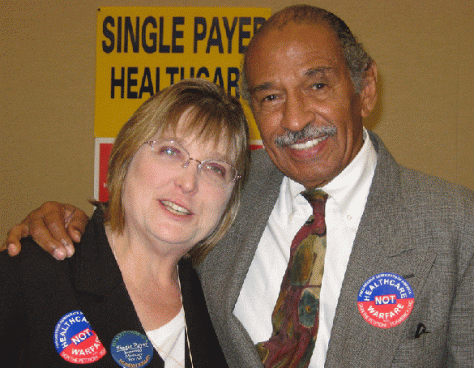
Photo: Donna Smith with Rep. John Conyers, author of HR 676

by Randy Shannon

Treasurer, PA 12th C.D. Chapter, PDA

As a long-time activist in Progressive Democrats of America and the leader of the PDA Economic and Social Justice Team, I want to welcome Donna Smith as PDA’s new Executive Director. Donna Smith has been a national leader in the fight for Medicare for All and a long time member of PDA. She was featured in Michael Moore’s film Sicko.

Thanks to Conor Boylan for his work helping PDA through the transition from the tragic loss of our founder Tim Carpenter.

Tim Carpenter‘s last big project for PDA was to organize a national petition drive to convince Bernie Sanders to run for President. Tim’s vision is now a reality, and it is one of Tim’s greatest successes. PDA is helping build the grass roots movement that can produce a President Sanders.

Bernie has made Medicare for All a central element of his campaign for President. Who better than Donna Smith, shown here with Rep. John Conyers, author of HR 676 – Medicare for All, to lead PDA to help elect Bernie Sanders President and finally win the battle for Medicare for All.

Read the Medicare for All bill – HR 676.

UAW Wins Election at VW Chattanooga

VWChattanoogaWorkers

BY BERNIE WOODALL

December 4, 2015
Reuters
The United Auto Workers union won its first organizing vote at a foreign-owned auto assembly plant in the U.S. South on Friday, in a groundbreaking victory after decades of failed attempts.

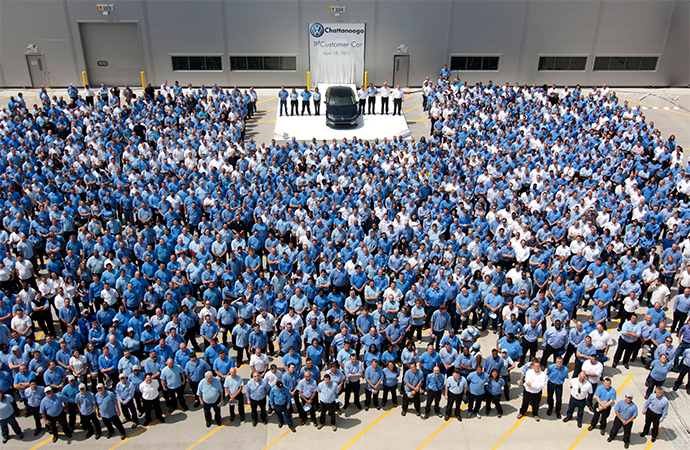
About 71 percent of skilled trades workers who cast ballots at Volkswagen AG’s (VOWG_p.DE) factory in Chattanooga, Tennessee voted to join the UAW, according to the company and the union. The skilled trades workers account for about 11 percent of the 1,450 hourly employees at the plant.

If the UAW victory, as expected, survives an appeal by Volkswagen to the National Labor Relations Board, the 164 skilled trades workers will be the first foreign-owned auto assembly plant workers to gain collective bargaining rights in the southern United States. While the unit of skilled trades workers who maintain the assembly machinery are a fraction of the hourly work force, observers said the victory was significant and could serve as a launching pad for the union’s efforts to organize other foreign-owned plants in the south.

“It gives the UAW a significant new tool in trying to organize the foreign automakers in the south. Symbolically, it’s going to be huge,” said Dennis Cuneo, a former automotive executive who has dealt with the UAW in past organizing campaigns. Gary Casteel, UAW secretary-treasurer and head of the union’s organizing efforts, downplayed the significance of the vote and its influence on the UAW’s attempts to organize workers at southern plants including those owned by Nissan Motor Co (7201.T) and Daimler AG’s (DAIGn.DE) Mercedes-Benz.

“To the overall grand plan of the UAW it’s probably not monumental, but to those workers, it’s a big deal,” Casteel said in an interview on Friday.

Casteel, and Chattanooga UAW Local 42 President Mike Cantrell, in a separate interview on Thursday, said the election was a result of the “frustration” of skilled trades workers not having collective bargaining rights for wages and benefits. “Every case has to be built on the circumstances” at each plant, Casteel said. “We are not filing on Nissan or Mercedes tomorrow, but if our evaluation proved that there was a unit that was ready and strong enough to have an election, certainly we would explore it.”

The union narrowly lost a February 2014 ballot in which all of the Chattanooga plant’s hourly workers were eligible to vote.

During that vote, Republican U.S. Senator Bob Corker, whose hometown is Chattanooga, said, “I’ve had conversations today and based on those am assured that should the workers vote against the UAW, Volkswagen will announce in the coming weeks that it will manufacture its new mid-size SUV here in Chattanooga.” Continue reading UAW Wins Election at VW Chattanooga

PA Gov. Battles Republicans for Education Budget

Wolf, Pa. GOP to resume meetings as budget stalemate hits three weeks

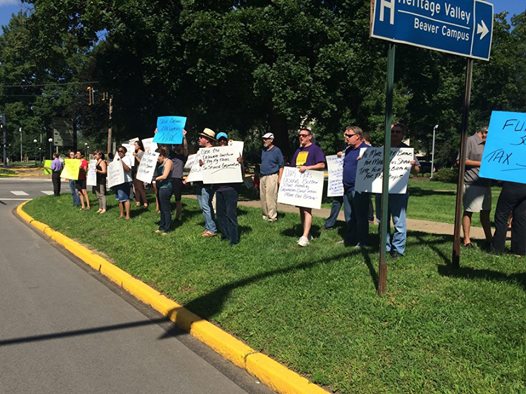
Progressive Democrats and Union members rally for taxing drillers and funding schools in Beaver, PA on 7/20/15

HARRISBURG — The Pennsylvania House of Representatives has returned to Harrisburg as Gov. Tom Wolf and top Republican lawmakers were set to resume face-to-face meetings to discuss a three-week-old budget stalemate.

No major votes were expected today.

The Democratic governor and Republicans who control the Legislature are sparring over competing budget proposals. Mr. Wolf is seeking a multibillion-dollar tax increase to deliver a record funding boost to schools and wipe out a long-term deficit that’s damaged Pennsylvania’s creditworthiness.

Republicans passed a zero-tax increase budget with a smaller boost for education, but Mr. Wolf vetoed it, saying it didn’t meet his goals and used gimmickry to balance.

The stalemate has left the state government without full spending authority. That includes payments to schools and nonprofits and county agencies that help administer Pennsylvania’s social-services safety net.

During a regularly scheduled appearance at KDKA-AM radio in Pittsburgh today, Mr. Wolf said that bad state budgeting is costing taxpayers about $170 million a year.

Mr. Wolf said state government is paying a premium of about 1 percent interest on $17 billion in debt. He linked the extra borrowing cost to five credit downgrades that Pennsylvania has received in the past three years.

“This isn’t just Democrat Tom Wolf talking, this is people outside looking at us and right now we’re paying a premium of about 1 percent on our debt, that’s $17 billion,” Wolf said. “That adds up to about $170 million a year we’re all paying. It’s not going to education. It’s not going to roads and bridges. It’s going to the pockets of people who have bought our bonds because we don’t have a good budget.”

In the meantime, Republicans are complaining about a $750,000 ad campaign by an affiliate of the Washington, D.C.-based Democratic Governors Association that is targeting them in the showdown. The affiliate, America Works USA, has not disclosed the source of the money.

Mr. Wolf and Republicans are sparring over competing budget proposals during the stalemate, which has left the state government without full spending authority. That includes payments to schools and nonprofits and county agencies that help administer Pennsylvania’s social services safety net.

Mr. Wolf is seeking a multibillion-dollar tax increase to deliver a record funding boost to schools and wipe out a long-term deficit that’s damaged Pennsylvania’s creditworthiness. Republicans passed a zero-tax increase budget with a smaller boost for education, but Wolf vetoed it, saying it didn’t meet his goals and used gimmickry to balance.

Mr. Wolf, a first-time officeholder who became governor in January, told KDKA-AM he believes that Republicans are probably doing “some testing of me as a new governor, which I think is designed to see if I’m really serious about standing up for what I believe and what I think the people of Pennsylvania want.”

Trumka Works to Control Trade Unions’ Sanders Momentum

AFL-CIO’s Challenge: Tempering Unions’ Embrace of Bernie Sanders

By Sandy Fitzgerald   |   Friday, 03 Jul 2015 10:42 AM
AFL-CIO Pres. Richard Trumka with Sen. Bernie Sanders

AFL-CIO chief Richard Trumka is warning labor leaders to hold off on endorsing Sen. Bernie Sanders’ bid for the presidency, saying the federation’s bylaws specify that such endorsements are to be left up to the organization on a national level.

Trumka, in a memo sent out this week, reminded groups that they are not allowed to “endorse a presidential candidate” or even work on statements or resolutions that indicate a preference for any candidate, reports Politico. Further, he said that “personal statements” are also forbidden.

“Because in years past, and already this year, a number of questions have been raised,” Trumka said, “I want to remind you all that the AFL-CIO endorsement for president and vice president belongs to the national AFL-CIO.

“State federations, central and area labor councils, and all other subordinate bodies must follow the national AFL-CIO endorsement regarding president and vice president.”

Under the organization’s procedures on endorsement, a political committee makes its recommendation to the executive council in Washington, which then submits it for ratification by leaders of its member unions. A two-thirds majority is required to approve the endorsement.

Trumka said the AFL-CIO had sent out questionnaires to both Democrats and Republicans, with a Friday deadline, and plans to interview candidates during its July executive council meeting.

National union leaders, though, are drawn to the party’s more progressive side, represented by Sanders, an independent running for the Democratic nomination, and groups in South Carolina and Sanders’ home state of Vermont have already passed resolutions that support him. Some union leaders in Iowa are also calling for a resolution to be passed at their convention in August to back Sanders.

Continue reading Trumka Works to Control Trade Unions’ Sanders Momentum

Leading House Democrat Will Oppose TPP Fast Track

Chris Van Hollen

House Budget Committee ranking member Chris Van Hollen (AFGE/CC BY 2.0)

As legislation to fast-track congressional approval of the Trans-Pacific Partnership gets ready to finally make its debut in Congress this week, a top Democratic member of the House announced he would oppose the bill.

Representative Chris Van Hollen, the ranking member of the House Budget Committee, wrote in a letter to Representative Sandy Levin, the ranking member of the House Ways & Means Committee, that he would oppose fast-track authority, also known as Trade Promotion Authority or TPA. The letter was obtained by The Nation and its authenticity was confirmed by an aide to Van Hollen.

Van Hollen opposed a previous iteration of fast-track legislation last year, as did most other top Democrats, including Minority Leader Nancy Pelosi. But so far, many of those Democrats (including Van Hollen) had not yet announced a position on the new TPA legislation being hammered out by Senators Ron Wyden, Orrin Hatch, and Representative Paul Ryan. (Levin opted out of those talks, and believes Congress should see at least the outline of a trade deal before taking up legislation to fast-track its approval.) Pelosi still remains publicly undecided.

If Van Hollen—a visible member of the Democratic caucus and ranking member of a major committee—ultimately supported the Wyden-Hatch-Ryan bill, it would have been a signal that House Democrats were ready to go along with the Obama administration’s trade agenda. But in his letter, Van Hollen wrote “it is clear that many [of my concerns] will not be included in a revised TPA.”

While the legislation remains behind closed doors for now, Van Hollen said continuing public opposition from Republicans made it clear that the TPA legislation wouldn’t include additional currency, labor, and environmental provisions. Moreover, he wrote that since TPA was being unveiled so close to the conclusion of the overall trade talks, “it is clearly too late for TPA to have any meaningful impact on the shape of TPP negotiations.”

Continue reading Leading House Democrat Will Oppose TPP Fast Track

HR 1391 to Strengthen Social Security

More information

FACT SHEET

SSA Chief Actuary Letter

(Washington) – Today, Congressman John B. Larson released details of the Social Security 2100 Act, H.R. 1391. Authored and introduced by Congressman Larson, the proposal stands to comprehensively strengthen benefits for current and future Social Security beneficiaries while keeping the program strong through the 21st Century:

“Social Security is America’s insurance program. In fact, it’s the insurance you have paid for!”said Larson. “Social Security lifts Americans, including children, out of poverty and boosts our economy as a whole. This is a system we can count on, and by taking common-sense, gradual steps, we can ensure that Social Security benefits keep up with the needs of current and future generations.”

“We applaud Representative Larson for sponsoring such important, visionary legislation,” said Nancy Altman and Eric Kingston, founding Co-directors of Social Security Works, in a joint statement. “In recognition of a looming retirement income crisis, an increasing squeeze on middle class families, and rising income inequality, Representative Larson has introduced The Social Security 2100 Act, which is an important step in addressing all three. Among other important improvements, it increases benefits for all current and future beneficiaries and switches to the more accurate CPI-E to better protect benefits from eroding over time. He pays for the improvements in responsible, balanced ways, including by requiring the wealthiest to pay more of their fair share and by increasing the return on Social Security’s $2.8 trillion reserve.”

Larson’s proposal improves Social Security benefits by providing:

  • Benefit bump for current and new beneficiaries – Everyone will see modest increase starting in 2015.
  • Improved cost of living adjustments (COLA) by adopting the CPI-E formula.
  • A tax break to over 10 million Social Security recipients by raising the threshold for taxation on benefits for individual and joint filers.
  • Protection for low income workers because no one who paid into the system should come out poor. It would set a new minimum benefit that will be 25% above the poverty line.

Social Security is currently estimated to remain solvent until the early 2030’s. According to the Social Security Administration’s Chief Actuary Stephen C. Goss, Larson’s proposal would make the Social Security Trust Fund fully solvent beyond the 75-year projection period (2088) and put the system into actuarial balance.

Larson’s proposal keeps Social Security strong through the 21st Century by ensuring millionaires and billionaires pay into the system like every American, by gradually increasing the payroll tax on workers and employers starting in 2018, equivalent to 50 cents per week cumulatively, and investing a portion of the reserve back into the American economy to double the rate of return on assets held by the Trust Fund.

###

Related

Huffington Post Blog Congressman John Larson’s Important Plan to Expand Social Security

Analysis of 2016 People’s Budget

Grijalva EllisonThe ‘People’s Budget’Analysis of the Congressional Progressive Caucus Budget for Fiscal Year 2016

Executive summary

http://www.epi.org/publication/the-peoples-budget-analysis-of-the-congressional-progressive-caucus-budget-for-fiscal-year-2016/

The Congressional Progressive Caucus (CPC) has unveiled its fiscal year 2016 (FY2016) budget, titled The People’s Budget—A Raise for America. It builds on recent CPC budget alternatives in prioritizing near-term job creation, financing public investments, strengthening the middle and working classes, raising adequate revenue to meet budgetary needs while restoring fairness to the tax code, protecting social insurance programs, and ensuring fiscal sustainability.

Refer to the end of this paper for Figures A–C, visualizing the People’s Budget’s impacts on deficits, debt, and nondefense discretionary funding; Tables 1 and 2 detailing the policy changes within the budget; and summary tables 1 through 4 depicting budget totals as well as comparisons with the current law baseline.

The People’s Budget aims to improve the economic well-being of the working and middle classes by focusing on finally closing the persistent jobs gap, and it provides substantial upfront economic stimulus for that purpose. This paper details the baseline assumptions, policy changes, and budgetary modeling used in developing and scoring the People’s Budget, and it analyzes the budget’s cumulative fiscal and economic impacts, notably its near-term impacts on economic recovery and employment.1

We find that the People’s Budget would have significant, positive impacts. Specifically, it would:

  • Accelerate the economic recovery. The People’s Budget would sharply accelerate economic and employment growth. It would boost gross domestic product (GDP) by 3.9 percent and employment by 4.7 million jobs at its peak level of effectiveness (within one year of implementation), while ensuring that fiscal support lasts long enough to avoid future “fiscal cliffs” that could throw recovery into reverse.2
  • Promote job growth and achieve full employment. The budget’s near-term economic stimulus measures would create 4.7 million jobs in calendar year 2015 and an additional 3.8 million jobs over the following two years. By the end of calendar year 2018 the People’s Budget would support 9.1 million job years and would ensure a prompt and durable return to full employment.
  • Make necessary public investments. The budget finances roughly $528 billion in job creation and public investment measures in calendar year 2015 alone and roughly $1.34 trillion over calendar years 2015–2017.3 This fiscal expansion is consistent with the amount of fiscal support needed to rapidly reduce labor market slack and restore the economy to full health.
  • Facilitate economic opportunity for all. By expanding tax credits and other programs for middle- and working-class workers, boosting public employment, and incentivizing employers to create new jobs, the People’s Budget aims to boost economic opportunity for all segments of the population.
  • Strengthen social insurance. The People’s Budget strengthens the social safety net and proposes no benefit reductions to social insurance programs—in other words, it does not rely on simple cost-shifting to reduce the budgetary strain of health programs. Instead, it uses government purchasing power to lower health care costs (health care costs are the largest threat to long-term fiscal sustainability) and builds upon efficiency savings from the Affordable Care Act. The budget also expands and extends emergency unemployment benefits and increases funding for education, training, employment, and social services as well as income security programs in the discretionary budget.4
  • Smartly cut spending. The budget focuses on modern security needs by repealing sequestration cuts and spending caps that affect the Defense Department but replacing them with similarly sized funding reductions. It ends emergency overseas contingency operation spending in FY2016 and beyond, and ensures a slow rate of spending growth for the Defense Department for the remainder of the decade.
  • Ask everyone to contribute his or her fair share. The budget restores adequate revenue and pushes back against income inequality by adding higher marginal tax rates for millionaires and billionaires, equalizing the tax treatment of capital income and labor income, restoring a more progressive estate tax, eliminating inefficient corporate tax loopholes, levying a tax on systemically important financial institutions, and enacting a financial transactions tax, among other tax policies.
  • Reduce the deficit in the medium term. The budget increases near-term deficits to boost job creation, but reduces the deficit in FY2017 and beyond relative to CBO’s current law baseline. The budget would achieve primary budget balance (excluding net interest) and sustainable budget deficits below 2 percent of GDP in FY2017 and beyond.
  • Target a sustainable debt level. After increasing near-term borrowing to restore full employment, the budget gradually reduces the debt ratio to a fully sustainable 66.0 percent of GDP by FY2025. Relative to current law, the budget would reduce public debt by $3.2 trillion (11.6 percent of GDP).