Category Archives: Green Jobs

Montgmery Locks And Dams Repairs ‘Should Be Dealt With Now’

Green jobs for cleaner bulk transport

By J.D. Prose
Beaver County Times

USep 17, 2019 – POTTER TWP. — Tuesday offered beautiful weather for a tugboat ride on the Ohio River to view the Shell Chemicals’ ethane cracker plant site, but it was a distressing situation on those same waters that concerned an influential Ohio congresswoman.

After touring the Montgomery Locks and Dam at the invitation of U.S. Rep. Conor Lamb, D-17, Mount Lebanon, U.S. Rep. Marcy Kaptur, a Toledo Democrat, expressed dismay at the crumbling condition of the 83-year-old structure.

“It’s a poster child for why Congress needs to pass an infrastructure bill and why the president needs to sign it,” said Kaptur, a member of the powerful House Appropriations Committee and chairwoman of that committee’s subcommittee on energy and water development.

“This is really serious here,” said Kaptur, noting the cracks in the locks and damn officials pointed out to her on the walking tour. “This should be dealt with now, not five years from now, not 10 years from now. Now.”

A $1.09 million project to temporarily fix the damaged middle-lock wall began about a year ago with the U.S. Army Corps of Engineers estimating that it had a 50 percent chance of failing in the next decade if it were not addressed.

A catastrophic failure would halt all river traffic, officials warned, and would significantly damage the regional economy. With construction on Shell’s $6 billion cracker plant now in full swing, repairing the locks and dam is even more vital, Lamb said.

“Fixing the locks and dams, especially the Montgomery Locks, is one of the most import infrastructure needs of western Pennsylvania, and it’s one that we can actually do,” Lamb said. “It’s cracked concrete, and we know how to fix that.”

Lamb and Kaptur were joined on the tour by officers from the U.S. Army Corps of Engineers, Mary Ann Bucci, the executive director of the Port of Pittsburgh Commission, and Matt Smith, the president of the Greater Pittsburgh Chamber of Commerce and a former Allegheny County state senator.

The group toured the locks and dam and then climbed aboard a Campbell Transportation Co. tugboat to soak in a river view of the cracker plant before returning to shore.

Smith said keeping the Ohio River navigable for goods and products is essential to the region’s success.

“It’s billions of dollars of economic development,” he said.

Part of Lamb’s job now is convincing House colleagues in leadership roles, such as Kaptur, that the region’s locks and dams must be upgraded immediately.

In an April letter to Kaptur and her subcommittee’s ranking Republican, Lamb and four colleagues — U.S. Reps. Guy Reschenthaler, R-14, Peters Township; Mike Doyle, D-18, Forest Hills; David McKinley, R-W. Va.; and Bill Johnson, R-Ohio — asked for the “highest possible increase” in funding for the Corps of Engineers’ account for pre-construction, engineering and design.

The bipartisan group noted that the account was funded at $125 million in the 2019 Energy and Water Development Appropriations Act, which is $48 million higher than the $77 million requested in the 2020 fiscal year budget.

Appropriating the highest amount would allow for the Upper Ohio Navigation Project to pursue funding. The region’s locks and dams fall under that project.

Kaptur credited Lamb with bringing photos of the Montgomery Locks’ condition to a subcommittee hearing to prove how bad the situation is there.

“A picture is worth a thousand words. We’re all very proud of America and proud of the places that we come from and when you see a cracked and degraded piece of infrastructure it makes you feel a little bit of ashamed,” Lamb said.

“That’s our responsibility as public officials … to maintain and improve that stuff so we can have a good quality of life,” he said. “I think the picture really communicates that, that we’ve let this go on for way too long and its urgent that we fix it right away.”
Mayor Bill Peduto Introduces Bill To Eliminate Carbon Emissions Produced By Local Government Buildings

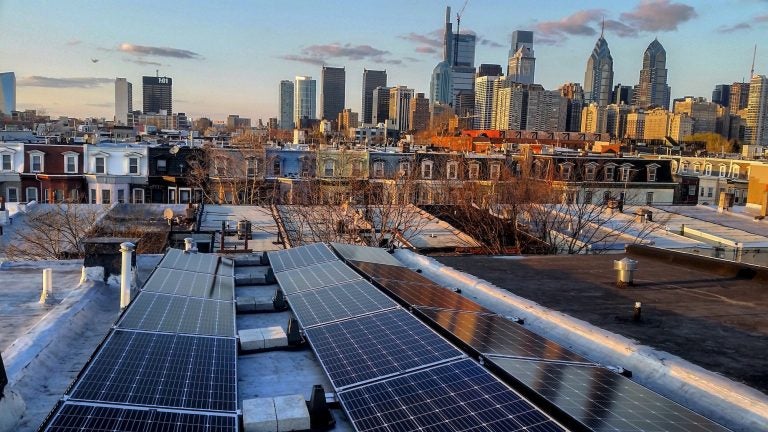
Urban Solar underway in Philadelphia

By Amanda Waltz
Pittsburgh City Paper

Sept 3, 2019 – When President Donald Trump famously namedropped Pittsburgh in his reasoning for exiting the global Paris Agreement on climate change, Mayor Bill Peduto was quick to take a stand by voicing his city’s commitment to lowering emissions that contribute to global warming. Now, two years after the incident, Peduto appears to be continuing with that mission, as he introduced new legislation today to Pittsburgh City Council that would require all new or renovated government buildings to be net-zero, meaning they produce as much energy as they consume.

Peduto believes the bill would not only help meet goals outlined in the City of Pittsburgh’s Climate Action Plan 3.0, which aims to reduce greenhouse gas emissions by 50 percent by 2030 and 80 percent by 2050, it would also significantly lower municipal energy costs.

“Pittsburgh is taking real steps to meet its energy goals, and moving to net-zero construction will be one of the most meaningful and impactful actions we’ve ever taken,” Peduto stated in a press release. “It is not only the right move for the planet, but for the city’s budget too.”

City of Pittsburgh Chief Resilience Officer, Grant Ervin, seconded Peduto in a tweet, in which he called the bill, “A major policy tool to lower city governments carbon emissions, save money over time and upgrade public facilities.”

The World Green Building Council, a global network committed to reducing the building and construction sector’s CO2 emissions, defines net-zero buildings as “highly energy efficient and fully powered from on-site and/or off-site renewable energy sources,” such as solar or wind. The council believes that, in order to help mitigate global warming, all buildings must meet net-zero emission standards by 2050.

In Pittsburgh, the proposed ordinance would cover all construction of new buildings and all major renovations of existing buildings on City-owned property. A press release stated that buildings are the “largest end-users of energy in the world,” and Pittsburgh, along with other cities, is looking at more ways to tackle the current climate crisis. The effort aligns Pittsburgh with Los Angeles and New York City, both of which recently moved toward energy-efficient or zero-emission construction and renovation methods.

There would be some exemptions, however, including renovations of buildings that are being decommissioned or sold within five years, emergency renovations, and short-term buildings such as trailers.

The announcement follows a report released in August by the Planning Department’s Sustainability and Resilience Division, which said reducing the energy used by municipal buildings could cut the City’s annual energy costs, totaling $2,700,000, in half.

A public hearing will be scheduled on the bill.

Climate Change In Pittsburgh: Locals Aired Concerns on Pollution, Industry and Legislation at Town Hall

U.S. Rep. Mike Doyle, who led Wednesday’s event, called out President Donald Trump for framing climate change as a ‘hoax.’

By Varshini Chellapilla
PublicSource,org

August 15, 2019 – Pittsburgh isn’t a coastal city, in the hurricane belt or among the areas with the worst heat, but there was no shortage of local concerns to discuss at Wednesday’s town hall on climate change. About 200 people showed up to the event organized by U.S. Rep. Mike Doyle, and the conversation ranged from the cracker plant in Beaver County and regional air pollution to the Green New Deal and the Trump administration attempting to roll back Obama-era carbon restrictions.

“I want to provide you with information on how we can go about reducing our greenhouse gas emissions and curbing climate change before it’s too late and, particularly, how can we make a change while we have a president who thinks climate change is a hoax and an EPA which is trying to protect polluters instead of people,” said Doyle (D-Forest Hills) while stressing the urgency to reach net-zero carbon emissions by 2050 as advised by the United Nations.

The UN Intergovernmental Panel on Climate Change released a report in the fall calling for a cut of 40% to 50% of emissions by 2030 to limit global warming by 1.5 degrees Celsius above pre-industrial levels. Even if that goal is met, there are still expected to be consequences, like worsening storms, heat waves and forest fires.

Climate change “is really inextricably tied to every other system and problem we see,” said Anaïs Peterson, an urban studies student at the University of Pittsburgh, at the event held in the Soldiers & Sailors Memorial Hall and Museum.

However, like several other attendees, Peterson was not satisfied with the format of the event, which included two expert panels, followed by a question-and-answer session with the public. Doyle gave an introductory speech, briefed attendees on action in Congress and answered questions.

“I feel like it’s so rare to actually have this face-to-face time with people from Washington,” Peterson said. “I would have liked to have him be more present and have more of a voice throughout the conversation.”

One of the biggest concerns raised by some attendees was Doyle’s stance on the Green New Deal. Introduced in February by Alexandria Ocasio-Cortez (D-New York) and Sen. Edward Markey (D-Massachusetts), the Green New Deal calls for swift action to solve the climate crisis and curtail carbon emissions. The Green New Deal is a proposed overhaul to the U.S. economy that includes ending the use of fossil fuels and shifting transportation systems to use only renewable energy, among other proposals. Doyle is not a co-sponsor of Ocasio-Cortez’s resolution.

“The Green New Deal got a lot of attention when it was introduced in February, but I believe it kicked off an important conversation and has built momentum to address climate change that is affecting our planet,” Doyle said. “I agree with supporters of the Green New Deal’s goals of getting the U.S. economy to net-zero carbon emissions quickly. I share many of its long-term goals as well, and I believe that the components of the Green New Deal will be a part of any comprehensive climate bill that comes out of the House of Representatives.”

Gerald Dickinson, who is challenging Doyle for his seat, criticized Doyle’s stance.

“It is very low key,” Dickinson said after the event. “It’s too incremental and not enough urgency and not enough desire and energy to actually make a difference.” Continue reading Climate Change In Pittsburgh: Locals Aired Concerns on Pollution, Industry and Legislation at Town Hall

THE GREEN NEW DEAL: LET’S GET VISIONARY

Lately there’s been a lot of bad news about climate change and the future of humanity.

Last October, the United Nations issued a major report warning of a climate crisis as soon as 2040. The day after Thanksgiving, the Trump administration tried to bury the release of its own report on the dire effects of climate change already occurring in the United States, which included dark predictions for the future.

In December alone, we learned that 2018’s global carbon emissions set a record high. NASA detected new glacier melts in Antarctica. There were wildfires. Coral reef bleaching. Ecosystem upheaval in Alaska as the arctic ice melts.

Meanwhile the Trump administration sent an adviser to the UN climate summit to promote coal and warn against climate “alarmism.”

So this all sucks. But here’s the thing about climate change: You can either ignore it, get depressed about doomsday scenarios, or believe that no matter how badly we’ve screwed up as a species, we’re also smart and creative enough to fix this.

If the alternatives are ignorance and despair, I’ll choose hope. Every single time.

So where can we focus our hope? What can we actually do about climate change?

I’m excited about the Green New Deal, an idea that’s been kicking around since 2007 but was popularized this fall by Representative-elect Alexandria Ocasio-Cortez (D-NY) and the youth-led Sunrise Movement. At least 37 members of Congress have signed on, along with dozens of activist organizations.

Not only a plan to shake up environmental policies, it’s also a massive jobs program, named after the Depression-era New Deal. The basic idea is to get us to 100 percent renewable energy by 2035, by putting Americans to work building a new energy infrastructure.

It merges the immediate concerns of working Americans — jobs and the economy — with the long-term concerns of climate change. We don’t have to choose between economic sustainability and environmental sustainability.

“This is going to be the Great Society, the moonshot, the civil rights movement of our generation. That is the scale of the ambition that this movement is going to require,” said Ocasio-Cortez during a town hall meeting with Bernie Sanders.

The ambitious plan touches on a “smart” grid; energy-efficient buildings; sustainable agriculture, manufacturing, transportation, and infrastructure; and exporting green technology to make the U.S. “the undisputed international leader in helping other countries transition to completely carbon neutral economies.” Think of the scale of this program, and then think of all the jobs that would be created. This could be huge for rural America in particular.

Will the Green New Deal be expensive? Probably. But that doesn’t mean it will be a drag on our economy.

A recent study by the Global Commission on the Economy and Climate revealed that we could save $26 trillion, worldwide, if we shifted to sustainable development. Another new study shows wind and solar power to be the cheapest sources for electricity around the world. Last year, the Republican mayor of Georgetown, Texas switched his city to 100 percent renewable energy because of the low costs in the long-term.

On the other hand, at the UN climate summit in Poland, some of the world’s most powerful investors warned of a major financial crash if we don’t solve the climate crisis.

Is the Green New Deal too ambitious? No. We need ambition. The impending climate crisis is the biggest problem the human race has ever faced, and we can’t think small.

So let’s get visionary. Let’s dream big. Let’s fight for our children, and let’s invest in their future.

On the Rise: Solar Farms Begin Cropping Up in Western Pa

Solar farm in Smith Twp, near Burgettstown.

By Megan Tomasic
TribLive

May 5, 2019 – Down a gravel road close to what constitutes downtown Slovan in rural Washington County, roughly 3,500 solar panels stand in a field of green grass, their blue-hued faces tilted toward the sun.

The development, one of the largest solar farms in Western Pennsylvania, spans 4.5 acres and can power about 750 homes. It’s just a small part of a national trend infiltrating the Pennsylvania landscape.

A similar project is slated to occupy 12 acres of Hempfield, Westmoreland County. Almost 11,000 solar panels will be visible from Hunker-Waltz Mill Road, near Westinghouse Electric Co.

But the state still has a long way to go, with only three major solar farm projects powering roughly 575 homes and one business — Lincoln Financial Field in Philadelphia, Snyder’s-­Lance in Hanover and Elizabethtown Solar, according to the Solar Energy Industries Association, or SEIA, a solar energy advocacy group.

Westmoreland and Allegheny counties have no big solar projects, according to a report by the Pennsylvania Public Utility Commission.

The report does not include individual panels on the rooftops of residential homes, said Nils Hagen-Frederiksen, press secretary for the PUC.

While there are few solar farm developments in the immediate area, Pennsylvania has a growing number of solar jobs.

Between 2017 and 2018, the number of jobs increased by 10%, accounting for almost 4,220 workers, according to Avery Palmer, communications director at The Solar Foundation, a nonprofit organization promoting solar and solar technology.

“Most of the jobs will be at companies that install solar on rooftops or commercial businesses,” Palmer said. “With that said, large utility-­scale farms are a major job creator in other states, and developing these projects could help create even more solar jobs in Pennsylvania.” Continue reading On the Rise: Solar Farms Begin Cropping Up in Western Pa

A Closer Look at Climate Accord–and Our Congressman

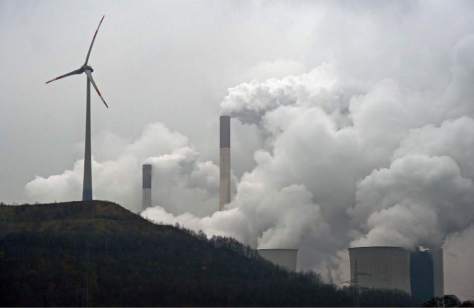
wind-coal

By Tom Prigg
TribLive Op-Ed

July 14, 2017 – This is in response to Keith Rothfus’ recent op-ed, “A better ‘climate’ for America,” and honestly, it’s difficult to know where to begin.

In reference to the Paris accord, Rothfus claimed, “The American people would never approve of a deal so harmful to their security and prosperity.”

Yet, as The Atlantic reported, 70 percent of Americans want the United States to remain in the Paris accord.

Rothfus argued that during the 2014 polar vortex, natural gas failed to provide energy to capacity while coal and nuclear energy did just fine.

However, PJM Vice President Craig Glazer stated at the time that coal generation was stymied by “frozen coal or wet coal, frozen limestone, frozen condensate lines, frozen fly ash transfer equipment, cooling tower basin freezing, and freezing of injection water systems for emissions control equipment.”

Rothfus suggest the coal industry’s recent woes are due to President Obama’s policies. While some policies may have affected the coal industry output, the real driving force has been its own market forces.

Charles Bayless, former chief executive of Tucson Electric Co. and Illinois Power, said, “A gas plant is much cheaper to build than a coal plant and it is much simpler to run.”

Continue reading A Closer Look at Climate Accord–and Our Congressman

Green Jobs and the Ohio: A Bold New Vision for Restoring America’s Most Polluted River

24951876696_85224986c5_o-2400px

The Ohio is the archetype of a “working river.” Its near-thousand-mile course connects cities like Pittsburgh, Cincinnati and Louisville and is lined with industrial facilities and power plants. In this February 2016 photo, a coal barge pushes past the industrial town of Marietta, Ohio. Photo: Mike Tewkesbury via Flickr

By Kara Holsopple

AlleghenyFront.org

October 21, 2016 – In many ways, the Ohio River is an unsung resource for the region it serves. The Ohio’s near-thousand-mile course flows through Pennsylvania and five other states before emptying into the Mississippi. It’s a source of drinking water for more than five million people. But its long legacy as a “working river” has also made it the most polluted in the country. Today, many cities and towns along the Ohio are rethinking their relationship to the river—and weighing how a large-scale restoration effort could be critical to the region’s future. But just how do we get there? As part of our Headwaters series, we talked with the National Wildlife Federation’s Collin O’Mara, who’s hoping to ignite a new way of thinking about one of the region’s most vital natural resources. (Photo: Shannon Tompkins via Flickr)

The Allegheny Front: So tell us why the National Wildlife Federation is turning its attention to the Ohio River.

Collin O’Mara: One of the things that we’re seeing is that there have been amazing investments made in the Great Lakes and the Chesapeake Bay. But these investments tend to be in places that are seen as destinations: Folks plan vacations or retire or have second homes in some of these places. But we’re not seeing the same level of investments in what I would consider the “working waterways”—places like the Allegheny River leading into the Ohio River Valley, or places like the Delaware River. But 25 million people live in the Ohio River Valley Basin—that’s almost a tenth of the country. And yet we’ve seen virtually no investment of federal resources in trying to clean up the legacy pollution. The Ohio is still the most polluted waterway in the entire country. Over the last 50 years, between the Clean Water Act and reducing the direct discharge of pollutants into the water, there has been some progress. But folks don’t plan fishing vacations around going to the Allegheny, even though cities are seeing investments in their riverfronts as a way to revitalize their downtowns. So the next thing is having that investment not stop at the river’s edge—literally. We can have the water itself become a place you can swim, fish, recreate and enjoy the benefits that come from that.

AF: There have been some efforts to cooperate around water in this region, but they have largely stalled. So what can be done to move that effort forward?

CO: We’ve been working with some of the mayors and different advocacy groups in the region, trying to just begin talking about the Ohio River as a system and [develop] a vision for the entire watershed. There’s been some good work in places like the Beaver River; there are a bunch of groups in Kentucky working on the Green or the Cumberland. So we’re trying to unite those voices under a common vision. This has been done in places like the Chesapeake or the Great Lakes. So it’s really about trying to have a vision so folks are as excited about restoring these iconic waterways that, in many ways, help build our country.

AF: Well, it seems like the most exciting thing happening on the Ohio recently is the ethane cracker facility that Shell is planning to build near Pittsburgh. People are excited about the jobs and the economic development around that. How do you strike a balance between restoration and economic development?

CO: So often, in places that are working waterways, we basically treat these water bodies as simply a support for larger industrial facilities. And you see it with crackers or refineries, and you have many of those across the entire basin. Those jobs are important, but we don’t value the economic loss when you degrade these waterways. Right now across America, the outdoor economy is about a $646 billion economy. It employs more than six million people. And that puts it on par with many of the largest industries in the country. A lot of those jobs are water-dependent jobs related to fishing or swimming or outdoor activities. So one of the cases we’re trying to make is that it doesn’t have to be “either/or.” The technologies exist now that we can actually have some industrial facilities and still not have to contaminate the waterway. The old dichotomy of having to choose between the economy or the environment really isn’t true, and there are places in the country that are making those choices that they want both. What we’re trying to figure out is how do we work with leaders across the region to prioritize this. The cities are already making investments. In Pittsburgh, for instance, there’s obviously a focus on the fact that the water is what separates Pittsburgh from other cities in the region. So the question is, how do you take the next step?

AF: So do you imagine a scenario where Pittsburgh is more like the Chesapeake Bay—where it’s more of a recreational hub and that becomes a viable alternative to more industry?

CO: I absolutely do. Obviously, you have PCBs and dioxins and other things we have to get out of the water column that are legacy pollution. It’s not cheap, but it can be done. But there are amazing opportunities. (Continued)

Continue reading Green Jobs and the Ohio: A Bold New Vision for Restoring America’s Most Polluted River

A Step Forward on Green Jobs, But Will the GOP Block It?

Montgomery Locks and Dam on Beaver County: Army Corps of Engineers spokesman Dan Jones said locks and dams funding on the Ohio River in Pennsylvania and West Virginia will receive nearly $47.97 million based on President Barack Obama’s proposed numbers. The Montgomery Locks and Dam in Potter Township could be among those receiving funding.

Locks and dams funding increases for southwestern Pennsylvania

By David Taube

Beaver County Times

Feb 3 , 2015 – WASHINGTON, D.C. – An Army Corps of Engineers spokesman said the president’s proposed budget calls for significant increased spending on the Ohio River.

Spokesman Dan Jones said locks and dams funding on the Ohio River in Pennsylvania and West Virginia will receive nearly $47.97 million based on President Barack Obama’s proposed numbers. Typically, Jones added, those figures do not change drastically from what’s approved by Congress.

That compares to a previous budget of $30.8 million, he said.

The federal government also will invest $58 million in unallocated dollars to locks and dams in western Pennsylvania, which involves funding already approved by Congress and the administration, U.S. Sen. Bob Casey, D-Pa., said in a statement Monday.

The unallocated money relates to the current 2015 federal fiscal year, which began Oct. 1 and ends Sept. 30. The president’s budget is for the upcoming 2016 federal fiscal year, which begins this fall.

Casey had asked federal staff for that other investment so a lower Monongahela River project could begin constructing a river chamber portion and support existing contracts, he wrote in a letter to Jo-Ellen Darcy, assistant secretary of the Army for civil works.

It was not immediately clear if or how that $58 million change could benefit other locks and dams projects in the state as Casey’s press office stated it would.

‘Moral Mondays’ Launched in Western PA

Protesters Rally for Officials to ‘Do the Right Thing’

People gather at the Beaver County Courthouse to raise awareness of several social and economic issues.

By Kirstin Kennedy

Beaver County Times

Oct 28, 2014 – BEAVER — Everyone knows the First Amendment gives citizens the right to assemble. Few regularly exercise it.

But that wasn’t the case Monday evening on the steps of the Beaver County Courthouse, when over 30 people gathered with signs and chants.

Willie Sallis, president of the NAACP in Beaver County, said he helped to gather the protest to pressure elected officials to "just do the right thing."

"What is the moral thing to do? … That’s what we’re trying to keep alive with the union and the civil rights leaders," he said. Sallis paired with several other organizations — including members of local labor unions — for the rally, with the hope of raising awareness of several social and economic issues.

Inspired by a recent lecture given locally by the Rev. William Barber, president of the North Carolina State Conference of the NAACP, Sallis dubbed the rally Moral Monday.

"What’s the right thing to do for the poor?" Sallis said. "What’s the right thing to do for health benefits? What’s the right thing to do when it comes to jobs? What’s the right thing to do when it comes to minimum wages? All we’re saying is, ‘Look, do the right thing.’"

On the courthouse lawn, participants chanted, "Keep it fair; we care."

Continue reading ‘Moral Mondays’ Launched in Western PA

One Small Step Nearby Giving Us a Glimpse of a Green Future

Example of solar charger in Sofia, Bulgaria

Mall at Robinson to debut solar car-charging stations

Tim Schooley
Beaver County Blue via Pittsburgh Business Times

The Mall at Robinson on July 24 will unveil new electric car-charging stations powered by solar panels located above the entrance of the mall’s food court.

With the chargers donated by Wesco and Eaton, the new stations are a partnership between the mall’s owner — Cleveland-based Forest City Enterprises — Green Roads Energy LLC and Day & Night Solar.

The charging stations are free to use for mall guests.

A kiosk will be installed in the food court within the next week so shoppers can monitor the energy created by the solar panels, according to a release issued by Forest City Enterprises.

The mall also expects to offer loyalty promotions to shoppers who use the chargers, including the chance to earn a $25 gift card for using the station ten times.

The unveiling of the station is scheduled for Thursday, July 24, at 11:30 a.m.