Category Archives: Green Energy

Mayor Bill Peduto Introduces Bill To Eliminate Carbon Emissions Produced By Local Government Buildings

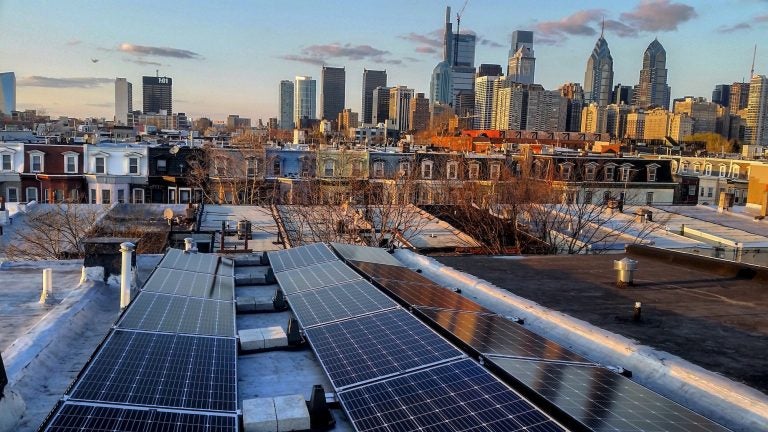
Urban Solar underway in Philadelphia

By Amanda Waltz
Pittsburgh City Paper

Sept 3, 2019 – When President Donald Trump famously namedropped Pittsburgh in his reasoning for exiting the global Paris Agreement on climate change, Mayor Bill Peduto was quick to take a stand by voicing his city’s commitment to lowering emissions that contribute to global warming. Now, two years after the incident, Peduto appears to be continuing with that mission, as he introduced new legislation today to Pittsburgh City Council that would require all new or renovated government buildings to be net-zero, meaning they produce as much energy as they consume.

Peduto believes the bill would not only help meet goals outlined in the City of Pittsburgh’s Climate Action Plan 3.0, which aims to reduce greenhouse gas emissions by 50 percent by 2030 and 80 percent by 2050, it would also significantly lower municipal energy costs.

“Pittsburgh is taking real steps to meet its energy goals, and moving to net-zero construction will be one of the most meaningful and impactful actions we’ve ever taken,” Peduto stated in a press release. “It is not only the right move for the planet, but for the city’s budget too.”

City of Pittsburgh Chief Resilience Officer, Grant Ervin, seconded Peduto in a tweet, in which he called the bill, “A major policy tool to lower city governments carbon emissions, save money over time and upgrade public facilities.”

The World Green Building Council, a global network committed to reducing the building and construction sector’s CO2 emissions, defines net-zero buildings as “highly energy efficient and fully powered from on-site and/or off-site renewable energy sources,” such as solar or wind. The council believes that, in order to help mitigate global warming, all buildings must meet net-zero emission standards by 2050.

In Pittsburgh, the proposed ordinance would cover all construction of new buildings and all major renovations of existing buildings on City-owned property. A press release stated that buildings are the “largest end-users of energy in the world,” and Pittsburgh, along with other cities, is looking at more ways to tackle the current climate crisis. The effort aligns Pittsburgh with Los Angeles and New York City, both of which recently moved toward energy-efficient or zero-emission construction and renovation methods.

There would be some exemptions, however, including renovations of buildings that are being decommissioned or sold within five years, emergency renovations, and short-term buildings such as trailers.

The announcement follows a report released in August by the Planning Department’s Sustainability and Resilience Division, which said reducing the energy used by municipal buildings could cut the City’s annual energy costs, totaling $2,700,000, in half.

A public hearing will be scheduled on the bill.

Climate Change In Pittsburgh: Locals Aired Concerns on Pollution, Industry and Legislation at Town Hall

U.S. Rep. Mike Doyle, who led Wednesday’s event, called out President Donald Trump for framing climate change as a ‘hoax.’

By Varshini Chellapilla
PublicSource,org

August 15, 2019 – Pittsburgh isn’t a coastal city, in the hurricane belt or among the areas with the worst heat, but there was no shortage of local concerns to discuss at Wednesday’s town hall on climate change. About 200 people showed up to the event organized by U.S. Rep. Mike Doyle, and the conversation ranged from the cracker plant in Beaver County and regional air pollution to the Green New Deal and the Trump administration attempting to roll back Obama-era carbon restrictions.

“I want to provide you with information on how we can go about reducing our greenhouse gas emissions and curbing climate change before it’s too late and, particularly, how can we make a change while we have a president who thinks climate change is a hoax and an EPA which is trying to protect polluters instead of people,” said Doyle (D-Forest Hills) while stressing the urgency to reach net-zero carbon emissions by 2050 as advised by the United Nations.

The UN Intergovernmental Panel on Climate Change released a report in the fall calling for a cut of 40% to 50% of emissions by 2030 to limit global warming by 1.5 degrees Celsius above pre-industrial levels. Even if that goal is met, there are still expected to be consequences, like worsening storms, heat waves and forest fires.

Climate change “is really inextricably tied to every other system and problem we see,” said Anaïs Peterson, an urban studies student at the University of Pittsburgh, at the event held in the Soldiers & Sailors Memorial Hall and Museum.

However, like several other attendees, Peterson was not satisfied with the format of the event, which included two expert panels, followed by a question-and-answer session with the public. Doyle gave an introductory speech, briefed attendees on action in Congress and answered questions.

“I feel like it’s so rare to actually have this face-to-face time with people from Washington,” Peterson said. “I would have liked to have him be more present and have more of a voice throughout the conversation.”

One of the biggest concerns raised by some attendees was Doyle’s stance on the Green New Deal. Introduced in February by Alexandria Ocasio-Cortez (D-New York) and Sen. Edward Markey (D-Massachusetts), the Green New Deal calls for swift action to solve the climate crisis and curtail carbon emissions. The Green New Deal is a proposed overhaul to the U.S. economy that includes ending the use of fossil fuels and shifting transportation systems to use only renewable energy, among other proposals. Doyle is not a co-sponsor of Ocasio-Cortez’s resolution.

“The Green New Deal got a lot of attention when it was introduced in February, but I believe it kicked off an important conversation and has built momentum to address climate change that is affecting our planet,” Doyle said. “I agree with supporters of the Green New Deal’s goals of getting the U.S. economy to net-zero carbon emissions quickly. I share many of its long-term goals as well, and I believe that the components of the Green New Deal will be a part of any comprehensive climate bill that comes out of the House of Representatives.”

Gerald Dickinson, who is challenging Doyle for his seat, criticized Doyle’s stance.

“It is very low key,” Dickinson said after the event. “It’s too incremental and not enough urgency and not enough desire and energy to actually make a difference.” Continue reading Climate Change In Pittsburgh: Locals Aired Concerns on Pollution, Industry and Legislation at Town Hall

THE GREEN NEW DEAL: LET’S GET VISIONARY

Lately there’s been a lot of bad news about climate change and the future of humanity.

Last October, the United Nations issued a major report warning of a climate crisis as soon as 2040. The day after Thanksgiving, the Trump administration tried to bury the release of its own report on the dire effects of climate change already occurring in the United States, which included dark predictions for the future.

In December alone, we learned that 2018’s global carbon emissions set a record high. NASA detected new glacier melts in Antarctica. There were wildfires. Coral reef bleaching. Ecosystem upheaval in Alaska as the arctic ice melts.

Meanwhile the Trump administration sent an adviser to the UN climate summit to promote coal and warn against climate “alarmism.”

So this all sucks. But here’s the thing about climate change: You can either ignore it, get depressed about doomsday scenarios, or believe that no matter how badly we’ve screwed up as a species, we’re also smart and creative enough to fix this.

If the alternatives are ignorance and despair, I’ll choose hope. Every single time.

So where can we focus our hope? What can we actually do about climate change?

I’m excited about the Green New Deal, an idea that’s been kicking around since 2007 but was popularized this fall by Representative-elect Alexandria Ocasio-Cortez (D-NY) and the youth-led Sunrise Movement. At least 37 members of Congress have signed on, along with dozens of activist organizations.

Not only a plan to shake up environmental policies, it’s also a massive jobs program, named after the Depression-era New Deal. The basic idea is to get us to 100 percent renewable energy by 2035, by putting Americans to work building a new energy infrastructure.

It merges the immediate concerns of working Americans — jobs and the economy — with the long-term concerns of climate change. We don’t have to choose between economic sustainability and environmental sustainability.

“This is going to be the Great Society, the moonshot, the civil rights movement of our generation. That is the scale of the ambition that this movement is going to require,” said Ocasio-Cortez during a town hall meeting with Bernie Sanders.

The ambitious plan touches on a “smart” grid; energy-efficient buildings; sustainable agriculture, manufacturing, transportation, and infrastructure; and exporting green technology to make the U.S. “the undisputed international leader in helping other countries transition to completely carbon neutral economies.” Think of the scale of this program, and then think of all the jobs that would be created. This could be huge for rural America in particular.

Will the Green New Deal be expensive? Probably. But that doesn’t mean it will be a drag on our economy.

A recent study by the Global Commission on the Economy and Climate revealed that we could save $26 trillion, worldwide, if we shifted to sustainable development. Another new study shows wind and solar power to be the cheapest sources for electricity around the world. Last year, the Republican mayor of Georgetown, Texas switched his city to 100 percent renewable energy because of the low costs in the long-term.

On the other hand, at the UN climate summit in Poland, some of the world’s most powerful investors warned of a major financial crash if we don’t solve the climate crisis.

Is the Green New Deal too ambitious? No. We need ambition. The impending climate crisis is the biggest problem the human race has ever faced, and we can’t think small.

So let’s get visionary. Let’s dream big. Let’s fight for our children, and let’s invest in their future.

On the Rise: Solar Farms Begin Cropping Up in Western Pa

Solar farm in Smith Twp, near Burgettstown.

By Megan Tomasic
TribLive

May 5, 2019 – Down a gravel road close to what constitutes downtown Slovan in rural Washington County, roughly 3,500 solar panels stand in a field of green grass, their blue-hued faces tilted toward the sun.

The development, one of the largest solar farms in Western Pennsylvania, spans 4.5 acres and can power about 750 homes. It’s just a small part of a national trend infiltrating the Pennsylvania landscape.

A similar project is slated to occupy 12 acres of Hempfield, Westmoreland County. Almost 11,000 solar panels will be visible from Hunker-Waltz Mill Road, near Westinghouse Electric Co.

But the state still has a long way to go, with only three major solar farm projects powering roughly 575 homes and one business — Lincoln Financial Field in Philadelphia, Snyder’s-­Lance in Hanover and Elizabethtown Solar, according to the Solar Energy Industries Association, or SEIA, a solar energy advocacy group.

Westmoreland and Allegheny counties have no big solar projects, according to a report by the Pennsylvania Public Utility Commission.

The report does not include individual panels on the rooftops of residential homes, said Nils Hagen-Frederiksen, press secretary for the PUC.

While there are few solar farm developments in the immediate area, Pennsylvania has a growing number of solar jobs.

Between 2017 and 2018, the number of jobs increased by 10%, accounting for almost 4,220 workers, according to Avery Palmer, communications director at The Solar Foundation, a nonprofit organization promoting solar and solar technology.

“Most of the jobs will be at companies that install solar on rooftops or commercial businesses,” Palmer said. “With that said, large utility-­scale farms are a major job creator in other states, and developing these projects could help create even more solar jobs in Pennsylvania.” Continue reading On the Rise: Solar Farms Begin Cropping Up in Western Pa

Industry Officials, Protesters Confront Appalachia’s Future as a Possible Petrochemical Hub

Protestors outside the Marcellus and Manufacturing Development Conference in Morgantown, West Virginia on April 9, 2019. (Photo by Kat Procyk/PublicSource)

By Oliver Morrison

PublicSource.org

April 10, 2019 – Attendees at an industry conference in West Virginia on Tuesday cheered projections for increased petrochemical production in the next 40 years, while protesters outside held up withered single-use plastic bags to show the environmental harm of petroleum products.

Both groups, however, shared a common view that the economic hype and resulting environmental impact predicted for the region may not pan out. It’s how they feel about the prospect that diverges.

The Ohio River Valley region is projected to be on the brink of a petrochemical boom adding to its already booming natural gas industry: Production of ethane, which is used to make plastics, is expected to quadruple by 2025, according to a presentation by Brian Anderson, the director of the National Energy Technology Center at the U.S. Department of Energy.

Several top industry executives and analysts at the Marcellus and Manufacturing Development Conference in Morgantown spoke about the rare opportunity to create 100,000 jobs, an industry estimate, and bring billions of dollars in economic growth to the region, which includes Pennsylvania, West Virginia and Ohio.

“This is the chance of a lifetime to create a generational change for the region,” said Michael Graney, executive director of the West Virginia Development Office.

But the mood at the conference was not always celebratory. Several speakers focused on the urgent need to continue to sell the Appalachian region’s potential to the rest of the world. Continue reading Industry Officials, Protesters Confront Appalachia’s Future as a Possible Petrochemical Hub

A Closer Look at Climate Accord–and Our Congressman

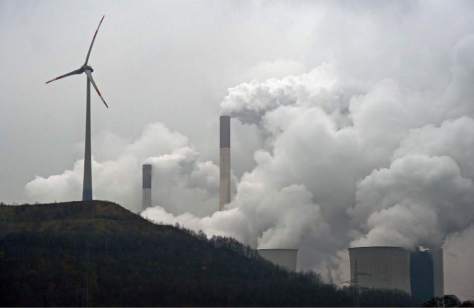
wind-coal

By Tom Prigg
TribLive Op-Ed

July 14, 2017 – This is in response to Keith Rothfus’ recent op-ed, “A better ‘climate’ for America,” and honestly, it’s difficult to know where to begin.

In reference to the Paris accord, Rothfus claimed, “The American people would never approve of a deal so harmful to their security and prosperity.”

Yet, as The Atlantic reported, 70 percent of Americans want the United States to remain in the Paris accord.

Rothfus argued that during the 2014 polar vortex, natural gas failed to provide energy to capacity while coal and nuclear energy did just fine.

However, PJM Vice President Craig Glazer stated at the time that coal generation was stymied by “frozen coal or wet coal, frozen limestone, frozen condensate lines, frozen fly ash transfer equipment, cooling tower basin freezing, and freezing of injection water systems for emissions control equipment.”

Rothfus suggest the coal industry’s recent woes are due to President Obama’s policies. While some policies may have affected the coal industry output, the real driving force has been its own market forces.

Charles Bayless, former chief executive of Tucson Electric Co. and Illinois Power, said, “A gas plant is much cheaper to build than a coal plant and it is much simpler to run.”

Continue reading A Closer Look at Climate Accord–and Our Congressman

Monaca to Install 200 Solar Panels at its Reservoir

By Jared Stonesifer

Beaver County Times 

MONACA — The borough plans on installing 198 solar panels at its reservoir that could produce more than $200,000 worth of electricity over their lifespan.

Borough Manager Mario Leone said the project, which has been in the works for several years, could be up and running by April.

The borough will install the solar panels on the ground and buildings at the reservoir, although it also plans on building a new garage-like structure that will house at least half of the panels.

The panels will cost $150,000 to buy and install, half of which was paid for by a state grant.

Leone said it won’t take long for the panels to make up the cost through savings realized by the efficiency of solar energy.

“We’re looking between a 7 1/2 to nine-year payback on our $75,000 contribution,” he said. “The solar system over 20 years is expected to generate over $200,000 in electricity.”

That number could be higher, Leone said, if the solar panels exceed their typical lifespan of 25 to 30 years.

The solar panel project is just one of several that have led to Monaca being designated a gold-certified municipality in sustainability. The latest solar project means the borough could soon be certified as platinum, Leone said.

“The borough is a leader in sustainability,” he said. “I believe with the installation of the solar panels and other things we’re working on, we will probably achieve that higher standard.”

Another exciting aspect, Leone said, is that the amount of energy generated from the solar panels will be able to be viewed on the borough’s website.

A public hearing will be held Jan. 26, when the project is expected to receive the green light from borough council.

Leone said the panels will take about two weeks to be installed after being delivered.

The panels will generate about 63,000 kilowatt hours annually.

‘Moral Mondays’ Launched in Western PA

Protesters Rally for Officials to ‘Do the Right Thing’

People gather at the Beaver County Courthouse to raise awareness of several social and economic issues.

By Kirstin Kennedy

Beaver County Times

Oct 28, 2014 – BEAVER — Everyone knows the First Amendment gives citizens the right to assemble. Few regularly exercise it.

But that wasn’t the case Monday evening on the steps of the Beaver County Courthouse, when over 30 people gathered with signs and chants.

Willie Sallis, president of the NAACP in Beaver County, said he helped to gather the protest to pressure elected officials to "just do the right thing."

"What is the moral thing to do? … That’s what we’re trying to keep alive with the union and the civil rights leaders," he said. Sallis paired with several other organizations — including members of local labor unions — for the rally, with the hope of raising awareness of several social and economic issues.

Inspired by a recent lecture given locally by the Rev. William Barber, president of the North Carolina State Conference of the NAACP, Sallis dubbed the rally Moral Monday.

"What’s the right thing to do for the poor?" Sallis said. "What’s the right thing to do for health benefits? What’s the right thing to do when it comes to jobs? What’s the right thing to do when it comes to minimum wages? All we’re saying is, ‘Look, do the right thing.’"

On the courthouse lawn, participants chanted, "Keep it fair; we care."

Continue reading ‘Moral Mondays’ Launched in Western PA

Booming Natural Gas Won’t Slow Global Warming

Natural gas burns more cleanly than coal, but that’s not enough to reduce global carbon emissions, researchers say.

Waste gas is burned off at a hydraulic fracturing site in March 2014 near Buttonwillow, Calif. Five research teams found that natural gas alone won't curb climate change.

Waste gas is burned off at a hydraulic fracturing site in March near Buttonwillow, Calif. Five research teams found that natural gas alone won’t curb climate change.

By Alan Neuhauser

Beaver County Blue via US News & World Report

Oct. 15, 2014 – Natural gas won’t save us.

Despite the lofty claims of industry groups and President Barack Obama, the so-called natural gas revolution will not discernibly reduce greenhouse gas emissions, putting the globe no closer to averting catastrophic climate change, according to five independently developed models conducted by teams of researchers around the world and summarized in a new paper Wednesday.

"The high hopes that natural gas will help reduce global warming because of technical superiority to coal turn out to be misguided,” study co-author Nico Bauer, of the Potsdam Institute for Climate Impact Research in Germany, said in a statement. “The main factor here is that an abundance of natural gas leads to a price drop and expansion of total primary energy supply."

For this very reason, most of the studies projected, widespread natural gas consumption actually will make global warming worse.  

“Abundant gas alone will not solve climate change on its own in the absence of climate change mitigation policy,” says economist Haewon McJeon of the Department of Energy’s Pacific Northwest National Laboratory, who helped lead the American research team. “These five models are very different in its architecture and assumptions. The one thing we agreed on is it’s not going to solve climate change.”

Continue reading Booming Natural Gas Won’t Slow Global Warming

One Small Step Nearby Giving Us a Glimpse of a Green Future

Example of solar charger in Sofia, Bulgaria

Mall at Robinson to debut solar car-charging stations

Tim Schooley
Beaver County Blue via Pittsburgh Business Times

The Mall at Robinson on July 24 will unveil new electric car-charging stations powered by solar panels located above the entrance of the mall’s food court.

With the chargers donated by Wesco and Eaton, the new stations are a partnership between the mall’s owner — Cleveland-based Forest City Enterprises — Green Roads Energy LLC and Day & Night Solar.

The charging stations are free to use for mall guests.

A kiosk will be installed in the food court within the next week so shoppers can monitor the energy created by the solar panels, according to a release issued by Forest City Enterprises.

The mall also expects to offer loyalty promotions to shoppers who use the chargers, including the chance to earn a $25 gift card for using the station ten times.

The unveiling of the station is scheduled for Thursday, July 24, at 11:30 a.m.